

For many couples embarking on the journey to matrimony, the wedding-planning year often concludes not with regret over the total expenditure, but rather over the specific allocations of those funds. Instances of overlooked floral arrangements, inflated bar tabs driven by vendor recommendations for premium tiers, or budget categories silently consuming a disproportionate share due to generic spreadsheet assumptions are common refrains. This phenomenon underscores a critical flaw in conventional wedding budgeting: its failure to align with the unique priorities and values of individual couples. For nearly two decades, The Budget Savvy Bride has observed this consistent pattern, advocating for a fundamental shift away from standardized templates towards a personalized, values-driven financial planning methodology, which culminates in the introduction of their Savvy Weddings Budget Blueprint.
The Paradigm Shift in Wedding Planning and its Financial Implications
The wedding industry has undergone a significant transformation, moving from largely standardized celebrations to highly personalized events that reflect the distinct personalities and narratives of the marrying couple. This evolution, while enhancing the uniqueness of each wedding, has simultaneously exposed the limitations of traditional budgeting tools. Most readily available wedding budget templates adhere to an outdated model, prescribing fixed percentage allocations across a dozen or so categories—typically earmarking 35% for the venue, 28% for catering, and 12% for flowers. While these percentages may represent broad industry averages, they rarely, if ever, accurately reflect the specific desires or disinterests of a particular couple.
The consequence of this misalignment is substantial. Consider a couple with a $40,000 wedding budget. A generic template might dictate a $4,800 allocation for floral arrangements. If neither partner places significant value on elaborate floral displays, preferring instead to invest in an enhanced culinary experience or a superior photography team, they are inadvertently steered towards a expenditure they do not genuinely desire. This prescribed sum can create an anchoring effect, leading them to accept a $4,500 florist estimate simply because the spreadsheet suggested a similar figure, rather than based on their intrinsic preferences. When multiplied across multiple categories, this systemic misallocation can result in a wedding that, despite adhering to a budget, ultimately fails to resonate with the couple’s true vision, leading to post-event dissatisfaction and financial regret. The notion of an "average couple" serves the wedding industry’s statistical models but proves an unhelpful construct for individuals planning their most personal celebration.
Deconstructing the True Cost of a Wedding in 2026
Before any effective budgeting can commence, couples must establish a realistic financial ceiling. Data from 2025 indicates that the average wedding in the United States ranged from the low to mid-thirty thousands, though this figure is subject to considerable regional variation. Couples in the Northeast and on the West Coast frequently report higher expenditures, while those in the Midwest and South often achieve comparable event scopes for less. It is crucial to distinguish between average and median costs; industry experts and financial analysts often highlight that the average can be significantly inflated by a small percentage of exceptionally high-cost weddings, making the median a more honest and representative figure for most couples to plan around. Current market trends, including inflationary pressures on labor, goods, and services, coupled with persistent high demand, suggest these figures will remain robust, if not increase, into 2026. Understanding these economic realities is the first step towards setting a budget that is not influenced by external pressures from family, venue "starting from" pricing, or aspirational social media portrayals, but rather by personal financial comfort and realistic market conditions.
The "Values-First" Methodology: A Detailed Blueprint for Personalized Planning
The Budget Savvy Bride’s "values-first" method provides a structured, three-step approach designed to align financial allocations with a couple’s core priorities. This process is deliberately sequential, ensuring that personal values drive the financial decisions, rather than the reverse.
-
Comprehensive Income Mapping: The initial step involves a thorough assessment of all available financial resources earmarked for the wedding. This extends beyond personal savings to include family contributions, potential credit-card sign-up bonuses intended for travel, or funds redirected from canceled subscriptions or reallocated personal budgets. By consolidating all potential income sources upfront, couples gain a clear and realistic understanding of their total available capital before any mental dollars are spent on specific categories. Financial advisors often stress the importance of this holistic approach to prevent unforeseen shortfalls and potential post-wedding debt.
-
Private Prioritization Exercise: This critical phase addresses the often-complex dynamics of joint financial decision-making. Each partner independently reviews a comprehensive list of wedding categories—such as food, photography, venue, music, attire, guest experience, decor, and stationery—and ranks them from "I’ll remember this" to "I don’t care." The emphasis on private ranking, without discussion or mutual influence, is key. This independent assessment allows both individuals to articulate their authentic priorities, often revealing surprising convergences and divergences that form the foundation for a truly personalized budget. Relationship counselors frequently recommend such private exercises in joint financial planning to foster transparency and reduce potential conflict.
-
Algorithmic Redistribution and Joint Review: Following the private ranking, the individual lists are combined and weighted. This data then automatically redistributes the total budget across categories, allocating more funds to jointly high-priority areas and quietly minimizing expenditures in those ranked lower by both partners. This algorithmic approach minimizes the need for protracted negotiations, transforming a potentially contentious financial discussion into an objective, data-driven allocation that inherently respects both partners’ perspectives. The resulting budget breakdown is a unique financial blueprint, custom-tailored to the couple’s shared values rather than industry averages.
Translating Priorities into Tangible Allocations
The effectiveness of the values-first method is best illustrated through practical examples. Consider two hypothetical couples, both operating within a $35,000 budget, yet with vastly different priorities:
-
Couple A: Their top priorities are food, photography, and the overall guest experience. They envision a wedding where guests rave about the cuisine, where photographs serve as timeless memories, and where the atmosphere transcends a typical event. Their values-driven redistribution might allocate $11,500 (33%) to catering and bar services, $5,500 (16%) to photography and videography, and $3,000 to a bespoke "guest experience" line item (e.g., welcome bags, unique late-night snacks, curated transportation). Crucially, their floral budget might be a modest $1,200, a sum they readily accept without regret because flowers were a low priority.
-
Couple B: Their primary focus lies on the venue, attire, and music. They seek a venue that inherently provides visual storytelling, minimizing the need for extensive decoration. They desire impeccable personal styling and prioritize a live band over a DJ or playlist. For Couple B, the budget redistribution might see $13,000 (37%) allocated to the venue, $6,500 (19%) for both partners’ attire, and $4,500 (13%) for the band. Their photography budget might be $2,000 and their food allocation $9,000—still well-funded, but not the primary focus of their financial strategy.

In both scenarios, the total budget remains $35,000. However, the resulting percentages across categories are entirely distinct, reflecting each couple’s specific priorities rather than arbitrary industry norms. This personalized allocation fosters a sense of ownership and satisfaction, ensuring that every dollar spent contributes directly to what the couple truly values.
Ensuring Fiscal Discipline: The Three-Question Reality Check
Once a values-first budget is established, maintaining adherence requires ongoing vigilance. The Budget Savvy Bride recommends a quick, 30-second "reality check" before committing to any significant wedding purchase or signing a contract over $500. This three-question test serves as a crucial safeguard against budget creep:
- Does it fit the line item? The initial question is purely numerical: Is the specific budget category for this purchase still within its allocated amount, or has it already been exceeded?
- Does it match your ranked priority? This question connects the purchase back to the couple’s core values. If flowers were ranked in the bottom tier of priorities, a $4,500 floral quote, even if technically absorbable by the overall budget, should be reconsidered. The objective of values-first budgeting is to prevent overspending on low-priority items, not to simply permit it if funds are available.
- What’s the per-guest cost? Divide the total price of the item by the estimated guest count. Couples are encouraged to ask themselves: Would I hand this amount in cash to each guest if I had to? If the answer is no, it signals an opportunity to renegotiate the cost or explore alternative options. This metric provides a tangible perspective on the value derived per attendee.
Regularly applying these three questions can proactively identify and mitigate most instances of budget derailment, safeguarding the financial plan from impulsive decisions or vendor upselling.
Navigating Unforeseen Expenses: The Crucial Contingency Fund
Beyond planned expenditures, a significant challenge in wedding budgeting lies in anticipating and covering "surprise costs" – those hidden fees, incidental charges, and last-minute necessities that often surface in the final weeks before the wedding. Industry data suggests that a dedicated contingency fund, ideally ten percent of the total budget held in reserve until the final 60 days, is essential. Common examples of such costs include vendor tips, unexpected alteration fees for attire, last-minute transportation gaps, overflow from rehearsal dinner guests, postage for day-of stationery, and various taxes on rentals or services that were not initially factored into quotes. Preparing for these eventualities through a designated "cushion" category is a pragmatic approach to prevent financial stress during the critical final planning stages.
Introducing the Savvy Weddings Budget Blueprint
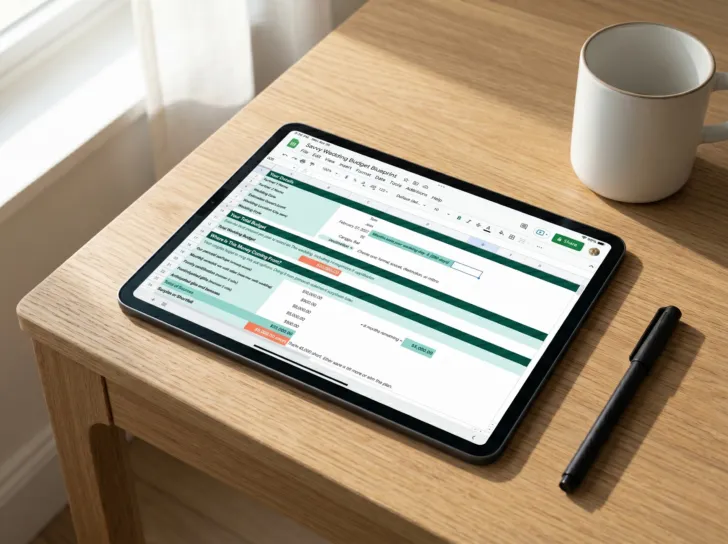
Building on eighteen years of experience and insights, The Budget Savvy Bride has developed the Savvy Weddings Budget Blueprint. This Google Sheets template is designed to fully implement the values-first method, providing an intuitive and comprehensive digital tool for couples.
The Blueprint features two primary, user-facing tabs:
- The Values and Priorities tab serves as the entry point, where couples complete the ranking exercise, with the integrated logic automatically driving the subsequent budget allocations.
- The Budget tab acts as the operational hub, displaying category totals, vendor-specific line items, and real-time tracking of paid versus remaining amounts.
Beyond these core functions, the Blueprint incorporates seven additional tabs to support thorough financial planning: vendor comparison scoring, cash flow projections, savings tracking, guest count sensitivity analysis, a dedicated surprise-cost cushion, a change log for transparent record-keeping, and a comprehensive final-month checklist. This robust suite of tools ensures that couples have a dynamic, adaptable, and transparent financial overview from engagement to post-wedding wrap-up. The Blueprint is a one-time purchase, providing perpetual access and customization within a couple’s personal Google Drive, making it a lasting resource.
Expert Perspectives on Financial Wellness and Wedding Planning
Financial advisors specializing in personal finance for couples consistently highlight the profound impact of wedding budgeting on a relationship’s long-term financial health. "Open and honest communication about money, starting well before the wedding, is paramount," states a leading financial expert often quoted in bridal publications. "Couples who engage in values-based budgeting not only reduce stress during planning but also build stronger financial foundations for their marriage by learning to prioritize and compromise effectively." The emphasis on private ranking followed by algorithmic redistribution within the Blueprint framework is seen as an innovative way to depersonalize potentially sensitive financial discussions, allowing data to guide decisions rather than emotional negotiation.
The Broader Impact: A Shift in Industry Standards
The widespread adoption of a values-first budgeting approach could catalyze a significant shift within the broader wedding industry. As more couples arrive at vendor consultations with clear, prioritized budgets reflecting their unique desires, vendors may be compelled to offer more flexible, modular packages rather than generic, pre-set tiers. This could foster greater transparency, encourage more customized service offerings, and ultimately lead to a more client-centric industry that truly caters to individual couple’s visions. The Budget Savvy Bride’s initiative represents not just a new budgeting tool, but a potential catalyst for a more mindful and personalized approach to wedding celebrations on a larger scale.
In an era where personal expression defines celebrations, wedding budgeting should no longer be an exercise in conforming to external averages. The Savvy Weddings Budget Blueprint champions a paradigm where a couple’s unique values and priorities form the bedrock of their financial plan, ensuring that every dollar spent contributes meaningfully to their envisioned day. This strategic approach promises not only fiscal responsibility but also a wedding experience that is genuinely, authentically theirs.