


For millennia, diamonds have been revered as symbols of enduring love, status, and natural wonder, meticulously forged over eons deep within the Earth’s mantle. Their mystique is intertwined with rarity and the profound geological processes that bring them to the surface. However, the 21st century has witnessed a paradigm shift, driven by scientific innovation and evolving consumer values. Lab-grown diamonds, once a scientific curiosity, have emerged as a significant contender in the jewelry market, challenging long-held perceptions and offering a new dimension to the world of precious gemstones. This article delves into the intricacies of both lab-grown and natural diamonds, exploring their creation, characteristics, market dynamics, and the factors influencing consumer choice.
The Genesis of Gemstones: From Earth’s Depths to Laboratory Precision
Natural diamonds are born from an extraordinary geological ballet occurring miles beneath the Earth’s surface. In the extreme conditions of the mantle, typically between 93 and 155 miles deep, immense pressures (45 to 60 kilobars) and temperatures (900 to 1,300 degrees Celsius) compel carbon atoms to arrange themselves into a tightly bound crystalline structure. These conditions are most commonly found beneath ancient, stable continental crusts known as cratons. The formation process is slow and deliberate, often spanning billions of years. Geologists theorize that processes like plate subduction, where one tectonic plate slides beneath another, generate the necessary heat and pressure for diamond crystallization. Carbon sources, such as fluids rich in carbon dioxide and methane, infiltrate mantle rocks, and under these specific thermodynamic regimes, carbon solidifies into diamond crystals. The age of most natural diamonds ranges from one to three-and-a-half billion years, a testament to the vast timescale of Earth’s geological evolution. These ancient gems are brought to the surface through violent volcanic eruptions, carried by kimberlite or lamproite magma. This rapid ascent, occurring millions of years ago, is crucial, preventing the diamonds from reverting to graphite due to the sudden decrease in pressure and temperature. Erosion eventually exposes these diamond-bearing pipes, leading to their discovery and extraction.
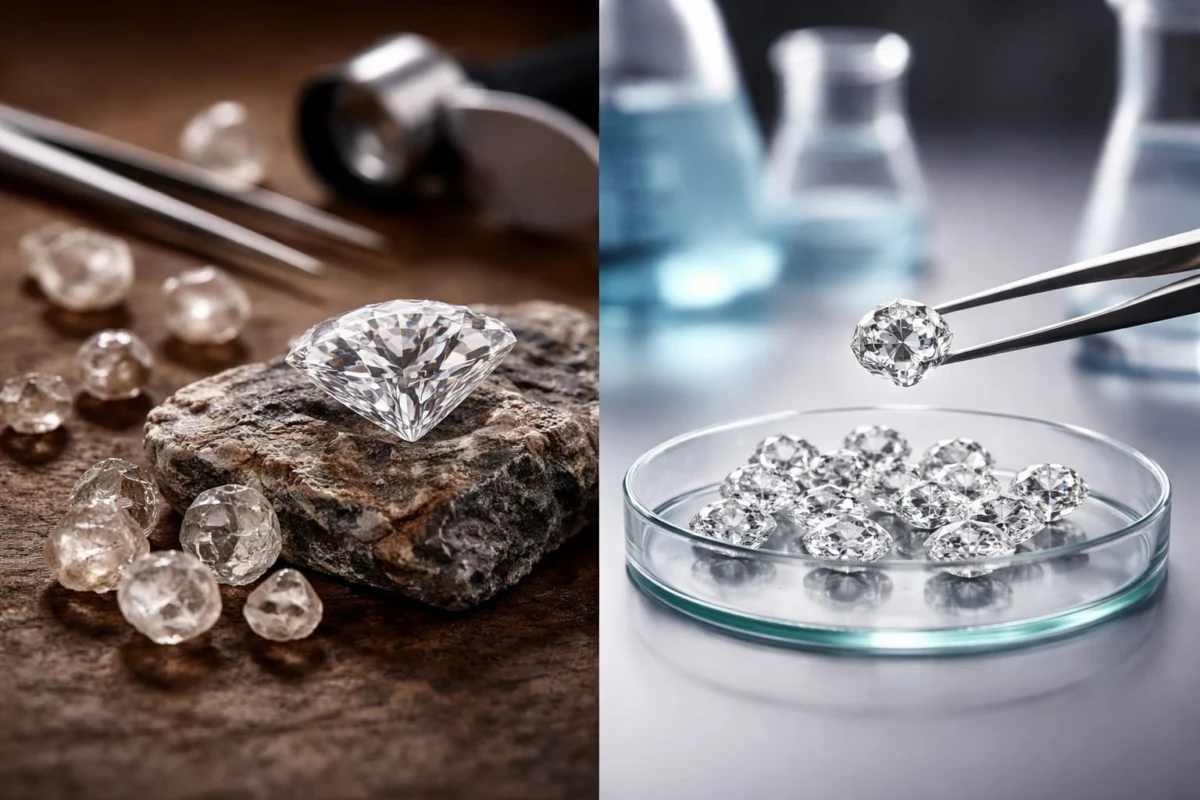
In stark contrast, lab-grown diamonds replicate these extreme conditions in controlled, sophisticated environments. The process begins with a small diamond "seed," a tiny fragment of a diamond crystal. This seed is then subjected to one of two primary methods: High-Pressure High-Temperature (HPHT) or Chemical Vapor Deposition (CVD).

The HPHT method directly mimics the Earth’s mantle. The diamond seed is placed within a press, along with a carbon source (like graphite) and a metal catalyst. This assembly is then subjected to pressures exceeding one million pounds per square inch and temperatures around 2,000 degrees Celsius. Under these intense conditions, the carbon source dissolves in the molten catalyst and then crystallizes onto the diamond seed, layer by layer, forming a larger diamond crystal. This process can yield significant diamond growth within weeks.
The CVD method, on the other hand, involves placing the diamond seed in a vacuum chamber filled with carbon-rich gases, such as methane, often mixed with hydrogen. The chamber is then heated to high temperatures (around 800-1,000 degrees Celsius), and microwave energy or other plasma-generating techniques are used to break down the gas molecules. This releases free carbon atoms, which then deposit onto the diamond seed, growing the crystal structure. CVD typically produces thinner layers of diamond over a longer period but offers greater control over the resulting crystal’s purity and properties.
Both methods result in diamonds that are chemically, physically, and optically identical to their mined counterparts. They possess the same hardness, brilliance, and durability, as they are composed of pure carbon atoms arranged in the same crystalline lattice.
The Science of Sparkle: Properties and Identifiability
The defining characteristic of all diamonds, whether natural or lab-grown, is their exceptional hardness. On the Mohs scale of mineral hardness, diamonds score a perfect 10, meaning they can only be scratched by another diamond. This inherent durability makes them ideal for everyday wear, resisting scratches and abrasions that would mar softer gemstones. Their refractive index of approximately 2.42 is responsible for their signature brilliance and "fire," the dispersion of light into spectral colors.

The 4Cs – Cut, Color, Clarity, and Carat – are the universal grading standards for all diamonds.
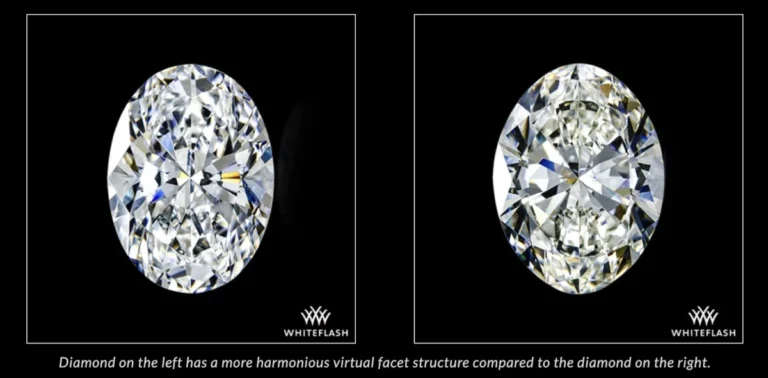
- Cut: This refers to the proportions, symmetry, and polish of a diamond, which significantly impact its ability to reflect and refract light. A well-cut diamond will exhibit superior brilliance, fire, and scintillation. The quality of the cut is independent of the diamond’s origin.
- Color: Diamonds are graded on a scale from D (colorless) to Z (light yellow or brown). Trace elements present during formation can impart color. While natural diamonds span the full spectrum, lab-grown diamonds often achieve higher color grades (closer to D) more readily due to controlled growth environments that minimize nitrogen impurities, a primary cause of yellow tints. However, both natural and lab-grown diamonds are graded using the same D-to-Z scale.
- Clarity: This refers to the presence of internal inclusions (flaws within the diamond) and external blemishes. Grades range from Flawless (FL) to Included (I). Inclusions and blemishes are common in both types of diamonds and can be unique identifiers. While the types of inclusions may differ – metallic flux remnants in HPHT diamonds versus mineral inclusions in natural diamonds – their impact on clarity is assessed using the same criteria.
- Carat: This is the unit of weight for diamonds, where one carat equals 0.2 grams.
Distinguishing between lab-grown and natural diamonds is not possible with the naked eye or even a standard jeweler’s loupe. Specialized gemological equipment, such as spectroscopy machines, is required. These advanced tools can detect subtle differences in growth patterns, fluorescence, and trace element composition that are indicative of their origin. Reputable grading laboratories, like the Gemological Institute of America (GIA) and the International Gemological Institute (IGI), provide detailed reports that clearly state whether a diamond is natural or lab-grown and detail all its characteristics.
Market Dynamics and Consumer Trends
The emergence of lab-grown diamonds has significantly disrupted the traditional diamond market. A 2024 market analysis indicated a substantial surge in lab-grown diamond jewelry unit sales, jumping by an impressive 43%. This growth is largely attributed to a combination of factors, including increasing consumer awareness, improved production technologies, and a more accessible price point.
Lab-grown diamonds typically cost between 60-80% less than natural diamonds of comparable size and quality. This affordability allows consumers to purchase larger carat weights, higher clarity grades, or more vibrant colors within the same budget. This has particularly resonated with younger demographics and those seeking greater value for their investment in engagement rings and other fine jewelry. Industry reports consistently show a growing adoption of lab-grown diamonds in engagement rings, reflecting this increased consumer interest in cost efficiency and larger stones without compromising budget.

The pricing differential stems directly from the production methods and supply chains. Natural diamonds are finite resources, their extraction is costly and labor-intensive, and their supply is dictated by geological discoveries and mining yields. New major diamond deposits are rare, meaning the supply of natural diamonds remains relatively stable but limited. In contrast, lab-grown diamonds are produced in factories, and as technology advances and production capacity expands globally, their cost of production continues to decrease. This scalability and predictable supply chain contribute to their lower market price.
However, this difference in scarcity and production cost has implications for resale value. While neither lab-grown nor natural diamonds are typically considered sound financial investments, natural diamonds tend to retain their value more consistently over time. The perceived rarity and long-term scarcity of natural diamonds contribute to a more stable resale market compared to lab-grown diamonds, whose value depreciates more rapidly as production costs continue to fall. A 2-carat lab-grown diamond, for instance, might cost a fraction of a comparable natural diamond, but its resale value will likely be significantly lower.
Ethical and Environmental Considerations
The discourse surrounding diamonds has increasingly incorporated ethical and environmental considerations. The mining of natural diamonds has historically been associated with concerns about conflict diamonds, labor practices, and environmental impact. While the Kimberley Process Certification Scheme has been established to curb the trade of conflict diamonds, and many mining companies are implementing sustainable practices, these issues remain a point of consideration for some consumers.
Lab-grown diamonds are often positioned as a more ethically and environmentally sound alternative. Their production occurs in controlled facilities, minimizing the risks associated with labor exploitation and environmental disruption. Furthermore, the energy consumption and carbon footprint associated with lab-grown diamond production are increasingly being scrutinized. While generally considered to have a lower environmental impact than traditional mining, the energy-intensive nature of HPHT and CVD processes means that ongoing efforts to utilize renewable energy sources are crucial for truly sustainable production. Transparency in reporting energy usage and carbon emissions is becoming increasingly important for manufacturers in this sector.

The Consumer’s Choice: Values, Perceptions, and Significance
Ultimately, the decision between a lab-grown and a natural diamond hinges on individual priorities, values, and perceptions.
For consumers who prioritize affordability, size, and value, lab-grown diamonds offer compelling advantages. They enable the acquisition of larger, more visually striking stones within a given budget, allowing for greater personalization in jewelry design. The predictable supply and competitive pricing make them an attractive option for those seeking immediate gratification and the ability to maximize their spending power. Furthermore, for environmentally conscious consumers who seek to minimize their ecological footprint, lab-grown diamonds can present a more appealing choice, provided the manufacturing processes are powered by sustainable energy.
Conversely, consumers who are drawn to the romance, rarity, and perceived exclusivity of natural diamonds often find their appeal irresistible. The story of a diamond forged over billions of years deep within the Earth, brought to the surface by geological forces, holds a unique symbolic weight. For these individuals, the inherent rarity, the long geological journey, and the tradition associated with natural diamonds imbue them with a deeper emotional and historical significance. The idea of owning a piece of "deep time" and the enduring prestige associated with naturally occurring gems are powerful motivators.
The choice is not simply about scientific equivalence but also about the narrative and emotional connection a consumer seeks with their gemstone. While both types of diamonds offer identical physical properties and performance, the origin story—one of ancient geological processes, the other of human ingenuity—carries different symbolic meanings for different people.

Expert Insights and Community Discourse
Navigating the nuances of diamond purchasing can be complex. Reputable grading reports from organizations like the GIA and IGI are essential for verifying the quality and authenticity of any diamond, regardless of its origin. However, understanding the finer points of these reports, such as the impact of specific inclusions on eye-cleanliness or the subtle differences between color grades, can be challenging for the average consumer.
Online forums and educational platforms play a crucial role in demystifying the diamond market. Communities like PriceScope, for instance, serve as invaluable resources where gemologists, industry experts, and experienced buyers share knowledge, conduct price comparisons, and offer unbiased advice. These platforms facilitate discussions on topics ranging from the practical implications of clarity grades to the long-term value retention of different diamond types, empowering consumers to make informed decisions. Such communities provide a space for candid discussions, moving beyond marketing rhetoric to focus on tangible quality factors and real-world experiences.
The Future of Brilliance
The diamond industry is in a dynamic state of evolution. Lab-grown diamonds have undeniably secured a significant and growing market share, offering a compelling alternative for a wide spectrum of consumers. As technology continues to advance, production methods will likely become even more efficient and sustainable, further solidifying their position.
Simultaneously, the allure of natural diamonds persists, rooted in their unparalleled geological history and perceived rarity. The industry continues to emphasize responsible sourcing and ethical practices for natural diamonds, seeking to address consumer concerns and maintain their market appeal.

Ultimately, the choice between a lab-grown and a natural diamond is a personal one. Both offer the timeless beauty and durability that have made diamonds cherished for centuries. Understanding their distinct origins, creation processes, market dynamics, and the emotional significance they hold allows consumers to make a choice that aligns with their values, budget, and the unique story they wish to tell. The ongoing dialogue and innovation in this sector promise a future where brilliance comes in many forms, catering to an ever-diversifying global market.