


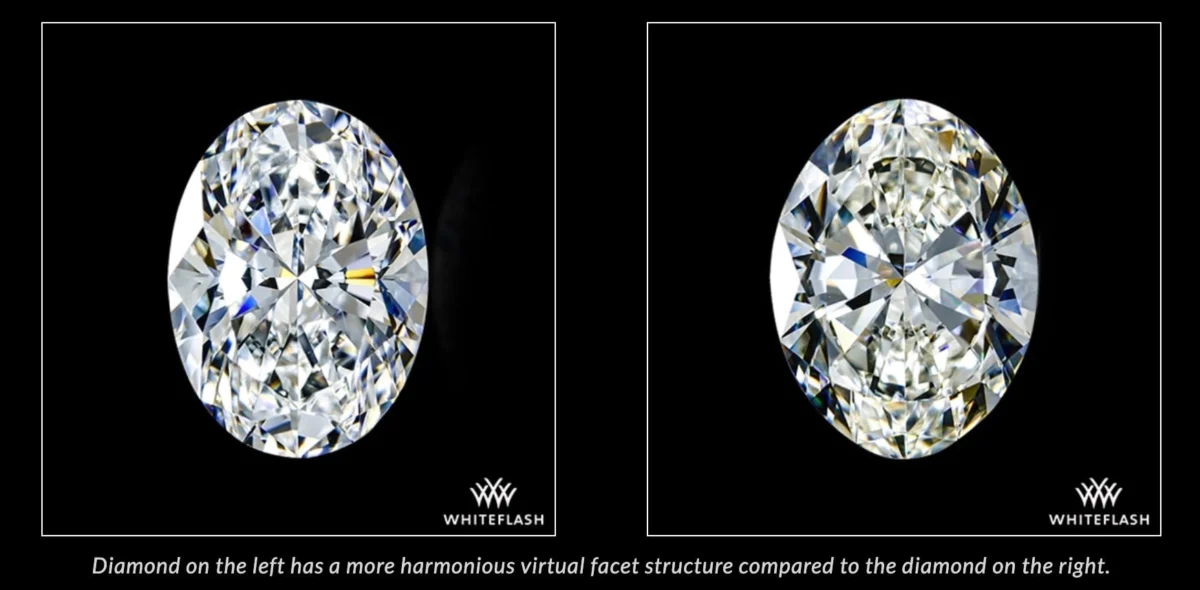
The bow-tie effect, a distinctive dark shadow pattern often observed in the center of oval diamonds, is a frequently discussed yet often misunderstood optical phenomenon. This characteristic, while natural, can significantly influence a diamond’s perceived beauty and brilliance. This comprehensive analysis delves into the intricacies of the bow-tie effect, providing a clear understanding of its origins, evaluation, and implications for consumers seeking to make informed purchasing decisions.
Understanding the Bow-Tie Effect in Oval Diamonds
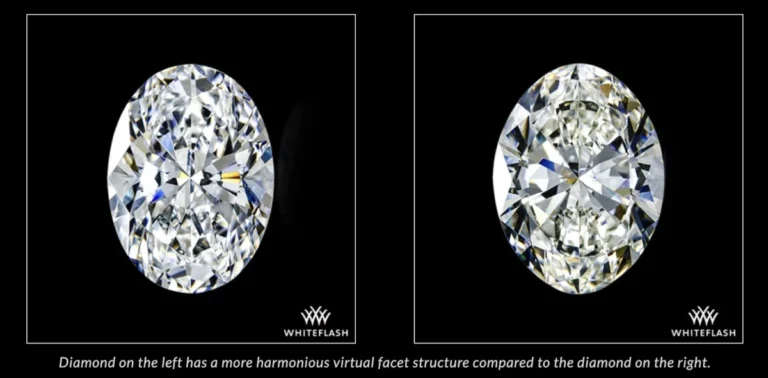
The bow-tie effect manifests as a symmetrical, dark band that stretches across the central portion of an oval-cut diamond. This phenomenon is not exclusive to ovals but is most prominently displayed in this shape due to its elongated geometry. While it can appear in other fancy-shaped diamonds like pears, marquises, and hearts, its prevalence and visual impact are most pronounced in ovals. It is crucial to recognize that the bow-tie effect is not an inherent flaw in a diamond. Instead, it is a natural consequence of diamond optics, specifically how light interacts with the internal structure and facet arrangement of the stone. The critical factor for consumers is not the mere presence of a bow tie, but rather its intensity, its behavior when the diamond is in motion, and its overall impact on the stone’s light performance. This article aims to provide a detailed examination from an expert perspective, focusing on the optical principles, imaging techniques, and practical evaluation methods beyond superficial advice.
The Science Behind the Bow Tie: Diamond Optics Explained
To truly comprehend the bow-tie effect, one must look beyond its visual appearance and delve into the complex behavior of light within the diamond. Several core optical concepts are fundamental to this understanding:
- Light Return: This refers to the amount of light that is reflected back to the observer’s eye from within the diamond. A strong light return is synonymous with brightness and scintillation.
- Light Leakage: Conversely, light leakage occurs when light enters the diamond but escapes through its sides or bottom rather than being reflected back. This phenomenon can lead to darkened areas within the diamond, diminishing its overall brilliance.
- Contrast Patterning: This describes the delicate balance between light and dark areas within a diamond. A well-balanced contrast pattern is essential for creating sparkle, definition, and visual appeal.
- Scintillation: This term refers to the flashes of light and sparkle that a diamond exhibits when it is moved. It is a crucial element of a diamond’s beauty, contributing to its lively appearance.
The bow-tie effect is primarily caused by a combination of factors related to how light is obstructed and how it returns to the viewer. The most significant contributor is light obstruction, where certain angles of light are blocked from reaching the observer’s eye by the diamond’s facet structure and the observer’s position. This obstruction creates the characteristic dark band. Angular light return also plays a role, as the specific angles at which light reflects off the internal facets can contribute to the formation of these shadow patterns. Finally, the interplay between contrast and extinction is vital. A bow tie is often a form of contrast, which is not necessarily detrimental. In fact, a complete absence of contrast can lead to a dull appearance.
Bow Tie vs. Light Leakage: A Critical Distinction
A common point of confusion among consumers and even some retail professionals is the distinction between the bow-tie effect and light leakage. These are not interchangeable concepts, and their impact on a diamond’s appearance is vastly different.
| Concept | What It Means | Visual Result | Impact |
|---|---|---|---|
| Bow Tie (Contrast) | Light blocked from observer’s perspective | Dark, symmetrical band across the center | Normal, can be acceptable or even beneficial |
| Light Leakage | Light escapes through the diamond’s pavilion | Washed-out, dull, or dark areas, lack of brilliance | Negative, significantly diminishes diamond’s beauty |
It is imperative to understand that a diamond can exhibit a visible bow tie without necessarily suffering from poor light performance. The key is to differentiate between a controlled contrast pattern (the bow tie) and areas where light is simply escaping the diamond, leading to a dull or lifeless appearance.
Severity Levels: Not All Bow Ties Are Equal
The intensity of the bow-tie effect can vary significantly, and understanding these variations is crucial for evaluation. Gemologists often categorize bow ties into several levels of severity:
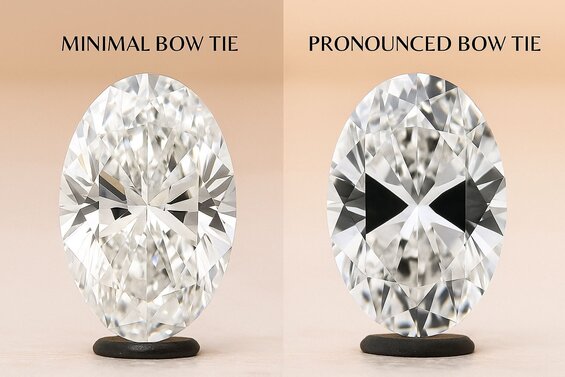
- Minimal Bow Tie: In this instance, the dark band is very faint and barely perceptible. It may only be visible from certain angles or under specific lighting conditions. Such diamonds typically exhibit excellent overall brilliance and sparkle.
- Moderate Bow Tie: A moderate bow tie is more apparent but remains well-controlled. It is visible under normal lighting but does not detract significantly from the diamond’s brightness or fire. The contrast it provides can actually enhance the diamond’s overall appearance.
- Severe Bow Tie: A severe bow tie is dark, wide, and highly noticeable, often extending significantly across the diamond’s table. This intensity can lead to a reduction in overall brilliance and can make the diamond appear duller and less lively. In extreme cases, a severe bow tie can be a significant aesthetic drawback.
The ultimate goal in evaluating a diamond’s bow tie is not necessarily its complete elimination, as this is often impossible and undesirable. Instead, the focus should be on achieving balance. A well-balanced diamond will have a pleasing contrast pattern that complements its brilliance and fire.
What Causes a Strong or Weak Bow Tie?

Several factors contribute to the strength or weakness of the bow-tie effect in oval diamonds, broadly categorized into structural (cut) factors and oval-specific factors.
Structural (Cut) Factors:
The precision and quality of a diamond’s cut are paramount in determining the appearance of the bow tie. This includes:
- Facet Alignment and Angles: The precise angles and placement of the diamond’s facets dictate how light enters, reflects, and exits the stone. Improperly aligned facets can lead to obstructions and increased light leakage, exacerbating the bow tie.
- Proportions: The depth, width, and crown angles of a diamond significantly influence light performance. Ovals with unfavorable proportions can create areas of darkness that manifest as a pronounced bow tie.
- Girdle Thickness: While less of a direct cause, an uneven or excessively thick girdle can sometimes contribute to light distortion and influence the perception of the bow tie.
Poor combinations of these structural elements can lead to undesirable outcomes, including:
- Excessive Light Leakage: Light escaping through the pavilion results in dullness.
- Uneven Light Distribution: Brightness and sparkle are not evenly spread across the diamond’s surface.
- Prominent Dark Areas: These can manifest as a strong bow tie or other shadow patterns.
Oval-Specific Factors:
The unique geometry of oval diamonds introduces specific considerations:
- Length-to-Width Ratio: The ideal length-to-width ratio for an oval diamond is a subject of ongoing discussion, typically ranging from 1.35 to 1.50. An excessively elongated oval (ratio above 1.50) can sometimes be more prone to a pronounced bow tie, while a very short and wide oval might exhibit a less defined or more diffused bow tie, but potentially with less overall brilliance.
- Facet Pattern: Oval diamonds can be cut with different facet patterns.
- Brilliant-style oval: These ovals are designed to maximize sparkle and brilliance, often mimicking the facet arrangement of a round brilliant diamond. While they can offer exceptional fire, the facet junctions can sometimes contribute to a more defined bow tie.
- Crushed ice oval: This cutting style features a multitude of smaller, irregular facets, creating a fragmented sparkle effect. While crushed ice ovals can sometimes exhibit a less noticeable bow tie, they may sacrifice some of the distinct fire and scintillation found in brilliant-style cuts. The overall impression can be more of a diffused shimmer than distinct flashes of light.
Advanced Evaluation: Tools That Actually Matter
In the pursuit of a well-cut oval diamond, visual inspection alone is often insufficient. Advanced evaluation tools provide objective data that goes beyond surface-level observation.
- ASET (Angular Spectrum Evaluation Tool): An ASET is a specialized device that uses colored lights to reveal how a diamond returns light from different angles.
- A strong bow tie accompanied by significant amounts of white light reflected within the ASET (indicating light leakage) signifies a problem.
- Conversely, a bow tie pattern that incorporates controlled areas of blue contrast (indicating good light return from those angles) is considered normal and often desirable, suggesting balanced light performance.
- Ideal Scope: Similar to ASET, an Ideal Scope uses red and white light to highlight contrast and light return. It is particularly useful for identifying "dead zones" (areas of poor light return) versus "contrast zones" (areas of balanced light and dark that contribute to sparkle). A diamond with a strong bow tie but also significant red or dark areas in the Ideal Scope likely has poor light performance.
- 360° Videos: For online diamond purchases, high-quality 360° videos are indispensable. These videos allow potential buyers to observe the diamond’s sparkle and movement from all angles, providing a dynamic view of the bow tie and its interaction with light. This is critical for assessing how the bow tie behaves in motion, a factor often missed in static images.
How to Evaluate an Oval Diamond Bow Tie (Real-World Method)
Evaluating an oval diamond’s bow tie effectively involves a systematic approach:
- Initial Visual Inspection: Observe the diamond under various lighting conditions (natural light, overhead lights, direct light). Note the presence and intensity of any dark bands.
- Observe Movement: Gently tilt and rotate the diamond. Pay close attention to how the bow tie changes. Does it disappear, shrink, or become more prominent? Does it distract from the overall sparkle?
- Look for Balance: Assess the distribution of light and dark areas across the diamond. Are there any large, washed-out patches (light leakage)? A well-balanced diamond will have a pleasing contrast pattern that enhances its brilliance.
- Examine Video Footage: If purchasing online, scrutinize the 360° video. Look for consistent sparkle and vibrant flashes of light, even with the presence of a bow tie.
- Consider Expert Opinions: If possible, consult with a reputable gemologist or diamond dealer who can provide an objective assessment.
Common Misconceptions and Their Rebuttals
Several prevalent myths surround the bow-tie effect in oval diamonds:
- "Bow tie is always bad": This is false. Some degree of contrast, which creates the bow tie, is essential for a diamond’s sparkle and brilliance. A complete absence of contrast would render a diamond dull and lifeless. The issue arises when the bow tie is excessively strong and detracts from the stone’s overall beauty.
- "You can find an oval with no bow tie": This is also false. Due to their elongated shape and how light refracts within them, all oval diamonds, and indeed most elongated fancy shapes, will exhibit some degree of a bow-tie effect. The goal is to minimize its prominence and ensure it is balanced.
- "All ovals have the same bow tie": This is untrue. The cut quality, facet pattern, and length-to-width ratio of an oval diamond have a significant impact on the appearance and intensity of its bow tie. Two oval diamonds of the same carat weight can have vastly different bow-tie characteristics.
Natural vs. Lab-Grown Oval Diamonds
It is important to note that the principles governing the bow-tie effect apply equally to both natural and lab-grown oval diamonds. The optical properties and the way light interacts with the crystal structure are identical, regardless of origin. Therefore, careful selection based on cut quality and optical performance is critical for both types of diamonds. Consumers should not assume that one origin inherently performs better than the other concerning the bow-tie effect.
How to Avoid a Strong Bow Tie
For those who are particularly sensitive to the appearance of a strong bow tie, certain strategies can help in selecting a more aesthetically pleasing oval diamond:
What to Look For:
- Well-Balanced Sparkle: Seek diamonds that exhibit lively scintillation and a good distribution of bright flashes of light.
- Controlled Contrast: The bow tie should appear as a defined but not overpowering dark band. It should complement, rather than dominate, the diamond’s brilliance.
- Excellent Cut Grade: Prioritize diamonds with an excellent or ideal cut grade, as this indicates superior facet alignment and proportions.
- Moderate Length-to-Width Ratio: Oval diamonds with length-to-width ratios between 1.35 and 1.50 often offer a good balance between brilliance and a pleasing shape, with a more manageable bow tie.
What to Avoid:
- Large, Opaque Dark Areas: If the dark band appears very wide, deep, or washes out large portions of the diamond, it is likely a sign of a severe bow tie and poor light performance.
- Excessive Light Leakage: Look for diamonds that appear bright and vibrant from all angles, without significant dull or grey patches.
- Ovals with Very High Length-to-Width Ratios: While not always the case, extremely elongated ovals can sometimes be more prone to pronounced bow ties.
- "Crushed Ice" Cuts with Poor Proportions: While some crushed ice ovals can minimize bow ties, poorly cut ones can also exhibit undesirable dark areas.
Where to Buy Well-Cut Oval Diamonds
For consumers prioritizing controlled light performance and a well-executed bow tie, the choice of vendor is paramount.
- Recommended Retailers: Reputable jewelers who specialize in high-quality diamonds and offer detailed diamond reports and high-resolution imagery are ideal. Many online retailers provide detailed specifications, grading reports, and 360° videos, enabling informed online purchases.
The key differentiator often lies in curation versus volume. Retailers who meticulously curate their inventory and provide in-depth educational resources are more likely to offer diamonds that have undergone rigorous selection for optical excellence. Such curated diamonds are more likely to exhibit controlled light performance, including a well-balanced bow tie.
Expert Insight: What Really Matters
At an advanced level of evaluation, the assessment of the bow tie transcends simple visual observation and delves into the nuanced interplay of light and facet geometry.
- Balance of Light and Dark: The ideal is a harmonious blend. A technically well-cut oval diamond might still show a bow tie, but it will:
- Be well-defined but not overwhelming.
- Be balanced by bright, scintillating areas.
- Not appear as a "hole" in the diamond.
- Be minimized through precise facet angling and proportioning.
The true measure of a well-cut oval lies in its ability to maximize brilliance, fire, and scintillation while managing the inherent optical characteristics of its shape.
FAQs
- Is a bow tie in an oval diamond bad? No, it is a natural characteristic. Only severe bow ties that significantly reduce brightness and overall sparkle are considered problematic.
- Can you eliminate the bow tie completely? No, it is not possible to eliminate the bow tie entirely in an oval diamond. The objective is to minimize its prominence and ensure it is balanced with the diamond’s other optical qualities.
- Do all oval diamonds have a bow tie? Yes, to varying degrees. The shape’s geometry dictates that some form of shadow pattern, akin to a bow tie, will be present.
- What’s the best way to check it online? Utilize high-quality 360° videos to observe the diamond’s movement and sparkle from all angles. Supplement this with detailed grading reports and images that highlight the diamond’s optical performance.
Final Takeaway
The bow-tie effect in oval diamonds is not an attribute to be entirely avoided but rather a phenomenon to be understood and evaluated correctly. The ultimate goal is not the absence of a bow tie, but its balanced integration into the diamond’s overall optical performance. By focusing on:
- Overall Brilliance and Sparkle: Ensuring the diamond is bright and lively.
- Balanced Contrast: Recognizing that some dark areas (the bow tie) are necessary for sparkle.
- Absence of Light Leakage: Verifying that light is not escaping the diamond, causing dullness.
- Dynamic Performance: Observing how the diamond performs in motion through high-quality videos.
Consumers can confidently select an oval diamond that delivers exceptional brightness, fire, and life, transcending the mere pursuit of a "clean center" and leading to a truly captivating gemstone.