


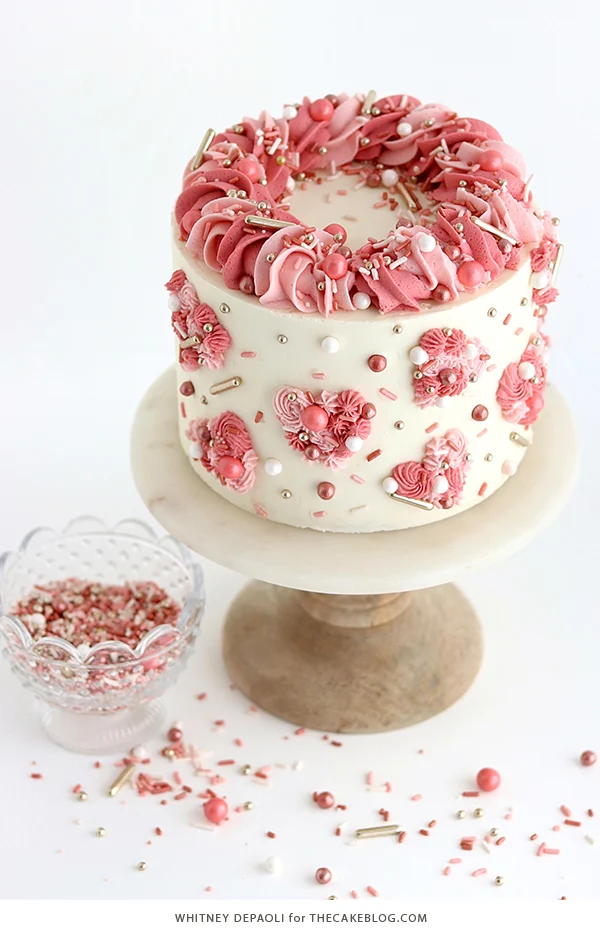
The culinary arts and home baking sectors have witnessed a significant shift toward textured, multidimensional designs, as evidenced by the recent release of a comprehensive instructional guide by Whitney DePaoli for The Cake Blog. This tutorial, which details the creation of the Piped Hearts Valentine’s Cake, represents a broader movement within the confectionery industry to modernize traditional holiday motifs through sophisticated piping techniques and specific color theory. By utilizing a method of imprinting shapes and filling them with varied buttercream textures, the tutorial provides a bridge between professional-grade cake artistry and the capabilities of the growing "cottage food" hobbyist community.
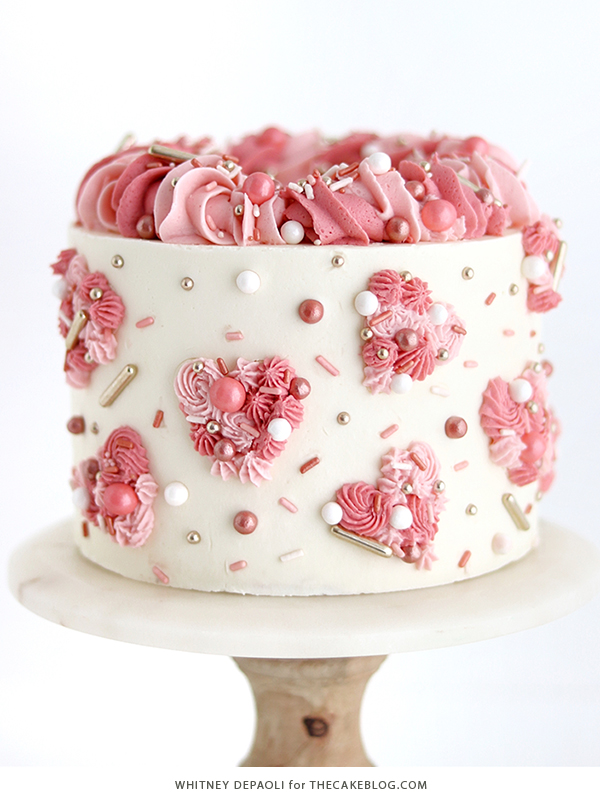
The design is rooted in a modern interpretation of classic Valentine’s Day elements, moving away from flat, two-dimensional icing toward a high-texture aesthetic. This approach, which has gained substantial traction on visual social media platforms, emphasizes the use of varied piping tips to create a "tapestry" effect within defined geometric boundaries. The technique not only serves an aesthetic purpose but also addresses a common challenge for home bakers: achieving symmetry and professional-level precision without the need for advanced freehand drawing skills.
Technical Methodology and Procedural Chronology
The construction of the Piped Hearts Valentine’s Cake follows a rigorous technical sequence designed to ensure structural integrity and visual depth. The process begins with the preparation of the medium—in this case, American buttercream. While the tutorial notes that any tintable and pipeable frosting is sufficient, American buttercream is specifically highlighted for its crusting properties and stability, which are essential for maintaining the sharp definition of the piped stars and rosettes.
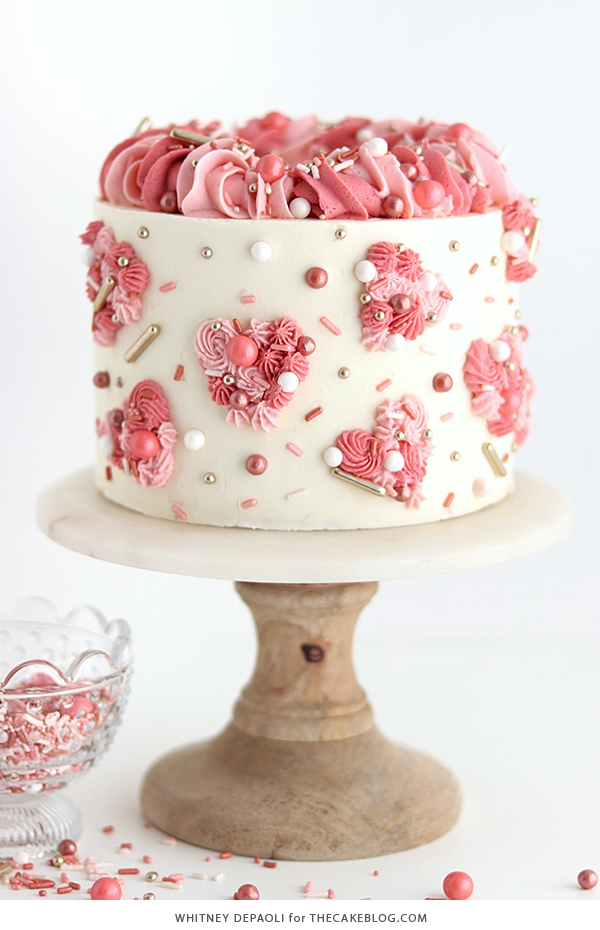
The chronological development of the cake’s exterior follows a four-stage hierarchy:
-
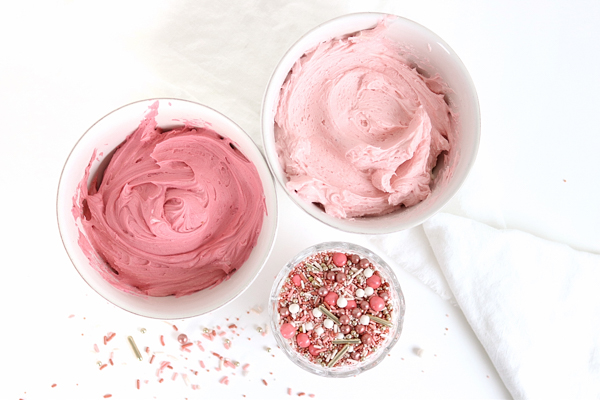
Color Theory and Medium Preparation: The palette selection for this specific iteration focuses on "Rose Gold" and "Dusty Rose," utilizing Americolor food gel technology. The buttercream is divided into two distinct shades to provide tonal contrast. The equipment loadout is specific, requiring four piping bags fitted with a variety of star tips: the 1M (large open star), the 199 (small open star), and the 21 (medium open star). This variety in aperture size is critical for creating the "full texture" look that defines the modern piping style.
-
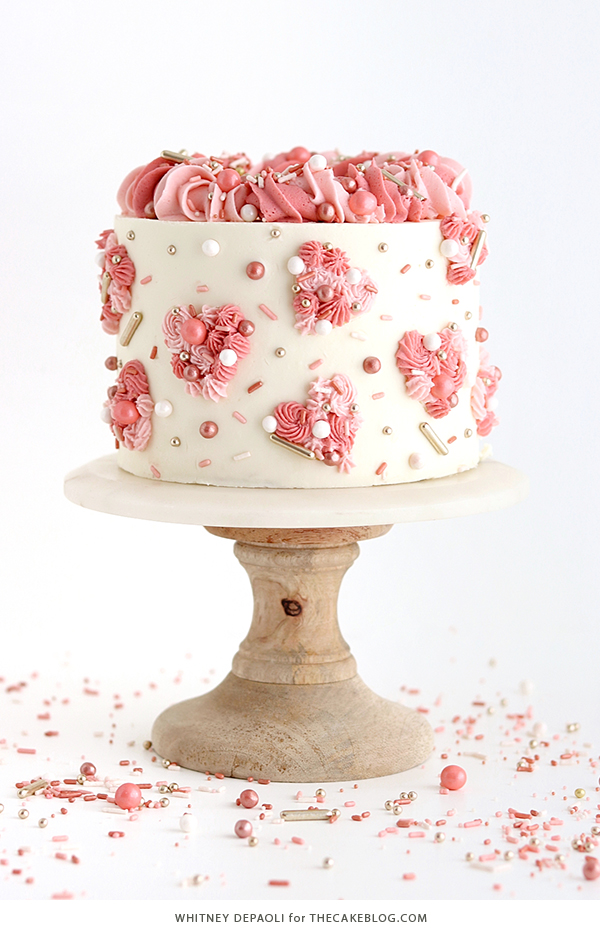
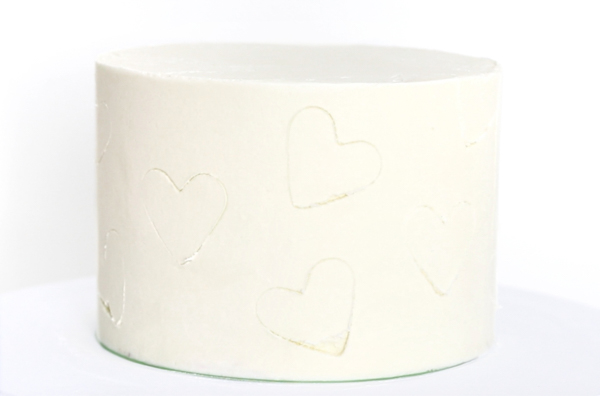
Structural Imprinting: Before any decorative elements are applied, the cake—which must be properly frosted and chilled to a specific temperature to ensure a firm surface—is imprinted using a heart-shaped cookie cutter. This step serves as the blueprint for the design. Industry standards suggest a spacing of at least two inches between imprints to prevent visual crowding and to allow the "negative space" of the base frosting to highlight the intricate heart designs.
-
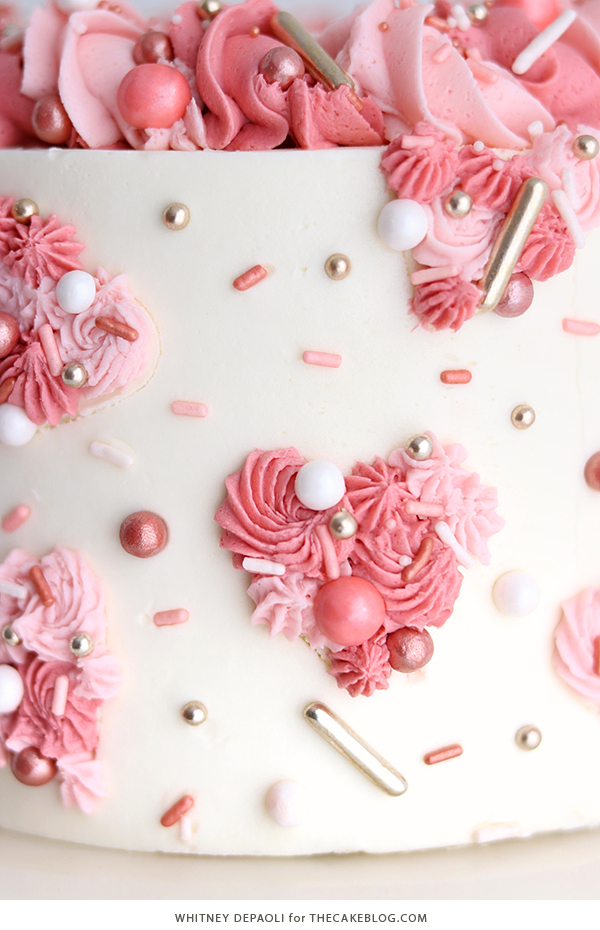
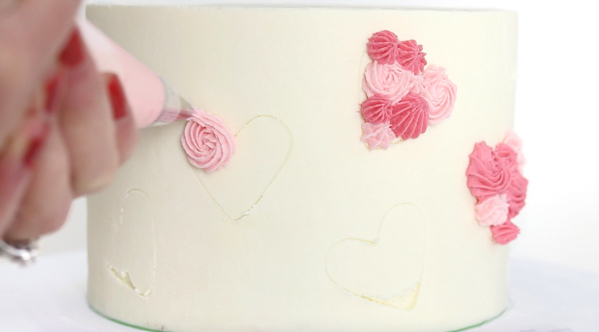
The Multi-Tip Piping Technique: The core of the design involves filling the imprinted boundaries with a combination of "tiny rosettes" and "stars." By alternating between the 1M, 199, and 21 tips, the baker creates a non-uniform surface that catches light differently across the heart’s surface. This technique is a direct departure from traditional smooth-filling methods and reflects a trend toward "maximalist" textures in holiday baking.
-
Surface Embellishment and Border Integration: The final stage involves the application of metallic and tonal sprinkles to fill gaps and add a tertiary layer of texture. The procedure concludes with a "rosette rope border," a classic technique applied at a 45-degree angle around the top perimeter of the cake. This border serves to frame the vertical designs and provides a cohesive finish to the overall structure.
Market Context and the "Instagram Effect"
The release of this tutorial coincides with a period of record-breaking consumer spending in the Valentine’s Day confectionery market. According to data from the National Retail Federation (NRF), consumers in the United States alone are projected to spend billions on Valentine’s Day gifts, with food and confectionery consistently ranking as top categories. Within this market, there is an increasing demand for "bespoke" or "artisan" aesthetics, even among home-baked goods.
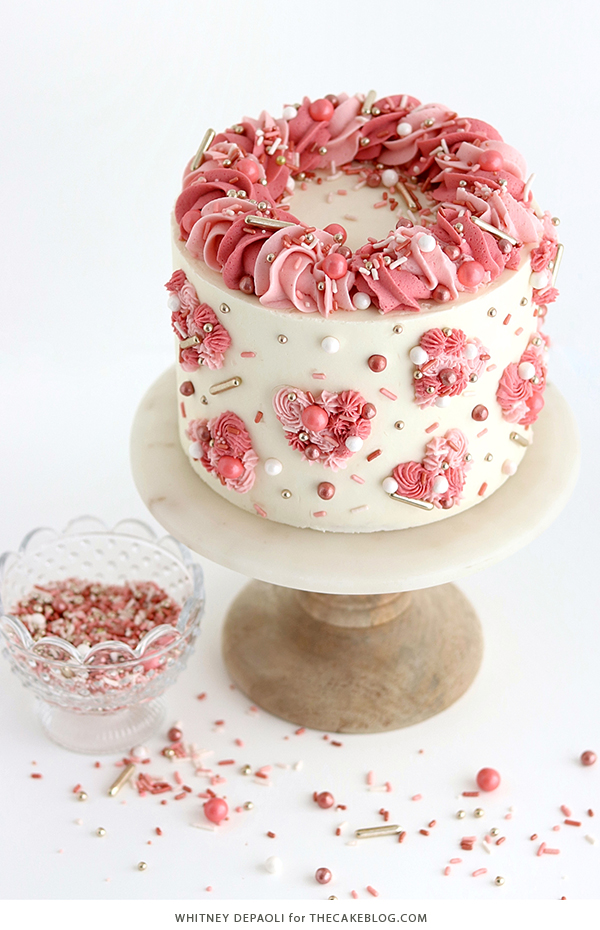
The Piped Hearts Valentine’s Cake is explicitly noted as being inspired by the work of digital influencer @frostedfujicakes. This highlights the "Instagram Effect" on the baking industry—a phenomenon where professional techniques are distilled into viral visual formats, which are then adapted and taught by contributors like DePaoli. This cycle of inspiration and instruction has democratized high-end cake design, allowing hobbyists to replicate looks that were previously exclusive to high-end patisseries.
Market analysis suggests that the "modern spin" mentioned in the tutorial—specifically the shift toward rose gold and textured piping—aligns with broader interior design and fashion trends. The move away from "primary red" toward more muted, sophisticated pinks and metallics reflects a maturing consumer palette that seeks elegance over kitsch.
Regulatory and Safety Considerations in Confectionery Design
A critical component of the tutorial involves the use of metallic dragées and long gold rods. From a journalistic and consumer safety perspective, the inclusion of these elements necessitates a discussion on food safety regulations. The tutorial includes a mandatory disclosure regarding gold and silver dragées, noting that while they are considered safe for decorative purposes, they have not been approved for consumption by the U.S. Food and Drug Administration (FDA).
This distinction is a point of ongoing discussion within the baking industry. In many jurisdictions, these items are sold as "for decoration only" to bypass the stringent requirements placed on edible food additives. The tutorial’s instruction for hosts to advise guests not to consume the long gold rods is a standard risk-mitigation strategy used by professional bakers to ensure guest safety while maintaining the high-luster aesthetic required for modern "luxury" cakes.

Supporting Data: The Rise of the "Cottage Food" Economy
The popularity of tutorials such as the Piped Hearts Valentine’s Cake is inextricably linked to the rise of the "Cottage Food" industry. Over the last decade, nearly every U.S. state has expanded or implemented laws that allow individuals to sell non-perishable baked goods from their home kitchens. This legislative shift has created a massive market for technical instruction.
- Growth Statistics: The home-based food business sector has seen an estimated 15-20% annual growth in search volume for "advanced cake decorating tutorials" since 2020.
- Engagement Metrics: Visual-heavy tutorials like those found on The Cake Blog see significantly higher engagement rates (up to 40% more shares) compared to text-only recipes, highlighting the necessity of step-by-step photography in modern culinary education.
- Consumer Preference: A survey of home bakers indicates that 72% prefer designs that look "professionally made" but use "standard household tools" like cookie cutters as guides, rather than specialized professional equipment.
Broader Impact and Industry Implications
The dissemination of the Piped Hearts technique has broader implications for the seasonal baking industry. By providing a template that is "easy to whip up" yet "totally eye-catching," DePaoli and The Cake Blog are contributing to a shift in how seasonal content is consumed. The focus is no longer just on the recipe (the "what"), but on the technical execution (the "how").
Furthermore, the versatility of the technique—allowing for any color palette or shape—encourages "creative modularity." This means that while the tutorial is branded for Valentine’s Day, the underlying technical skills (imprinting, multi-tip filling, and rope borders) are transferable to other holidays and events, such as weddings, baby showers, or corporate functions. This transferability of skill is a hallmark of high-quality vocational instruction in the culinary arts.
As the industry moves toward the mid-2020s, the intersection of digital influence, accessible technology (like high-quality food gels and varied piping tips), and consumer demand for "Instagrammable" food will likely continue to drive the evolution of cake design. The Piped Hearts Valentine’s Cake stands as a representative example of this intersection: a blend of traditional sentiment and modern technical flair that appeals to both the aesthetic desires and the practical limitations of the contemporary baker.
In conclusion, the tutorial provided by Whitney DePaoli is more than a simple holiday guide; it is a reflection of a sophisticated, data-driven, and socially-influenced confectionery landscape. It emphasizes the importance of precision, the influence of digital subcultures, and the ongoing necessity for consumer education regarding food safety and aesthetic trends. As Valentine’s Day celebrations continue to evolve, the demand for such "modern classics" is expected to remain a cornerstone of the baking industry’s seasonal output.