

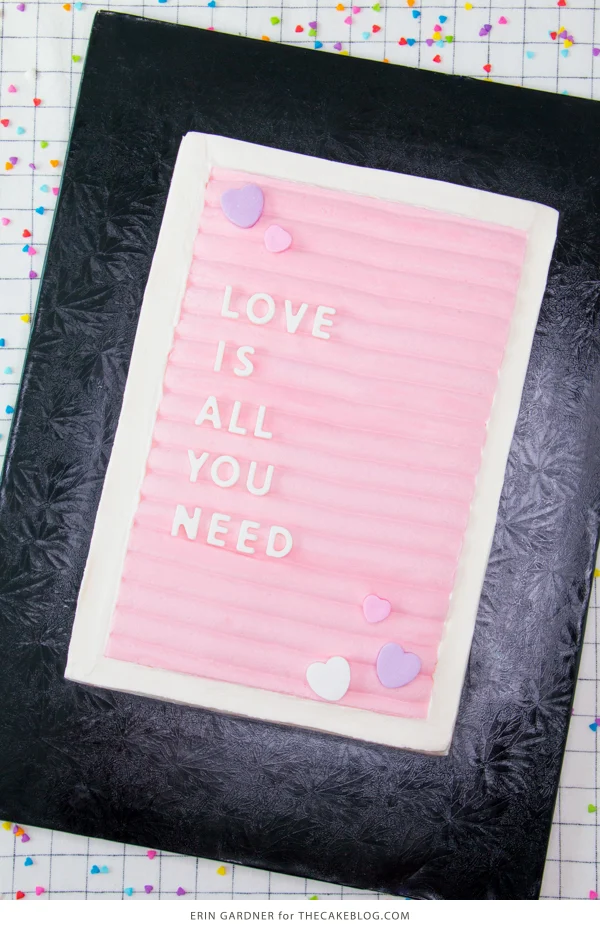
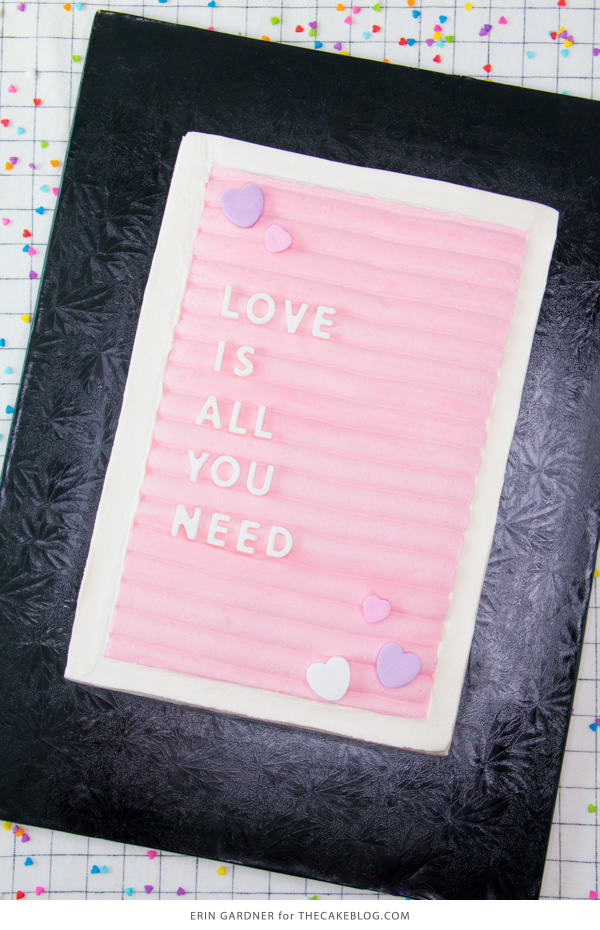
The intersection of interior design trends and culinary aesthetics has reached a new milestone with the introduction of the Message Board Sheet Cake tutorial, a creative conceptualization by noted cake designer and contributor Erin Gardner. This design translates the ubiquitous felt letter board—a staple of modern home decor and social media announcement culture—into an edible format, offering bakers a versatile medium for personalization. The tutorial emphasizes accessibility, providing multiple technical pathways to achieve a professional finish regardless of a baker’s inventory of specialized equipment. By utilizing standard buttercream techniques and chocolate molding, the design bridges the gap between high-end custom confectionery and home-based baking projects.
Evolution of the Sheet Cake in Modern Confectionery
The sheet cake has long served as the pragmatic cornerstone of American celebrations, valued primarily for its ease of transport and high serving capacity. Historically associated with office parties and large-scale domestic gatherings, the format is undergoing a stylistic renaissance. Modern iterations, such as Gardner’s message board concept, prioritize "Instagrammable" aesthetics without sacrificing the inherent simplicity of the rectangular form.
According to market research data, the global cake decorating market is projected to expand at a compound annual growth rate (CAGR) of approximately 5.4% through 2030. This growth is driven largely by the "maker movement" and the proliferation of digital tutorials that empower hobbyists to attempt complex designs. The message board cake aligns with these trends by focusing on "minimalist-maximalism"—a design philosophy where the structural form is simple, but the communicative potential is maximized through typography and color choice.
Technical Methodology and Chronology of Construction
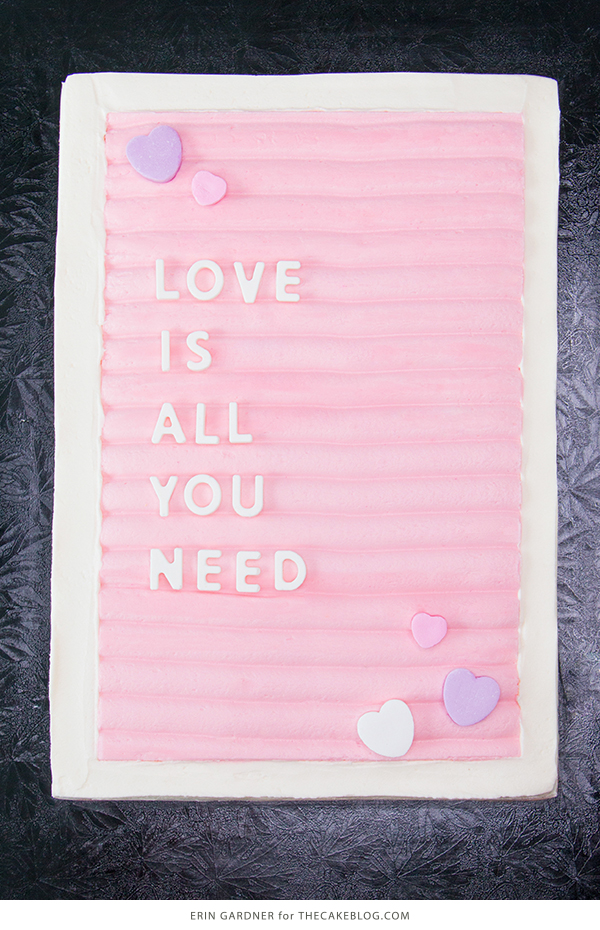
The construction of the Message Board Sheet Cake follows a rigorous technical sequence designed to ensure structural integrity and visual clarity. The process is divided into three primary phases: the creation of the textured "board" surface, the fabrication of the frame, and the production of the typographic elements.
Phase I: Surface Texturing and Temperature Management
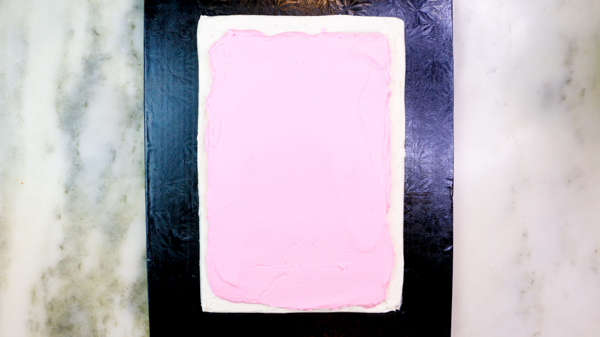
The foundational element of the design is the mimicry of the grooved texture found on traditional felt letter boards. The process begins with the application of a thick, level layer of pigmented buttercream—typically pink, though adaptable to any palette—across the surface of a pre-baked sheet cake. Gardner notes that achieving a level surface is critical; any irregularities in the initial icing will be magnified once the texturing tool is applied.
Bakers are presented with two primary methods for creating the grooves:
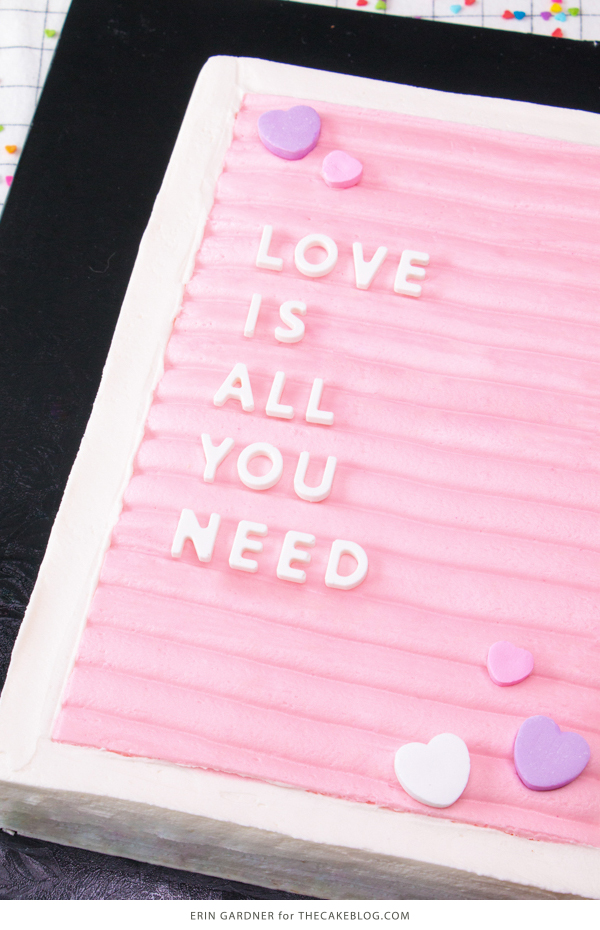
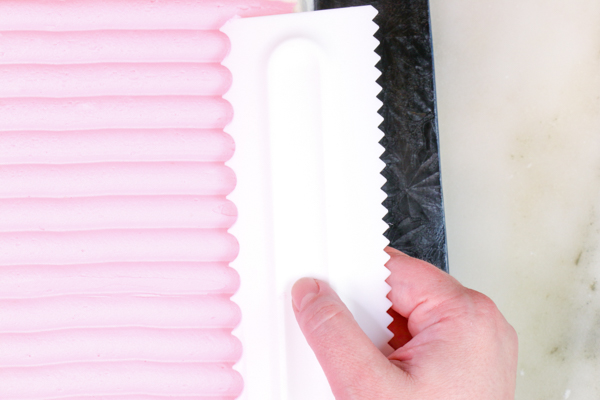
- The Scalloped Comb Method: This is the preferred professional approach. A scalloped cake comb is dragged across the chilled buttercream. By overlapping the comb by one or two ridges during each pass, the baker creates a seamless, uniform texture across the entire length of the cake.
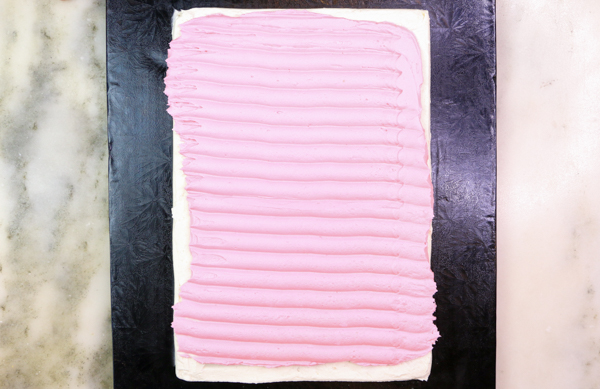
- The Piping Method: For those without specialized combs, a large round piping tip can be used to lay down parallel lines of frosting. While this method is more accessible, technical analysis suggests it requires approximately 100% more buttercream by volume and demands a higher degree of manual dexterity to maintain straight lines.
Once textured, the cake must be chilled until the buttercream reaches a firm state. This thermal management is essential for the subsequent "bordering" step, as it allows for clean cuts without smearing the established ridges.
Phase II: Structural Framing and Border Integration
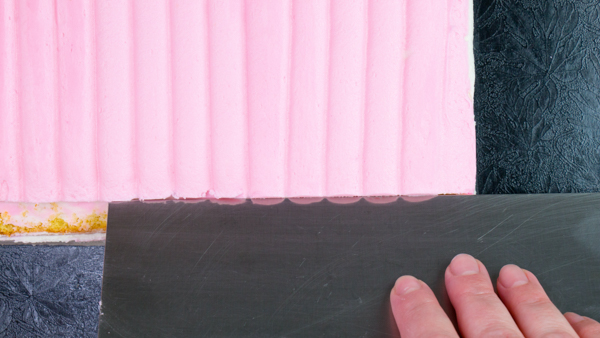
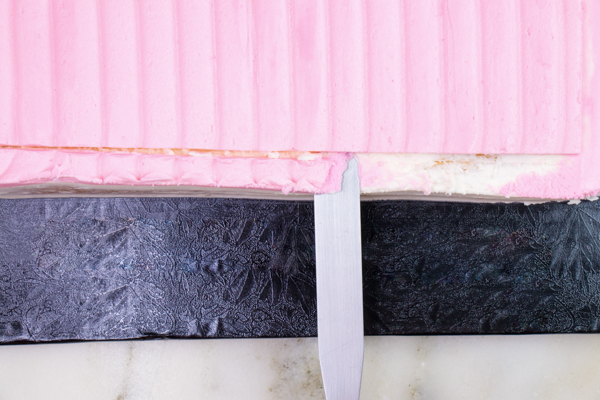
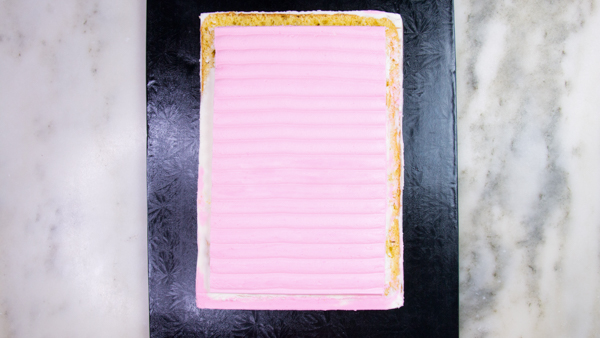
Following the stabilization of the textured surface, the baker must create a "frame" for the board. This is achieved by using a heated bench scraper to excise a one-inch border from the perimeter of the frosted cake. The use of heat—typically by dipping the metal tool in warm water—allows for a surgical precision that mimics the wooden frame of a physical letter board.
The void created by this excision is then filled using a basketweave piping tip. By positioning the smooth side of the tip upward, the baker creates a flat, raised border that encapsulates the textured "felt" center. A small offset spatula is then used to refine the edges, ensuring a flush transition between the frame and the board.
Phase III: Typographic Production and Assembly
The final phase involves the creation of the message itself. Gardner advocates for the use of white chocolate or candy melts to ensure the letters are durable enough to be handled. The use of silicone letter molds is the standard recommendation, requiring the baker to melt the medium, fill the molds, and vibrate the tray to eliminate air pockets (voids) that could compromise the structural integrity of the letters.
In the absence of molds, the tutorial suggests a "trace-and-pipe" technique. This involves placing parchment paper over a printed template of the desired message and piping the melted chocolate directly onto the paper. Once cooled and hardened, these letters can be lifted and placed onto the cake.
Analytical Perspective on Customization and Versatility
The Message Board Sheet Cake represents a shift in how celebratory food functions as a communication tool. Unlike traditional cakes where the message is often an afterthought written in cursive script, this design makes the message the central architectural feature.
From a logistical standpoint, the design offers significant advantages for various event types:
- Gender Reveals: The "felt" portion can be tinted in neutral or specific colors, with the message providing the reveal.
- Corporate Branding: The clean lines and professional finish allow for the inclusion of corporate slogans or hashtags.
- Seasonal Adaptability: By altering the color of the buttercream and the shape of the accent candies (e.g., hearts for Valentine’s Day, pumpkins for autumn), the cake remains relevant year-round.
Industry analysts suggest that the "customization economy" is a major factor in modern consumer behavior. A study by Deloitte indicated that 1 in 4 consumers are willing to pay more for a personalized product. In the baking industry, this translates to a demand for designs that can be easily tailored to specific sentiments without requiring a complete overhaul of the cake’s structure.
Market Implications and Professional Responses
The reception of Gardner’s tutorial within the professional baking community highlights a growing appreciation for "attainable luxury." Professional decorators have noted that the message board design allows for a high-concept look that can be executed in a fraction of the time required for traditional tiered cakes or complex fondant sculpting.
"The brilliance of the message board cake lies in its modularity," says one industry observer. "It utilizes basic tools—the comb, the scraper, and the mold—to create something that looks highly technical but is actually based on repeatable, reliable steps."
Furthermore, the design addresses a common pain point in cake decorating: the difficulty of piping consistent, attractive lettering by hand. By outsourcing the typography to chocolate molds or templates, the tutorial removes one of the most significant barriers to entry for novice decorators, thereby expanding the market for specialized decorating tools like letter molds and scalloped combs.
Broader Cultural Context: The Digital Aesthetic
The rise of the "Letter Board Cake" cannot be divorced from the broader digital landscape. On platforms like Pinterest and Instagram, the felt letter board became a visual shorthand for domestic milestones, from pregnancy announcements to first-day-of-school photos. By translating this digital-era icon into a physical, edible object, Gardner is tapping into a pre-existing visual vocabulary that resonates with a wide demographic.
This phenomenon is part of a larger trend known as "food as media," where the aesthetic value of the food is considered as important as its flavor profile. The Message Board Sheet Cake is designed to be photographed and shared, serving as a backdrop for digital storytelling before it is ever consumed.
Conclusion
The Message Board Sheet Cake tutorial by Erin Gardner serves as a comprehensive guide for modern bakers looking to merge contemporary decor trends with traditional confectionery skills. Through its emphasis on temperature control, tool versatility, and typographic precision, the design offers a sophisticated yet accessible approach to celebratory baking. As the industry continues to evolve toward personalized and social-media-friendly designs, concepts like the message board cake are likely to remain at the forefront of the DIY baking movement, providing a canvas for infinite expression in buttercream and chocolate.