


The journey from "yes" to "I do" is traditionally envisioned as one of life’s most joyous passages, yet it is often accompanied by the intricate complexities of planning. From selecting the perfect venue to managing guest lists and curating registries, the sheer volume of details can be overwhelming. In response to this universal challenge, the digital age has ushered in a new era of wedding planning, with online platforms emerging as indispensable tools. Among the most prominent and widely adopted are Zola and The Knot, each vying to be the ultimate companion for engaged couples. This analysis delves into their offerings, operational philosophies, and user experiences to provide a detailed comparison for those embarking on their marital voyage.
The Evolution of Wedding Planning: From Binders to Bytes
For decades, wedding planning was a largely analog affair, characterized by thick binders filled with magazine clippings, endless phone calls to vendors, and physical visits to countless showrooms. The late 20th century began to see the nascent stages of digital integration, but it was the turn of the millennium that truly catalyzed the shift. The internet offered unprecedented access to information, vendor directories, and inspirational content, laying the groundwork for specialized wedding planning platforms.
The Knot, founded in 1996 by married couple Carley Roney and David Liu, emerged as a pioneering force in this digital transformation. Recognizing the inherent stresses of wedding preparation, their vision was to create a comprehensive online ecosystem that would centralize resources and foster a supportive community. Their early entry into the market allowed them to establish a significant footprint, becoming synonymous with online wedding planning for a generation of couples.

More than a decade later, in 2013, Zola entered the scene, spearheaded by friends and co-workers Shan-Lyn Ma and Nobu Nakaguchi. Their genesis was rooted in identifying perceived gaps in the existing digital wedding landscape, particularly concerning e-commerce and a more streamlined, modern user experience. While The Knot had built a robust platform over time, Zola aimed to disrupt with a fresh, digitally native approach, emphasizing seamless integration of various planning facets, particularly the registry. This chronological distinction is critical, as it often informs each platform’s design philosophy and feature set, with The Knot reflecting a broader, more established resource base, and Zola showcasing a more contemporary, integrated e-commerce model.
The global wedding industry, valued at hundreds of billions of dollars annually, continues to witness a profound shift towards digital tools. A 2023 report indicated that over 85% of couples now use online resources for at least a portion of their planning, with wedding websites and online registries becoming standard rather than exceptions. This widespread adoption underscores the critical role platforms like Zola and The Knot play in democratizing access to planning resources and streamlining what was once a notoriously fragmented process.
First Impressions and User Experience: Navigating the Digital Aisle
Both Zola and The Knot prioritize user-friendly interfaces, offering clean designs and intuitive navigation crucial for stressed-out couples. However, their structural approaches subtly reflect their core philosophies.
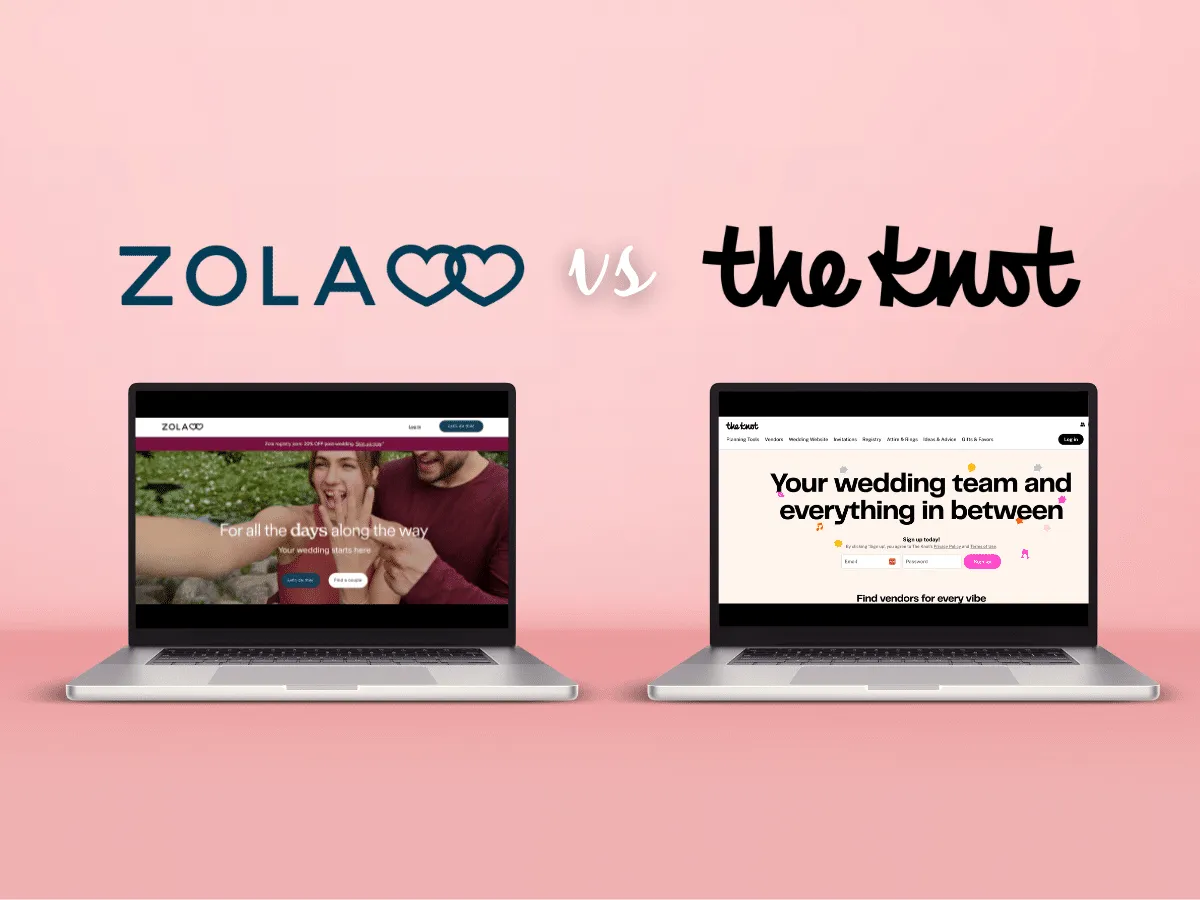
The Knot presents a highly comprehensive navigation menu, typically featuring direct links to an extensive array of services such as "Venues," "Vendors," "Dresses," "Invitations," "Registry," "Website," "Guests," "Photos," "Ideas & Advice," and "Community." This expansive top-level navigation speaks to its long-standing position as an all-encompassing resource. Its homepage often highlights a diverse vendor selection, key planning milestones, and prominently features its free wedding website builder, often concluding with visually engaging wedding compilation videos and user testimonials presented in a dynamic carousel. Deeper exploration reveals dedicated sections for "Planning & Inspiration," "The Company," and "Sister Sites," indicating a vast ecosystem of related content and services.

In contrast, Zola adopts a more minimalist navigation, typically structured around three primary categories: "Plan your wedding," "Expert advice," and "Find a couple." The "Plan your wedding" dropdown consolidates essential tools like "Checklist," "Guest List," "Registry," "Website," "Invites & Paper," "Vendors," and "Attire," presenting a more curated, task-oriented approach. Similarly, "Expert advice" branches into a well-organized hierarchy of topics covering everything from "Budget & Finance" to "Wedding Attire" and "Decor & Flowers." Zola’s homepage immediately emphasizes its core offerings: essential planning tools, the free wedding website, guest list management, venues and vendors, invitations, and registry services. It strategically positions its unique selling points (USPs), such as expert personal advisors under "Team-Z," to differentiate itself. The simpler navigation suggests a focus on streamlined efficiency, catering to a user base accustomed to modern e-commerce interfaces.
Comprehensive Planning Tools: Orchestrating the Big Day
Beyond initial impressions, the true value of these platforms lies in their robust suite of planning tools designed to manage every facet of the wedding. Both offer a significant array of functionalities, albeit with slight variations in depth and integration.
The Knot provides an impressive arsenal of tools, including a detailed "Wedding Checklist" to keep tasks organized, a "Budgeter" for financial tracking, a "Guest List Manager" for contact organization, a "Wedding Website" builder, a "Registry" service, and a "Vendor Manager" for coordinating with service providers. A standout feature is its "Style Quiz," which helps couples define their wedding aesthetic and offers personalized inspiration, aligning with The Knot’s emphasis on personalization and comprehensive ideation. Furthermore, The Knot’s guest list manager often includes more integrated features for managing RSVPs and even thank-you notes, reflecting a more holistic approach to guest communication.
Zola mirrors many of these core offerings, featuring its own "Checklist," "Budgeter," "Guest List Manager," "Wedding Website," "Registry," and "Vendor Manager." While its guest list manager is highly functional for organizing contacts and tracking RSVPs, The Knot’s additional functionality for thank-you notes provides a slight edge in terms of end-to-end guest management. Zola’s approach, however, often feels more tightly integrated with its e-commerce capabilities, particularly concerning its registry and invitations, presenting a cohesive user journey from planning to procurement.

Wedding Registries: Gifting Made Easy (or Not)
The wedding registry is a cornerstone of guest interaction, and how effectively a platform manages it can significantly impact both the couple and their guests. Both Zola and The Knot offer registry services, but their strengths and weaknesses differ.
The Knot’s registry traditionally excels for couples who prefer items from large national retailers and big-box stores. It allows for the integration of various external registries, offering couples maximum flexibility to curate gifts from their preferred outlets. A significant benefit is the potential for a 20% post-wedding discount on eligible leftover items, providing an incentive for couples to complete their wish list. The platform also facilitates cash gifts, a popular modern alternative to physical items.
Zola’s registry is praised for its gift-tracking feature, which provides couples with real-time updates on purchases, simplifying the thank-you note process. Similar to The Knot, it offers a 20% post-wedding discount on most items. A key differentiator is Zola’s curated selection, which includes both major retailers and smaller, local businesses, appealing to couples seeking unique or artisan gifts. However, Zola has faced criticism regarding markups on some registry items, although it does offer price matching under strict terms to mitigate this. Reports of occasional issues with registry item purchases have also surfaced, suggesting potential complexities in their e-commerce fulfillment.
The trend of cash registries and honeymoon funds has grown substantially, with nearly 40% of couples now including cash options. Both platforms accommodate this, but their fee structures for credit card transactions differ.

Digital Invitations and Wedding Websites: Your Online Story
The modern wedding often begins with a digital presence, and both platforms offer free wedding website builders and comprehensive invitation suites.
The Knot provides an extensive library of over 380 pre-designed website templates, easily sortable by season, color, and style (e.g., floral, vintage, classic). These websites are fully functional, allowing guests to RSVP, view registries, and access cash funds. For couples desiring a more personalized touch, The Knot offers the option to purchase a custom domain for an additional $20, elevating the site’s professionalism and uniqueness. For physical invitations, The Knot boasts over 670 quality Signature paper templates, with options for foil, different design styles, and multi-color themes. It allows couples to order three free samples before committing and offers bulk discounts, with invitations costing around $2 per invite. A valuable perk is a free re-print if wedding plans change.
Zola also offers a robust selection of over 250 customizable website templates and themes. Its customization options are often highlighted, allowing couples to truly tailor their digital presence. Like The Knot, Zola’s websites support RSVPs, registry integration, and cash honeymoon funds, with the option for a custom domain at an extra cost. Zola’s invitation suite stands out for featuring designs by "Zola artists" and a commitment to environmental responsibility, planting a tree for every paper order. Couples can request five free samples, a higher number than The Knot, catering to those who require more options before deciding. While Zola’s invitations are generally more affordable, often around $1 per invite, they typically do not offer bulk discounts, meaning the per-invite price remains consistent regardless of quantity.
Vendor and Venue Sourcing: Connecting Couples with Professionals

Finding the right venues and vendors is arguably the most time-consuming aspect of wedding planning. Both platforms offer extensive directories, but their curation philosophies differ.
The Knot provides a vast searchable directory of venues and vendors, allowing filtering by category (e.g., photographers, florists, caterers) and location (specific city, state, or popular regions). Search results prominently display photos, essential details like guest capacity and price estimates, and any accolades, such as "Best of Weddings" awards. Each listing provides detailed information including contact details, reviews, portfolios, and pricing guides, with a direct "request quote" option. The Knot’s business model largely relies on paid listings from vendors, which contributes to the sheer volume of options available.
Zola adopts a more curated approach, emphasizing that vendors do not pay for listings. Instead, Zola’s staff meticulously vets businesses to ensure quality and relevance, aiming to provide couples with a more refined selection. A unique feature is a quiz that helps couples narrow down venues and vendors based on their budget, location, and style preferences. Zola also allows searching by location and vendor type, offering subpages for top cities. Its search results present similar brief details and photos, with the option to click for more information or request a quote immediately. This curated model, while potentially offering fewer total listings than The Knot, aims to deliver higher-quality, pre-screened options.
Mobile Accessibility and Customer Support: Planning On-the-Go and Getting Help
In today’s mobile-first world, app accessibility is paramount for on-the-go planning. Customer support is equally crucial for navigating inevitable challenges.

The Knot offers "The Knot Wedding Planner" app available on both Android and iOS platforms. At present, its services are primarily focused on the American market, though efforts to expand international solutions are reportedly underway. This broad platform accessibility ensures that a wide range of users can manage their planning from their smartphones.
Zola’s mobile app accessibility has seen changes. Currently, the Zola app is exclusively available on iOS, with its Android counterpart having been discontinued on January 1, 2023. While users who downloaded the Android app before this date can still utilize it, new Android users are unable to access it. This limitation significantly impacts Zola’s reach and convenience for a substantial segment of the smartphone user base.
When it comes to customer support, Zola generally holds an advantage. Beyond standard contact forms and phone lines, Zola distinguishes itself with "personal wedding advisors" available at no extra cost. These advisors can be reached via email, phone, or even direct messages through social media platforms like TikTok and Instagram, offering personalized guidance. The Knot, while providing contact forms and a phone number, notably lacks a live chat feature. Furthermore, some users have reported inconsistencies in the professionalism of The Knot’s support team, suggesting Zola’s personalized advisor model offers a more reassuring and responsive experience.
Financial Considerations and Transparency: The Cost of Convenience
A major draw of both platforms is their provision of extensive free tools. Both Zola and The Knot offer their core planning functionalities and wedding website builders at no charge, a significant benefit for budget-conscious couples. However, fees are typically levied on cash gifts processed through their registries.

The Knot applies a 2.5% processing fee for cash gifts made via credit card transactions. Crucially, this fee is borne by the guest, not the couple, ensuring that couples receive the full intended amount of their gift. Beyond this, there are generally no other hidden fees for using The Knot’s primary services.
Zola also charges a 2.5% credit card transaction fee for cash gifts. However, Zola offers more flexibility: couples can choose to have their guests cover the fee, or they can opt to pay it themselves. An additional feature allows couples to convert cash gifts into gift cards, thereby eliminating the transaction fee altogether, providing a practical alternative for those looking to maximize their gift value. For bank transfers, debit card payments, or Venmo balance transactions, Zola takes 0%.
Broader Impact and Implications for the Modern Couple
The sustained presence and evolution of platforms like Zola and The Knot have fundamentally reshaped the wedding industry. They have moved wedding planning from a niche service to an accessible, digital-first experience, empowering couples with tools previously available only through professional planners. This democratization of resources has profound implications:
- Increased Efficiency: Centralized dashboards, checklists, and vendor managers significantly reduce the administrative burden on couples, allowing them to focus more on personalization and enjoyment.
- Enhanced Personalization: Style quizzes, customizable websites, and diverse invitation designs enable couples to craft a wedding that truly reflects their unique personalities and tastes.
- Budget Management: Integrated budgeters and transparent fee structures, particularly for registries, assist couples in making informed financial decisions, a crucial aspect given the rising cost of weddings.
- Vendor Accessibility: Vast directories open up a wider pool of vendors, though the curation approach (paid listings vs. vetted selections) impacts the quality and volume of choices.
- Community and Support: The Knot’s forums and Zola’s personal advisors highlight the importance of communal knowledge and expert guidance, addressing the emotional and logistical stresses of planning.
As the digital landscape continues to evolve, the competition between these platforms will likely drive further innovation, pushing towards more integrated AI-driven planning, virtual reality venue tours, and even more seamless e-commerce experiences. For couples today, the choice between Zola and The Knot often comes down to prioritizing either The Knot’s expansive, community-driven comprehensiveness or Zola’s streamlined, e-commerce-centric modernity and personalized support.

Conclusion: Tailoring the Tools to Your Nuptial Needs
In the dynamic arena of digital wedding planning, both Zola and The Knot stand as formidable contenders, each offering a compelling suite of tools and services designed to alleviate the pressures of orchestrating a wedding. While The Knot, with its extensive history and community focus, provides a vast, all-encompassing resource, Zola distinguishes itself with a more modern, integrated e-commerce experience and personalized advisory support.
For couples seeking an exhaustive directory of vendors, a robust community forum, and flexibility with external registries, The Knot remains a strong choice. Its broad accessibility across mobile platforms and its established presence are undeniable assets. Conversely, couples prioritizing a streamlined, aesthetically pleasing interface, curated vendor selections, a strong e-commerce registry with flexible fee options, and personalized expert guidance may find Zola more aligned with their needs, despite its current iOS-only mobile app limitation.
Ultimately, the optimal platform is not universally defined but rather hinges on a couple’s specific preferences, planning style, and priorities. By carefully weighing the detailed offerings in areas such as user experience, planning tools, registry features, website customization, vendor sourcing, customer support, and financial implications, engaged couples can confidently select the digital partner best suited to transform their dream wedding into a beautifully executed reality. The digital revolution in wedding planning ensures that the path to "I do" can indeed be a more organized, efficient, and joyous journey for all.