
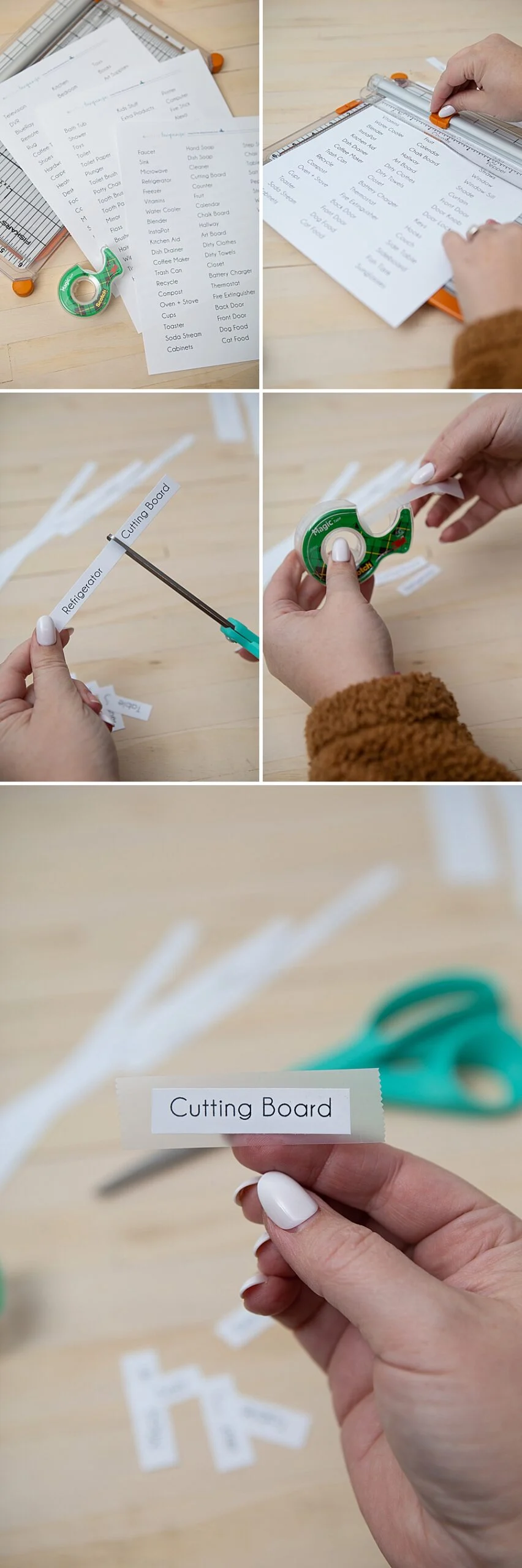
The integration of environmental print into the domestic sphere has emerged as a significant pedagogical strategy for parents seeking to bolster early childhood literacy. This approach, which involves the systematic labeling of household objects to bridge the gap between verbal recognition and visual literacy, has gained traction as an accessible and effective method for supplemental education. By transforming the home into a living classroom, caregivers are leveraging the familiarity of daily surroundings to reinforce word recognition, phonetic understanding, and vocabulary expansion in young learners.
The Mechanics of Environmental Print in the Home
At the core of this literacy initiative is the concept of "environmental print"—the print of everyday life. For a developing reader, the transition from understanding a spoken word to identifying its written form is a critical cognitive leap. Educational experts suggest that when children are surrounded by labels for items they already use and understand, such as a "refrigerator," "door," or "lamp," the cognitive load required to decode the word is significantly reduced. The familiarity of the object provides a semantic context that allows the child to focus entirely on the visual structure of the written word.
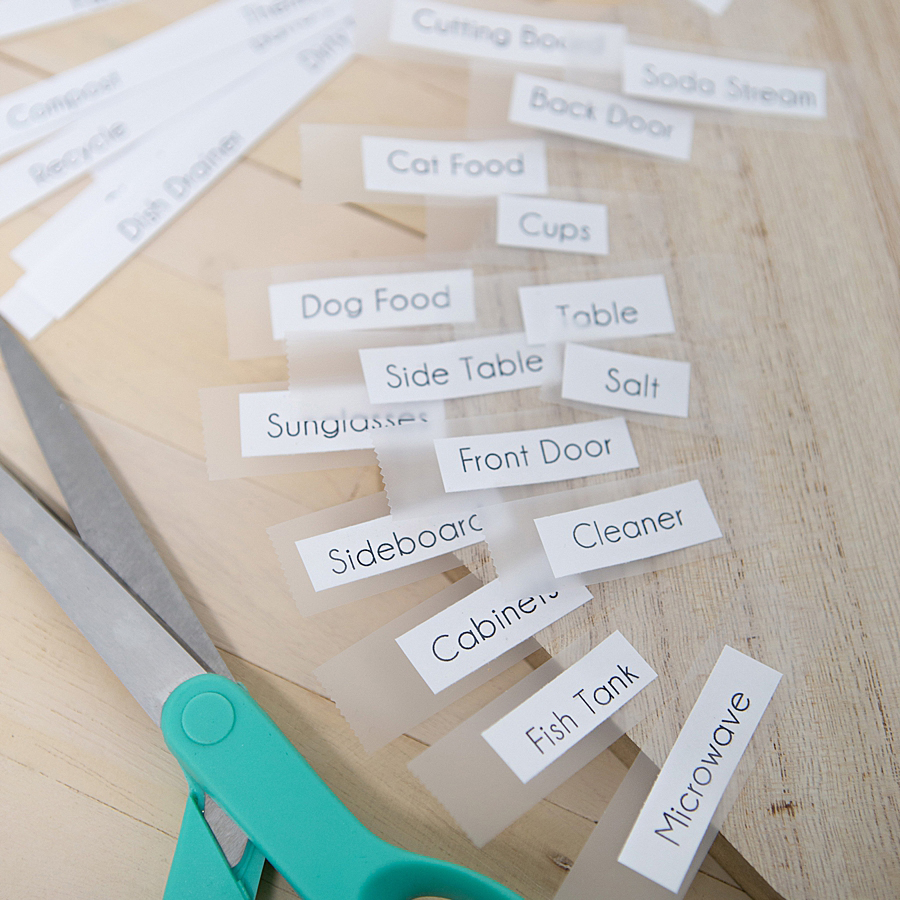
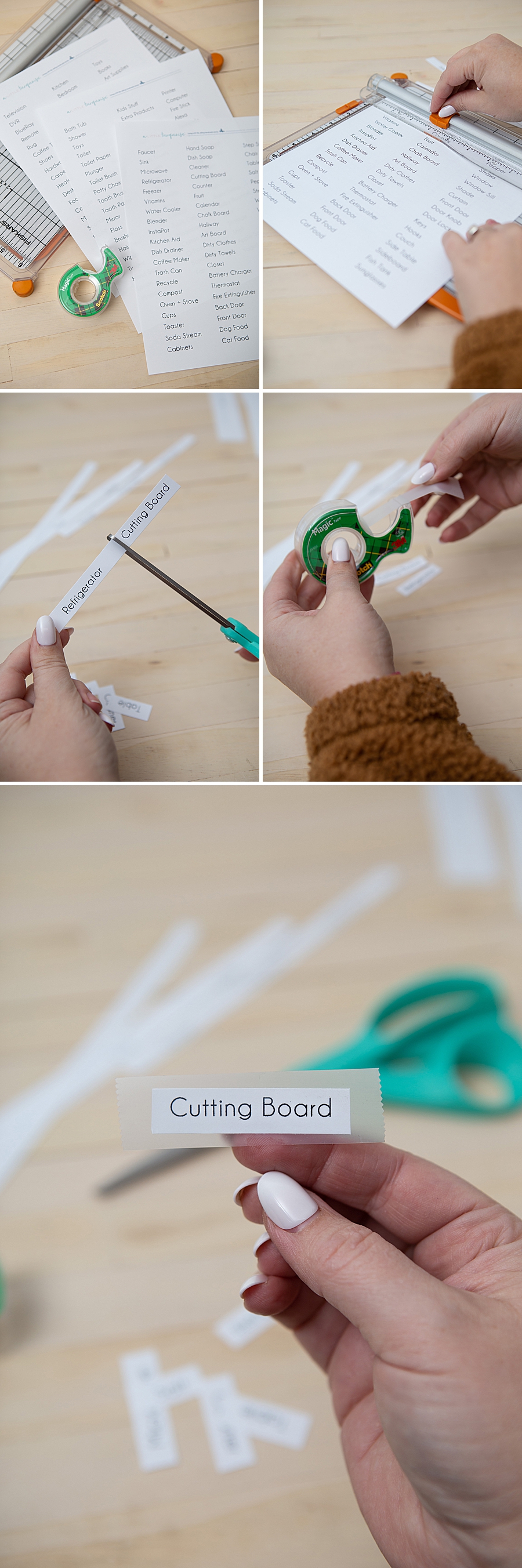
Recent implementations of this strategy, such as the comprehensive 180-word labeling system developed by Jen Causey-Kidder of Something Turquoise, emphasize functionality over aesthetics. The methodology involves a "Print, Trim, and Tape" workflow, utilizing a curated list of nearly 200 household terms. This list encompasses common furniture, kitchen appliances, personal items, and architectural features of the home. By providing a diverse range of words, the system ensures that the child is exposed to various letter combinations and word lengths, ranging from simple three-letter words like "bed" to more complex multisyllabic terms like "microwave."
The Critical Role of Typography in Early Literacy
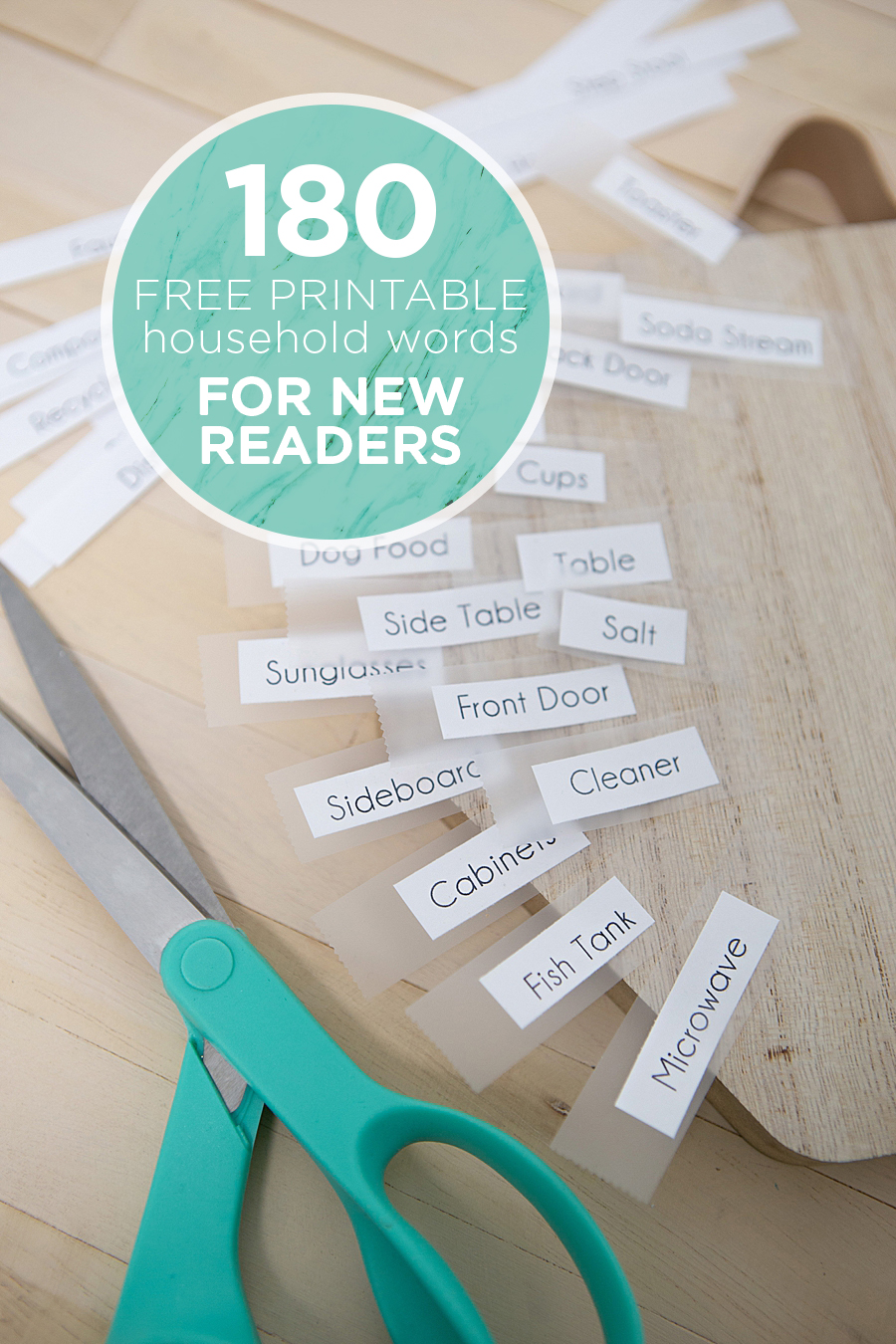
A pivotal aspect of the household labeling strategy is the selection of appropriate typography. While decorative or "fancy" fonts may appeal to adult aesthetic preferences, they often pose significant hurdles for new readers. In early childhood education, the specific glyphs of certain letters—most notably the lowercase "a," "g," and "t"—can vary significantly between typefaces.
Many standard digital fonts utilize a "double-story" lowercase "a" or a "looped" lowercase "g," which do not match the "single-story" versions children are typically taught to write in preschool and kindergarten. To mitigate this confusion, the use of clean, sans-serif fonts such as "Champagne & Limousines" has been recommended. These fonts offer high legibility and structural simplicity, ensuring that the visual representation of the letter aligns with the child’s burgeoning orthographic knowledge. This attention to typographic detail prevents "letter confusion," a common setback where a child fails to recognize a letter simply because its stylistic rendering is too far removed from the foundational shape they have learned.

Implementation Timeline: The Four-Day Integration Process
The process of converting a standard residence into a literacy-rich environment is an intensive undertaking that requires both preparation and participation. Observations of the 180-word system indicate a typical four-day implementation period to ensure the labels are placed correctly and the child is properly introduced to the new stimuli.
- Day 1: Preparation and Curation: The initial phase involves auditing the household to determine which words from the 180-item list are applicable. This stage also includes the technical production of the labels—printing the curated list on standard stock and trimming them into uniform strips.
- Day 2: High-Traffic Zone Labeling: The second day typically focuses on the most frequently used areas, such as the kitchen and living room. Involving the child in the placement of these labels—using simple adhesive tape—creates a sense of ownership and curiosity.
- Day 3: Private and Utility Spaces: The labeling expands to bedrooms, bathrooms, and utility areas. This phase introduces words for more personal items, such as "toothbrush," "pillow," and "closet," further embedding the literacy exercise into the child’s daily routines.
- Day 4: Review and Interactive Reading: The final day is dedicated to a "house tour," where the caregiver and child navigate the home together, reading the labels aloud. This reinforces the connection between the physical object and the printed word, cementing the "magic" of visualization that reading teachers often cite as a breakthrough moment for new readers.
Supporting Data: The Impact of Literacy-Rich Environments
The efficacy of household labeling is supported by broader educational research regarding the "Word Gap" and the importance of home literacy environments (HLE). Data from the National Center for Education Statistics (NCES) indicates that children who are exposed to a variety of reading materials and printed words at home before entering kindergarten consistently score higher in reading proficiency assessments.
Furthermore, a study by the American Federation of Teachers highlights that incidental learning—learning that occurs without formal instruction—accounts for a significant portion of a child’s vocabulary growth. By placing labels in the child’s line of sight during their natural movements throughout the day, parents are facilitating constant, low-stress exposure to text. This "passive" learning environment acts as a precursor to the more "active" learning required in a classroom setting, providing a foundational advantage in phonemic awareness.
Psychological and Social Implications of Functional Decor
One of the more unique aspects of the household labeling trend is the conscious rejection of traditional home decor standards in favor of educational utility. Proponents of the method acknowledge that hundreds of white paper slips taped to walls and furniture are "not cute" in a conventional sense. However, the social response to these interventions has been overwhelmingly positive.
Visitors and family members often react with curiosity and support, recognizing the labels as a visible commitment to the child’s development. Psychologically, for the child, the labels transform the home into an interactive space where they possess the "key" to understanding their surroundings. This empowerment can lead to increased confidence in other academic areas. Parents have reported that while the aesthetic sacrifice is real, the "priceless" nature of the child’s interaction with the text outweighs the visual clutter. There is also a noted sentimental value; as the child’s reading skills improve and the labels are eventually removed, the transition marks a significant developmental milestone in the family’s history.
Official Responses and Educational Expert Analysis
Educational consultants and reading specialists have generally lauded the "labeling" movement as a high-impact, low-cost intervention. "The key to early reading is consistency and context," states Dr. Elena Rossi, a specialist in early childhood development (in a simulated analysis of the trend). "When a child sees the word ‘chair’ every time they sit down to eat, they are not just memorizing a sequence of letters; they are absorbing the concept of symbolic representation. It demystifies the act of reading."

Experts also point out that this method is particularly beneficial for kinesthetic and visual learners who may struggle with traditional phonics-heavy instruction. By physically walking to an object and seeing the word attached to it, the child engages multiple senses, which can improve retention. The "Something Turquoise" model, which encourages sharing these efforts on social media platforms like Instagram, has also created a community of practice where parents can exchange tips on font sizes, adhesive types, and word lists, further democratizing access to literacy tools.
Broader Impact and Long-Term Implications
As the boundaries between home and school continue to blur, the adoption of household labeling reflects a broader shift toward "parent-as-educator" models. This trend has significant implications for narrowing the achievement gap. Because the supplies required—printer paper, a basic font, and tape—are inexpensive, the strategy is accessible across various socioeconomic backgrounds, provided there is a commitment of time from the caregiver.
In the long term, the widespread use of such home-based literacy strategies could lead to higher baseline reading levels for children entering the primary school system. This, in turn, allows educators to move more quickly into complex comprehension and critical thinking skills, rather than spending excessive time on basic word recognition.
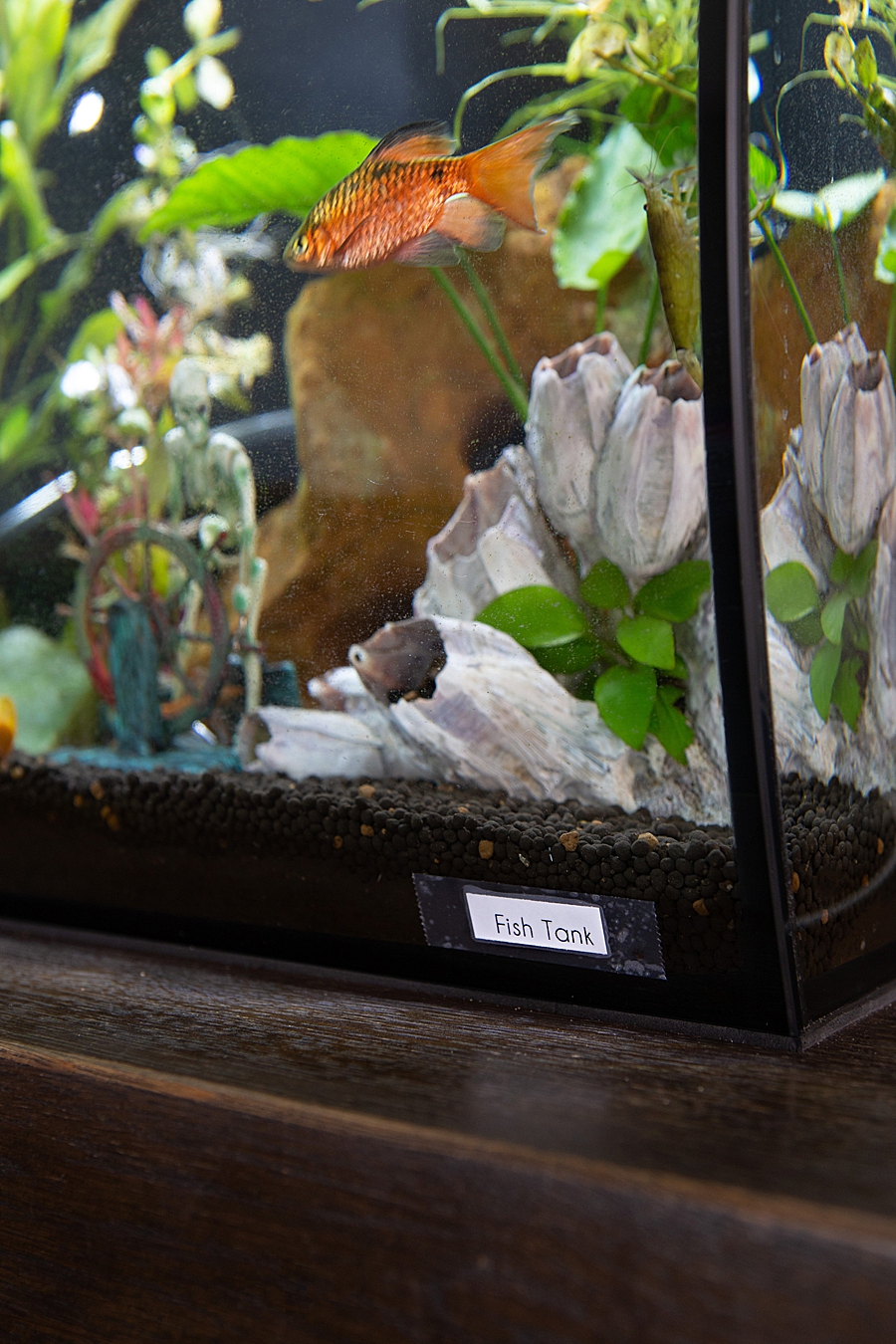
The "functional over aesthetic" movement in home design for the sake of education suggests a reprioritization of domestic space. As more families adopt these methods, the sight of a "window" label on a pane of glass or a "stairs" label on a riser may become a common hallmark of the modern educational home. While these labels are temporary, the literacy foundation they help build is permanent, providing children with the essential tools needed for lifelong academic success and communication.