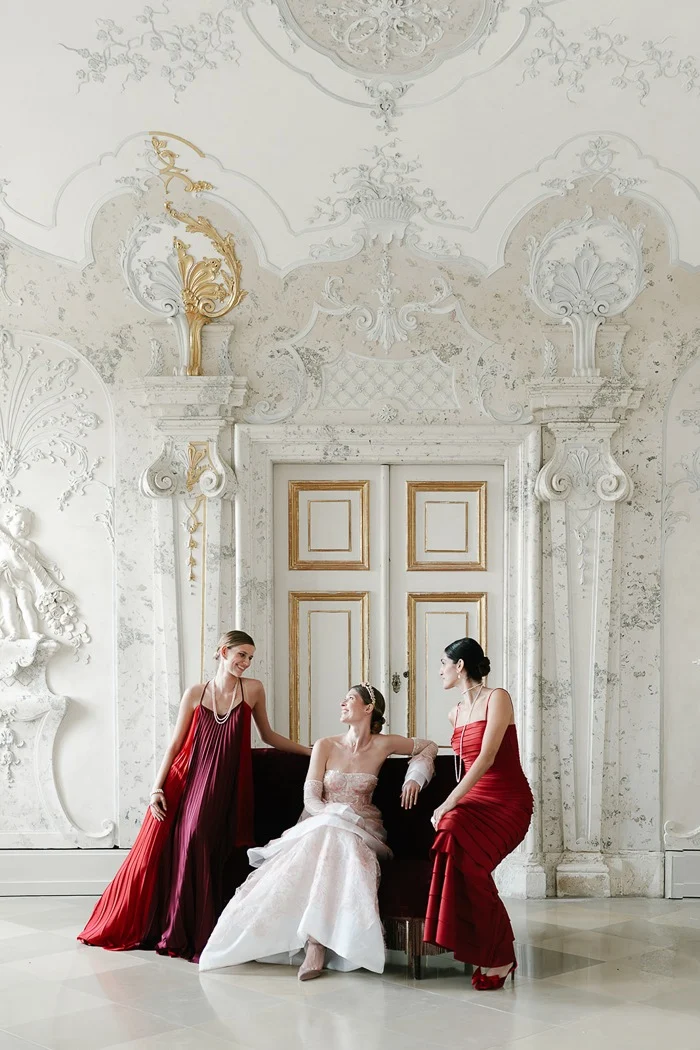
A groundbreaking editorial shoot at Austria’s historic Schloss Hof has redefined wedding aesthetics, demonstrating that grand, centuries-old venues can be transformed into settings for deeply personal and contemporary celebrations without sacrificing their inherent splendor. Spearheaded by acclaimed Junebug vendor and planner Elisabeth Cardich of A Very Beloved Wedding, the project deliberately sought to challenge conventional notions of historical venue styling, offering a vibrant, modern interpretation of a Baroque masterpiece. The core message resonated clearly: couples are empowered to honor a venue’s storied past while infusing their event with current design sensibilities, creative flair, and an authentic reflection of their unique personalities.

Schloss Hof: A Glimpse into Baroque Grandeur

Schloss Hof, a magnificent Baroque palace located in Engelhartstetten, Lower Austria, stands as a testament to 18th-century imperial splendor. Originally built in the early 1700s, it was acquired and extensively remodeled by Prince Eugene of Savoy, one of Europe’s most brilliant military commanders and art patrons. Later, under Empress Maria Theresa, it became a significant imperial country residence. The palace is renowned for its expansive seven-terraced Baroque gardens, opulent state rooms, and elaborate architectural details that speak to an era of grandeur and artistic extravagance. Today, Schloss Hof serves not only as a historical museum but also as a prestigious venue for cultural events, exhibitions, and, increasingly, weddings. Its inherent magnificence, characterized by gilded stucco, intricate frescoes, and vast, formal spaces, naturally leans towards a traditional, classic aesthetic. However, this editorial consciously moved beyond such expectations, leveraging the historical canvas as a foundation for innovation rather than a dictate for design.

The Vision: A Symphony of Contrast

Elisabeth Cardich’s conceptual framework for the Schloss Hof editorial was rooted in the power of contrast. The design juxtaposed the venerable history of the palace with a fresh, modern sensibility. "The key narrative was that a historic venue does not require a historically styled wedding," Cardich emphasized, articulating the editorial’s guiding principle. "Couples can honor the significance of a place while still creating something contemporary, personal, and emotionally resonant." This vision was meticulously translated through a strategic blend of elements: old against new, rigid structure softened by fluid forms, and refined elegance infused with expressive personality. The outcome is a testament to elevated design that avoids unnecessary complication, offering tangible inspiration for couples contemplating a wedding in a historically rich setting. It serves as a compelling reminder that the character of a venue should inspire, not confine, a couple’s unique wedding vision.

A Deliberate Palette: Building Emotion with Color and Texture

One of the most impactful strategies employed in this editorial was the thoughtful layering of color and texture, designed to add depth and warmth without overwhelming the ornate Baroque backdrop. The color story commenced with white, serving as a clean, quiet foundation that allowed other hues to emerge with striking clarity. From this pristine base, the palette gracefully transitioned through soft blushes and delicate roses, escalating to vibrant cherry reds and finally culminating in rich, deep crimson tones. "The design was built around a palette of white, blush, rose, cherry red, and deeper crimson tones," Cardich explained. "White acted as a quiet foundation, allowing the red spectrum to build in intensity and emotion." This nuanced progression created a visual journey, imbuing each scene with a sense of evolving passion and sophistication.

Beyond color, texture played a pivotal role in enriching the aesthetic. Luxurious velvet fabrics draped elegantly, while delicate silk ribbons introduced a sense of graceful movement. Custom-designed paper goods, featuring intricate botanical motifs, provided a tactile and visual preview of the event’s refined nature. Even unexpected elements like fresh fruit were integrated into the decor, adding organic warmth and an inviting, artisanal touch. This interplay of materials—smooth silk against plush velvet, crisp paper juxtaposed with natural fruit—created a sensory richness that felt both opulent and approachable. For couples planning their own celebrations, this approach offers a vital lesson: a cohesive design doesn’t necessitate a vast array of elements. Instead, a well-defined color story, combined with a few intentionally chosen textures, can achieve a profoundly impactful and memorable aesthetic.

Setting the Tone: The Art of First Impressions and Reception Elegance

The editorial underscored the critical role of early details in shaping the overall guest experience, particularly through the meticulously crafted stationery suite. This initial touchpoint served as more than just an informational piece; it was a curated prologue to the event, providing guests with a tangible sense of the aesthetic and emotional journey awaiting them. "The floral-forward stationery suite is a beautiful example of how paper goods can set the tone," Cardich noted, highlighting how these invitations acted as a sophisticated overture to the wedding’s design narrative.

This same dedication to detail permeated the reception styling, where every element was chosen to contribute to a harmonious yet dynamic atmosphere. Tables were adorned with tonal linens, their subtle variations adding depth without distraction. Sculptural floral arrangements, artfully designed to complement rather than compete with the venue’s grandeur, became focal points. The inclusion of colored candles cast a warm, inviting glow, enhancing the romantic ambiance, while tinted glassware added a touch of refined elegance and a hint of modernity. Smaller, yet equally impactful, details such as delicate silk bows tied around menus or the strategic placement of fresh fruit accents further personalized the setting. Each component worked in concert, achieving a polished and cohesive look that felt thoughtfully curated rather than overtly styled. This holistic approach to design ensures that from the moment an invitation is received to the final toast, guests are enveloped in a consistently beautiful and emotionally resonant experience.

Curating the Dream Team: Collaboration as the Cornerstone of Success

The seamless execution of this Baroque-inspired editorial was a direct result of a carefully assembled team of vendors, each chosen for their artistic prowess and alignment with Elisabeth Cardich’s clear creative concept. "The project began with a clear creative concept and visual direction," Cardich stated, emphasizing the foundational importance of a unified vision. "Each professional was chosen for their ability to contribute thoughtfully and execute their part with sensitivity to the atmosphere." This collaborative synergy is evident in every detail captured by the camera. The photographer, Agnes Kinczer, skillfully immortalized the intricate details and grand scale, translating the vision into stunning visuals that speak volumes. The florists, responsible for the sculptural and vibrant arrangements, introduced organic movement and a pop of color that breathed life into the historic spaces. The stationery designer crafted pieces that were not merely functional but artistic extensions of the overall theme, setting expectations with elegance. Each vendor’s contribution, from the exquisite styling to the choice of linens and tableware, demonstrated a profound understanding of the editorial’s delicate balance between historical reverence and modern expression. This approach highlights a crucial lesson for couples: building a team of wedding professionals who share and understand your vision is paramount to transforming even the most ambitious concepts into a breathtaking reality. The collective expertise and sensitive execution of each specialist ensure that every aspect of the wedding, from the grandest gesture to the smallest detail, contributes to a cohesive and unforgettable experience.

Navigating Historic Grandeur: The Art of Understated Impact

Working within a venue as intrinsically ornate and historically significant as Schloss Hof presents a unique set of challenges. The risk of "overstyling" – where added decor competes with or diminishes the existing architecture – is substantial. However, the editorial successfully navigated this delicate balance, proving that impact can be achieved through intentionality rather than excess. "As with any production in a historic venue, the challenge is creating something visually bold without overwhelming the space," Cardich reflected on this crucial aspect. "The solution was allowing color, composition, and detail to do the work."

Instead of attempting to fill every corner or introduce a multitude of disparate elements, the design focused on strategic placements and curated compositions. Key areas, such as the ceremony backdrop, reception tables, and bridal portraits, were meticulously styled to draw the eye and convey the desired aesthetic. This minimalist yet impactful approach ensured that the inherent beauty of Schloss Hof remained central, while the added modern details served to enhance and reinterpret its grandeur, rather than overshadow it. The result is a celebration of both the past and the present, where each design choice feels deliberate and contributes to a cohesive, sophisticated narrative. This principle offers invaluable guidance for couples planning weddings in similarly grand settings: by prioritizing quality over quantity, and allowing the venue’s character to inform, rather than dictate, design choices, it is possible to achieve a visually stunning event that feels both deeply personal and harmoniously integrated with its surroundings.

Implications for Modern Weddings and Industry Trends

This Schloss Hof editorial is more than just a collection of beautiful images; it’s a powerful statement with significant implications for the modern wedding industry and couples alike. In an era where personalization and unique experiences are highly valued, this shoot provides a compelling blueprint for how to achieve both within traditionally imposing settings. It dismantles the notion that historic venues necessitate a rigid adherence to period-specific decor, thus expanding the creative possibilities for couples who dream of a wedding steeped in history but alive with contemporary spirit.

For the wedding industry, the editorial serves as a benchmark for innovative design and collaborative excellence. It encourages planners, florists, and other vendors to think beyond conventional boundaries, fostering a culture of creative problem-solving and artistic fusion. The focus on a disciplined color story, textural richness, and thoughtful details offers actionable strategies that can be adapted to various venue types and budgets. This approach suggests a broader trend towards "curated eclecticism" in wedding design, where diverse influences are harmonized to create a distinct and memorable atmosphere. Furthermore, it highlights the growing demand for venues that offer both historical charm and flexibility for modern interpretations, potentially influencing how such properties market themselves to prospective clients.

Bringing This Style into Your Own Celebration: Actionable Insights

While a palace setting might seem unattainable for many, the underlying principles of this Schloss Hof editorial are remarkably flexible and adaptable to any wedding. Elisabeth Cardich offered practical advice for couples looking to infuse a similar ethos into their own event. "Start with a clear emotional direction, not just a color palette," she advised, emphasizing that true design begins with understanding the desired feeling and atmosphere. "Couples can focus on a few intentional choices, like a disciplined color story, beautifully designed stationery, and florals with shape and depth."

To translate this vision, couples might consider:

- Defining an Emotional Core: Instead of merely choosing colors, think about the mood you want to evoke – dramatic, intimate, joyful, serene. This will guide all subsequent design decisions.
- Strategic Color Play: Adopt a limited, cohesive color palette and use variations in tone and saturation to create depth, as seen with the red spectrum in the editorial.
- Elevated Stationery: Invest in a stationery suite that visually communicates your wedding’s style and emotional direction from the outset. This sets expectations and builds excitement.
- Sculptural Florals: Opt for floral arrangements that possess distinct shape, texture, and movement, acting as artistic focal points rather than mere decorations.
- Thoughtful Textural Layers: Incorporate a mix of fabrics (velvet, silk, linen), materials (wood, metal, ceramic), and natural elements (fruit, foliage) to add richness and warmth.
- Intentional Details: Focus on a few standout elements – perhaps a dramatic ceremony arch, unique table settings, or distinctive lighting – and allow the surrounding decor to remain elegant in its simplicity.
- Collaborative Vendor Selection: Choose vendors whose portfolios align with your aesthetic and who demonstrate an understanding of your unique vision. Trusting their expertise within your defined parameters is key.
By focusing on these intentional choices and embracing a philosophy where the venue inspires rather than dictates, couples can craft a wedding that feels authentically theirs, regardless of its scale or setting.

A New Chapter for Historic Romance

The Baroque-inspired editorial at Schloss Hof stands as a compelling testament to the evolving landscape of wedding design. It eloquently proves that historic venues are not confined to traditional narratives but can serve as breathtaking backdrops for modern love stories. Through a masterful blend of rich colors, tactile textures, and deeply thoughtful details, Elisabeth Cardich and her team have illuminated a path for couples to craft celebrations that are both deeply personal and respectful of their grand surroundings. The editorial’s success lies in its ability to reconcile the gravitas of history with the vibrancy of contemporary style, offering a powerful statement: a venue’s heritage should ignite imagination, not constrain it. Ultimately, what truly shines through in such a setting is the couple’s personality, artfully woven into the fabric of an unforgettable day.