
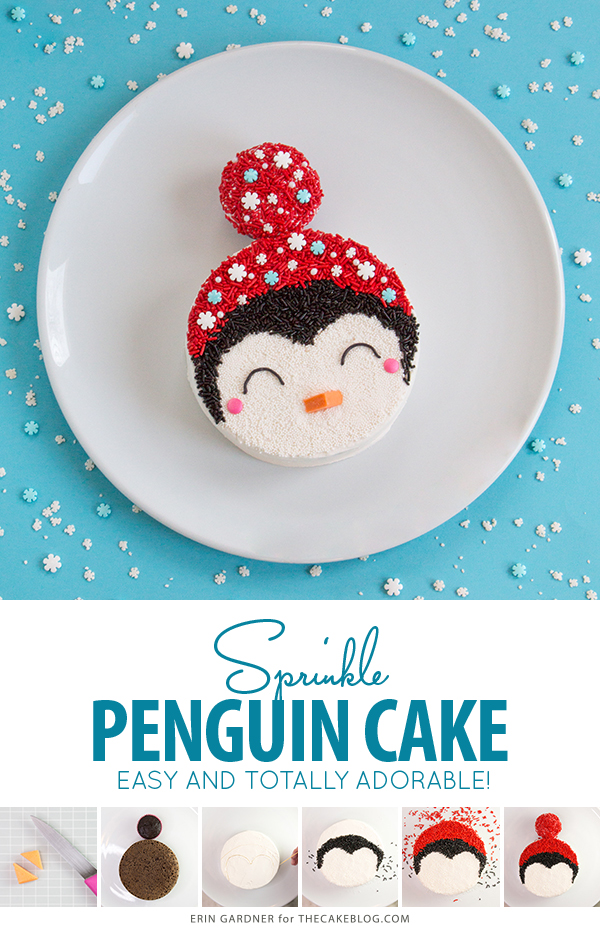
The global landscape of home baking and confectionery arts has seen a significant shift toward accessible yet visually sophisticated designs, a trend punctuated by the recent release of a new instructional guide from renowned cake stylist Erin Gardner. Published via The Cake Blog, a premier digital destination for pastry enthusiasts, Gardner’s latest contribution introduces the "Sprinkle Coated Penguin Cake." This project represents a strategic intersection of simplified decorative techniques and the high-aesthetic demands of modern social media-driven food culture. By utilizing a comprehensive coating of nonpareils to define character features, the tutorial provides a solution for amateur bakers to achieve professional-grade results without the necessity of advanced piping skills or fondant sculpting.
Architectural Foundation and Design Philosophy
The Penguin Cake is positioned as a cornerstone of Gardner’s "sprinkle universe," a conceptual framework that began with her popular "Sprinkle Girl" cake series. The design philosophy centers on the democratization of cake decorating. Traditionally, character cakes—specifically those depicting animals with distinct facial features—require high levels of precision with buttercream or the use of labor-intensive sugar paste. Gardner’s methodology bypasses these barriers by using texture as a primary medium.
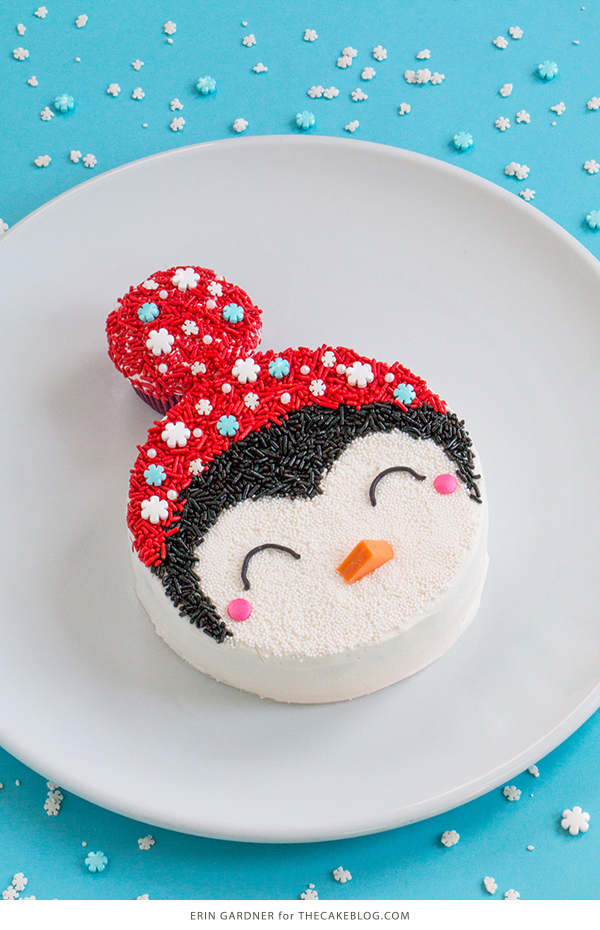
The aesthetic of the penguin relies on a "Kawaii" influence, a Japanese-originated cultural trend toward "cuteness" that has dominated Western confectionery design over the last decade. By focusing on oversized features and a minimalist color palette (black, white, red, and pink), the cake appeals to a broad demographic, ranging from children’s birthday celebrations to sophisticated winter-themed adult gatherings. The versatility of the design allows for significant customization, including the addition of chocolate-molded accessories or the integration of seasonal sprinkle shapes such as stars and miniature evergreen trees.
Chronology of the Confectionery Process
The construction of the Penguin Cake follows a rigorous four-phase sequence designed to ensure structural integrity and visual clarity.
Phase I: The Preparatory Foundation
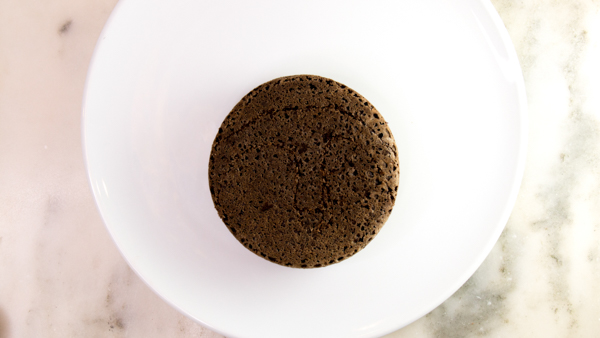
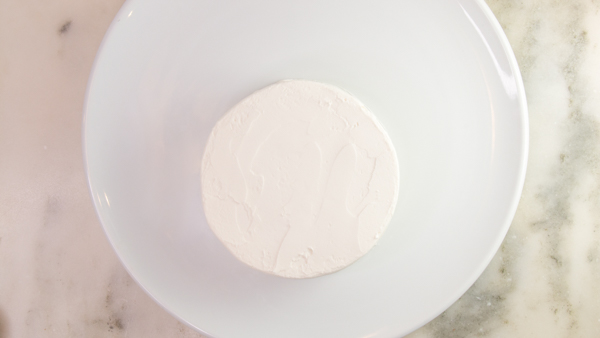
The process begins with a standard round cake, which serves as the primary canvas. A thick application of plain buttercream is essential during this stage. Unlike traditional smooth-finish cakes, where the "crumb coat" and final layer must be flawless, this tutorial emphasizes that the buttercream serves primarily as an adhesive. The thickness of the icing allows for the "mapping" of features in the subsequent phase.
Phase II: Topographical Mapping
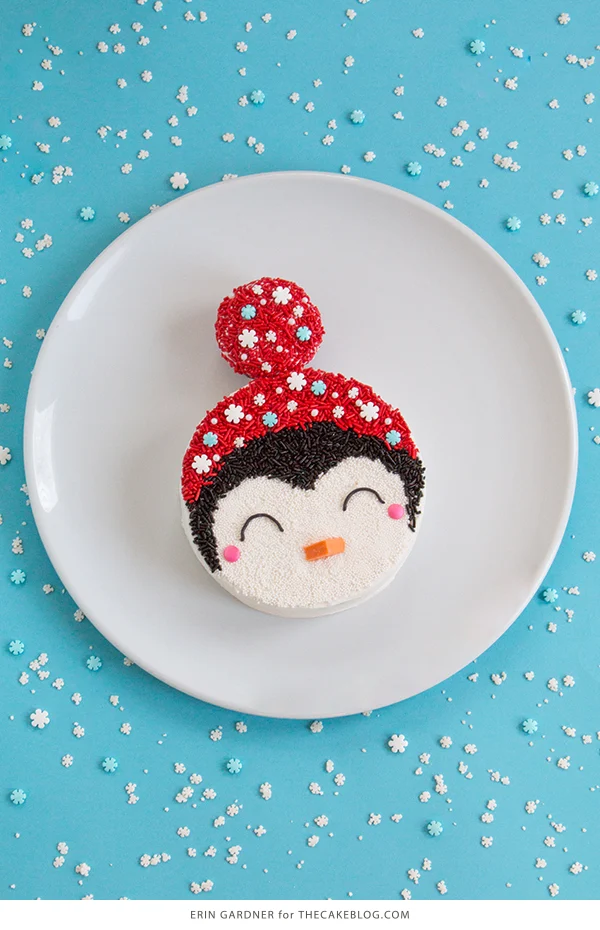
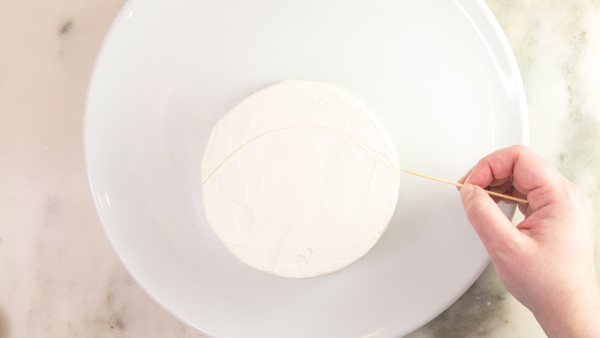
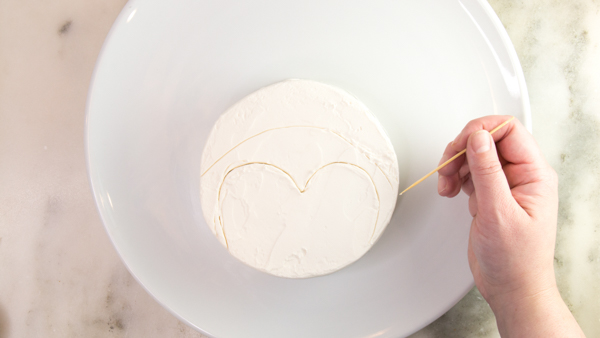
Using a precision tool such as a toothpick or skewer, the baker is instructed to delineate the boundaries of the penguin’s anatomy. This includes a "half-moon" shape across the upper hemisphere of the cake to represent the winter hat and an "open-bottom heart" configuration on the vertical face of the cake to define the penguin’s facial mask. This mapping is a critical step in ensuring the proportions remain symmetrical before the permanent application of the decorative media.
Phase III: Media Application and Texturing
The application of sprinkles follows a specific hierarchy, starting with the largest surface area to prevent cross-contamination of colors.
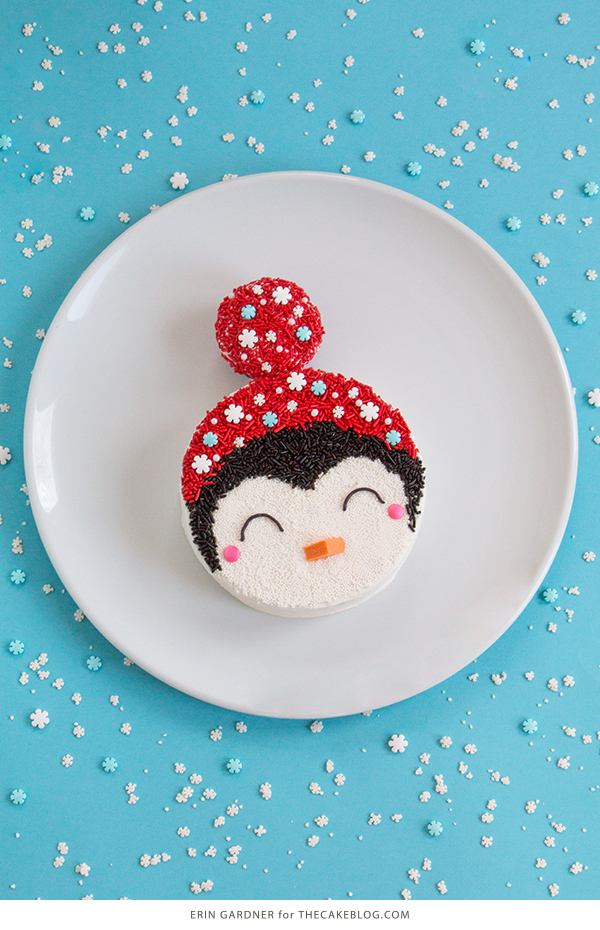
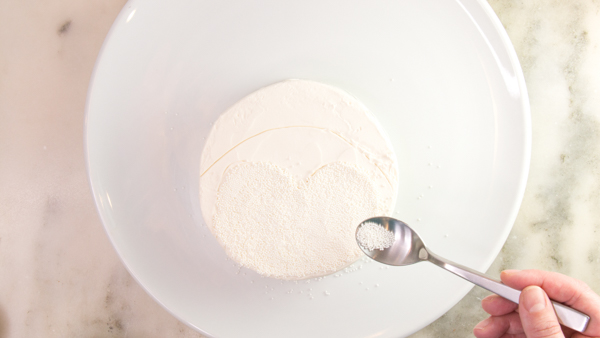
- The Face: White nonpareils are applied using a spoon and smoothed with the back of the utensil.
- The Body: Black sprinkles are layered to define the "skin" or feathers of the penguin.
- The Hat: Red sprinkles fill the uppermost section.
A key innovation in this tutorial is the use of a baking sheet as a catchment system for "over-spill" sprinkles, a practical consideration that addresses the logistical mess often associated with nonpareil-heavy designs.
Phase IV: Accessory Integration
The final stage involves the assembly of the "pom-pom" and facial features. A standard cupcake is coated in red sprinkles and adhered to the top of the cake platter with a bolster of buttercream, creating a three-dimensional effect for the penguin’s hat. The beak is fashioned from a Starburst fruit chew, cut diagonally to create a geometric triangle, while pink confetti sprinkles serve as the cheeks. The eyes are piped using a small round tip with black buttercream, completing the character’s expression.
Supporting Data: The Growth of the DIY Baking Sector
The release of Gardner’s tutorial coincides with a sustained upward trajectory in the global baking ingredients market. According to market analysis reports, the global cake decorating market was valued at approximately $4.2 billion in 2022 and is projected to expand at a compound annual growth rate (CAGR) of 5.8% through 2030. This growth is largely attributed to the "prosumer" movement, where hobbyists invest in professional-grade tools and follow high-level tutorials to replicate bakery-style results at home.
Furthermore, search engine data indicates a 45% seasonal spike in "winter-themed cake ideas" and "beginner-friendly character cakes" during the fourth quarter of the fiscal year. Gardner’s Penguin Cake addresses this specific market demand by providing a high-impact visual that does not require the purchase of expensive, specialized equipment.
Technical Analysis of Materials and Preservation
From a food science perspective, the Penguin Cake utilizes the hygroscopic properties of sugar. Nonpareils, while durable, are susceptible to moisture. Gardner notes that sprinkles tend to soften when exposed to the high-humidity environment of a refrigerator for extended periods. This is due to the sugar crystals absorbing ambient moisture, which can lead to color bleeding or a loss of the desired "crunch" texture.
Professional recommendations included in the tutorial suggest finishing the cake on the day of service to maintain the structural integrity of the sprinkle coating. Storage requirements vary based on the buttercream used; American buttercream, which has a higher sugar-to-fat ratio, is more stable at room temperature, whereas Swiss Meringue or Italian Meringue buttercreams require colder storage but are more prone to causing sprinkle degradation.
Official Responses and Culinary Impact
Industry experts have praised Gardner’s ability to translate complex textures into simple, repeatable steps. While Gardner herself maintains a focus on the "adorable" nature of the project, culinary analysts suggest that such tutorials are vital for the longevity of digital media platforms like The Cake Blog. By providing content that is both aspirational and achievable, these platforms maintain high engagement rates with a diverse audience.
"The goal of modern confectionery education is to remove the intimidation factor," states a summary of Gardner’s pedagogical approach. "By treating the cake as a mosaic project rather than a fine-art sculpture, we invite a larger demographic into the kitchen."
The "Sprinkle Penguin" has already begun to see traction on social media platforms like Instagram and Pinterest, where "user-generated content" (UGC) featuring variations of the design provides a feedback loop for the creator. This interaction is a hallmark of the modern digital economy, where a single tutorial can spawn thousands of iterations, each contributing to the trend’s momentum.
Broader Implications and Market Trends
The success of the Penguin Cake tutorial reflects a broader trend in the food industry: the "Characterization of Food." As consumers increasingly look for "experience-based" dining, even at home, the demand for food that tells a story or embodies a persona has increased. The penguin, a symbol of winter resilience and playfulness, fits perfectly into the seasonal branding strategies used by both home bakers and commercial retail bakeries.
Moreover, the tutorial highlights the importance of "repurposeable" skills. The techniques learned in the Penguin Cake—mapping with toothpicks, using cupcakes as 3D accents, and spoon-smoothing nonpareils—are transferable to other designs. This educational value is what differentiates Gardner’s work from standard "recipe-only" content. It builds a skill set that allows the baker to eventually move away from tutorials and toward original creation.
As the winter season progresses, the Penguin Cake stands as a testament to the power of creative simplification. It proves that in the world of high-end confectionery, sometimes the most effective way to achieve a sophisticated result is to return to the basics: sugar, butter, and a generous application of imagination. In an era where the visual presentation of food is often as important as its flavor profile, Gardner’s contribution provides a roadmap for success in the competitive and ever-evolving landscape of the culinary arts.