The phenomenon widely known as "wedding maxxing" represents a significant evolution in contemporary bridal planning, diverging sharply from traditional expenditure patterns. Far from being a new aesthetic trend synonymous with maximalist decor, wedding maxxing is fundamentally a strategic financial allocation model where couples intentionally channel a greater proportion of their budget towards elements that directly enhance the guest experience, while concurrently minimizing outlay on physical objects destined for single use or rapid obsolescence. This approach acknowledges that wedding costs are not diminishing, but rather, the investment is shifting into different categories that yield more perceived value and lasting memories.
Background and Context: The Evolving Landscape of Matrimonial Spending
The wedding industry has long been characterized by escalating costs, a trend exacerbated by inflationary pressures and a cultural emphasis on elaborate celebrations. According to Zola’s 2026 First Look Report, which surveyed over 11,500 couples planning nuptials, the average cost of a wedding in 2026 is projected to remain at a record high of $36,000 for the second consecutive year. This persistent financial commitment underscores the necessity for couples to make discerning choices about where their money is best spent.
Several factors converge to foster the rise of wedding maxxing. Economically, couples face increased scrutiny over large expenses, driven by broader cost-of-living increases and a more pragmatic view of discretionary spending. Culturally, there’s a growing inclination towards authenticity and personalization, moving away from prescriptive wedding templates. The post-pandemic era, in particular, has instilled a heightened appreciation for communal experiences, human connection, and meaningful celebration, often prioritizing these over ostentatious displays. Moreover, the broader societal shift towards conscious consumerism and sustainability plays a pivotal role. As individuals become more aware of environmental impact, the idea of purchasing numerous items for a one-day event that will then be discarded or stored indefinitely feels increasingly anachronistic. This aligns with the burgeoning circular economy, where reuse and resale are not merely cost-saving measures but also ethical choices.
Deconstructing "Wedding Maxxing": Allocation, Not Aesthetics
At its core, wedding maxxing is an exercise in resource allocation. It is a philosophy that dictates where each dollar goes, independent of the day’s visual style. A wedding maxxing approach can seamlessly manifest in a minimalist setting or a maximalist explosion of color and layers; its defining characteristic is the underlying financial calculus. The thesis is elegantly simple: spend up on what guests experience, spend down on what they take home or throw away.
This principle, while seemingly intuitive, often challenges ingrained planning instincts. The myriad small details that demand attention during wedding preparations—custom signage, intricate favors, unique table accouterments—frequently prove to be the most forgettable elements by the wedding’s conclusion. Conversely, the foundational components that truly shape the atmosphere and guest enjoyment—exceptional catering, vibrant entertainment, seamless logistics ensuring comfort and flow—are the very aspects that resonate for years to come. Anna Gantt, Marketing Director at The Barn at Coley Creek, a North Carolina wedding venue, frequently observes this post-event sentiment: "We often hear things like signage or trendy items that only serve one purpose can end up feeling like they wasted a lot of money for something that had a short lifespan. After the wedding day is over, our couples have come back to us and say they wish that they would have simplified the decor and put that money toward something more meaningful like food, photography, or their honeymoon." This firsthand account from industry professionals highlights the tangible regret associated with misallocated spending.
The Data Behind the Shift: A Closer Look at Spending Patterns
While the overall cost of weddings remains substantial, empirical data points to a reorientation of where these significant sums are being spent. Zola’s report confirms the enduring financial commitment, with 85% of surveyed couples affirming that their investment will be "worth every penny." This suggests that couples are not necessarily seeking to spend less overall, but rather to optimize the impact of their existing budget.
The most compelling evidence for this reorientation comes from the rapid growth of the secondhand wedding market. Data provided to The Budget Savvy Bride by BuyWander, an auction platform for returned and overstock retail inventory, paints a clear picture. In the 12 months leading up to August 2026, BuyWander listed an impressive 58,282 wedding-related items, successfully selling 55,879 of them, achieving a remarkable 96% sell rate. These items, representing a combined retail value of approximately $3.17 million, were sold for a collective $665,871—a substantial discount that underscores the market’s efficiency in value recovery. BuyWander further reports that its wedding category is its fastest-scaling segment, experiencing a 23-fold increase in monthly volume and recording July 2026 as its highest month to date. These proprietary figures, though requiring contextual weighting, undeniably signal a robust and accelerating trend of wedding objects exiting traditional retail channels.
Jordan Allen, Co-Founder and CEO of BuyWander, contextualizes this shift: "Wedding maxxing is really just value-conscious shopping catching up with the rest of retail. Consumers have already gotten comfortable buying open-box electronics or returned furniture at lower prices, and we’re seeing that same mindset extend to weddings. In the last 12 months, more than 58,000 wedding-related items have been listed on BuyWander, and we’ve seen wedding dresses sell for as little as $5 at auction. You’re bidding on real supply instead of following a traditional retail path." This perspective reframes the act of purchasing used wedding decor not as a form of "penny-pinching," but as a savvy consumer behavior already normalized across other retail sectors.
Further substantiating this trend, an internal analysis of 940 real weddings published by The Budget Savvy Bride reveals a notable evolution in couples’ priorities. Historically, approximately two-thirds of couples featured on the platform opted to forgo a professional planner or day-of coordinator—a key "spend up on experience" category. Concurrently, a majority continued to hire professional florists, traditionally a "spend down" category for objects. However, a closer examination of 168 weddings published since 2022 indicates a significant shift: half of these recent couples (71 out of 142 respondents) hired a planner or day-of coordinator, a stark contrast to under a third of earlier couples (192 out of 665). Crucially, the median total budget for both groups remained steady at $10,000, demonstrating that recent couples were not spending more overall but were actively reallocating funds towards crucial experiential services like coordination. This internal data, while not a nationally representative survey, provides anecdotal evidence of the wedding maxxing instinct manifesting within real-world budgets.
Navigating the Secondhand Market: Strategies for "Spend Down"
The "spend down" component of wedding maxxing primarily targets physical items, which typically suffer from a poor cost-per-use ratio. A decorative sign may be viewed for a mere six hours, and table numbers are utilized once, yet their retail price reflects their initial novelty. The existence of a robust resale market, however, mitigates this inefficiency, as subsequent couples are eager to acquire these items at a fraction of their original cost.
Distinguishing between general resale and auction platforms is crucial for couples seeking to optimize their savings. Resale typically involves items listed at a predetermined price on platforms like Etsy, Facebook Marketplace, or specialized wedding resale sites. While offering significant savings, prices are generally firmer. Auction sites, like BuyWander, deal in returned or overstock inventory, often starting bids extremely low. This can lead to dramatic discounts, such as wedding dresses selling for less than $5, as reported by BuyWander. However, auction buying inherently carries greater risk, including variable item condition, limited or no return policies, and the potential for bidding wars.
A critical logistical consideration for auction platforms like BuyWander is their reliance on local pickup. As of August 2026, BuyWander operated in only eight locations across the United States (Spokane Valley WA, Kent WA, Portland OR, West Valley City UT, West Sacramento CA, Denver CO, Addison IL, and Plymouth MN), with no shipping options. This geographical limitation means that the substantial savings advertised are only accessible to couples living within reasonable proximity to these warehouses. For those outside these regions, the more traditional secondhand avenues—local Facebook Marketplace groups, estate sales, thrift stores, and general online resale platforms—remain the primary options, albeit often with slower results and less dramatic price reductions.
Real-World Application: Nixi Swedlund-Tomlinson’s Experiential Wedding
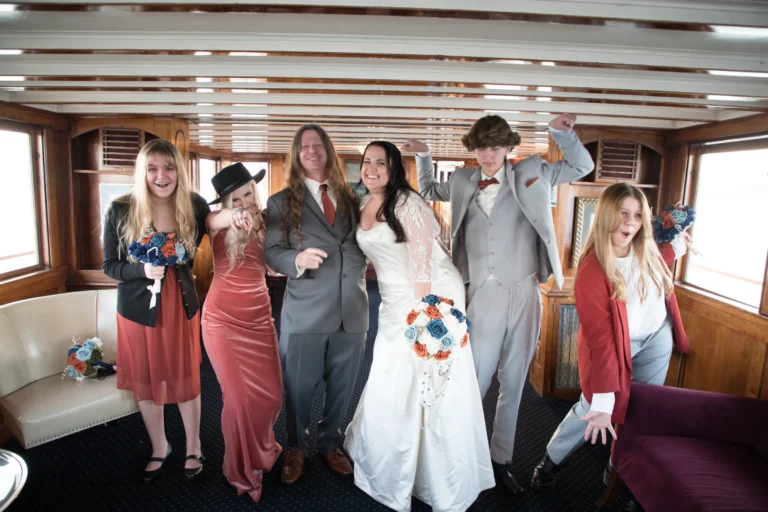
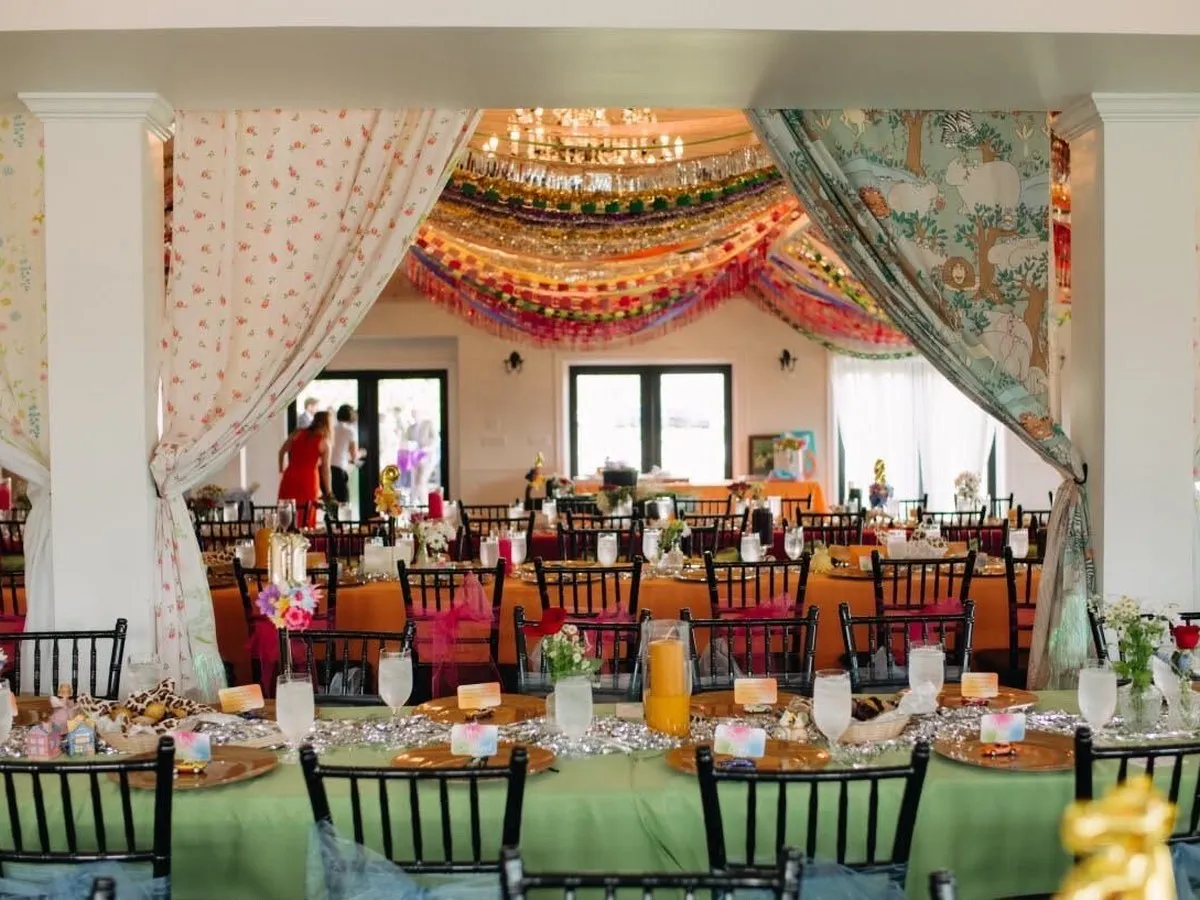
The principles of wedding maxxing find vivid expression in the wedding of Nixi Swedlund-Tomlinson, who consciously designed a celebration rooted in thriftiness and creativity. For Nixi, saving money was a significant motivator, but equally important was the desire to infuse her wedding with originality and personal expression. Her approach involved leveraging vintage finds and the "incredible crafty skills of the women in her life."
Nixi’s wedding showcased an array of thoughtful, experience-driven elements achieved through strategic sourcing. The venue ceiling was "drenched in decor" sourced secondhand, oversized letters spelling her and her husband’s names provided a playful focal point, and every guest received unique glassware—all meticulously hunted down. Homemade tomato sauce served as memorable favors, an 8-foot-long rug hand-latched by her mother added a deeply personal touch, and even her wedding cake was a blend of "made with love or hunted down on Ebay." This collaborative effort, involving friends and family actively searching for items on a thrift list, exemplifies the community-driven aspect often seen in wedding maxxing. Crucially, Nixi’s planner and mother managed the setup, allowing her to fully immerse herself in the joy of the day. Her ultimate takeaway underscores the philosophy: "Our wedding screamed ‘joy’… because we put in the extra work to find the things that felt right." This personal narrative illustrates that wedding maxxing is not solely about cost reduction but about creating a deeply meaningful and authentic celebration by prioritizing effort and resourcefulness in key areas.
Implications and Future Outlook
The rise of wedding maxxing carries significant implications for both couples and the broader wedding industry. For couples, it offers a pathway to agency and empowerment, allowing them to align their significant financial investment with their personal values and priorities. Instead of feeling pressured by traditional expectations, they can consciously decide to craft an experience that truly reflects them.
For wedding vendors, this shift necessitates adaptation. Service providers may need to pivot towards offering more customizable and experience-focused packages, potentially de-emphasizing standard decor rentals that couples are increasingly sourcing independently. The growth of rental services for large-scale decor items, rather than outright purchase, could also see an uptick as the industry responds to this demand. Furthermore, the trend contributes positively to environmental sustainability by promoting the reuse of goods and reducing the overall waste generated by single-use wedding items, aligning the industry with broader ecological imperatives.
Culturally, wedding maxxing is normalizing the use of secondhand items for significant life events. This gradually erodes the stigma once associated with anything less than "brand new" for a wedding, fostering a more practical and resourceful approach to celebrating milestones. While the benefits are clear, challenges remain, including the time and effort required for sourcing secondhand items, the potential for inconsistencies in condition, and the logistical complexities of coordinating disparate elements.
In conclusion, wedding maxxing is more than a fleeting trend; it represents a fundamental recalibration of priorities within wedding planning. It is not about spending less money, but rather about strategically allocating existing budgets to maximize experiential value while smartly navigating the market for physical goods. By embracing a value-conscious approach and leveraging the burgeoning secondhand economy, couples are demonstrating that memorable, joyful, and authentic weddings are those that prioritize lasting experiences over ephemeral objects. As the wedding landscape continues to evolve, this strategic mindset is poised to become an increasingly influential model for future generations of couples planning their special day.