


The landscape of consumer discovery has undergone a profound transformation, with Artificial Intelligence (AI) agents rapidly becoming the initial gateway for a significant portion of online buyers, including couples planning their weddings. A comprehensive research brief published in May 2026 by Bain & Company reveals that a striking 44% of online consumers in the United States now commence their purchase journey within an AI platform, or they strategically divide their time between AI tools and conventional search engines. This seismic shift is particularly pronounced among younger demographics, with Millennials leading the charge at 52% initiating their searches with an AI assistant, closely followed by Gen Z at 25%. In contrast, only 30% of these consumers opt to start with AI-enabled Google, signaling a clear preference for direct, conversational AI interaction over traditional search interfaces.
This emergent behavior represents an unforeseen and monumental pivot in how services are discovered and vetted, largely bypassing the established marketing channels that wedding vendors have meticulously cultivated over years. For many professionals in the wedding industry, this change was not an opted-in evolution but a widespread, gradual, and often invisible alteration in consumer habits, brought to light only through empirical data. Understanding this paradigm shift is not merely about adopting new technology, but about comprehending the fundamental mechanisms by which future clients will connect with services.
The Dawn of AI-Driven Vendor Discovery
The rapid ascent of generative AI, epitomized by platforms like ChatGPT and Google Gemini, since late 2022 and early 2023, has fundamentally reshaped digital interactions. Initially perceived by many as novel tools for content generation or basic information retrieval, these AI agents have quickly evolved into sophisticated decision-making assistants. For the wedding industry, this means that the traditional "search bar," once the undisputed front door to a vendor’s online presence, is increasingly being superseded by conversational interfaces. Couples are no longer just typing keywords into a browser; they are posing nuanced questions to AI, expecting synthesized, actionable recommendations.
This transition from keyword-driven search to natural language query processing marks a significant technological leap. AI platforms excel at understanding context, inferring intent, and synthesizing information from vast datasets to deliver concise, direct answers. This capability is particularly appealing to busy couples navigating the complexities of wedding planning, who seek efficient and personalized recommendations without sifting through countless websites. The convenience offered by AI agents in distilling complex information into readily consumable insights has rapidly propelled them to the forefront of the consumer journey, demanding a strategic re-evaluation from businesses on how they ensure discoverability.
The "Zero-Click" Phenomenon and Its Implications
Perhaps the most critical implication of this shift for wedding professionals is the rise of the "zero-click economy." Data from a March 2026 Forbes Business Council report indicates that approximately 60% of all online searches now conclude without the user ever clicking through to a website. Instead, the AI platform provides a direct answer within its interface. This phenomenon directly undermines the traditional goals of website optimization and content creation. The beautifully designed "About Us" page, the carefully curated portfolio of images, or the insightful blog post painstakingly crafted in 2024—all of these elements become largely irrelevant if the AI never directs a potential client to visit the vendor’s site.

This doesn’t necessarily warrant panic, but it necessitates a profound understanding of how AI aggregates its responses. The crucial insight is that AI agents do not exclusively rely on a business’s own website for information. Instead, they draw from a multitude of external sources, creating a synthesized profile of a vendor based on their broader digital footprint. This means that a vendor’s online visibility is no longer solely a function of their individual website’s SEO performance, but rather an intricate interplay of their presence across the wider digital ecosystem. The implication is clear: marketing strategies must expand beyond owned media to encompass a more distributed and interconnected approach to information dissemination.
Beyond Backlinks: The Ascendance of Third-Party Mentions
For years, the cornerstone of online visibility and SEO in the wedding industry was the backlink—a link from a reputable external website to a vendor’s own site. The logic was simple: backlinks drove referral traffic, boosted domain authority, and signaled credibility to search engines. While a vestige of this system technically remains, its primacy has waned dramatically in the age of AI.
A deep analysis of approximately 500 million AI citations, also highlighted by Bain & Company, revealed a compelling trend: 89% of unbranded prompts—queries that do not specify a particular brand or vendor—are answered by AI using third-party sources, not the business’s own website. This statistic is transformative for wedding professionals. When a couple asks an AI assistant like ChatGPT or Gemini, "Who are inclusive elopement photographers in the Pacific Northwest?" the bots are not primarily scrutinizing individual vendor homepages. Instead, they are synthesizing answers from a diverse array of trusted external sources.
These sources include Google local listings (e.g., Google My Business profiles), specialized wedding vendor directories, features in real wedding publications, mentions in other vendors’ blog posts, and various other instances where a business’s name and services have been organically referenced in third-party content. The new marketing currency, therefore, is the "mention"—the act of being cited and associated with specific services, locations, and values on platforms that both couples and AI models already trust. This form of digital endorsement trains AI models to accurately connect a vendor’s name with their specialized offerings, a strategic advantage that a vendor’s individual website, regardless of its quality, cannot generate in isolation. Offbeat Wed, recognizing this shift, has proactively evolved its directory listings to prioritize detailed Q&A sections, allowing vendors to articulate their specializations in a way that is easily consumable by both human readers and AI agents.
Crafting for Conversational Search: Optimizing for Natural Language Queries
The traditional SEO paradigm encouraged vendors to craft bios and website copy as keyword-dense strings: "Pacific Northwest wedding photographer, PNW elopement photographer, Seattle elopement photographer." The underlying assumption was that search engines operated on keyword density, matching exact phrases to user queries. However, AI search functions fundamentally differently. It does not rely on keyword density but on understanding the semantic meaning and intent behind actual questions, often breaking them down into independent search fragments.
Consequently, the vendor bio that now achieves optimal discoverability is not one stuffed with location-and-service combinations, but rather one that reads like a direct answer to a natural language query a couple would genuinely pose to a chatbot. Consider a question like, "Who photographs queer elopements without making anyone perform for the camera?" An effective bio in this new environment would directly address the nuances of such a query, showcasing authenticity and specialized experience.
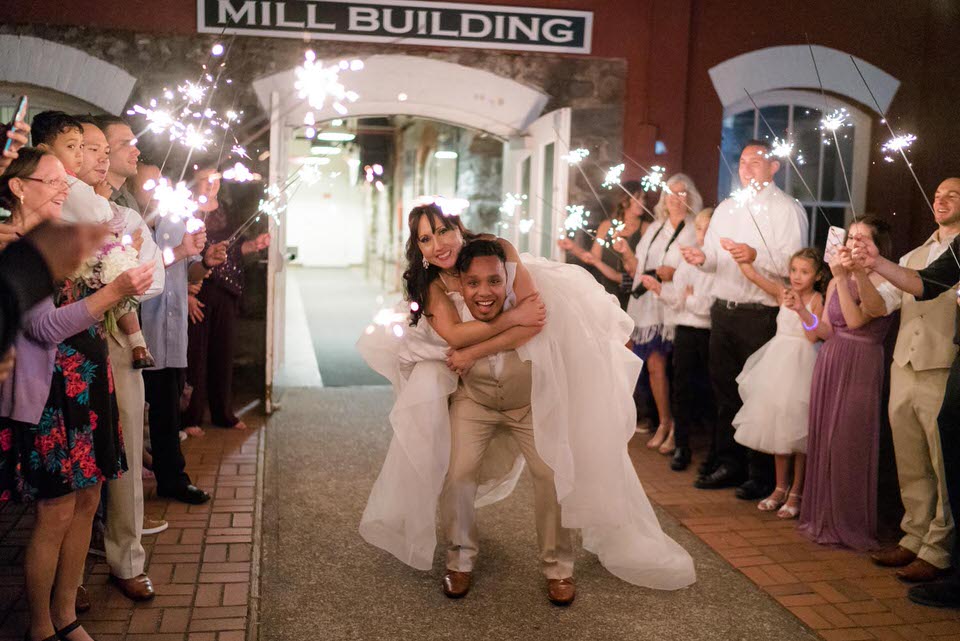
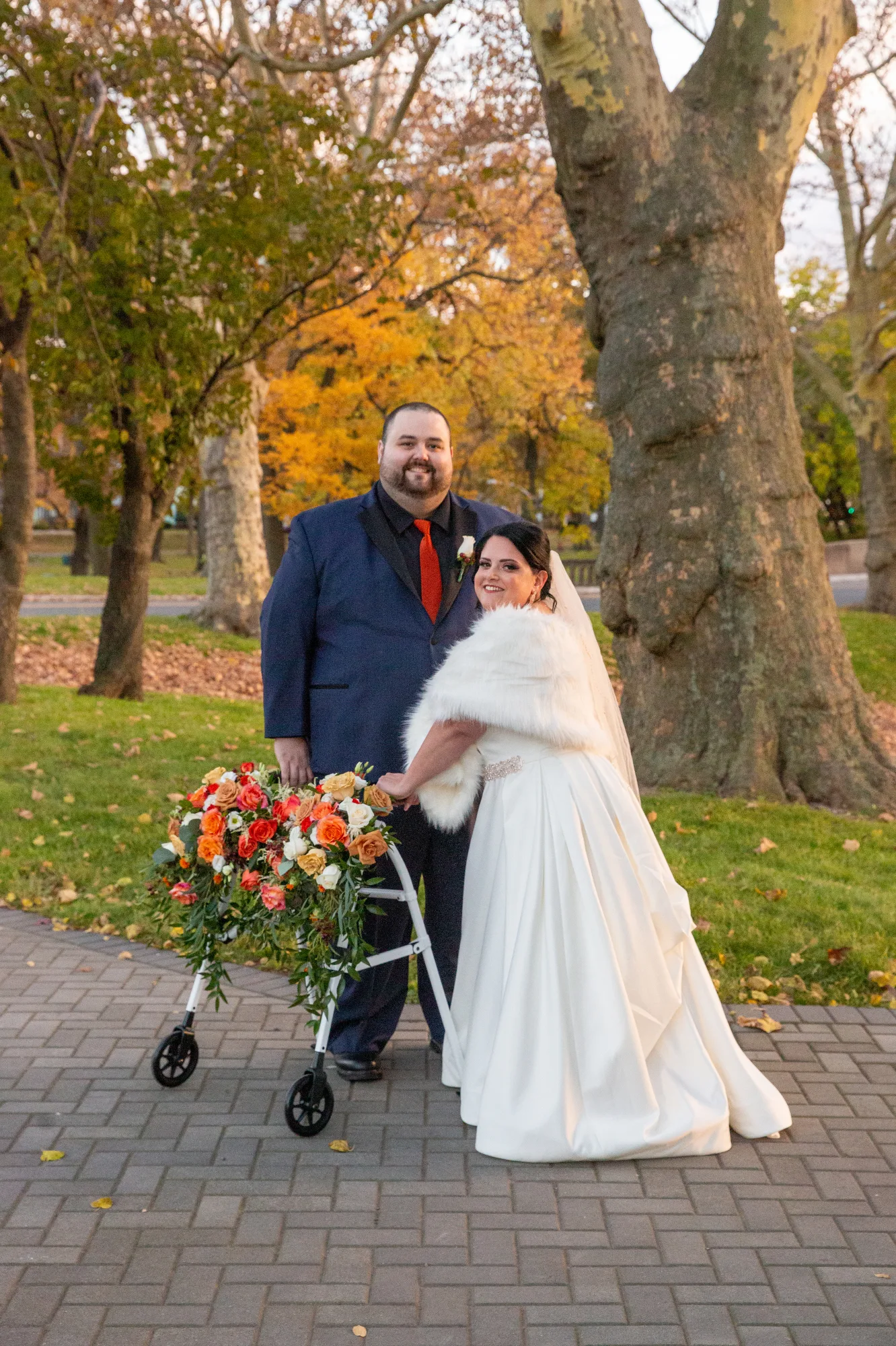
For instance, to answer a question such as, "Does this photographer have experience shooting disabled people?" a vendor’s bio could be structured conversationally: "I’ve photographed weddings where the couple used wheelchairs, walkers, service animals, and ASL interpreters. I plan every shot list around actual mobility and sightlines, not just a pretty backdrop." This approach demonstrates not only capability but also empathy and a deep understanding of specific client needs, making the vendor highly relevant to a targeted AI query. This shift mandates a move from generic self-promotion to specific, empathetic, and question-answering content, a principle Offbeat Wed has embedded into its vendor profiles with extensive business FAQ and personal interview sections, exemplified by members like Sightglass Photo + Films and Milestone Images, whose listings directly address diverse client needs.
The Imperative of Content Freshness in AI Rankings
Another critical factor in AI-driven discovery is content freshness. AI models heavily weight the recency of information, especially for time-sensitive queries, which most wedding searches inherently are. A meticulously researched and well-written piece from two years ago, however high its quality, can be outranked by a more recent, even if qualitatively inferior, piece published last month, purely due to the AI’s preference for up-to-date information. While potentially frustrating for content creators, this mechanism reflects the AI’s design to provide the most current and relevant information available.
Practically, this means that a singular, high-profile feature or mention received years ago no longer carries the sustained marketing weight it once did. The era of resting on past laurels is over. Sustained visibility now requires a continuous "drumbeat" of fresh mentions and updated information rather than a one-time "spotlight" event. Vendors must adopt a strategy of ongoing engagement and content contribution across the digital ecosystem to maintain their relevance in AI rankings. This could involve regularly updating directory profiles, contributing to new real wedding features, or participating in industry-specific discussions that generate fresh mentions.
Navigating the New Landscape: Strategic Adaptation for Wedding Professionals
The current shift in consumer discovery paradigms presents both challenges and unparalleled opportunities for wedding professionals. Industry analysts agree that this marks a pivotal moment, requiring vendors to critically re-evaluate their digital presence and marketing strategies beyond the confines of traditional SEO. While an initial wave of skepticism regarding AI’s role in small businesses is understandable, the key distinction for vendors lies not in adopting AI tools themselves, but in achieving "AI literacy"—understanding how these tools impact client behavior and, consequently, their own discoverability.
This does not mandate that vendors must generate copy with chatbots or integrate AI into their daily operations. Rather, it means recognizing that the rules of engagement for client acquisition have changed. A vendor can meticulously hand-write every sentence of their bio in their unique voice and still reap significant benefits from understanding that specificity, natural language, and credible third-party mentions now outperform outdated keyword-stuffing tactics. Being AI-literate in this context is akin to understanding the postal system’s mechanics to ensure a letter reaches its destination, rather than needing to design the postal system itself. Ignoring these fundamental shifts risks accidental invisibility in an increasingly AI-mediated market.
Actionable Steps for Vendors in an AI-Dominated Search Environment
For wedding professionals seeking to thrive in this evolving digital landscape, immediate and practical steps can be taken, many of which require no additional budget:
- Optimize Google My Business and Other Local Listings: Ensure all information is current, comprehensive, and includes natural language descriptions of services and specialties. Encourage clients to leave detailed reviews.
- Enhance Specialized Directory Profiles: Actively fill out all available sections on reputable wedding vendor directories, particularly Q&A sections. Use these spaces to answer specific, nuanced questions that couples might ask an AI, rather than just listing services. Focus on conversational language that highlights unique selling propositions and niche expertise (e.g., "queer-friendly," "disability-inclusive," "sustainable practices").
- Seek Strategic Third-Party Mentions: Actively pursue features in real wedding publications, contribute expert advice to industry blogs, and collaborate with other vendors on projects that will generate mentions. Focus on quality platforms that AI models are likely to trust.
- Collaborate for Content Creation: Partner with other vendors to create joint content—blog posts, social media features, styled shoots—that generates mutual mentions and expands reach across trusted networks.
- Maintain Content Freshness: Regularly update existing directory listings, social media profiles, and any content on third-party sites. Submit new real weddings and client testimonials consistently to ensure a steady stream of fresh, relevant information for AI models to discover.
- Articulate Niche Specialization: Clearly define and communicate what makes your business unique. AI is highly effective at matching specific needs with specialized providers. If you cater to blended families, unique cultural traditions, or specific accessibility requirements, make sure this is explicitly and conversationally stated across your digital footprint.
One concrete way for Offbeat Wed vendor members to engage with this strategy immediately is by responding to the upcoming submission call for a feature on navigating blended families and adult children at midlife weddings. This piece will actively seek insights from officiants, planners, photographers, caterers, and other professionals with real-world experience, offering a direct opportunity to generate valuable, fresh mentions on a trusted platform. For those not yet part of the Offbeat Wed vendor community, joining offers a direct avenue to participate in this new era of AI-driven discoverability.
The Future of Wedding Vendor Discovery
As AI technologies continue to evolve, the methods of consumer discovery will undoubtedly undergo further refinements. However, the fundamental shift towards conversational search and the reliance on a distributed network of trusted third-party information are trends that are here to stay. Wedding professionals who embrace AI literacy and adapt their marketing strategies to prioritize comprehensive, conversational, and continuously updated digital footprints across reputable platforms will be best positioned for success.
Ultimately, while AI streamlines the initial discovery phase, the enduring value of authenticity, specialization, and genuine human connection remains paramount. AI serves as a powerful conduit, connecting couples with the services that best meet their unique needs and values. It is not a replacement for the artistry, expertise, and personal touch that define the wedding industry, but rather a sophisticated tool that empowers couples to find those unique qualities more efficiently than ever before. The future of wedding vendor discovery lies in harmonizing human creativity with intelligent automation, ensuring that the perfect match is made, one nuanced query at a time.