
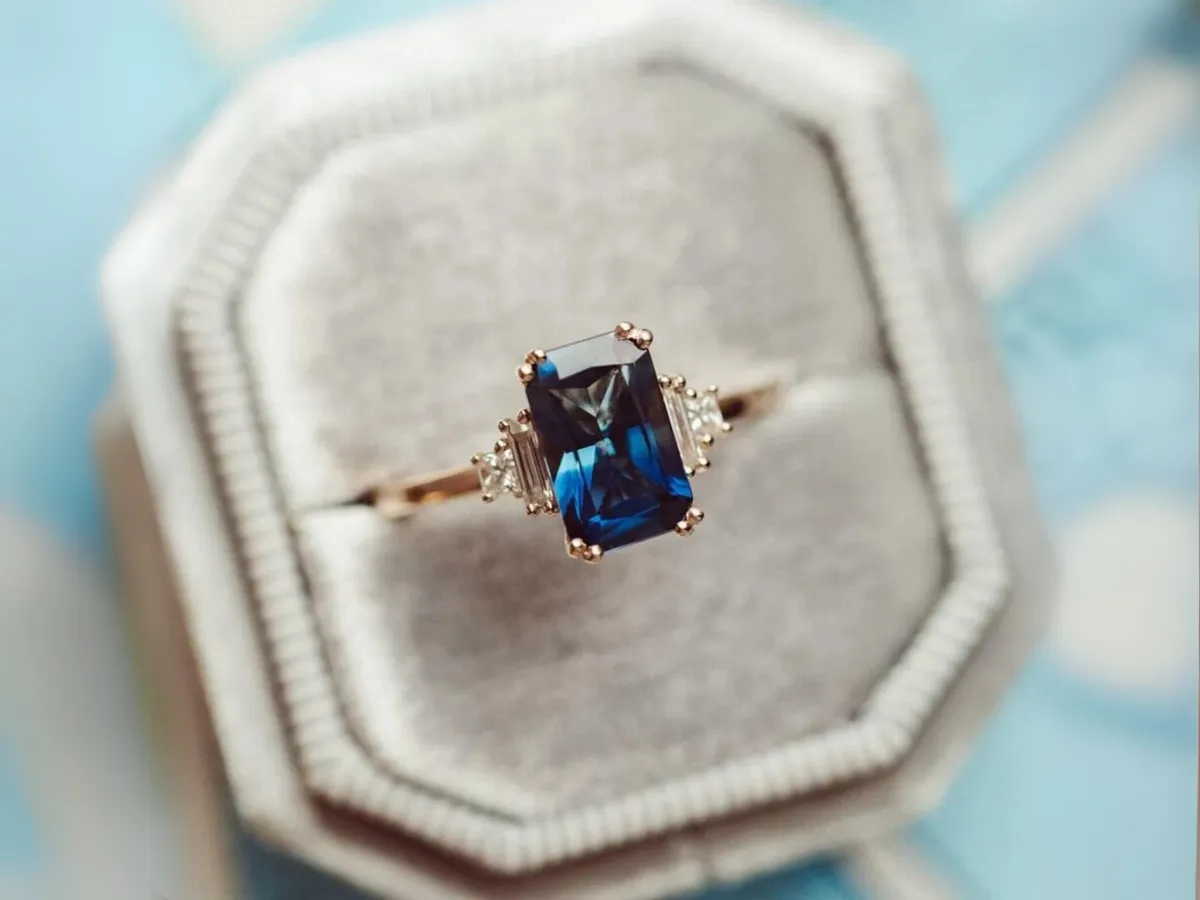
Sapphire engagement rings are increasingly capturing the attention of modern couples, positioning themselves as a compelling alternative to traditional diamonds. This shift reflects a growing consumer desire for personalized expression, ethical sourcing, and financial prudence, without compromising on beauty or durability. Known for their captivating hues, rich symbolism, and remarkable resilience, sapphires are cementing their status as a sophisticated and savvy choice for a lifetime commitment.

Historically, sapphires have graced the hands of royalty and nobility for centuries, long before diamonds became the dominant engagement stone. From ancient Persian kings who believed sapphires made the sky blue, to medieval European monarchs who cherished them for their protective qualities, these gemstones have always been associated with wisdom, loyalty, and truth—attributes profoundly relevant to a marital union. The enduring legacy of sapphires in engagement jewelry was notably revitalized in recent history by Princess Diana’s iconic sapphire and diamond ring, now worn by Catherine, Princess of Wales. This prominent display by a modern royal figure underscored the gem’s elegance and timeless appeal, sparking renewed interest among a new generation. Beyond their symbolic depth, sapphires also offer a tangible connection to tradition, serving as the "something blue" often sought by brides for good luck on their wedding day.

The contemporary resurgence of sapphire engagement rings is multifaceted, driven by a confluence of economic, aesthetic, and ethical considerations. The diamond market, while robust, often presents a significant financial barrier for many couples. Sapphires, conversely, offer a spectrum of price points that provide "affordable luxury," allowing couples to achieve a high-end aesthetic without the prohibitive cost. Data from August 2026 indicates a wide price range for sapphire engagement rings, from approximately $50 for sterling silver settings with cubic zirconia accents to upwards of $4,740 for fine jewelry pieces featuring natural sapphires and substantial diamond halos. This flexibility allows couples to allocate their budget effectively, focusing on elements most important to them.

Beyond cost, the inherent versatility of sapphires in color is a major draw. While deep blue is the most iconic hue, sapphires naturally occur in an extraordinary array of colors, including vibrant pinks, sunny yellows, serene teals, delicate lavenders, and even rare colorless whites. This vast palette empowers couples to select a gemstone that truly reflects their individual style and narrative, moving beyond the monochromatic dominance of traditional white diamonds. This desire for uniqueness aligns with broader trends in consumer behavior, where personalization and authenticity are highly valued.

Durability is another critical factor in the suitability of any engagement ring for everyday wear. Sapphires rank 9 on the Mohs scale of mineral hardness, placing them just below diamonds (which rank 10). This exceptional hardness means sapphires are highly resistant to scratches and chips, making them a practical and enduring choice for a piece of jewelry intended to be worn daily for decades. This practical aspect, combined with their beauty, makes them a sound investment for a lifetime.

When evaluating a sapphire, prospective buyers should familiarize themselves with the "4 Cs"—Color, Clarity, Cut, and Carat Weight—though their prioritization differs slightly from diamonds.

- Color is paramount for sapphires. A vivid, evenly saturated hue is generally preferred, with specific shades like "cornflower blue" being highly prized. The absence of color zoning (uneven distribution of color) is also desirable. For fancy colored sapphires, the intensity and purity of the hue are key determinants of value.
- Clarity refers to the presence of inclusions. While eye-clean sapphires are valuable, minor inclusions are more acceptable than in diamonds and can even contribute to the gem’s unique character. Unlike diamonds, where inclusions can significantly diminish brilliance, some silk-like inclusions can even enhance a sapphire’s beauty, particularly in certain cutting styles.
- Cut is crucial for maximizing a sapphire’s brilliance and optimizing its color display. A well-executed cut ensures light interacts beautifully with the stone, regardless of its shape—be it emerald, oval, cushion, or pear. The cut can also influence the perceived depth of color.
- Carat Weight dictates the size of the stone. While larger sapphires naturally command higher prices, the relationship between carat weight and price is often less exponential than with diamonds, particularly for lab-grown or more common natural varieties.
The market dynamics for sapphire engagement rings, as observed in August 2026, reveal a nuanced pricing structure. Entry-level options, such as sterling silver rings with lab-created sapphires and cubic zirconia accents, begin around $50-$100. Moving into solid 14k gold bands with real sapphires, prices typically range from $175 to $550, particularly from independent makers on platforms like Etsy who benefit from lower overheads. Mid-range designer pieces, often featuring solid gold and subtle diamond accents, fall between $1,390 and $1,930. Mainstream jewelers like Kay and Blue Nile offer sapphire rings, often with diamond halos, in the $1,895 to $2,980 range, frequently applying significant discounts. At the pinnacle, fine jewelry halo settings with natural sapphires and nearly a carat of surrounding diamonds can reach $4,280 to $4,740. This detailed analysis underscores a critical insight for savvy shoppers: the overall price of a sapphire engagement ring is often more heavily influenced by the metal choice, the intricacy of the setting, and the presence and carat weight of accompanying diamonds, rather than the sapphire itself. This allows for strategic budgeting; prioritizing the sapphire’s quality and size while scaling back on surrounding embellishments can significantly reduce costs.

The growing demand for ethical and sustainable options in the jewelry industry has also bolstered the appeal of sapphires. Many jewelers now offer ethically sourced natural sapphires, often accompanied by certifications detailing their origin and mining practices. Furthermore, the advent and refinement of lab-grown sapphires provide an excellent alternative. These gems are chemically, physically, and optically identical to their mined counterparts but are produced in controlled environments, eliminating environmental and social concerns associated with mining. This makes lab-grown sapphires a particularly attractive choice for environmentally conscious consumers, often at a more accessible price point. According to industry analysts, this flexibility in sourcing options positions sapphires as a strategic choice for consumers who prioritize design and material quality, alongside responsible consumption, over traditional diamond exclusivity.

Current design trends in sapphire engagement rings cater to a wide array of tastes:

- Classic Solitaires: These designs emphasize the sapphire itself, allowing its color and brilliance to take center stage. They are often set in simple prongs or bezels, appealing to those who appreciate minimalist elegance.
- Halo Settings: Framing the central sapphire with a ring of smaller diamonds, halo settings enhance the perceived size and sparkle of the primary stone. They offer a luxurious look and are a popular choice for adding extra brilliance.
- Vintage-Inspired Designs: Drawing from historical eras such as Art Deco or Edwardian, these rings feature intricate metalwork, milgrain detailing, and often unique side stones or geometric patterns, imbuing them with old-world charm and character.
- Alternative Hues: Beyond the traditional blue, sapphires in peach, teal, lavender, and yellow are gaining immense popularity. These unconventional colors offer a distinct and modern aesthetic. For example, teal sapphires, with their deep ocean tones, provide a sophisticated twist, while soft peach sapphires offer a romantic, delicate appeal, often complemented beautifully by rose gold settings. These diverse color options truly allow sapphires to earn their place as a diamond alternative, as such vibrant and varied hues are almost impossible to achieve in other stones at a comparable price point.
For those considering a sapphire engagement ring, several practical tips are essential. First, establish a clear budget, as sapphires offer remarkable flexibility across various price points. Second, understand the unique aspects of sapphire grading, prioritizing color saturation and hue. Third, explore ethical options, including both responsibly sourced natural sapphires and lab-grown alternatives, seeking certifications for transparency. Fourth, choose a setting that not only complements the sapphire but also reflects the wearer’s personal style, whether it’s a timeless solitaire, a dazzling halo, or a charming vintage design. Finally, be mindful of lead times; many unique or custom sapphire rings are made-to-order and can require several weeks, or even months, for production and delivery. Planning ahead is crucial to ensure the ring is ready for the intended proposal date.

The broader market implications of this growing sapphire trend are significant. It signals a notable shift in consumer values, moving beyond singular traditions towards greater personalization, ethical considerations, and informed financial decisions. This diversification is a healthy sign for the jewelry industry, encouraging innovation and expanding offerings beyond a sole focus on diamonds to embrace the rich spectrum of natural and lab-created gemstones. Modern couples are increasingly seeking rings that resonate deeply with their personal story and values, rather than adhering strictly to conventional expectations.

In conclusion, sapphire engagement rings represent a compelling fusion of beauty, durability, and profound symbolism, making them an increasingly preferred choice for couples embarking on their journey of lifelong commitment. They offer a unique opportunity to break away from traditional norms while still making a powerful and meaningful statement. Whether drawn to the classic deep blue or an unexpected, vibrant hue, a sapphire ring stands as a stunning and enduring testament to love, wisdom, and loyalty, symbolizing a modern approach to everlasting commitment. This trend underscores a broader evolution in consumer preferences, emphasizing individuality, value, and ethical responsibility in the significant purchase of an engagement ring.