
The Evolution of Valentine’s Day Confectionary Trends
The release of this tutorial comes at a time when the home baking sector has experienced unprecedented growth, driven largely by digital media and the democratization of professional culinary techniques. Traditionally, Valentine’s Day cakes were characterized by smooth fondant finishes or simple piped borders. However, consumer preferences have shifted toward "maximalist" textures—a style where the frosting itself becomes a sculptural element. Data from retail market analysts suggests that the DIY baking market has seen a steady increase in the purchase of specialized decorating tools, such as piping tips and high-quality food gels, as consumers seek to replicate artisan gallery looks at home.
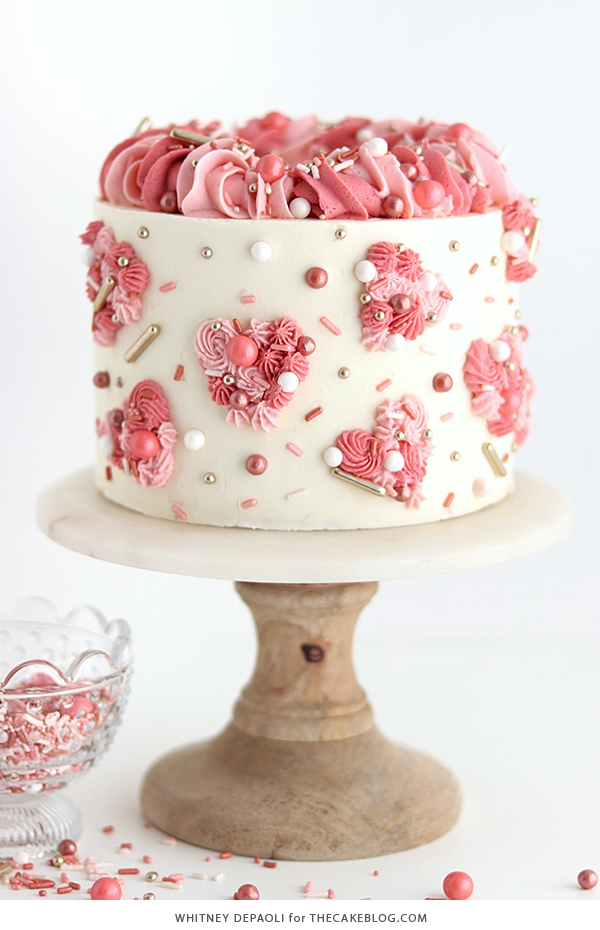
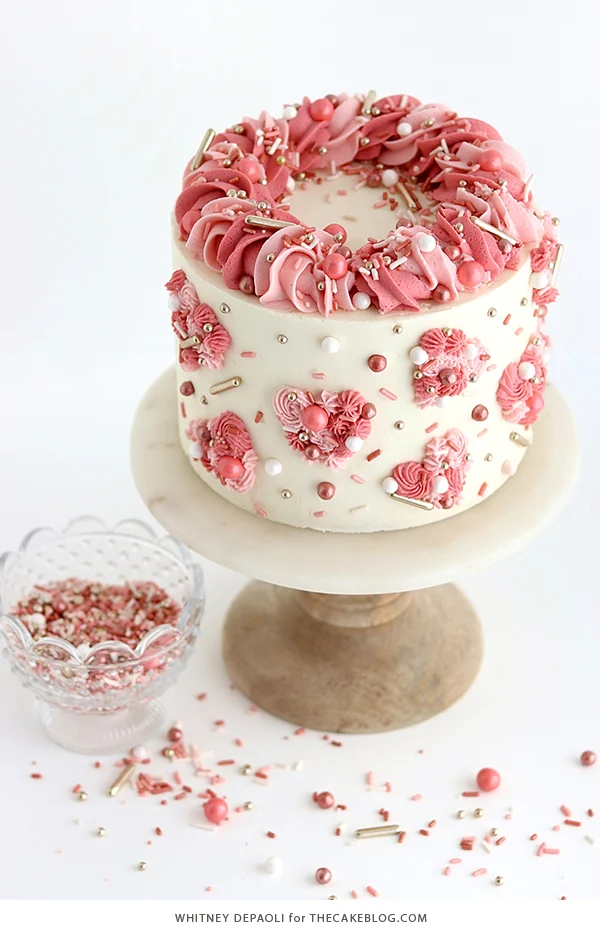
This specific "Piped Hearts" design leverages the popularity of the "shag cake" and "rosette" trends, combining them into a cohesive holiday theme. The use of American buttercream—a crusting frosting known for its stability and ease of tinting—serves as the medium for this structural art. Unlike softer European-style buttercreams, American buttercream provides the necessary tension to hold the intricate shapes of the 1M, 199, and 21 piping tips, ensuring the hearts maintain their definition during the decorating process and subsequent display.
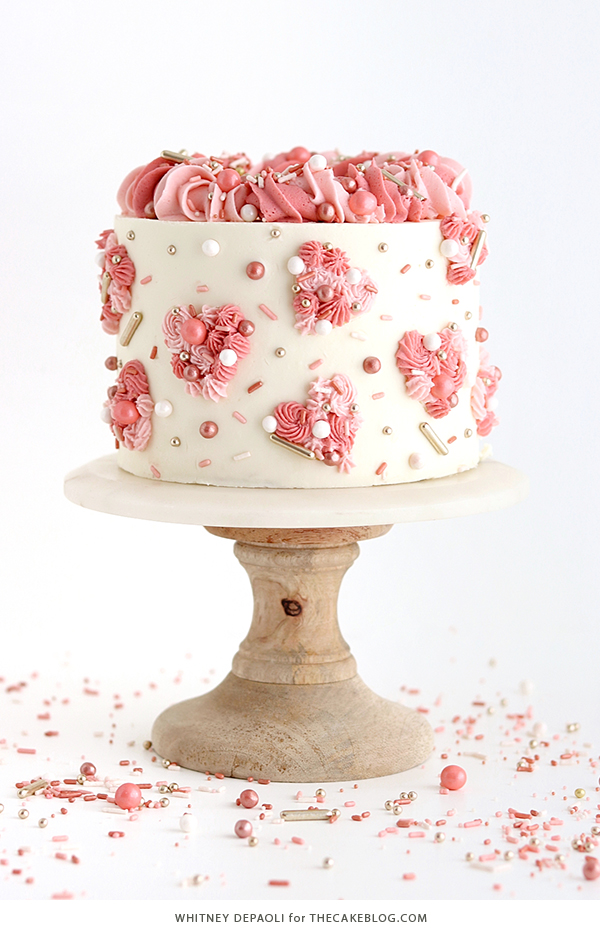
Technical Methodology and Procedural Chronology
The execution of the Piped Hearts Valentine’s Cake follows a rigorous technical sequence designed to ensure symmetry and structural integrity. The process begins with the preparation of a chilled, frosted cake, which serves as a stable canvas for the subsequent layers of decoration.
Phase I: Color Theory and Material Preparation
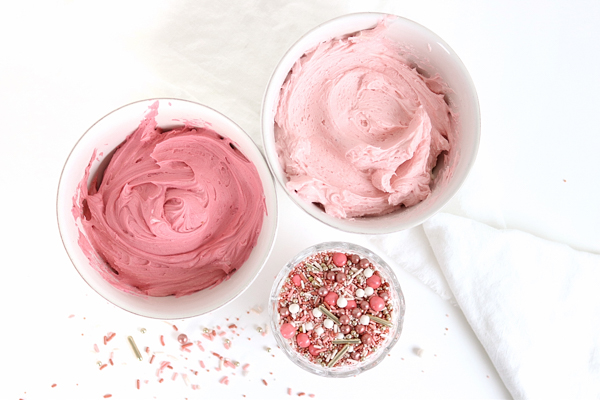
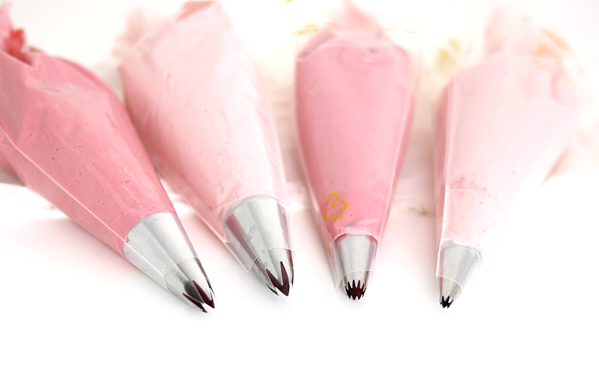
The tutorial prescribes a sophisticated color scheme achieved through the use of specific pigment concentrations. DePaoli recommends dividing the buttercream into two distinct bowls, both tinted with Americolor Dusty Rose. By varying the saturation, the baker creates a monochromatic depth that complements the metallic and pearlescent tones of the rose gold sprinkle mix. This phase is critical, as the consistency of the buttercream must be maintained to prevent "sliding" or loss of detail. The preparation involves four piping bags:
- Two bags fitted with 1M tips (large open star) for creating rosettes and large stars.
- One bag fitted with a 199 tip (open star) for medium-textured fill.
- One bag fitted with a 21 tip (small open star) for fine-detail work.
Phase II: Structural Imprinting
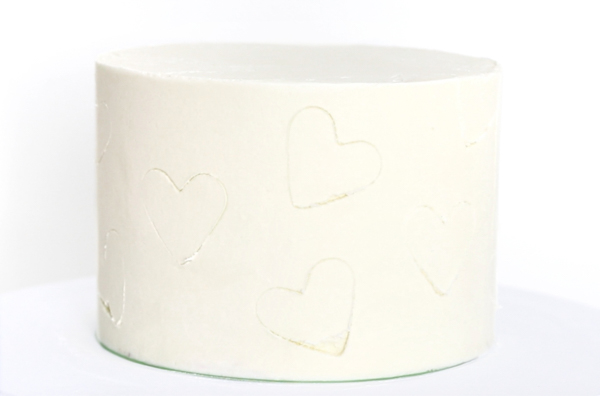
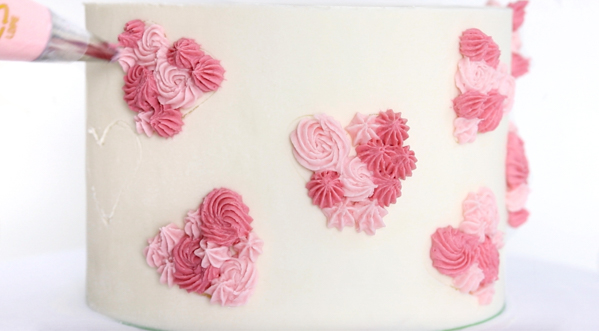
To solve the common issue of asymmetrical free-handing, the tutorial introduces a "stencil-imprint" method. Using a standard heart-shaped cookie cutter, the baker lightly presses the shape into the chilled frosting. This creates a guide for the piping work. Industry experts note that this technique reduces the margin of error significantly, allowing hobbyists to achieve the geometric precision usually reserved for commercial-grade stencils. The tutorial advises spacing these imprints at least two inches apart to prevent visual crowding, a principle rooted in basic design theory regarding negative space.
Phase III: Textural Application and Ornamentation
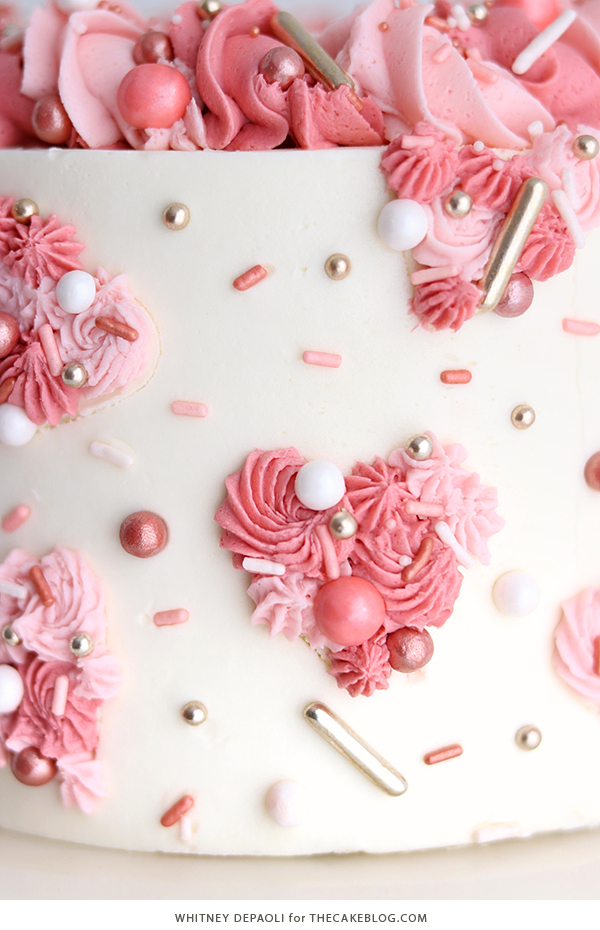
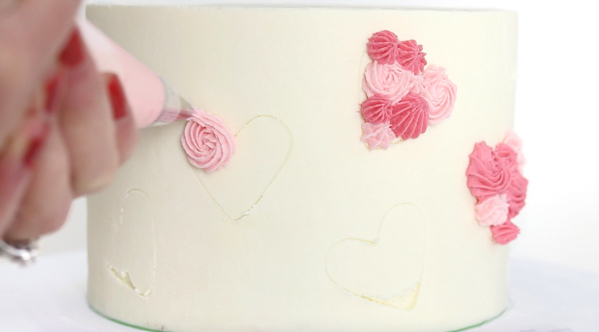
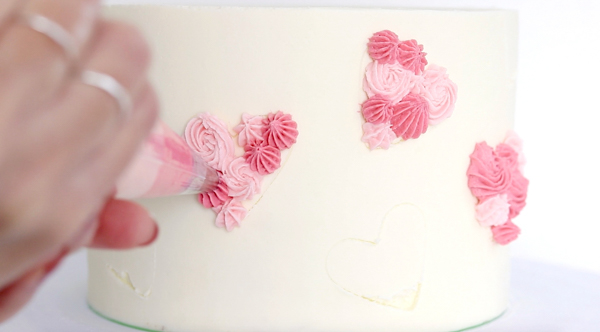
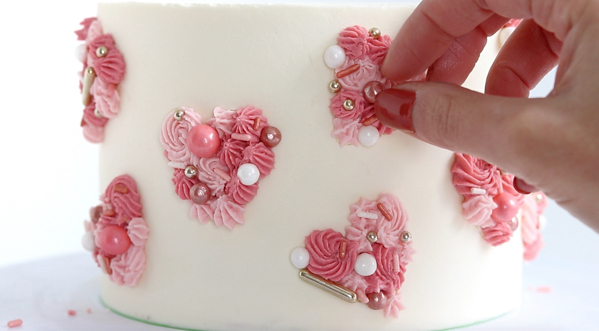
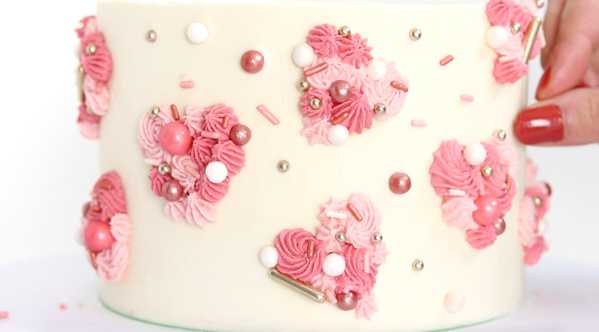
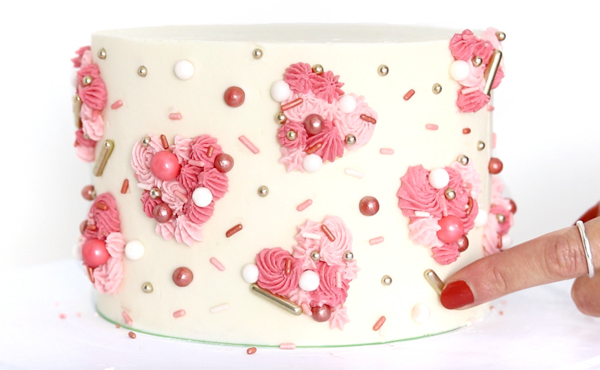
The core of the design lies in the "fill" process. The baker utilizes the various piping tips to create a cluster of rosettes and stars within the imprinted heart boundaries. This is not a flat fill; rather, it is a layering of different heights and shapes. Once the buttercream is applied, the "mixed-media" aspect begins. Sprinkles are added one by one into the gaps of the piping. DePaoli suggests a technical "hack" for this meticulous process: using a damp paper towel to slightly moisten the fingertip, which creates enough surface tension to pick up and place individual sprinkles without the need for specialized tweezers.
Phase IV: The Rosette Rope Border
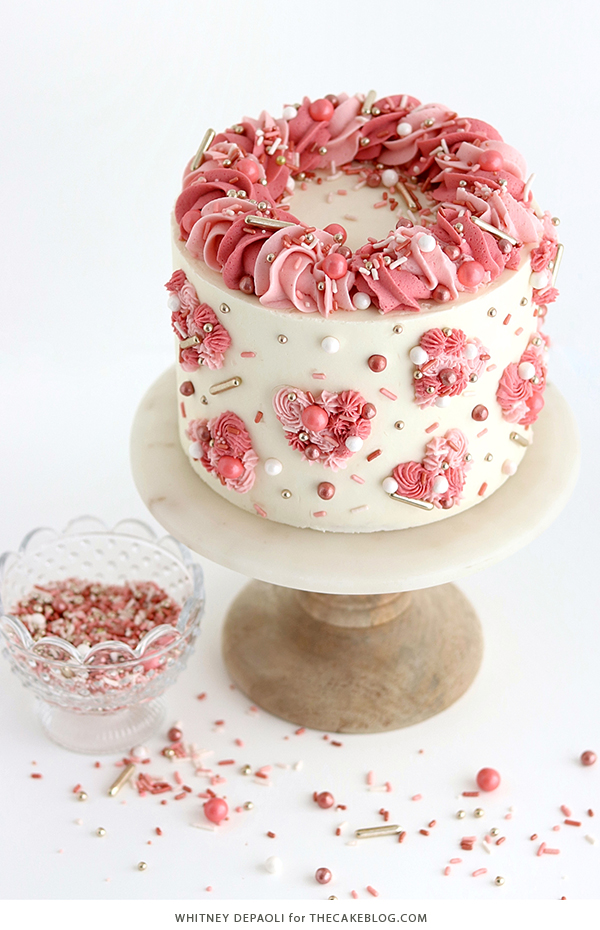
The final architectural element is the rosette rope border. This is achieved by holding the 1M piping tip at a 45-degree angle and piping counter-clockwise rosettes in an alternating color pattern. This border serves to "frame" the cake, drawing the eye toward the center while providing a professional finish to the top edge.
Regulatory Guidance and Safety Standards
A critical component of the tutorial involves the use of decorative elements known as dragées—metallic-coated sugar pearls or rods. The article includes a necessary regulatory notice regarding these items. While gold and silver dragées are widely sold as cake decorations, the United States Food and Drug Administration (FDA) has not approved the metallic coatings for human consumption.
The tutorial explicitly advises bakers to instruct guests to remove certain decorative elements, such as long gold rods, before eating. This highlights a growing tension in the baking community between aesthetic trends and food safety regulations. Professional bakers are increasingly required to navigate these guidelines, often opting for "for decoration only" labels on high-end custom orders to comply with local health department standards.
The Economic Impact of Digital Culinary Influence
The mention of @frostedfujicakes as the primary inspiration for this tutorial underscores the powerful role of social media in the modern culinary economy. Platforms like Instagram and TikTok have become the primary drivers of consumer trends in the baking industry. When a specific technique, such as "textured heart piping," goes viral, it creates a ripple effect throughout the supply chain.
Retailers of baking supplies often report surges in the sale of specific piping tips (like the Wilton 1M) following the release of high-profile tutorials. Furthermore, the rise of "Galentine’s Day"—a social holiday celebrated on February 13th focused on female friendship—has expanded the market for Valentine’s-themed goods. This tutorial explicitly targets this demographic, offering a "versatile" design suitable for both romantic and platonic celebrations. Market data indicates that spending on Galentine’s Day activities has grown by over 20% in the last five years, providing a lucrative secondary market for bakers and content creators.
Broader Implications for the Baking Industry
The Piped Hearts Valentine’s Cake tutorial represents more than just a seasonal recipe; it is a manifestation of the "Professional Hobbyist" movement. As professional-grade equipment and techniques become more accessible through digital education, the line between home baking and commercial artistry continues to blur.
This shift has several implications:
- Increased Demand for High-Quality Ingredients: Home bakers are no longer satisfied with grocery-store food coloring; they are seeking out specific brands like Americolor to achieve the muted, sophisticated tones seen in professional portfolios.
- The Rise of the "Micro-Bakery": Many individuals who master these techniques go on to launch home-based businesses, leveraging social media to sell custom cakes that compete with traditional brick-and-mortar establishments.
- Aesthetic Standardization: While social media fosters creativity, it also leads to a "global aesthetic" where certain styles—like the textured heart—become the standard for a particular season, regardless of geographic location.
In conclusion, Whitney DePaoli’s tutorial provides a comprehensive framework for achieving a modern, sophisticated Valentine’s Day aesthetic. By combining technical precision with accessible tools and addressing safety concerns regarding decorative elements, the guide serves as a vital resource for the contemporary baking community. As the industry continues to evolve, the integration of social media influence, regulatory awareness, and advanced textural techniques will remain the hallmark of successful confectionary design.