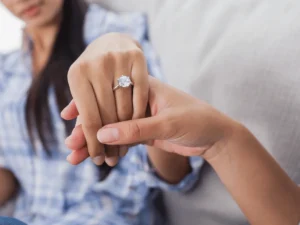
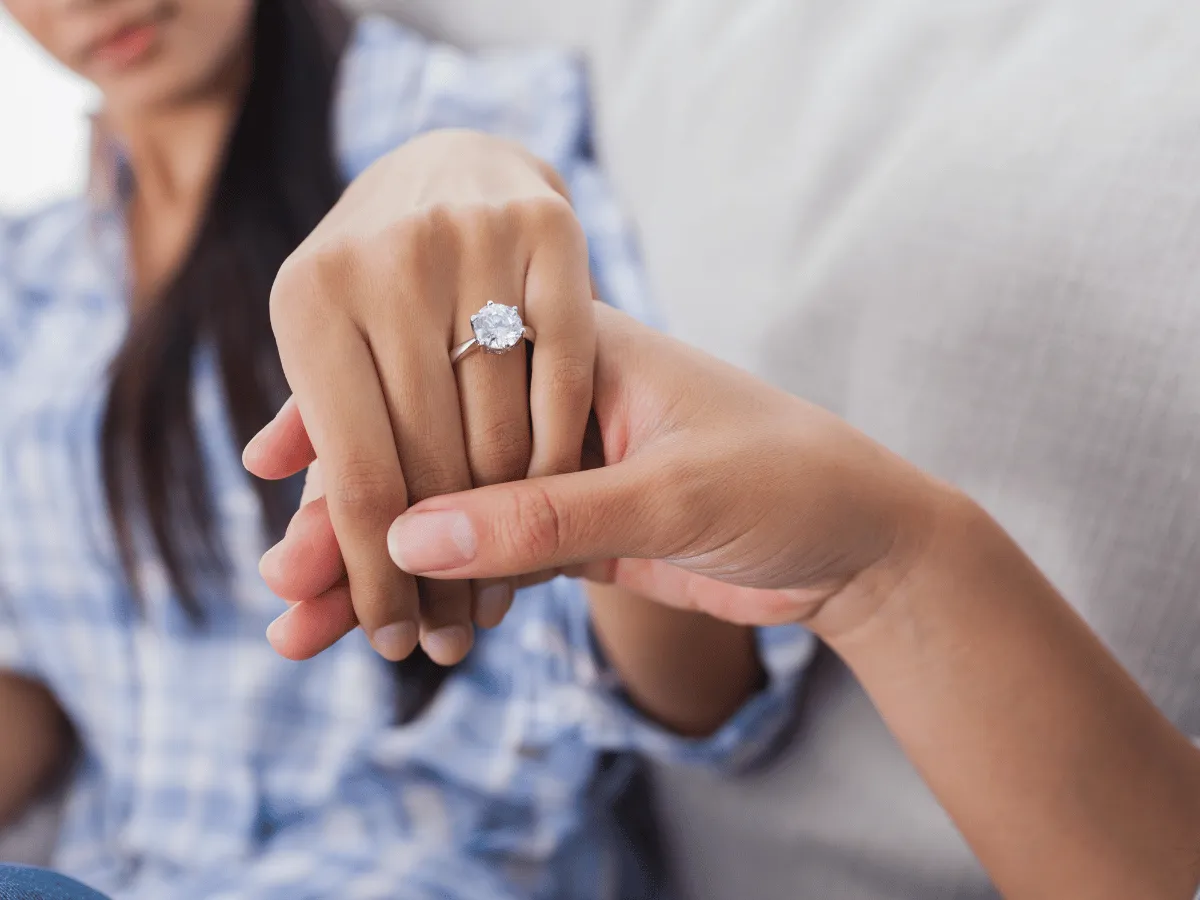
For many embarking on the journey toward matrimony, the selection of an engagement ring represents a significant emotional and financial milestone. However, the perceived exorbitant cost of these symbols of commitment often presents a formidable challenge, prompting couples to seek innovative strategies for fiscal prudence. This article explores the evolving landscape of engagement ring procurement, offering a comprehensive guide to navigating market complexities and achieving substantial savings without compromising on sentiment or quality.
The average expenditure on engagement rings has remained a subject of considerable discussion. According to The Knot’s 2026 Real Weddings Study, as reported by Rapaport, couples married in 2025 allocated an average of $4,600 to the engagement ring. This figure, while a useful benchmark, does not represent a mandatory spending target. Indeed, a burgeoning segment of the market caters to those who prioritize financial sensibility, demonstrating that exquisite rings are attainable at considerably lower price points through informed decision-making.
The Enduring Legacy of the "Two Months’ Salary" Myth
A foundational aspect of understanding contemporary engagement ring economics involves deconstructing historical marketing narratives. For decades, the adage suggesting an expenditure equivalent to two or three months’ salary on an engagement ring permeated societal consciousness. This benchmark, however, did not originate from independent financial planning experts or consumer advocacy groups. Its genesis lies firmly within the strategic advertising campaigns of De Beers, the global diamond conglomerate.
Beginning in 1947, De Beers launched its iconic "A Diamond Is Forever" campaign, a marketing masterpiece that inextricably linked diamonds with everlasting love and commitment. As the campaign evolved, the company’s advertisements subtly, then overtly, suggested spending benchmarks. Initially, the recommendation was a month’s salary, a figure that gradually escalated over time to the now-familiar two or three months. This brilliant, albeit self-serving, strategy successfully cultivated a perception of intrinsic value and established a societal norm for diamond expenditure that largely benefited the industry.
In essence, the very entities profiting from diamond sales dictated the perceived appropriate spending level for their products. Contemporary financial literacy advocates and consumer behavior experts increasingly encourage couples to disregard this arbitrary, industry-created rule, instead advocating for a budget rooted in personal financial reality rather than corporate marketing legacy.
Current Market Dynamics: A Shift Towards Value and Alternatives
The 2025 data from The Knot’s Real Weddings Study offers crucial insights into current consumer preferences and spending habits. While the $4,600 average provides a snapshot, a deeper dive into the report reveals a significant trend: a growing preference for lab-grown diamonds. The study indicated that couples opting for lab-grown diamonds generally spent less while simultaneously acquiring larger stones. This critical observation underscores a fundamental shift in consumer values, moving away from the exclusivity of mined diamonds towards a more cost-effective and ethically transparent alternative.
Industry analysts suggest that this trend is driven by a confluence of factors: increased awareness regarding the origin and environmental impact of mined diamonds, advancements in lab-grown diamond technology making them virtually indistinguishable from their natural counterparts, and a generation of consumers prioritizing financial prudence and value. This shift has profound implications for both the traditional diamond mining sector and the burgeoning lab-grown diamond industry, signaling a potential long-term realignment of market share.
Strategic Financial Planning: Setting a Realistic Budget
Before engaging with jewelers or browsing online inventories, establishing a realistic and sustainable budget is paramount. This initial step involves a candid assessment of current savings, disposable income, and anticipated future expenses. The engagement ring is often the first significant joint financial commitment for a couple, but it is rarely the last. It precedes other substantial expenditures such as wedding costs, a honeymoon, potential housing transitions, and future family planning.
Financial advisors consistently recommend approaching the engagement ring purchase as any other significant financial goal: by setting a specific numerical target, establishing a realistic savings timeline, and implementing an automated savings system. This disciplined approach ensures that the purchase is made from accumulated capital rather than incurring debt. Opting for a ring that can be paid for in cash invariably positions a couple on a stronger financial footing as they embark on their marital journey, avoiding the burden of interest payments that can accompany financing options. While promotional financing rates may appear attractive, understanding the terms, particularly what happens if the balance is not paid within the introductory period, is crucial to prevent unexpected and substantial costs.
Twelve Proven Strategies for Optimizing Engagement Ring Expenditure
Once a clear budget has been established, several tactical decisions can dramatically influence the final cost of an engagement ring. These levers allow couples to maximize the visual impact and quality of the ring while adhering to their financial parameters.
-
Embrace Lab-Grown Diamonds: This is arguably the most impactful strategy for cost reduction. Lab-grown diamonds possess nearly identical chemical, optical, and physical properties to mined diamonds, as confirmed by the Gemological Institute of America (GIA). The key differentiator is their origin: they are cultivated in controlled laboratory environments rather than extracted from the earth. This fundamental difference in production method translates into a significantly lower retail price, often 50-70% less than a comparable mined diamond. The ethical and environmental benefits, often cited by consumers, further bolster their appeal.
-
Consider Moissanite or Other Alternative Stones: Beyond lab-grown diamonds, moissanite offers another compelling alternative. Moissanite is a distinct gemstone, originally discovered in a meteorite, and now primarily synthesized for jewelry. It closely resembles a diamond, earning its classification as a diamond simulant, but exhibits a unique fire and brilliance with more rainbow-flecked sparkle. It is also exceptionally durable. Crucially, moissanite typically costs a fraction of a diamond of equivalent size, providing a luxurious aesthetic at an accessible price point. Other popular alternatives include white sapphires or topazes, which offer a similar colorless appearance.
-
Opt for a Colored Gemstone: Moving away from traditional colorless stones opens a world of vibrant possibilities. Sapphires, morganite, emeralds, rubies, and moonstones offer a personalized and often more budget-friendly option. Colored gemstones can reflect personal taste, cultural heritage, or simply a preference for unique aesthetics. Their price points vary widely based on rarity, size, and quality, but generally, they present a more economical choice than diamonds while offering a distinct and often striking appearance.
-
Strategic Carat Weight Selection: Diamond pricing often exhibits exponential jumps at specific "magic numbers" – commonly half-carat, one-carat, and two-carat marks. This phenomenon is driven by consumer demand and search patterns. A diamond weighing 0.90 or 0.95 carats, for example, will appear virtually identical in size to a 1.00-carat stone to the naked eye, yet its price can be considerably lower due to this psychological pricing dynamic. Shopping just under these popular weight thresholds can yield significant savings.
-
Prioritize "Eye-Clean" Clarity Over Flawless: Clarity refers to the presence of internal inclusions (blemishes) and external characteristics. The GIA clarity scale ranges from Flawless (FL) to Included (I). Many inclusions are microscopic and undetectable without magnification. Paying a premium for a flawless or near-flawless diamond often translates to an investment in characteristics that will never be observed during normal wear. Jewelers recommend seeking an "eye-clean" diamond, meaning no inclusions are visible to the unaided eye. This typically corresponds to grades in the VS (Very Slightly Included) or SI (Slightly Included) range, offering substantial savings without compromising visual beauty.
-
Thoughtful Color Grade Selection: Diamond color is graded from D (colorless) to Z (light yellow/brown). While D, E, and F are considered colorless, and G, H, I, J are near-colorless, the difference between adjacent grades is often subtle. When set in yellow or rose gold, a diamond with a slightly lower color grade (e.g., G or H) can appear perfectly white, as the warm tones of the metal can mask any faint yellow tint. Dropping one or two color grades below the absolute top can result in noticeable price reductions, especially in larger stones.
-
Explore Non-Round Shapes: The round brilliant cut is the most popular and, consequently, often the most expensive per carat due to its high demand and the greater amount of rough diamond lost during its cutting process. "Fancy shapes" such as oval, pear, emerald, cushion, and princess cuts can offer a larger perceived size for their carat weight and typically come with a lower per-carat price tag. These shapes also provide a unique aesthetic, allowing for greater personalization.
-
Opt for Simpler Setting Designs: The complexity of the ring setting significantly impacts its cost. A classic solitaire setting, which features a single center stone, highlights the diamond’s beauty and is generally more affordable than intricate designs. Settings that incorporate a halo of smaller diamonds around the center stone, pavé bands (bands covered in tiny diamonds), or elaborate filigree work require more labor and additional materials, thereby increasing the overall price. Sometimes, the cost of an elaborate setting can rival or even exceed that of the center stone itself.
-
Choose 14k Gold Over Platinum: Platinum is a highly desirable precious metal, renowned for its rarity, density, and hypoallergenic properties. However, it is also typically more expensive than gold, particularly 14k gold. Both 14k white gold, yellow gold, and rose gold offer durable and attractive options for ring settings. While 18k gold is also an option, 14k gold is often preferred for engagement rings due to its greater durability and lower price point. White gold, in particular, provides a similar aesthetic to platinum but at a more accessible cost.
-
Leverage Online Retailers and Comparison Shopping: The digital marketplace has revolutionized engagement ring shopping. Online jewelers typically boast significantly larger inventories than brick-and-mortar stores, allowing for extensive comparison shopping. They also often operate with lower overheads, translating to more competitive pricing. Crucially, when shopping online, prioritize retailers that provide comprehensive grading reports from independent laboratories like the GIA or IGI (International Gemological Institute) for any diamond purchase. This ensures transparency and verifies the stone’s stated characteristics.
-
Time Your Purchase Around Major Sales Events: Like many retail sectors, the jewelry industry experiences seasonal sales cycles. Major promotions often coincide with peak shopping periods such as Black Friday, the December holiday season, and Valentine’s Day. If the proposal timeline allows for flexibility, waiting for a sitewide sale or specific promotions on settings or stones can result in substantial savings. Subscribing to newsletters from preferred online jewelers can provide alerts for these events.
-
Consider Heirloom or Pre-Owned Rings: The ultimate in sustainable and often sentimental saving is to utilize a family heirloom stone or purchase a pre-owned ring. Resetting a cherished family diamond into a new, contemporary setting can dramatically reduce costs while imbuing the ring with profound personal history. Similarly, the market for pre-owned and estate jewelry offers exceptional value. When pursuing this option, it is imperative to have the stone independently appraised by a certified gemologist to verify its authenticity, quality, and fair market value.
The Broader Economic and Societal Implications
The shift in consumer preferences towards value-driven choices and alternative stones carries significant implications for the global jewelry industry. The traditional diamond mining sector, long accustomed to market dominance, faces increasing pressure from the burgeoning lab-grown diamond industry. This competition is fostering innovation across the supply chain, from sustainable mining practices to advanced laboratory cultivation techniques.
Moreover, the evolving approach to engagement ring purchases reflects a broader societal trend among younger generations towards financial literacy and mindful consumption. These consumers are often less swayed by traditional marketing narratives and more inclined to make choices that align with their personal values, whether those values are financial prudence, ethical sourcing, or environmental responsibility. This cultural shift underscores a redefinition of luxury, where authenticity and personal meaning increasingly outweigh ostentatious display.
Beyond the Checkout: Understanding Post-Purchase Costs
The initial purchase price of an engagement ring is not always the final expenditure. Prospective buyers should be aware of potential ancillary costs that can arise after the transaction:
- Insurance: Given the value and sentimental significance of an engagement ring, obtaining jewelry insurance is highly recommended. This protects against loss, theft, or damage. Premiums vary based on the ring’s value and the chosen coverage.
- Resizing: If the ring size is not perfect, resizing will be necessary. While some jewelers offer a complimentary first resizing, subsequent adjustments or more complex alterations will incur a fee.
- Maintenance and Cleaning: Regular professional cleaning and maintenance, including checking prong security, are essential for preserving the ring’s beauty and integrity. Some jewelers offer free lifetime cleaning, while others charge for these services.
- Future Appraisals: For insurance purposes or simply to understand its value, periodic appraisals may be necessary, particularly for rings with significant value or those that have undergone repairs or upgrades.
Conclusion: Redefining Value in Commitment
The quest for the perfect engagement ring need not be synonymous with financial strain. By critically evaluating historical marketing influences, embracing contemporary market trends like lab-grown diamonds, meticulously planning a budget, and employing smart purchasing strategies, couples can acquire a beautiful and meaningful symbol of their commitment without undue financial burden. The ultimate value of an engagement ring resides not in its sticker price, but in the love and commitment it represents, and the shared future it heralds. In an era of increasing financial awareness, a thoughtfully chosen ring that aligns with a couple’s financial reality is arguably a more profound testament to their partnership than one dictated by outdated commercial mandates. With the ring secured through informed decisions, couples can then confidently transition to planning their wedding and future life together, building on a foundation of shared financial wisdom.