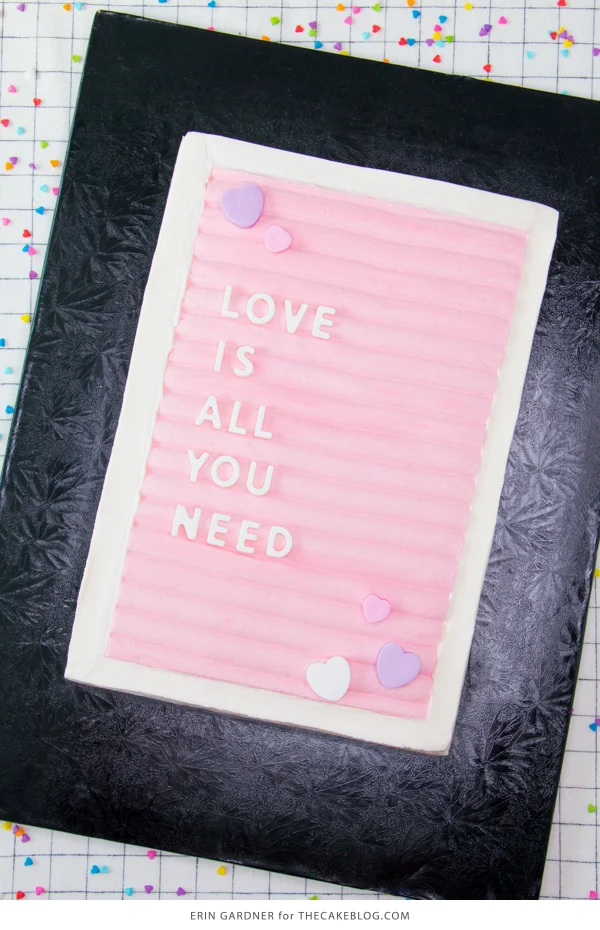
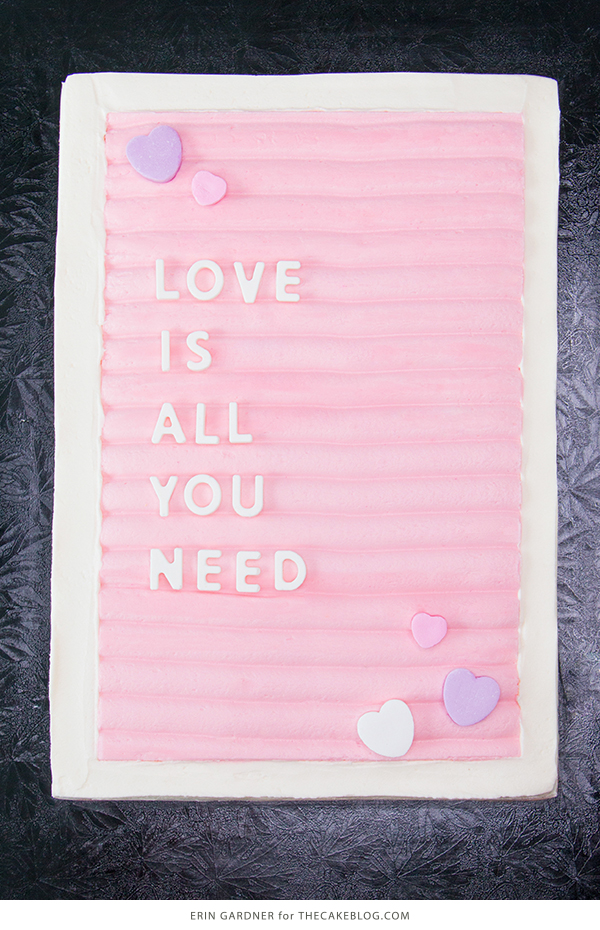
The intersection of home decor aesthetics and culinary craftsmanship has reached a new milestone with the introduction of the message board sheet cake, a design concept that translates the popular felt letter board trend into an edible medium. Contributed by pastry specialist Erin Gardner, this decorative methodology offers a versatile platform for personalized messaging, utilizing accessible tools to achieve professional-grade results. This development arrives at a time when the home baking sector is experiencing a significant shift toward "at-home professionalization," where hobbyists utilize specialized tools like scalloped cake combs and silicone molds to replicate high-end bakery finishes. By leveraging the visual language of the traditional office or cafe directory board, this cake design provides a functional yet artistic solution for various social milestones, ranging from Valentine’s Day celebrations to corporate events and gender reveals.
The Evolution of the Letter Board Aesthetic in Culinary Arts
The conceptual origin of the message board sheet cake can be traced back to the resurgence of mid-century modern signage in interior design during the mid-2010s. Felt letter boards, characterized by their horizontal ridges and movable plastic typography, became a staple of social media "flat-lay" photography. This aesthetic trend has now permeated the confectionery industry, driven by consumer demand for customizable and "Instagrammable" food products.
Market analysis indicates that the DIY cake decorating market has grown at a compound annual growth rate (CAGR) of approximately 5.4% over the last five years. This growth is largely attributed to the democratization of professional techniques through digital tutorials. The message board cake serves as a prime example of this trend, moving away from traditional floral piping toward a minimalist, graphic design approach. This shift reflects a broader cultural movement toward personalization, where the ability to "say it with cake" has evolved from simple cursive writing to sophisticated, modular typography.
Technical Methodology and Procedural Chronology
The construction of a message board sheet cake requires a systematic approach to ensure structural integrity and visual precision. The process is divided into three distinct phases: the preparation of the ridged "board," the fabrication of the chocolate typography, and the final assembly and framing.
Phase I: Architectural Foundation of the Buttercream Board
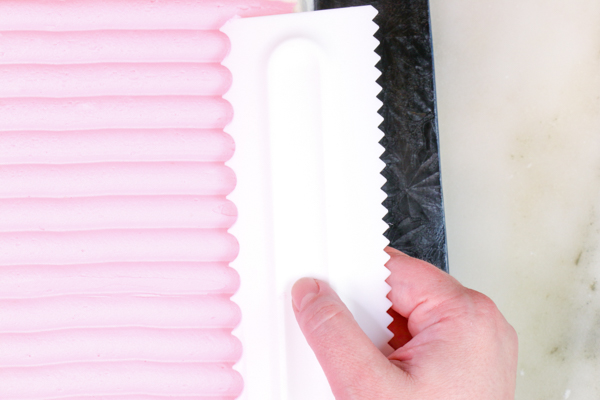
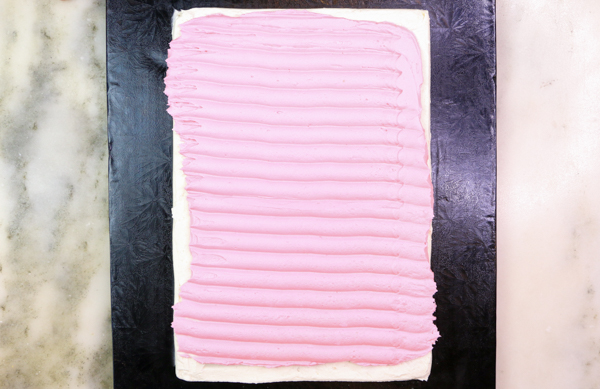
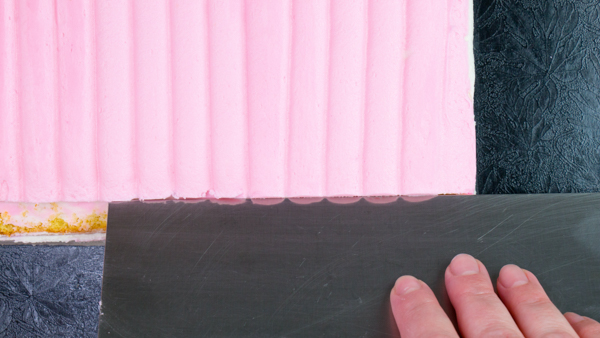
The foundational layer consists of a standard sheet cake topped with a dense application of pink buttercream. Technical precision at this stage is paramount; the buttercream must be leveled to a uniform thickness to prevent distortions in the ridged pattern. The "message board" texture is achieved through one of two primary methods:
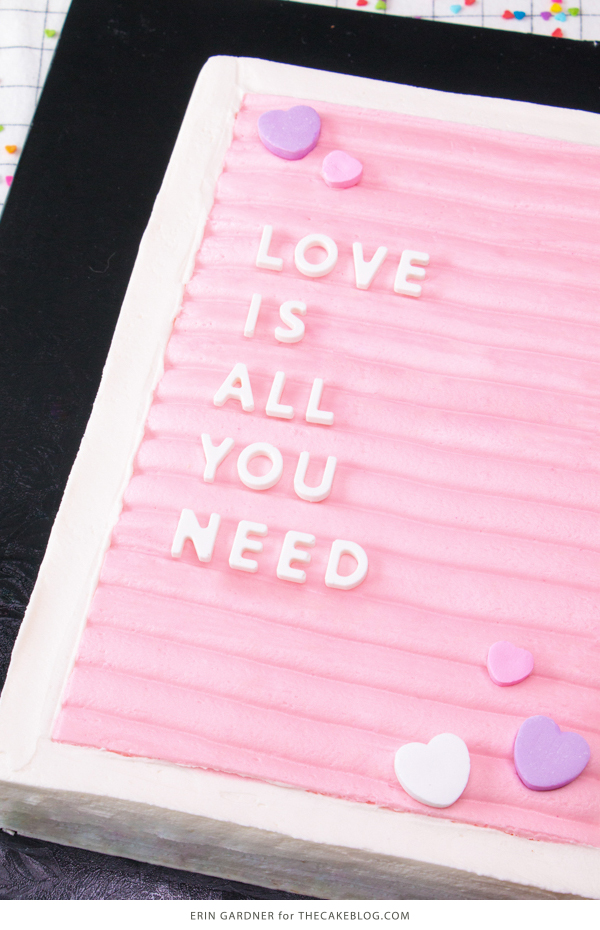
- The Mechanical Approach: A scalloped cake comb is dragged through the chilled buttercream. This tool creates uniform horizontal grooves that mimic the slots in a felt board.
- The Manual Piping Approach: For bakers without specialized combs, a piping bag fitted with a large round tip can be used to lay down parallel lines of frosting. While more labor-intensive and requiring nearly double the volume of buttercream, this method offers a similar tactile depth.
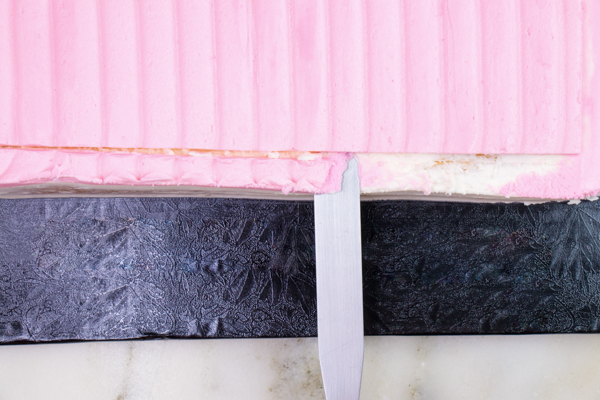
Following the application of the ridges, the cake undergoes a mandatory chilling period. In professional settings, this is often achieved in a blast chiller to rapidly stabilize the fats in the buttercream, ensuring that the ridges remain crisp during the subsequent trimming and framing stages.
Phase II: Fabrication of Edible Typography
The lettering system is constructed from white chocolate or compound coating, chosen for its structural rigidity at room temperature. The use of silicone letter molds allows for the production of uniform, sans-serif characters that mirror the plastic letters of traditional message boards.
The molten chocolate is piped into the molds, followed by a mechanical agitation (tapping) to eliminate air pockets—a critical step to prevent structural failure in the thinner parts of the letters. For practitioners without access to molds, the tutorial suggests a "trace-and-pipe" method using parchment paper templates, demonstrating the scalability of the design for different skill levels and tool availability.
Phase III: Integration and Framing
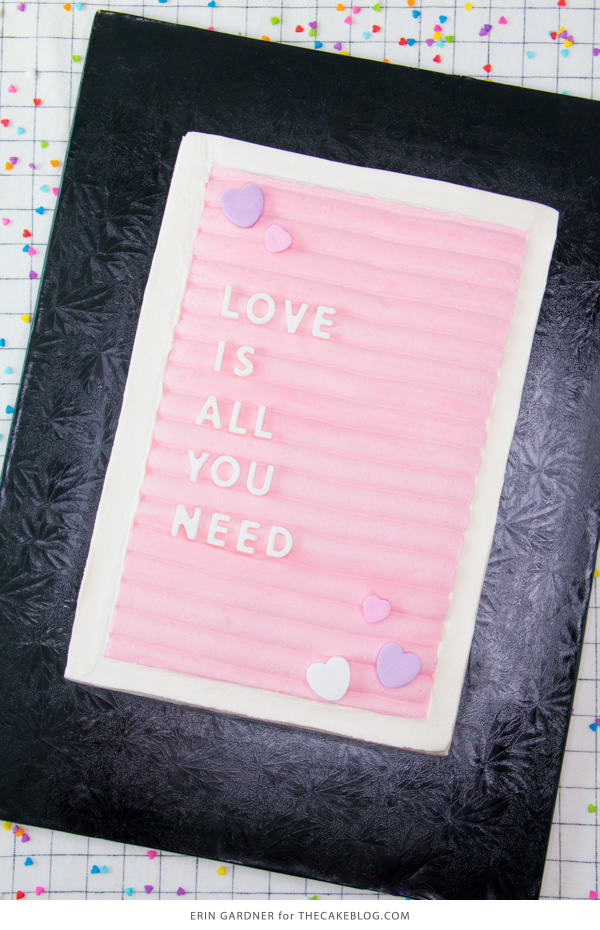
The final assembly involves the strategic placement of letters. To ensure professional alignment, the methodology recommends arranging the message on parchment paper first to calculate spacing. Placement on the cake begins from the center of the word outward, a technique used by sign painters to ensure perfect centering.
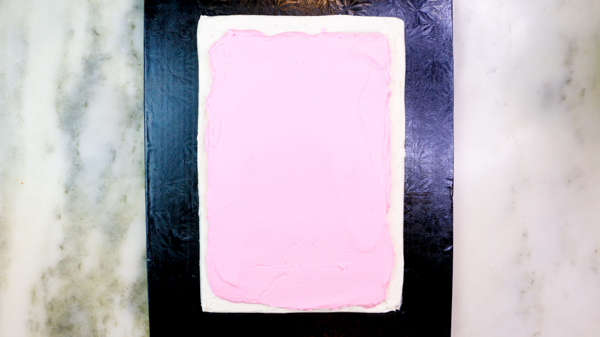
The "frame" of the board is created using a basketweave piping tip. By orienting the smooth side of the tip upward, the baker creates a flat, raised border that mimics a wooden or plastic frame, effectively "boxing in" the design and providing a finished, clean edge that distinguishes the message board from the rest of the cake surface.
Market Context and Consumer Data
The rise of specialized tutorials like the message board sheet cake coincides with significant shifts in consumer spending during the first quarter of the year. According to the National Retail Federation (NRF), Valentine’s Day spending in the United States alone frequently exceeds $25 billion, with food and confectionery representing a substantial portion of that expenditure.
Furthermore, the "Sheet Cake" category has seen a revival. Long considered a utilitarian option for large gatherings, the sheet cake is being rebranded as a canvas for modern art. Data from search engines indicates a 40% year-over-year increase in searches for "unique sheet cake designs," suggesting that consumers are looking for alternatives to the traditional round layer cake. The message board design fits this niche by providing a large, flat surface area that is easier to transport and serve than multi-tiered alternatives.
Professional Perspectives and Industry Impact
Industry experts note that the accessibility of the message board cake design is its greatest strength. Chef Erin Gardner’s approach emphasizes that the design "offers many paths to the destination," a philosophy that resonates with the modern "maker" movement. By providing alternatives for every specialized tool, the tutorial lowers the barrier to entry for novice bakers while maintaining a high aesthetic standard.
Culinary instructors have noted that this specific tutorial teaches several fundamental skills in a single project:
- Temperature Control: Understanding the "firm to the touch" stage of buttercream.
- Steady-Hand Piping: Mastering the use of the basketweave tip and letter tracing.
- Spatial Planning: The mathematical requirement of centering a message on a pre-ridged grid.
The design also has implications for professional bakeries. The modular nature of the chocolate letters allows bakeries to pre-make "alphabets," enabling rapid customization for last-minute customer requests. This operational efficiency is highly valued in high-volume retail environments.
Broader Implications for Social Expression
Beyond its technical and economic aspects, the message board sheet cake represents a shift in how individuals utilize food for social communication. In an era dominated by digital messaging, the physical act of "typesetting" a message in chocolate and buttercream offers a tangible form of expression.
The versatility of the design—allowing for changes in color palette, font style, and messaging—makes it an adaptable tool for social commentary, celebratory announcements, and personal sentiment. As social media continues to drive food trends, the "legibility" of food becomes increasingly important. A cake that is designed to be read as much as it is to be eaten satisfies the dual modern requirements of culinary quality and visual communicability.
Conclusion
The message board sheet cake is more than a seasonal baking project; it is a synthesis of current design trends, technical innovation, and the ongoing evolution of the DIY movement. By providing a clear, adaptable framework for decoration, Erin Gardner has contributed a significant template to the modern baker’s repertoire. As the industry moves forward, the success of such designs suggests that the future of cake decorating lies in the balance between professional precision and home-kitchen accessibility. Whether used for a simple "Happy Birthday" or a complex romantic sentiment, the message board cake stands as a testament to the enduring power of personalized, edible art. Through the use of simple geometry, temperature management, and creative typography, the domestic kitchen continues to close the gap between the amateur and the artisanal.