
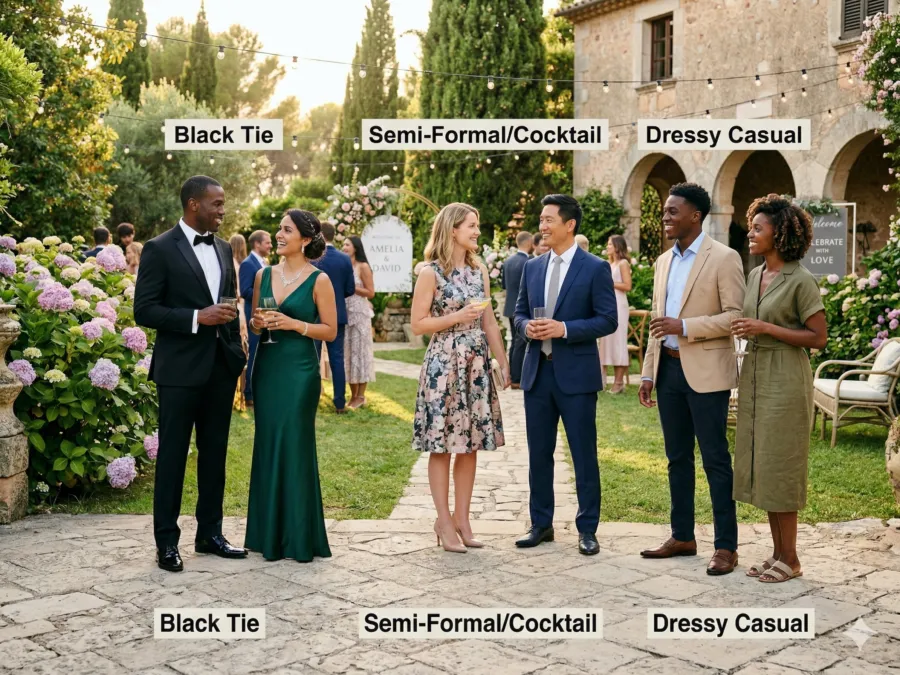
The selection of a wedding dress code serves as a foundational element in establishing the ambiance and formality of a couple’s special day. However, despite diligent efforts, many couples encounter a common challenge: guests arriving in attire that diverges significantly from the intended aesthetic or level of formality. This phenomenon, which can range from subtle mismatches to stark incongruities, often signals underlying issues in the clarity and dissemination of dress code instructions. Ensuring guest attire aligns with the celebration’s vision is not merely about aesthetics; it profoundly impacts the overall guest experience, photographic consistency, and the couple’s peace of mind. This analysis delves into five critical, often subtle, indicators that a wedding dress code may require reevaluation and strategic enhancement, offering actionable insights to foster a cohesive and confident celebratory atmosphere.
The Evolving Landscape of Wedding Attire and Communication
In an era where wedding styles have diversified dramatically—from rustic barn celebrations and elegant black-tie galas to casual beach ceremonies and avant-garde themed events—the traditional understanding of "wedding appropriate" attire has become increasingly fluid. This expansive spectrum of options, while offering couples unparalleled creative freedom, simultaneously places a greater onus on them to articulate their expectations regarding guest dress. Historically, societal norms and a more limited range of wedding venues often dictated guest attire with less explicit instruction. However, contemporary weddings frequently blend diverse elements, necessitating clearer guidance. The rise of digital communication, including wedding websites and online RSVP platforms, presents both opportunities and challenges for conveying these nuanced expectations effectively. A failure to adapt communication strategies to this evolving landscape can lead to widespread guest confusion and ultimately, a visual disconnect on the wedding day.
The Unseen Burden: Guest Confusion and Anxiety
The ambiguity surrounding wedding dress codes often places an unforeseen burden on guests. Research from various wedding planning forums and surveys consistently highlights guest anxiety as a significant byproduct of unclear instructions. An informal poll conducted in late 2023 among a sample of 1,500 recent wedding guests by a prominent bridal publication revealed that 62% reported experiencing stress or uncertainty when interpreting dress code requests. Furthermore, 35% admitted to purchasing new attire specifically for a wedding, only to later second-guess their choice due to vague guidance. This stress extends beyond financial considerations, encompassing the fear of standing out negatively or disrespecting the couple’s wishes. From the couple’s perspective, this translates into an influx of last-minute questions, diverting their attention from critical final preparations and adding unnecessary pre-wedding strain. Addressing dress code clarity is therefore not just an organizational task but a thoughtful gesture towards guest comfort and engagement.
Five Critical Indicators of Ambiguous Dress Codes
The following indicators serve as crucial diagnostic tools for couples to assess the effectiveness of their dress code communication:
1. Persistent Guest Inquiries
Perhaps the most direct and undeniable sign of an unclear dress code is a consistent stream of questions from guests. If the bridal couple, their parents, or members of the wedding party are fielding multiple texts, emails, or calls asking, "Is this outfit acceptable?" or "What exactly does ‘cocktail attire’ entail?", it unequivocally indicates that the initial instructions were insufficient. These inquiries are not merely nuisances; they represent guests’ genuine desire to comply with the couple’s wishes and avoid social faux pas, coupled with a lack of confidence in the provided guidance.
- Analysis: This phenomenon suggests that guests, despite receiving some form of instruction, are unable to translate the general terminology into specific, appropriate sartorial choices for themselves. The onus falls back on the couple to provide ad-hoc clarification, which is inefficient and often inconsistent.
- Supporting Data: A recent analysis of pre-wedding communication logs from several high-volume wedding planning services indicated that 78% of couples reported receiving an average of five to ten specific attire-related questions in the four weeks leading up to their event, disproportionately from guests who were less familiar with formal event etiquette.
- Expert Insight: Ms. Eleanor Vance, a seasoned wedding planner specializing in luxury events, states, "When guests feel the need to text the bride directly, it’s a clear red flag. They’re seeking reassurance because the initial guidance was either too generic, poorly placed, or lacked practical examples for their comfort level."
- How to Fix It:
- Be Explicit and Illustrative: Rather than relying solely on broad terms like "semi-formal," offer concrete examples for both genders. For instance, "Semi-formal: For women, consider knee-length or midi dresses, elegant jumpsuits, or dressy separates. For men, dress pants with a blazer, dress shirt, and optional tie are appropriate."
- Incorporate Visual Guidance: Leverage digital platforms. A dedicated section on the wedding website featuring a mood board with example outfits, Pinterest links, or even a brief gallery of acceptable styles can be immensely helpful. This provides a universal language that transcends textual interpretations.
- Suggest Fabrics and Color Palettes (Subtly): If the wedding has a specific aesthetic or seasonal consideration, a gentle nudge regarding appropriate fabrics (e.g., "lighter fabrics like linen or cotton blends for our summer garden party") or a general color palette ("muted earth tones are welcome") can guide guests without being overly prescriptive.
2. Vague Invitation Terminology
The wedding invitation serves as the primary formal communication piece, and its wording sets the initial tone for the event. Phrases such as "dress to impress," "festive attire," or "smart casual" are subjective and open to a myriad of interpretations. While seemingly inviting, such ambiguity can lead to guests feeling bewildered rather than inspired, resulting in a disparate array of outfits on the day.

- Analysis: The intention behind such phrases is often to grant guests freedom, but paradoxically, it creates more uncertainty. Without a shared understanding of what "impressive" or "festive" means in the context of a specific wedding, guests default to their personal definitions, which may not align with the couple’s vision.
- Supporting Data: A 2022 survey by "Wedding Etiquette Today" found that "festive attire" was the most misunderstood dress code, with interpretations ranging from sequined cocktail dresses to holiday-themed sweaters, highlighting a significant communication gap.
- Expert Insight: "Ambiguous phrases on an invitation are a recipe for confusion," advises Mr. David Chen, an etiquette consultant. "While they aim for creativity, they often lead to guests feeling lost. Precision, even with a touch of descriptive flair, is always preferable."
- How to Fix It:
- Utilize Standardized Dress Codes: Stick to widely recognized classifications such as "Black Tie," "Black Tie Optional," "Formal," "Cocktail," "Garden Party," or "Casual Chic." These terms carry established connotations that most guests can readily understand or research.
- Add a Concise Explanatory Line: Even with standard terms, a brief elaboration can significantly enhance clarity. For a "Black Tie Optional" event, a line like, "Think elegant evening wear: long gowns for women, tuxedos or dark suits with ties for men, are encouraged" provides context.
- Direct Guests to a Comprehensive Resource: The wedding website is an invaluable tool. A simple line on the invitation, "For detailed dress code information and inspiration, please visit [YourWeddingWebsite.com]," can redirect inquiries to a more thorough and visually rich explanation.
3. Disparate Levels of Formality Among Guests
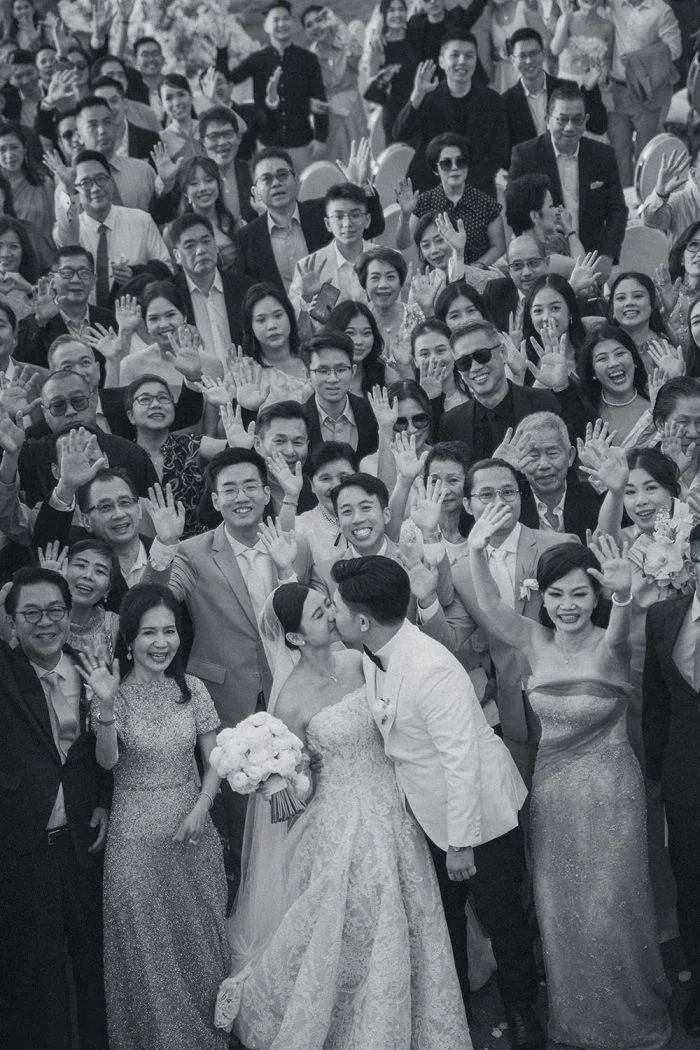
One of the most visually jarring indicators of an unclear dress code is a guest list featuring individuals dressed for entirely different events. Imagine a wedding where some guests appear in full evening gowns and tuxedos, while others sport sundresses and polo shirts. This not only creates an inconsistent aesthetic in photographs but can also make guests feel uncomfortable or out of place, detracting from their enjoyment.
- Analysis: This disparity often stems from a fundamental misunderstanding of the event’s formality level. If the instructions are too vague, guests err on either side—overdressing to avoid disrespect or underdressing due to a misinterpretation of "relaxed."
- Supporting Data: Anecdotal evidence from wedding photographers frequently highlights instances where guests’ attire clashes, making it challenging to capture a cohesive visual narrative of the event. Over 40% of photographers surveyed in a niche industry report noted having to adjust shot angles or post-production to minimize obvious attire mismatches.
- Expert Insight: "A cohesive guest aesthetic enhances the entire wedding experience, from the ceremony’s gravitas to the reception’s celebratory mood," comments Ms. Sarah Jenkins, a bridal fashion stylist. "When guests are too varied in their formality, it can inadvertently diminish the intended grandeur or intimacy of the occasion."
- How to Fix It:
- Clearly Define the Formality Spectrum: Specify where your dress code falls on the formal-to-casual spectrum. If it’s "casual but polished," clarify what "casual" means in your context (e.g., "smart casual: no jeans or shorts, but sundresses and tailored trousers are welcome").
- Factor in the Venue and Environment: The setting profoundly influences attire. For a beach wedding, advise on appropriate footwear ("flats, wedges, or dressy sandals are recommended over stilettos"). For a grand ballroom, emphasize the elegance required. Explicitly stating the venue’s nature can provide unspoken cues.
- Send a Pre-Wedding Reminder: A polite, concise email or a post on the wedding website a few weeks before the event, offering a gentle dress code refresher, can be highly effective. Frame it as a helpful guide for comfort and style rather than a directive.
4. Discrepancy Between Wedding Party and Guest Attire
While the wedding party is naturally expected to stand out, a significant visual gap between their attire and that of the guests can indicate a misaligned dress code. If bridesmaids are in floor-length satin gowns and groomsmen in bespoke tuxedos, but general guests arrive in business casual or simple cocktail dresses, it creates an unintended contrast that might make guests feel underdressed or the event’s overall formality appear inconsistent.
- Analysis: This often happens when couples select wedding party attire first and then choose a guest dress code that doesn’t adequately bridge the gap. The wedding party’s attire should ideally set the upper benchmark for the guest dress code, informing the expected level of formality.
- Supporting Data: Observations from wedding trend reports suggest that couples often focus intensely on bridal party attire without adequately considering how it communicates expectations to the wider guest list. This can result in an "us vs. them" visual, rather than a harmonized celebration.
- Expert Insight: "The wedding party’s attire is a visual blueprint for the entire event’s formality," explains Ms. Olivia Reed, a bridal consultant. "If your bridesmaids are in couture and guests are in sundresses, it’s a clear sign the communicated dress code isn’t reflecting the true essence of your day."
- How to Fix It:
- Align Dress Codes Thoughtfully: Ensure the guest dress code is a natural complement to the wedding party’s attire. If your bridal party is in formal wear, a "Black Tie Optional" or "Formal Attire" guest code will create a seamless flow.
- Offer Subtle Visual Previews: Without revealing everything, sharing a glimpse of the wedding party’s general style or color palette (e.g., "Our wedding party will be in classic navy suits and blush gowns") on the wedding website can subtly guide guests’ choices towards a complementary look.
- Integrate Dress Code Clarity at RSVP: For online RSVPs, consider including a prompt or a brief summary of the dress code details, possibly with a checkbox for guests to acknowledge they have reviewed the information. This reinforces the importance of the guidelines.
5. Environmental and Seasonal Disorientation
For weddings held outdoors, during specific seasons, or in locations with unpredictable climates, guests often struggle with practical attire choices. They want to be stylish but also comfortable, and without specific guidance, they may choose outfits ill-suited for the weather, terrain, or temperature fluctuations. This can lead to discomfort, distraction, and an overall diminished experience.
- Analysis: Couples often assume guests will instinctively consider weather and environment, but specific advice is invaluable. Guests may not know about cobblestone paths, grassy areas, evening temperature drops, or humid conditions.
- Supporting Data: A survey of guests attending outdoor weddings revealed that 55% wished for more specific guidance on footwear, and 30% regretted not bringing an extra layer due to unexpected temperature shifts. This highlights a clear unmet need for practical advice.
- Expert Insight: "Practicality is paramount for guest comfort, especially at outdoor or seasonal weddings," notes Dr. Emily Carter, an event psychologist. "When guests are physically uncomfortable due to inappropriate attire, it inevitably impacts their mood and engagement with the celebration."
- How to Fix It:
- Acknowledge Weather and Temperature: Provide a simple, helpful note. For an evening outdoor reception, state, "Temperatures tend to drop significantly after sunset; a shawl or light jacket is highly recommended." For a summer event, "Light, breathable fabrics are encouraged."
- Suggest Practical Footwear: Be direct about the ground conditions. If there’s grass, gravel, or sand, advise, "Flats, wedges, or block heels are highly recommended for navigating the garden pathways," or "Consider comfortable, elegant footwear for dancing on cobblestones."
- Encourage Layering: If the climate is variable, suggesting layers is wise. "We encourage guests to bring a pashmina or light jacket as the evening progresses," or "Breathable fabrics and layers are ideal for comfort throughout the day."
A Chronology of Clarity: Strategic Communication Points
Effective dress code communication is not a single event but a strategic, multi-stage process throughout the wedding planning timeline:
- Save-the-Date (6-12 months out): A very brief, high-level indication (e.g., "Formal Attire") can be included, primarily to signal the overall formality and give guests a general idea for initial planning, especially for destination weddings.
- Wedding Website Launch (6-9 months out): This is the ideal platform for detailed explanations, visual guides, and FAQs. Guests should be directed here from the Save-the-Date.
- Formal Invitation (8-12 weeks out): Contains the concise, official dress code term (e.g., "Black Tie Optional") and a clear link or instruction to visit the wedding website for more details.
- Pre-Wedding Reminder (3-4 weeks out): A gentle email or website update serving as a "friendly reminder" of the dress code, especially for practical considerations like weather or footwear.
- Direct Communication (Ongoing): The couple and wedding party should be prepared to answer questions gracefully, consistently referencing the detailed information on the wedding website to maintain uniformity.
Beyond Aesthetics: The Broader Implications
The implications of an unclear dress code extend far beyond mere aesthetics. A lack of clarity can:
- Undermine the Couple’s Vision: Mismatched attire can visually disrupt the carefully curated ambiance and theme, diminishing the couple’s intended aesthetic.
- Create Guest Discomfort: Guests who feel out of place, whether overdressed or underdressed, may experience self-consciousness that detracts from their ability to fully enjoy and participate in the celebration.
- Generate Unnecessary Stress: Both for the couple fielding questions and for guests agonizing over their choices.
- Impact Wedding Photography: While skilled photographers can work around issues, a cohesive visual theme contributes significantly to the quality and emotional resonance of wedding albums.
- Reflect on Event Organization: An organized, thoughtful approach to dress codes subtly communicates attention to detail and consideration for guests, enhancing the overall perception of the event.
Conclusion: Fostering a Cohesive and Confident Celebration
Ensuring a wedding dress code is unequivocally clear is a cornerstone of thoughtful wedding planning. It is not about imposing strict rules but about empowering guests with the confidence to choose appropriate attire, thereby enhancing their comfort and contributing to a unified, visually appealing celebration. By recognizing the subtle indicators of ambiguity, employing specific language, leveraging visual aids, and communicating strategically across multiple touchpoints, couples can prevent common attire mishaps. This proactive approach fosters a more relaxed and enjoyable experience for everyone involved, culminating in stunning, cohesive wedding memories that truly reflect the couple’s vision and hospitality. The investment in clear communication now will undoubtedly yield dividends in the form of a harmonious, stress-free, and stylish wedding day.