

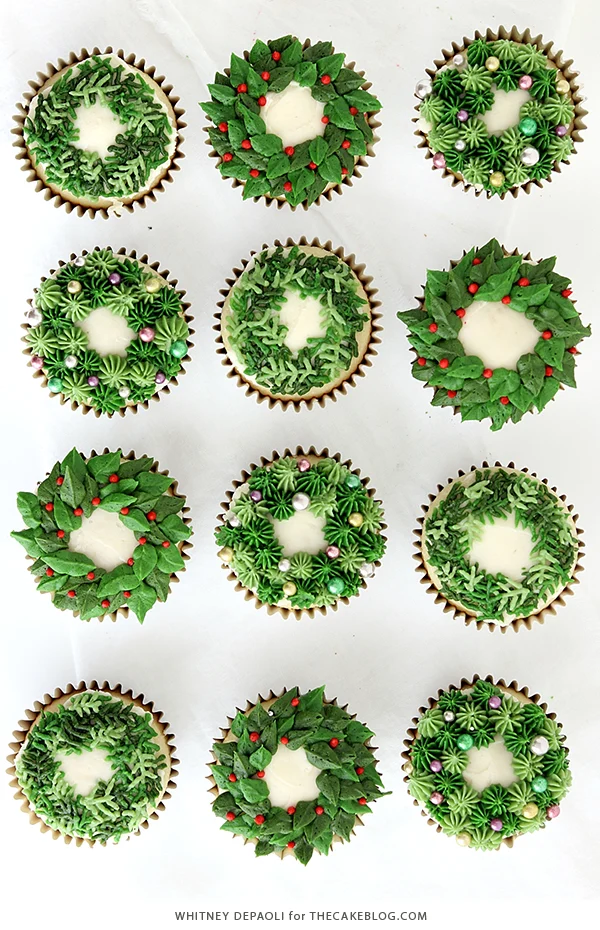
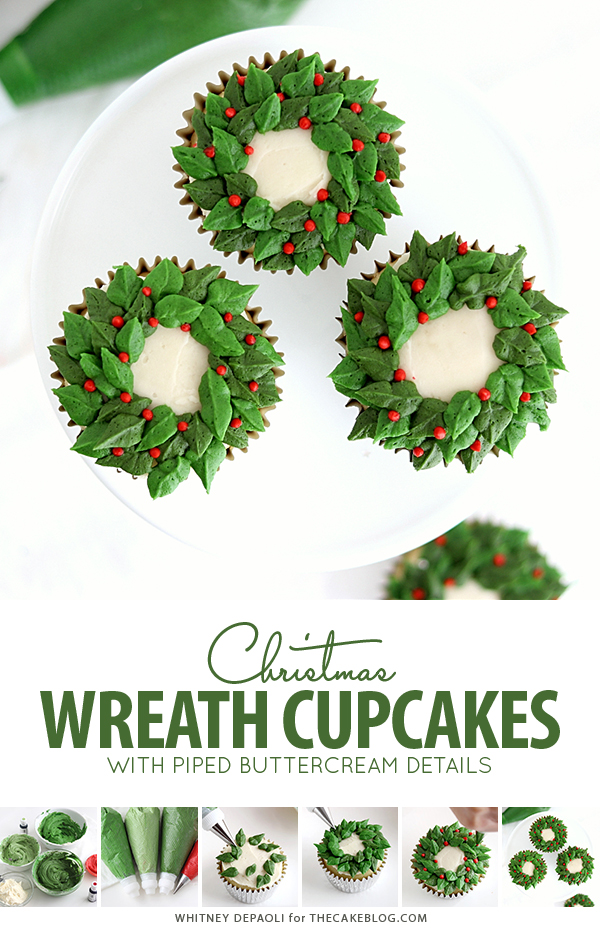
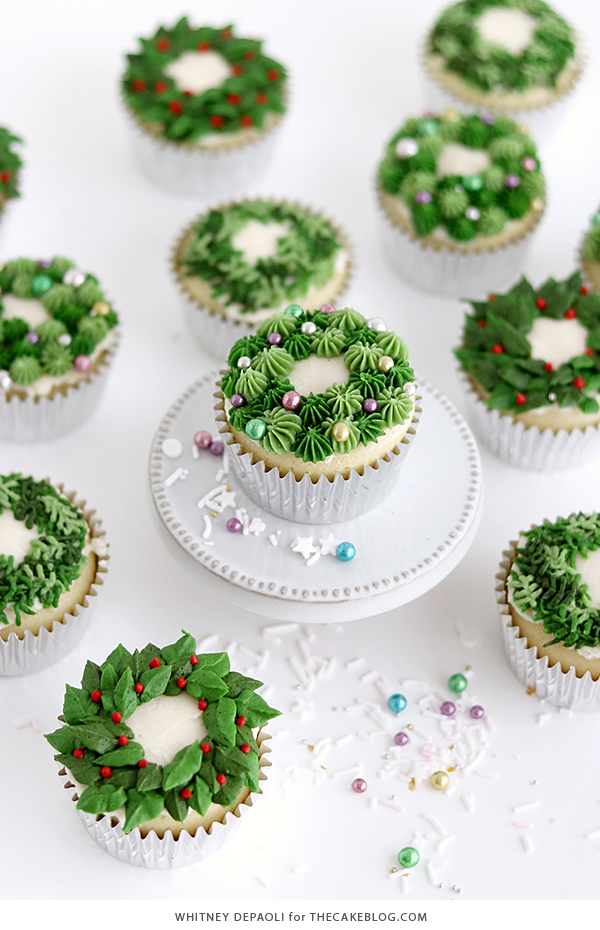
The seasonal transition into the winter holidays has historically prompted a surge in culinary creativity, particularly within the niche of decorative pastry arts. As metropolitan centers and retail corridors initiate their annual traditions of installing festive greenery and lighting, the domestic and professional baking sectors simultaneously pivot toward thematic presentations. Whitney DePaoli, a prominent contributor to the digital culinary publication The Cake Blog, has recently unveiled a sophisticated tutorial focusing on Christmas Wreath Cupcakes. This instructional guide details the construction of three distinct buttercream wreath designs, emphasizing the intersection of traditional holiday iconography and modern piping techniques. The project serves as a case study in how complex aesthetic goals can be achieved through systematic preparation and the strategic use of specialized confectionery tools.
The Evolution of Holiday Baking and the Symbolic Wreath
The practice of creating edible representations of holiday symbols is rooted in centuries of European tradition, where spiced breads and cakes were often molded into shapes signifying prosperity and protection. The wreath, a circle with no beginning or end, has served as a symbol of eternity and the cycle of the seasons since the Roman era. In the modern culinary landscape, these symbols have been miniaturized and refined. The rise of "boutique baking"—a movement characterized by high-level detail on small-scale treats like cupcakes—has transformed the humble dessert into a canvas for intricate seasonal art.
Market data suggests that the demand for specialty baking supplies, including high-pigment food gels and professional-grade piping tips, experiences a 35% to 50% increase during the fourth quarter of the fiscal year. This trend is driven largely by the democratization of professional techniques through digital platforms. Tutorials such as DePaoli’s provide the necessary technical framework for home bakers to replicate results that were previously exclusive to high-end patisseries.
Technical Requirements and the Role of the Coupler System
A central component of the Christmas Wreath Cupcake project is the utilization of American Buttercream, a medium favored for its structural integrity and "crusting" properties, which allow piped details to remain sharp even at room temperature. While the tutorial notes that any pipeable medium is sufficient, the chemical stability of American Buttercream—composed primarily of butter and powdered sugar—provides the resistance necessary for the delicate leaf and pine sprig designs.
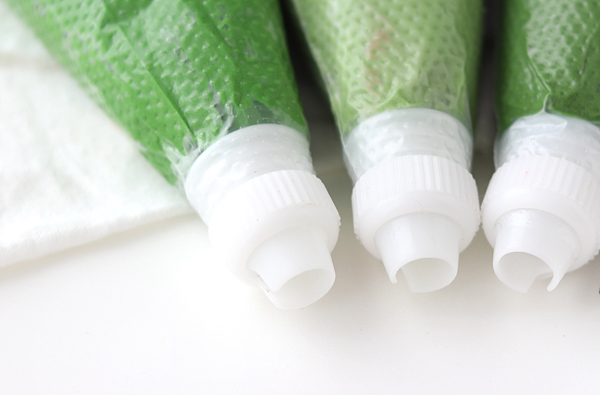
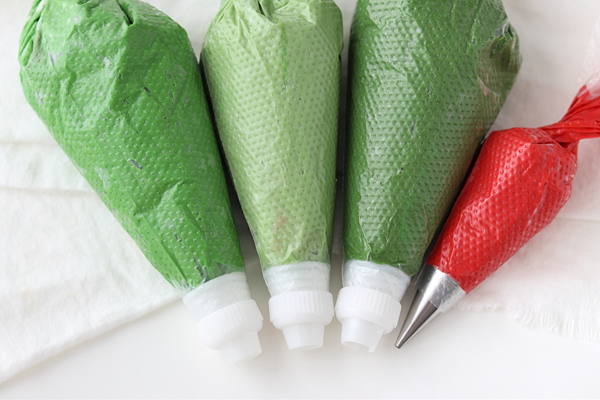
To manage the logistical complexity of using multiple colors and tips, the tutorial advocates for the use of piping bag couplers. In professional pastry production, efficiency and sanitation are paramount. The coupler system allows a baker to swap various piping tips onto a single bag of frosting without the need to empty or replace the bag. This not only reduces plastic waste but also ensures consistency in the pressure and temperature of the buttercream, as the baker’s hand remains in contact with the same bag throughout the process.
Color Theory and Pigment Application
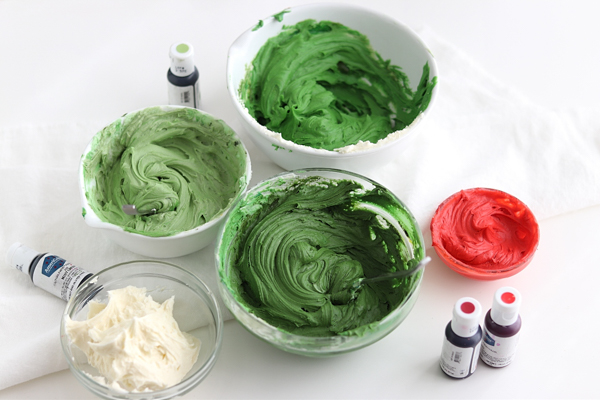
The aesthetic success of the wreath designs relies heavily on a nuanced color palette. Rather than utilizing a single shade of green, DePaoli recommends a three-tiered approach: light, medium, and dark green. This mimicry of natural foliage creates visual depth and shadow, preventing the designs from appearing monochromatic or artificial.
The tutorial specifies the use of professional-grade gels, specifically Americolor Super Red for the berries and a combination of Forest Green and Avocado for the greenery. The choice of gel-based colors over liquid dyes is a critical technical detail; liquid colors can alter the moisture content of the buttercream, potentially leading to "breaking" or a loss of structural definition. By dividing the buttercream into three medium bowls for the greens and a smaller portion for the red, the baker can achieve a gradient that reflects the complexity of real evergreen boughs.
Chronology of Construction: The Three Design Pillars
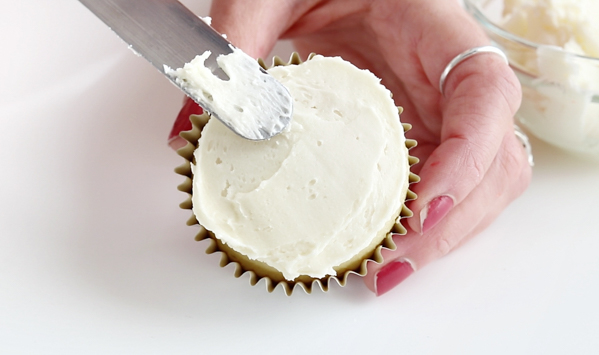
The production process follows a strict chronology, beginning with the application of a "crumb coat" or base layer. Each cupcake is first frosted with a thin, even layer of uncolored buttercream using a small icing spatula. This provides a neutral background and a tacky surface for the piped wreaths to adhere to, ensuring that the decorative elements do not slide off the domed top of the cake.
The Berry Wreath Design
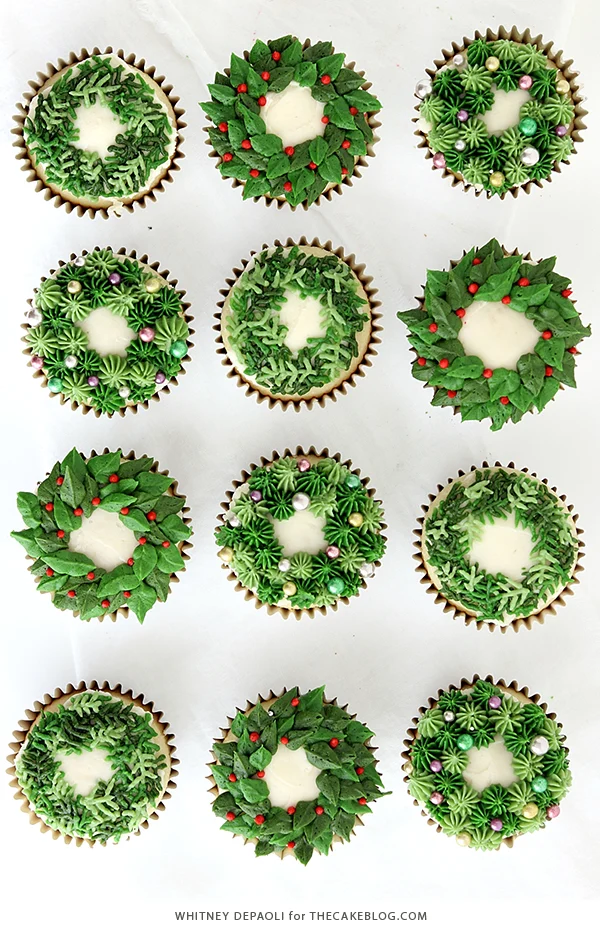
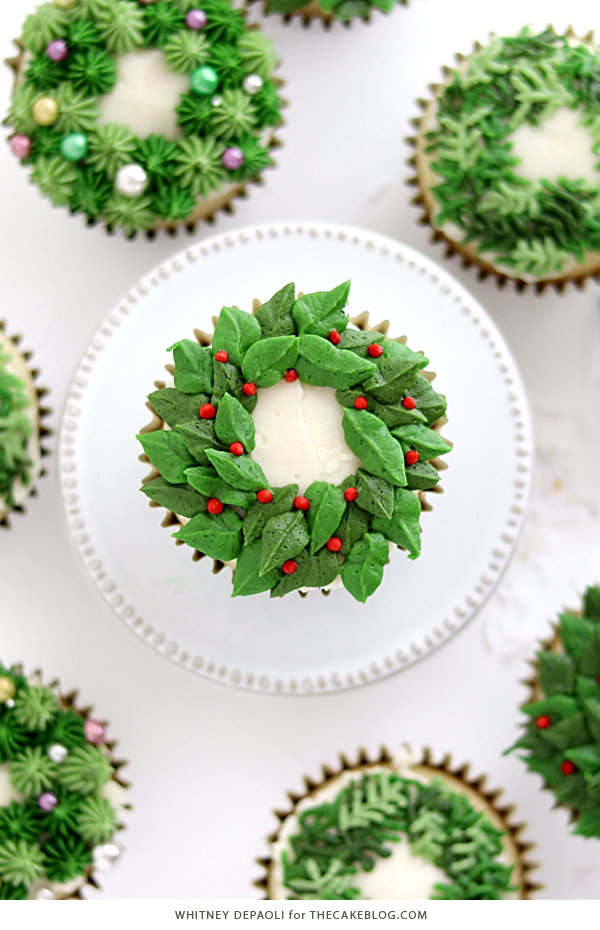
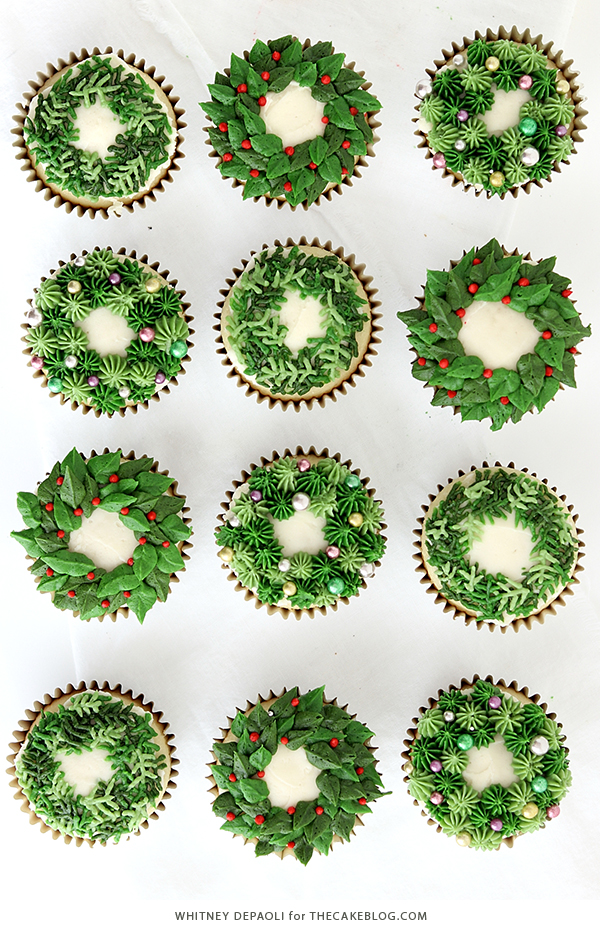
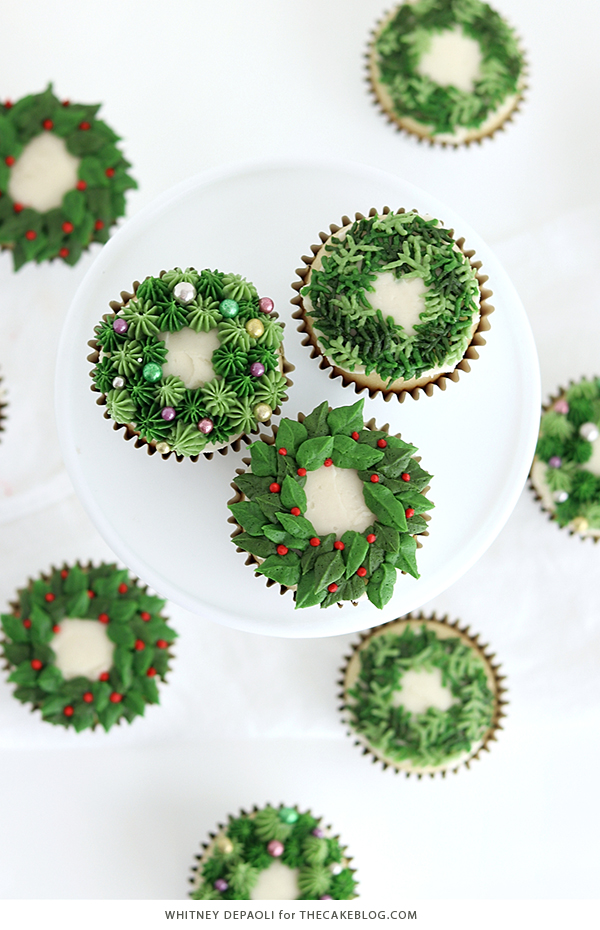
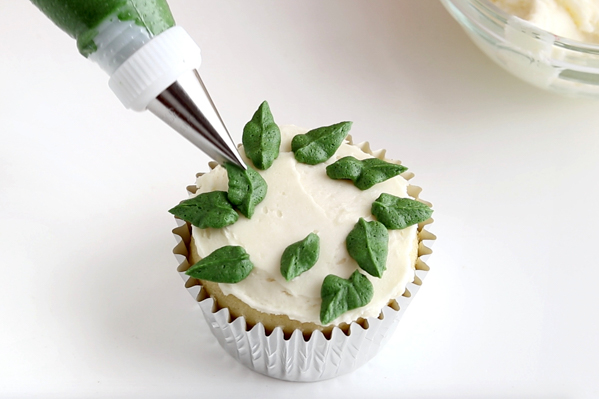
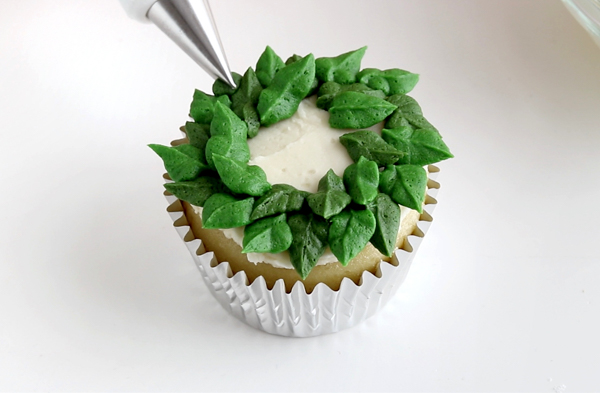
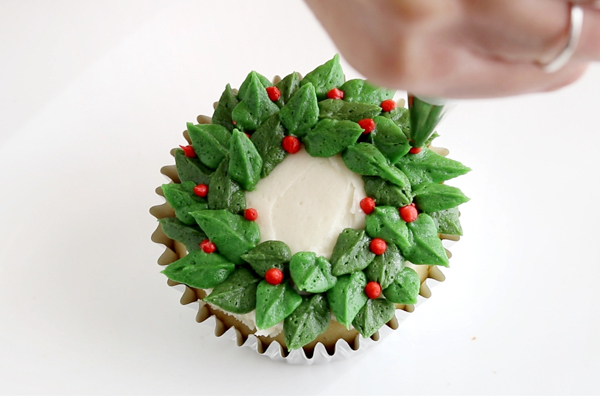
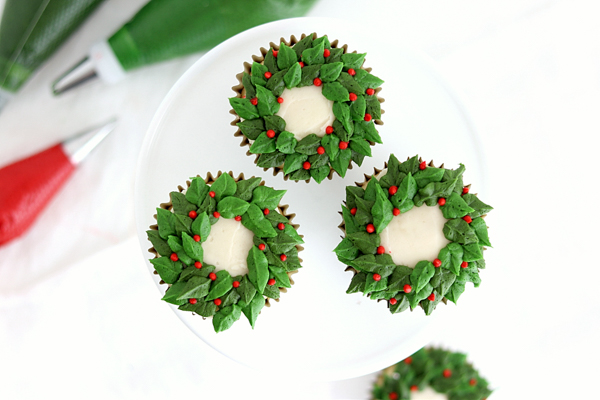
The first design focuses on a broad-leaf aesthetic. Utilizing the #352 leaf tip, the baker creates a series of overlapping leaves. The #352 tip is characterized by a "v-shaped" opening that, when squeezed and pulled, creates a pointed, ridged leaf. By alternating between medium and dark green shades and leaving intentional gaps for the secondary color, a two-toned effect is achieved. The final step involves the #3 piping tip, used to add small, spherical dots of red buttercream to simulate holly berries.
The Pine Sprig Wreath Design
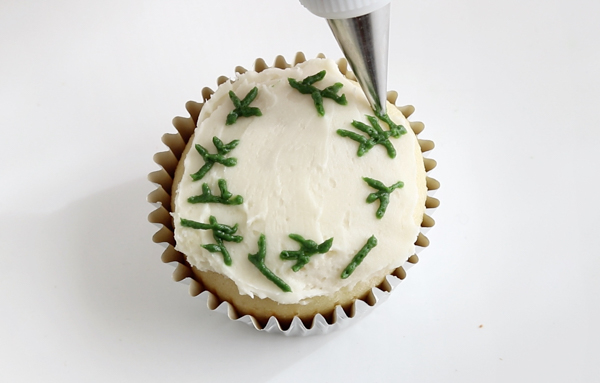
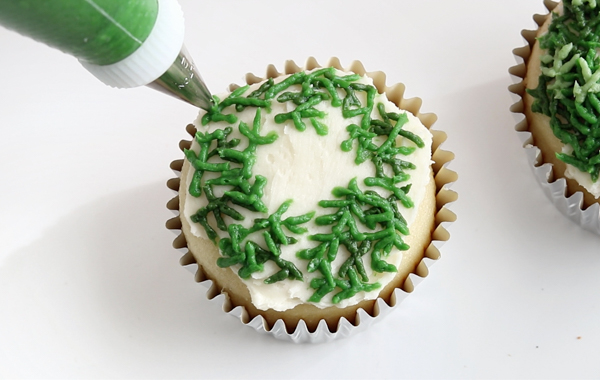
The second design is more labor-intensive and focuses on the texture of coniferous trees. Using a #3 round tip for all three shades of green, the baker pipes "pine sprigs." This technique involves drawing a central line and overlaying it with small "v" shapes. This design requires a high level of manual dexterity and patience, as the sprigs must be layered until the white base frosting is no longer visible. The resulting texture is dense and highly realistic, appealing to a more traditional holiday aesthetic.
The Sprinkled Wreath Design
The third design utilizes the #199 open star tip to create "drop stars." This is a foundational piping technique where the tip is held vertically, squeezed briefly, and lifted straight up. By alternating dark and medium green stars around the perimeter, a ruffled, voluminous wreath is formed. This design is then finished with spherical sprinkles—specifically the "Serendipity" mix by Fancy Sprinkles—to represent miniature ornaments. This design highlights the trend of "textural contrast," where the softness of the buttercream meets the crunch of sugar pearls.
Expert Perspective and Contributor Insights
Whitney DePaoli’s approach to these designs stems from a background in both art and baking. According to DePaoli, the conceptualization of these cupcakes began with traditional sketching—a common practice among high-level pastry architects. "I took to the drawing board… and got to work piping these cute little wreath cupcakes," DePaoli noted, emphasizing that the transition from a 2D sketch to a 3D edible object is a process of trial and error.
Industry analysts suggest that the "squeal of delight" DePaoli describes upon seeing the idea come to life reflects a broader psychological phenomenon known as "creative satisfaction in domestic labor." The ability to produce professional-grade art in a home kitchen environment has become a significant driver of consumer engagement in the digital food space.
Broader Impact on the Confectionery Industry
The release of such detailed tutorials has a measurable impact on the supply chain. When specific tools like the #352 leaf tip or #199 star tip are highlighted by influential contributors, retail platforms often see a corresponding spike in sales for those specific SKUs. Furthermore, the emphasis on "assortment" encourages consumers to purchase a wider variety of supplies rather than sticking to a single design.
From a broader perspective, these wreath cupcakes represent the "premiumization" of the cupcake. Once considered a simple children’s treat, the cupcake has been elevated to a luxury item through the application of professional piping techniques and sophisticated color palettes. This shift allows home bakers to contribute to the holiday atmosphere with the same level of visual impact as traditional centerpieces or high-end floral arrangements.
Conclusion: The Intersection of Tradition and Technique
The Christmas Wreath Cupcake tutorial by Whitney DePaoli is more than a set of recipes; it is a technical manual for seasonal expression. By breaking down complex floral and evergreen textures into repeatable piping motions, the guide bridges the gap between amateur interest and professional execution. As the holiday season progresses, the adoption of these techniques is expected to be seen across social media platforms and holiday dessert tables, further cementing the role of the decorated cupcake as a staple of contemporary festive celebration. The combination of efficient tool use (couplers), advanced color theory, and diverse piping tips ensures that these miniature wreaths provide a high-impact visual and culinary experience for the 2019 holiday season and beyond.