
The Evolution of Holiday Confectionery Design
The culinary arts have seen a marked shift toward "textural maximalism," a trend where the physical dimension of the frosting is as vital as the flavor profile. Historically, Valentine’s Day cakes relied heavily on flat fondant work or simple script writing. However, the current market reflects a consumer preference for the "rustic-modern" look, characterized by visible brushstrokes, varied piping tip applications, and layered embellishments.
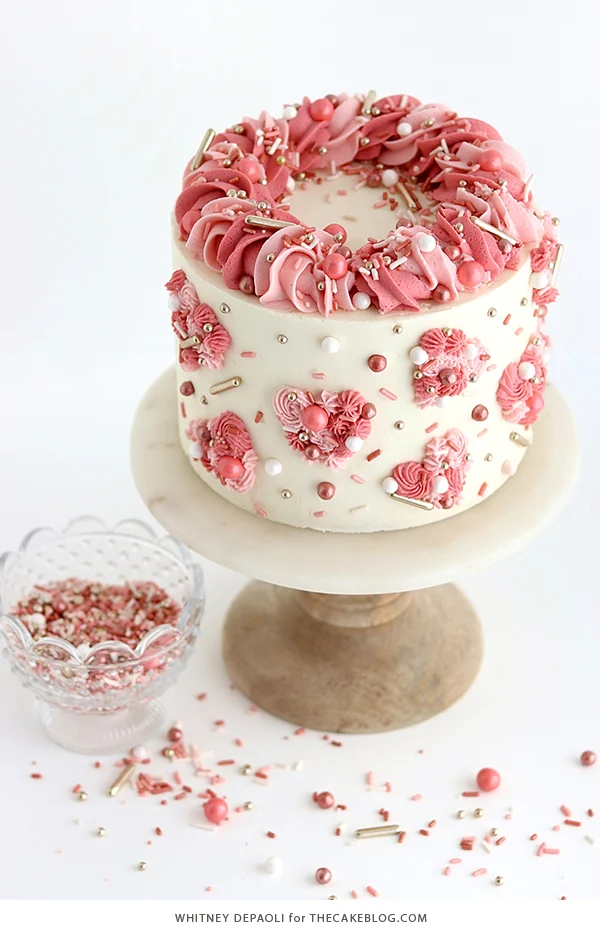
The "Piped Hearts" method is a direct response to this shift. Inspired by the digital caking community, specifically the work of social media influencer @frostedfujicakes, the technique bridges the gap between high-end professional finishing and DIY feasibility. By utilizing common kitchen tools, such as heart-shaped cookie cutters, as templates for complex piping, the barrier to entry for producing high-quality aesthetic results has been significantly lowered.
Chronology of the Decorating Process
The execution of the Piped Hearts Valentine’s Cake follows a rigorous chronological sequence designed to ensure structural integrity and visual balance. The process is divided into four primary phases: preparation, imprinting, filling, and finishing.
Phase I: Preparation and Color Calibration
The process begins with the preparation of a stable frosting base. While the technique is compatible with various mediums, including Swiss Meringue or Italian Buttercream, American buttercream is often cited for its crusting properties, which help maintain the definition of the piped stars and rosettes.
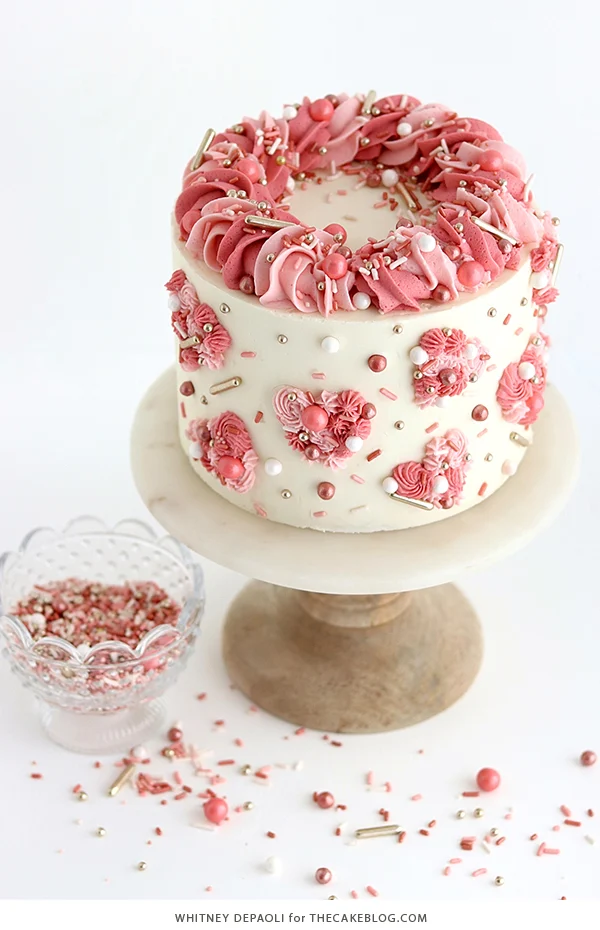
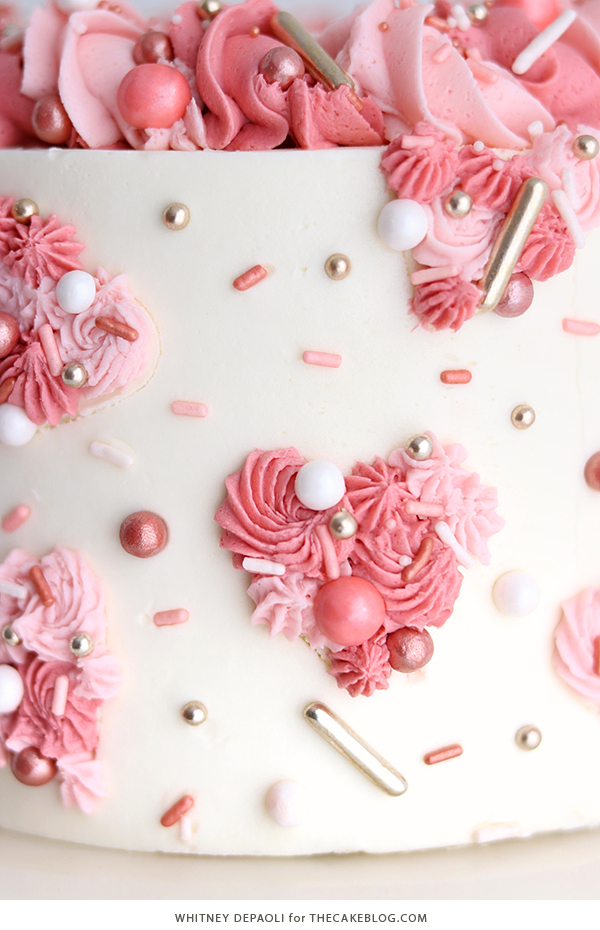
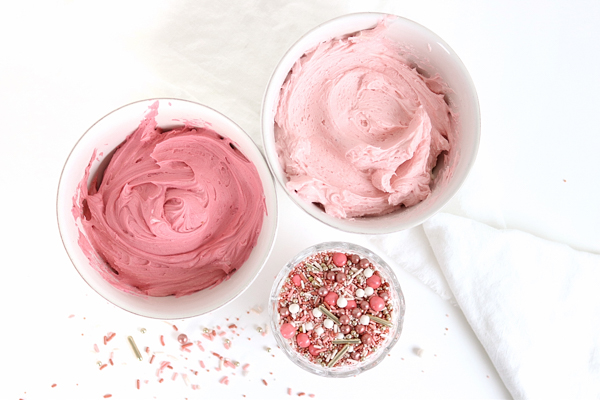
Color theory plays a crucial role in this phase. For the featured design, a rose gold palette was achieved using specific gel-based pigments, such as Americolor Dusty Rose. Unlike liquid food coloring, gel-based tints allow for high-saturation hues without compromising the chemical consistency of the buttercream. The frosting is divided and tinted to create a gradient effect, then distributed into piping bags fitted with specific industrial tips: the 1M (large open star), the 199 (small open star), and the 21 (closed star).
Phase II: Structural Imprinting
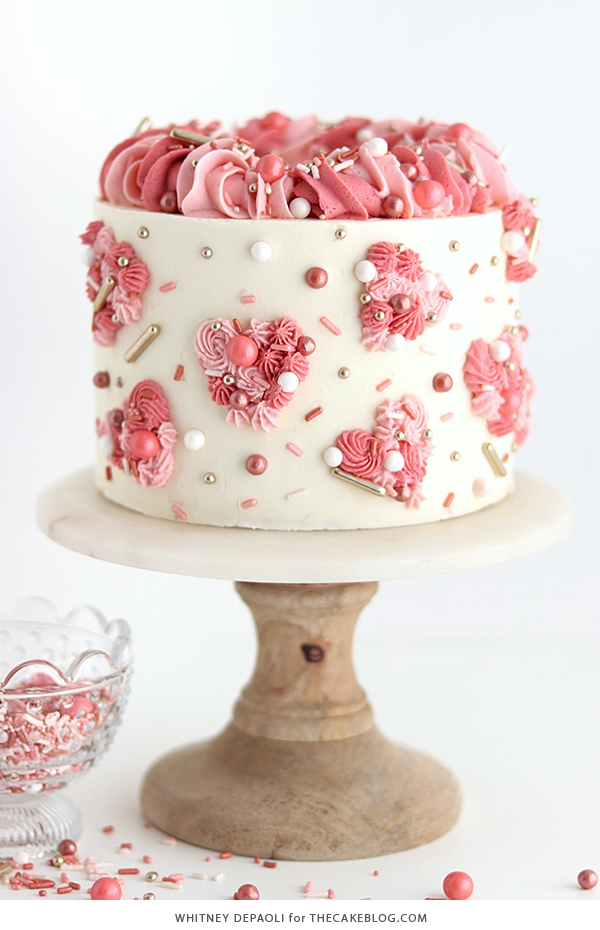
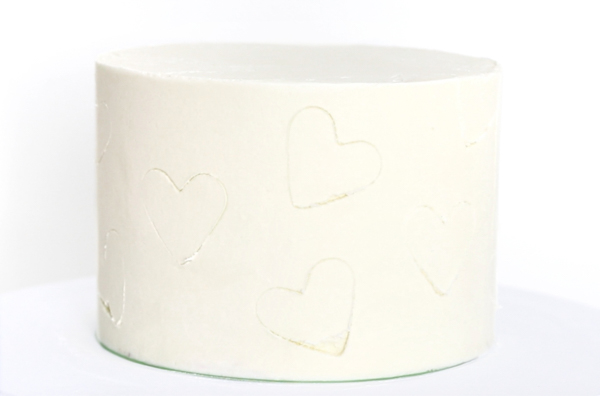
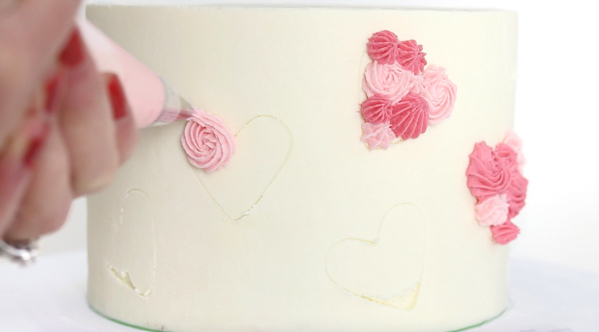
Precision in the layout is achieved through a "template-less" imprinting method. Once the base cake is frosted and thoroughly chilled—a step necessary to harden the exterior fats—a heart-shaped cookie cutter is used to gently score the surface. Experts recommend spacing these imprints at least two inches apart to prevent visual crowding and to allow the negative space of the base frosting to provide a clean contrast to the textured hearts.

Phase III: Textural Filling and Embellishment
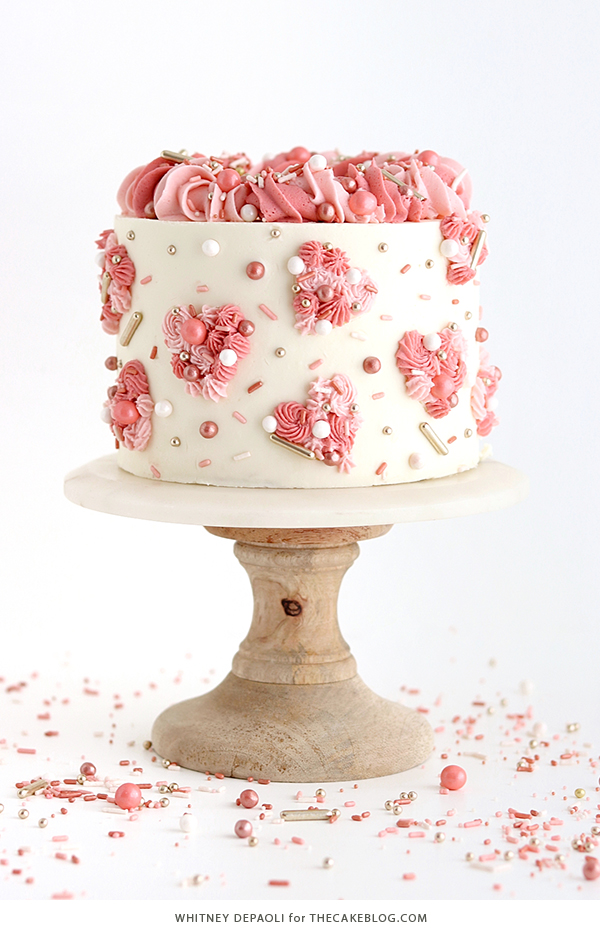
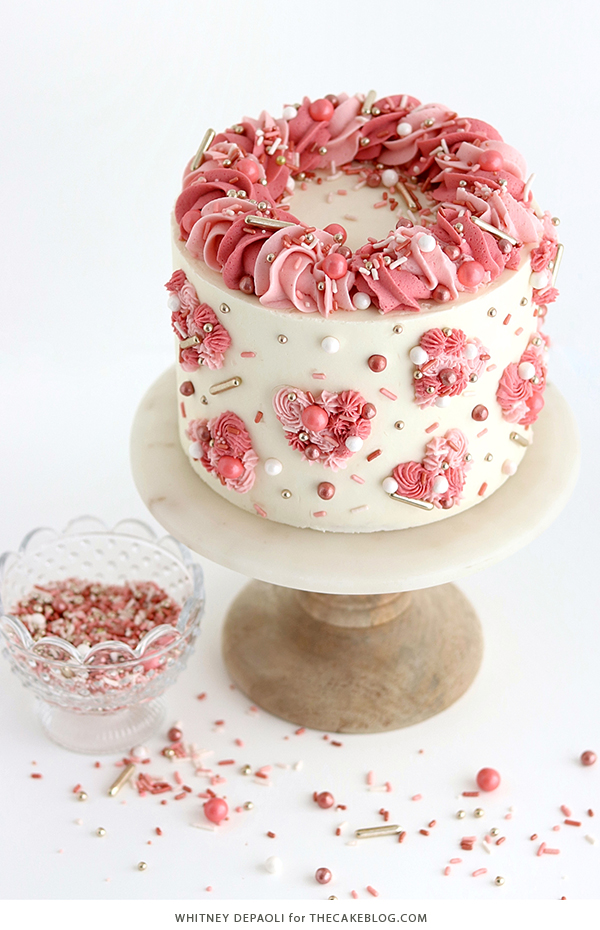
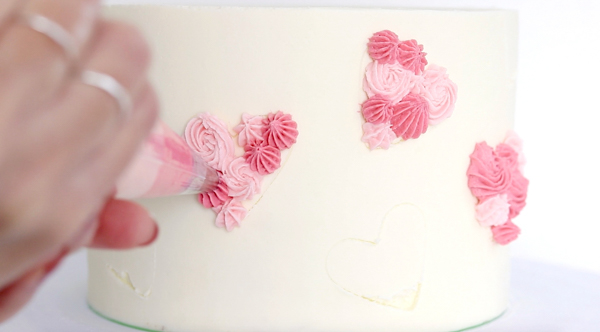
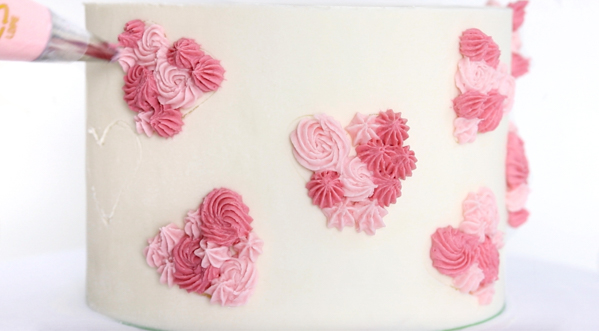
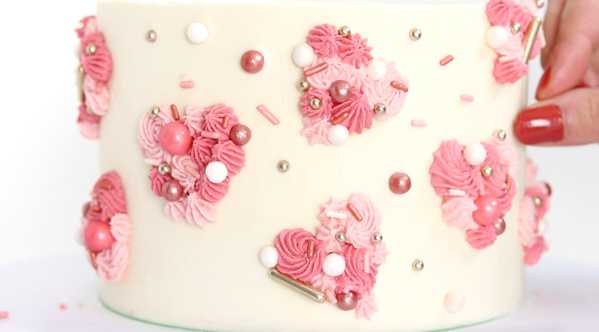
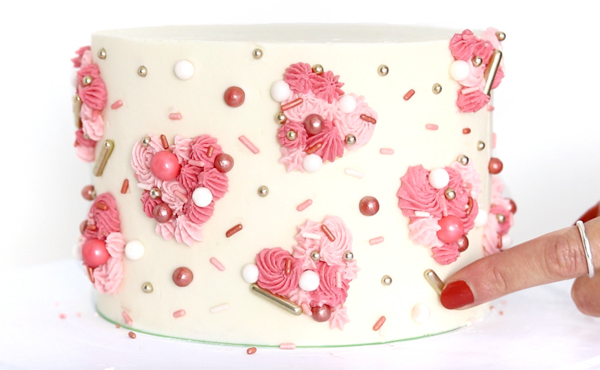
The core of the design lies in the "fill-in" piping. Using a variety of pressures and circular motions, the decorator creates a cluster of rosettes and stars within the scored boundaries. This phase is followed immediately by the application of metallic and pearlescent sprinkles. The addition of sprinkles serves a dual purpose: it obscures any minor piping imperfections and introduces a tertiary texture that reflects light, enhancing the "rose gold" effect.
Phase IV: The Rosette Rope Border
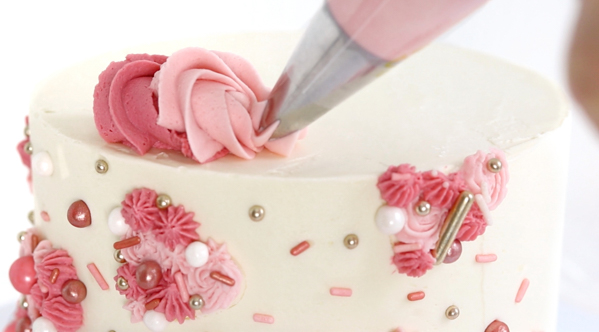
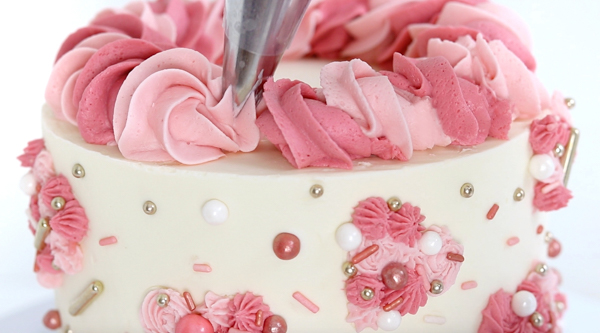
The final architectural element is the rosette rope border. This is executed using the 1M tip held at a 45-degree angle. By piping counter-clockwise rosettes in an overlapping, alternating color pattern, the decorator creates a continuous "rope" that frames the top of the cake. This technique provides a sense of completion and reinforces the professional silhouette of the dessert.
Market Data and Consumer Trends
The rise of specialized cake tutorials like the Piped Hearts Valentine’s Cake is supported by robust economic data. According to the National Retail Federation (NRF), Valentine’s Day spending in the United States alone frequently exceeds $20 billion annually. Within this expenditure, food and candy consistently rank among the top categories.
Furthermore, the "Galentine’s Day" phenomenon—a celebration of platonic female friendships popularized in the 2010s—has expanded the market for Valentine’s-themed baked goods. Data from Pinterest and Instagram indicates a 35% year-over-year increase in searches for "DIY Valentine’s Cake" and "Modern Piping Techniques" during the first quarter. This suggests that consumers are increasingly looking for ways to personalize their celebrations through handmade, high-aesthetic contributions rather than standard commercial purchases.
Technical Specifications and Material Safety
In the professional execution of the Piped Hearts design, attention to material safety is paramount. The tutorial highlights a critical distinction regarding gold and silver dragées. While these metallic spheres and rods are widely available in the cake decorating market, their regulatory status varies.
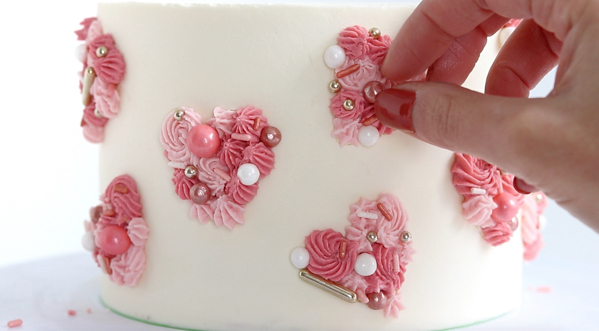
In the United States, the Food and Drug Administration (FDA) has not approved certain metallic pigments, such as those containing real silver or specific gold alloys, for direct consumption. These items are often labeled as "for decorative use only." Professional bakers are advised to inform clients or guests of these distinctions, particularly when using long metallic rods (often referred to as macaroni dragées), which are typically removed before the cake is consumed to ensure safety and prevent dental injury.
Inferred Industry Reactions
While official statements from industrial baking associations are rare for individual tutorials, the broader consensus among culinary educators is one of approval for "template-based" piping. By advocating for the use of cookie cutters as guides, educators note that the "Piped Hearts" technique reduces waste and minimizes the need for "re-dos," which is essential in a high-volume commercial kitchen environment.
Whitney DePaoli, the developer of this tutorial, emphasizes the versatility of the technique. Her approach suggests that while the pink and rose gold palette is traditional, the methodology can be adapted to any color story, allowing for seasonal variations. This flexibility is a hallmark of modern "smart" design, where a single technique can be rebranded for multiple holidays, increasing the return on investment for the baker’s time and equipment.
Analysis of Broader Implications
The Piped Hearts Valentine’s Cake is more than a seasonal recipe; it is a case study in the democratization of culinary expertise. The transition of professional-grade techniques from closed-door pastry kitchens to open-source digital platforms has fundamentally changed the "caking" industry.
- Professionalization of the Hobbyist: High-quality tutorials allow home bakers to produce results that rival boutique bakeries, driving competition and innovation in the local "cottage food" industry.
- Supply Chain Demand: The specific mention of tools like the Wilton 1M tip or Americolor gels drives targeted consumer spending in the baking supply sector, which has seen significant growth since 2020.
- Social Media Synergy: Designs are now engineered for "photogenic appeal." The Piped Hearts cake, with its high-contrast textures and metallic accents, is optimized for social media engagement, which in turn serves as free marketing for the creator and the platform.
In conclusion, the Piped Hearts Valentine’s Cake tutorial provides a comprehensive blueprint for modern holiday baking. By combining meticulous preparation with creative flair and safety consciousness, it offers a sustainable model for producing high-impact visual results. As the confectionery world continues to evolve, the integration of traditional symbols with contemporary textures will likely remain the gold standard for holiday celebrations.