

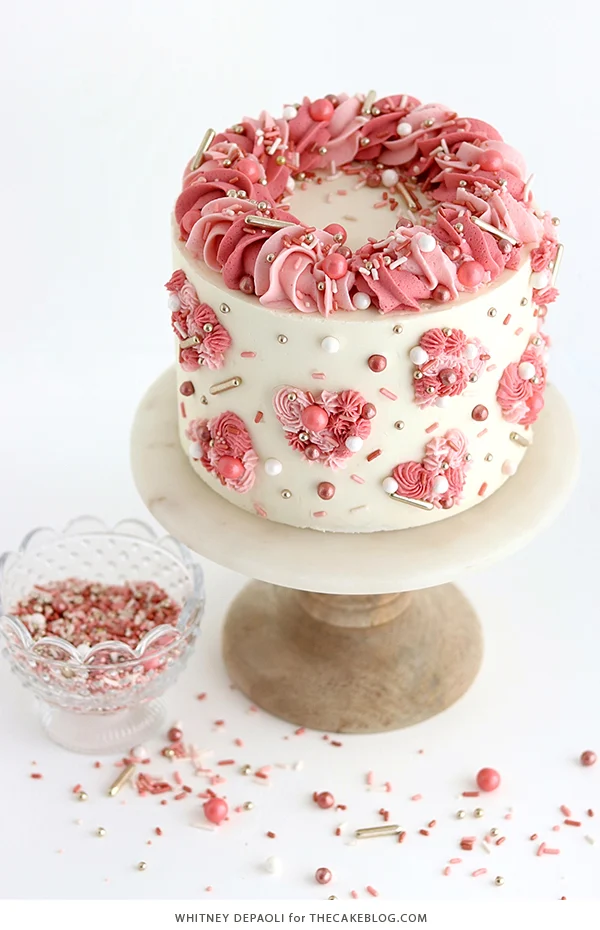
The culinary landscape of holiday-themed confectionery has undergone a notable transformation in recent years, shifting from rigid, traditional designs toward more textured, artisanal aesthetics. This evolution is prominently displayed in the latest instructional release by Whitney DePaoli, a contributor to the professional baking resource The Cake Blog. Her "Piped Hearts" technique represents a synthesis of classic romantic motifs—specifically heart shapes and pink palettes—with a contemporary "maximalist" piping style that has gained significant traction on visual social media platforms such as Instagram.
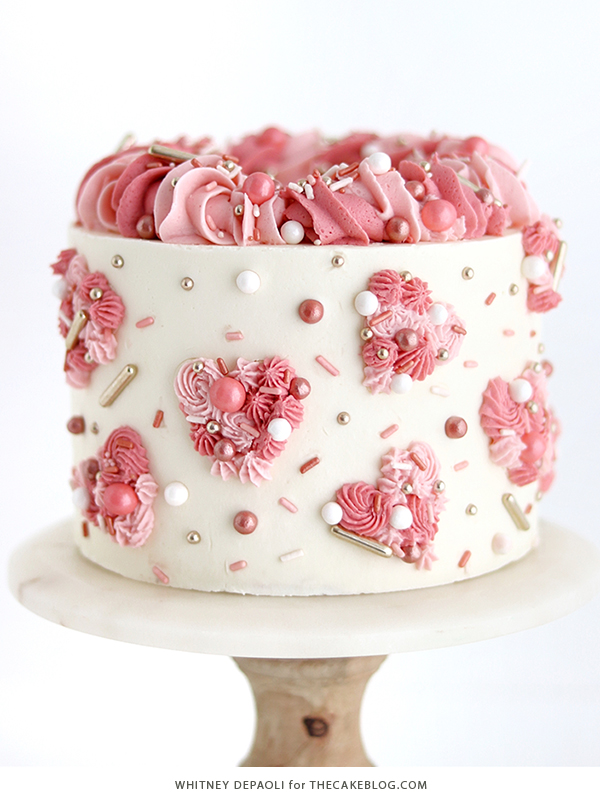
Technical Overview of Modern Buttercream Texturing
The "Piped Hearts" methodology utilizes a specific sequence of imprinting and filling to achieve a three-dimensional effect. Unlike traditional flat-iced cakes or fondant-wrapped tiers, this design relies on American buttercream’s structural integrity to support various piped shapes, including rosettes and stars. The technique was largely popularized by digital creators such as the Instagram-based baker known as @frostedfujicakes, whose work often emphasizes high-density piping and intricate color transitions.
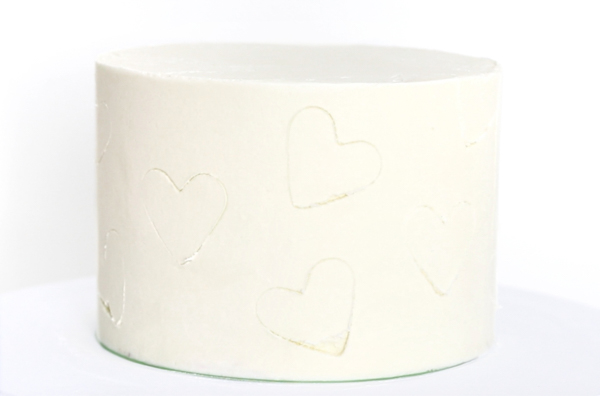
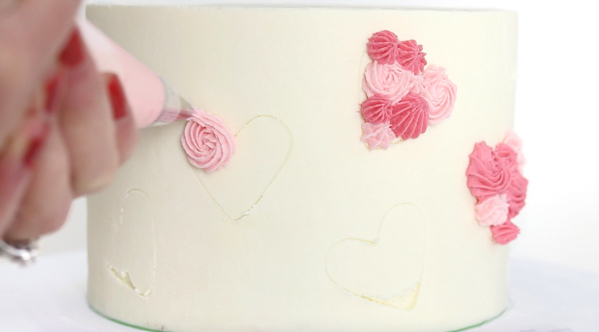
The process begins with a base of chilled, smooth-frosted cake. DePaoli recommends using a heart-shaped cookie cutter as a template, gently imprinting the outline into the cold frosting. This provides a geometric guide for the subsequent piping, ensuring symmetry while allowing for a "randomized" placement across the cake’s surface. This approach addresses a common challenge in pastry arts: maintaining consistent proportions when applying freehand textures to a vertical surface.
Chronology of the Decorative Process
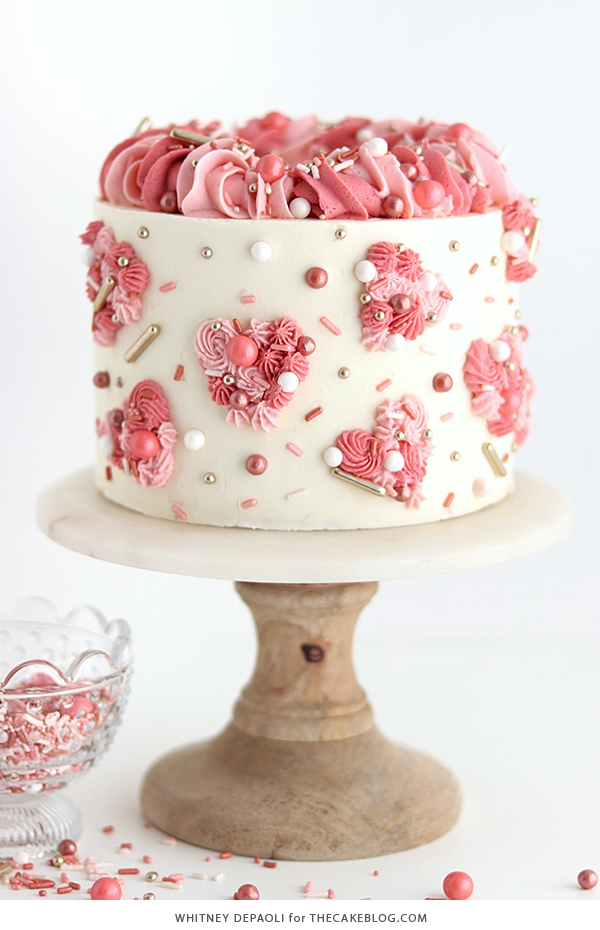
The execution of the Piped Hearts Valentine’s Cake follows a rigorous chronological framework designed to ensure the stability of the frosting and the clarity of the design.
Phase I: Preparation and Color Calibration
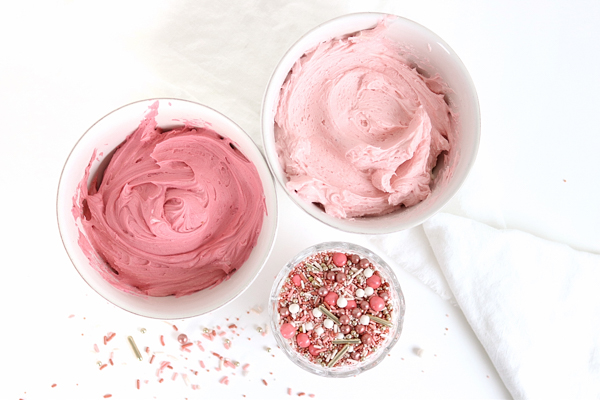
The initial stage involves the division and tinting of the buttercream. For the rose gold aesthetic featured in the tutorial, the process utilizes Americolor Dusty Rose gel. The buttercream is divided into two primary bowls to create a tonal variation, which is then distributed among four piping bags. These bags are fitted with specific stainless steel tips: the 1M (large star), 199 (open star), and 21 (small star). This variety of tips is essential for creating the multi-dimensional "shag" or "tapestry" look that characterizes modern buttercream art.
Phase II: Structural Imprinting
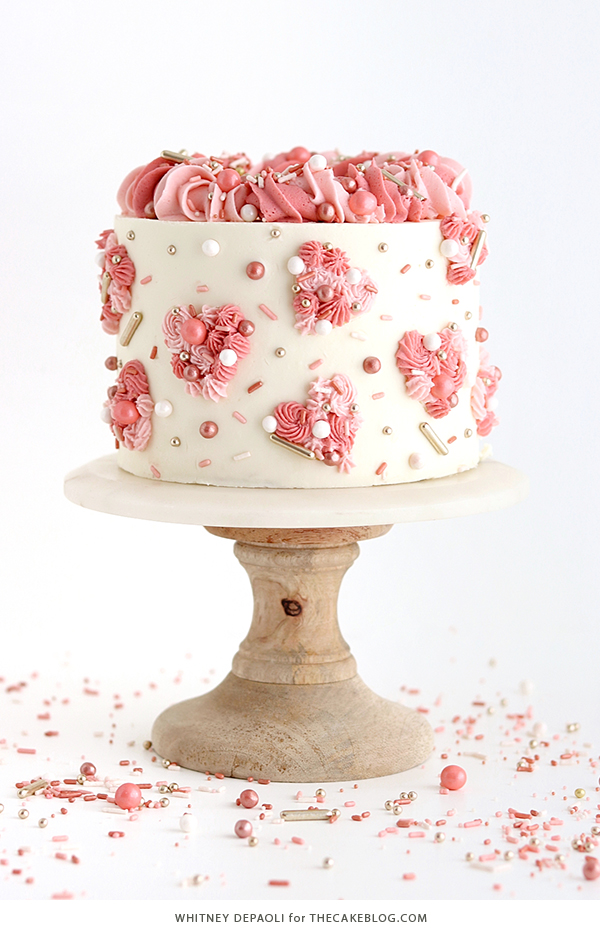
Once the cake is frosted and sufficiently chilled—a step necessary to prevent the template from sticking to the base—the heart shapes are imprinted. Industry experts suggest spacing these elements at least two inches apart to prevent visual crowding and to allow the negative space of the base frosting to provide contrast.
Phase III: High-Density Piping
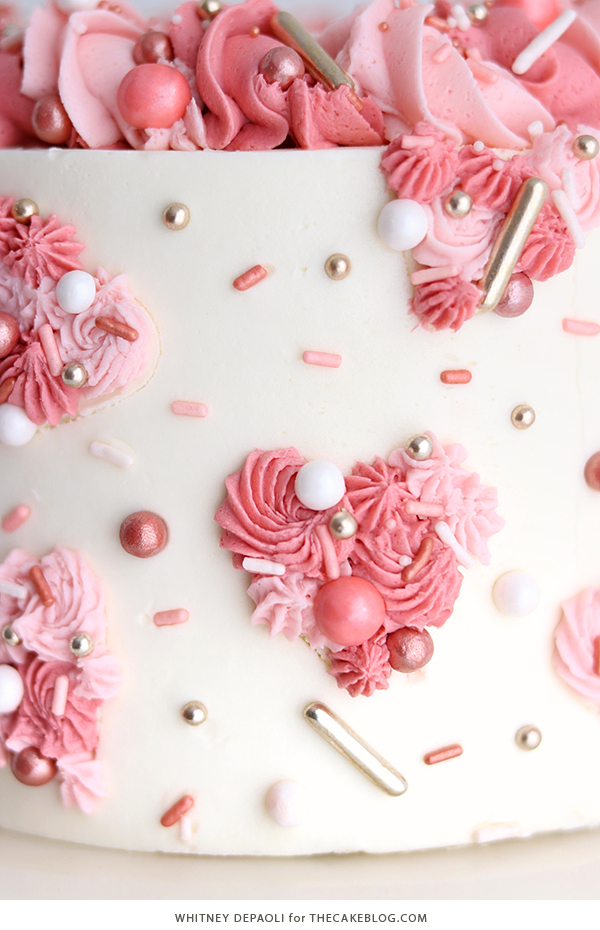
The core of the design involves filling the imprinted heart shapes with a series of tiny rosettes and stars. By alternating between the 1M, 199, and 21 tips, the baker creates a variegated surface. The tutorial emphasizes that while the initial piping may appear amorphous, the subsequent application of decorative elements clarifies the shape.
Phase IV: Textural Enhancement via Confectionery Accents
To bridge the gaps between piped rosettes and to add a reflective quality to the matte buttercream, various sprinkles and dragées are applied. This stage requires precision, often necessitating the use of tweezers or a damp paper towel to facilitate the placement of individual sugar pearls.
Phase V: The Rosette Rope Border
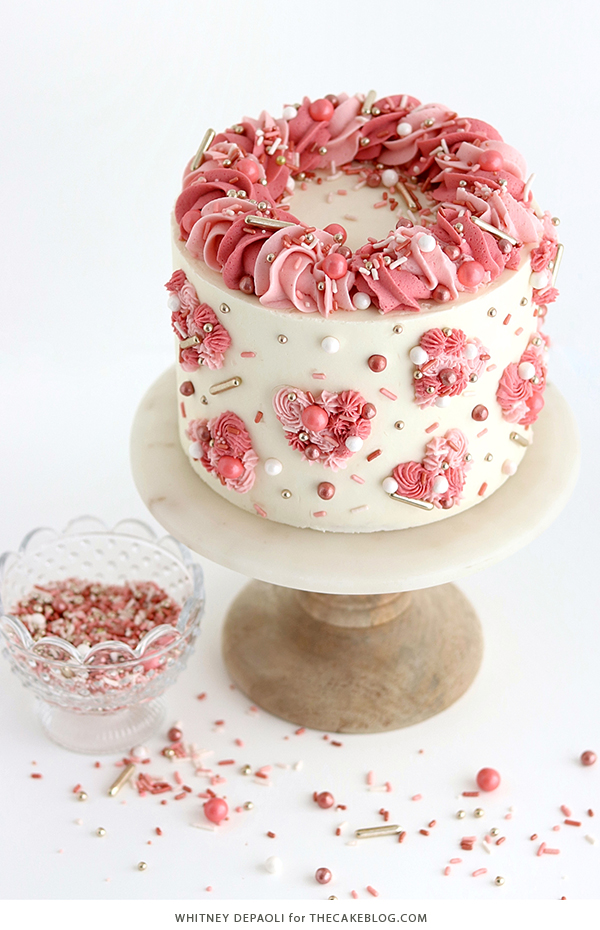
The final structural element is a "rosette rope" border. This is achieved by piping counter-clockwise rosettes in alternating colors around the top perimeter of the cake at a 45-degree angle. This border serves both an aesthetic purpose—framing the design—and a functional one, concealing the transition between the vertical sides and the horizontal top of the cake.
Market Context and Consumer Trends in Valentine’s Day Baking
The release of such tutorials coincides with a period of peak consumer activity in the confectionery sector. According to data from the National Retail Federation (NRF), Valentine’s Day spending in the United States consistently reaches into the billions of dollars, with a significant portion allocated to food and candy. In 2023, consumers spent an estimated $25.9 billion on the holiday, with nearly 52% of shoppers purchasing candy or baked goods.
The rise of the "DIY" (Do-It-Yourself) baking movement has further fueled demand for professional-grade instructional content. Market analysis suggests that the home baking industry saw a permanent shift during the 2020-2022 period, as hobbyists invested in professional tools such as rotating cake stands, offset spatulas, and high-quality piping kits. Tutorials like the Piped Hearts Valentine’s Cake cater to this demographic by providing "approachable luxury"—designs that look sophisticated and professional but can be executed with standard kitchen equipment.
Scientific and Regulatory Considerations in Cake Decoration
The tutorial specifically highlights the use of American buttercream, a choice grounded in the frosting’s chemistry. American buttercream, a crusting frosting made primarily of butter and powdered sugar, provides a more stable medium for high-density piping than Swiss or Italian Meringue buttercreams. Its ability to "set" or develop a thin outer crust allows the piped hearts to maintain their definition even in varying room temperatures.
Furthermore, the tutorial addresses a critical safety and regulatory issue regarding decorative elements. Gold and silver dragées, which are frequently used in high-end cake design, are often labeled as "for decorative use only." The U.S. Food and Drug Administration (FDA) has historically maintained that while these metallic-coated sugar pearls are non-toxic, they are not officially approved as a food additive. DePaoli’s tutorial includes a formal note advising bakers to instruct guests to remove certain metallic elements, such as long gold rods, prior to consumption. This reflects a broader industry movement toward transparency and food safety in the "edible art" space.

Broader Implications for the Creator Economy
The collaboration between Whitney DePaoli and The Cake Blog, and the explicit credit given to @frostedfujicakes, illustrates the interconnected nature of the modern "creator economy." In the digital age, culinary techniques are no longer guarded behind the doors of exclusive pastry schools. Instead, they are shared, iterated upon, and popularized through a global network of digital contributors.
This democratization of culinary skill has several implications:
- Lowered Barrier to Entry: Amateur bakers can achieve professional-level results by following step-by-step digital guides.
- Rapid Trend Cycling: Aesthetic trends in the baking world now move at the speed of social media algorithms, with "shag cakes" or "piped hearts" becoming global phenomena within weeks.
- Brand Monetization: For platforms like The Cake Blog, these tutorials serve as high-value content that drives traffic, supports affiliate marketing for supplies (such as Americolor gels or Wilton piping tips), and establishes authority in a crowded marketplace.
Analysis of Visual and Aesthetic Impact
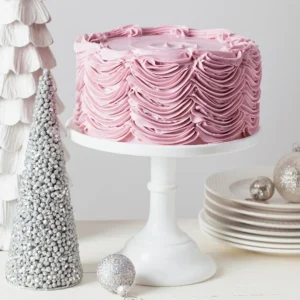
The choice of a rose gold color palette is a strategic departure from the stark reds and whites traditionally associated with Valentine’s Day. By utilizing "Dusty Rose" tones, the design appeals to a "Millennial" and "Gen Z" aesthetic that favors muted, sophisticated pastels. This shift is reflected in broader interior design and fashion trends, where rose gold has remained a staple for nearly a decade.
The use of texture—specifically the contrast between the smooth base frosting and the "bumpy" piped hearts—creates a tactile visual experience. In a digital environment where consumers "eat with their eyes," high-contrast textures perform better in terms of engagement and "shareability." The inclusion of various sprinkle sizes, from microscopic nonpareils to larger metallic rods, adds a layer of complexity that suggests a high level of craftsmanship.
Conclusion
The Piped Hearts Valentine’s Cake is more than a seasonal recipe; it is a manifestation of current trends in the global confectionery market, the influence of social media on culinary aesthetics, and the increasing sophistication of the home baker. By breaking down complex professional techniques into a structured, chronological format, contributors like Whitney DePaoli continue to bridge the gap between commercial pastry kitchens and the domestic sphere. As Valentine’s Day remains a cornerstone of the baking industry, the move toward these textured, modern designs suggests a long-term shift in how we celebrate and consume holiday-themed sweets.