


Mastering the Science of Sublimation: A Comprehensive Guide to Cricut Infusible Ink for Professional Grade DIY Projects. The landscape of home-based manufacturing and personalized apparel has undergone a significant transformation with the introduction of advanced dye-sublimation technologies, most notably represented by the Cricut Infusible Ink system. This technology marks a departure from traditional heat-transfer methods, offering a permanent, professional-grade solution for creators ranging from hobbyist crafters to small-scale entrepreneurs. By transitioning from surface-level adhesives to molecular-level integration, this system allows for the production of high-fidelity, vibrant designs that are indistinguishable from factory-manufactured goods.
The Mechanics of Sublimation Technology
To understand the utility of Cricut Infusible Ink, one must first examine the underlying science of sublimation. In a traditional heat-transfer vinyl (HTV) application, a design is cut from a film of polyurethane or similar plastic and adhered to the surface of a substrate using a heat-sensitive adhesive. While effective, this method creates a physical layer on top of the material, which is susceptible to cracking, peeling, and fading over time as the adhesive bond weakens through mechanical stress or repeated laundering.
In contrast, Cricut Infusible Ink utilizes a chemical process known as sublimation. During this process, a specialized solid-state ink is subjected to high heat (typically between 385°F and 400°F). At these extreme temperatures, the ink bypasses the liquid phase entirely, converting directly into a gas. Simultaneously, the heat causes the pores of the polymer-based substrate—such as polyester fabric or specialized ceramic coatings—to open. The gaseous ink permeates these pores, and as the heat source is removed and the material cools, the ink returns to a solid state, becoming trapped within the molecular structure of the substrate. The result is a design that is not merely on the material, but is part of the material itself.
A Chronology of Personalization Innovation
The development of the Infusible Ink system by Cricut Inc. represents a pivotal moment in the timeline of the "Maker Movement." The evolution of this technology can be traced through several key phases of consumer-accessible manufacturing:
- The Mechanical Era (Pre-2010): Early desktop cutting machines focused primarily on blade-based paper and cardstock cutting, largely serving the scrapbooking community.
- The Digital Integration Era (2010–2014): The introduction of cloud-based design software allowed for more complex vector-based designs, expanding the use of vinyl for home decor.
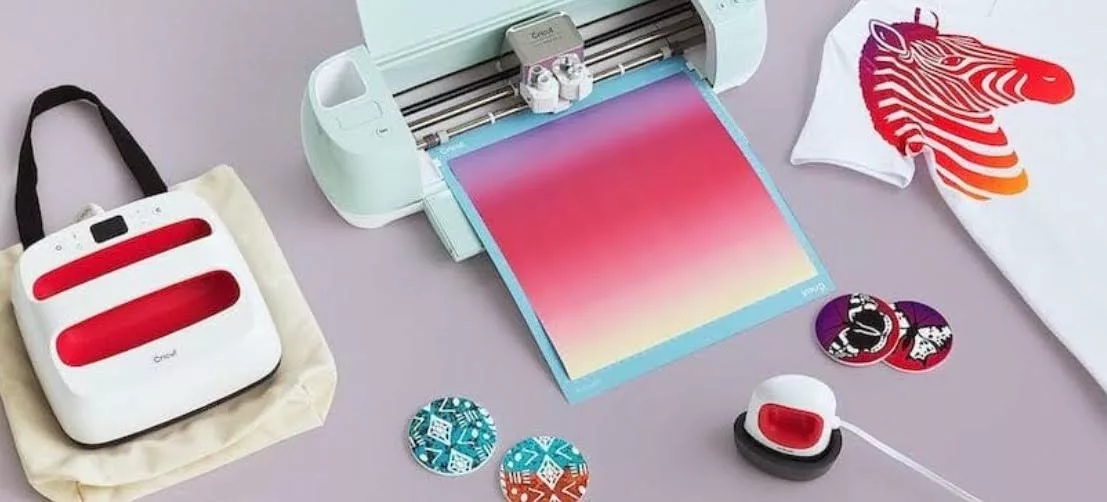
- The Material Expansion Phase (2015–2018): The rise of specialized heat presses, such as the Cricut EasyPress, provided the temperature consistency required for more durable transfers.
- The Sublimation Democratization (2019–Present): With the launch of Infusible Ink in June 2019, Cricut effectively simplified the complex industrial sublimation process, making it viable for home use without the need for expensive, dedicated sublimation printers.
Market Data and Economic Impact of the Maker Economy
The proliferation of tools like Infusible Ink has contributed significantly to the growth of the global handicrafts market. According to industry reports, the global handicrafts market reached a valuation of approximately $752.2 billion in 2022 and is projected to grow at a compound annual growth rate (CAGR) of 9.1% through 2028.
This growth is driven by a shift in consumer behavior toward "hyper-personalization." Data indicates that consumers are increasingly willing to pay a premium of 15% to 20% for customized goods compared to mass-produced alternatives. For independent creators, the ability to produce "factory-quality" items like personalized mugs, coasters, and apparel from a home studio has lowered the barrier to entry for e-commerce platforms such as Etsy and Shopify.
Technical Requirements: Compatibility and Substrates
A critical factor in the successful application of Infusible Ink is the selection of appropriate "blanks" or substrates. Because the sublimation process relies on a chemical bond with polymers, it is ineffective on natural fibers like 100% cotton or untreated organic surfaces.
- Fabric Composition: Successful transfers require a high polyester content (ideally 65% or higher). On 100% polyester, the colors reach maximum vibrancy. On blends with lower polyester counts, the design may take on a vintage or distressed aesthetic, as the ink will only bond with the synthetic fibers and wash out of the natural ones.
- Hard Surfaces: Items such as ceramic coasters, aluminum sheets, or mugs must be treated with a special polymer coating. Standard ceramic tiles or glass from a hardware store lack the necessary chemical receptors to hold the ink gas.
- Cricut Ecosystem: While third-party sublimation blanks are compatible, the company maintains a line of "Cricut Blanks" designed to withstand the high heat and specific pressure requirements of their hardware.
Procedural Guidelines: Executing Professional Transfers
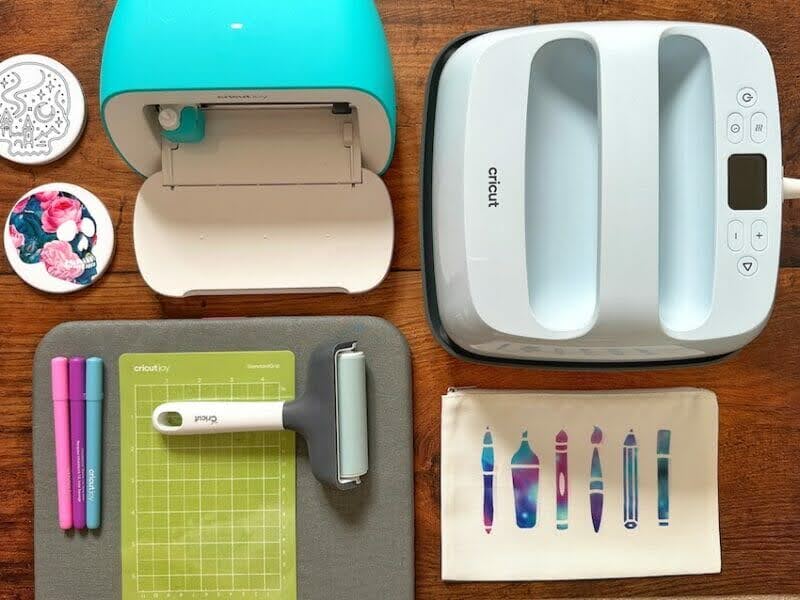
The application of Infusible Ink is divided into two primary methodologies: the use of pre-printed Transfer Sheets and the use of Infusible Ink Pens and Markers.
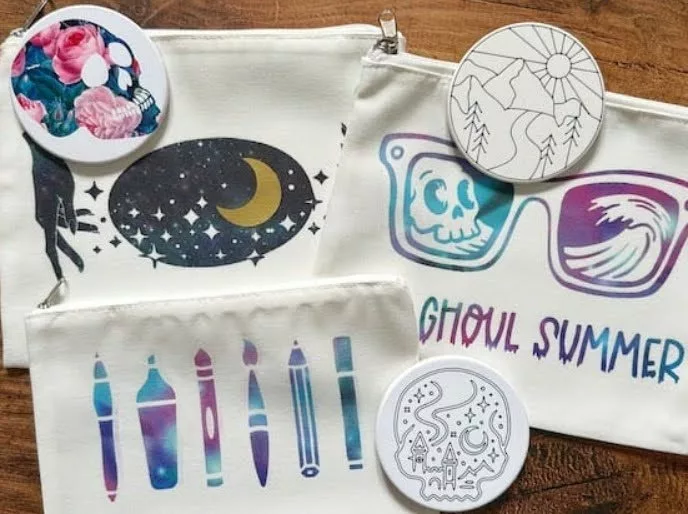
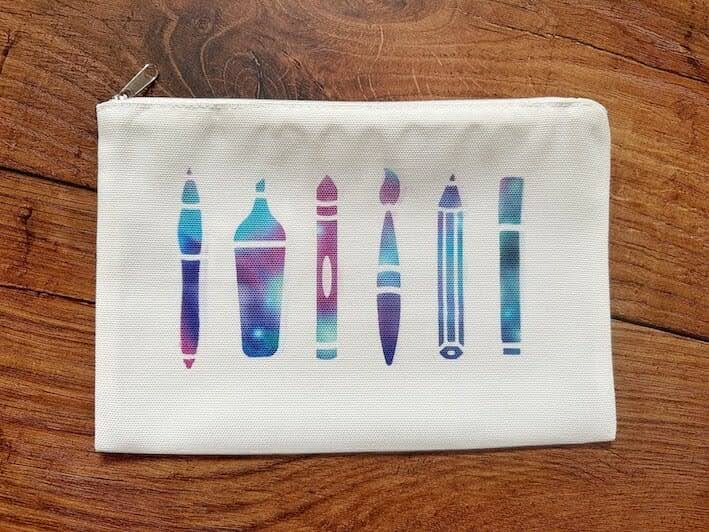
Case Study 1: Soft Surface Integration (Cosmetic Bags)
The process for fabric-based items involves high-precision cutting and thermal management.
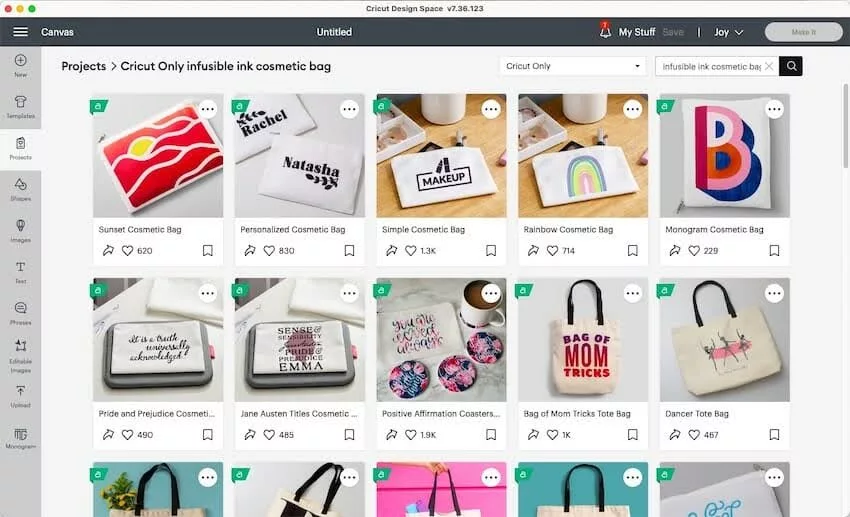
- Design Preparation: Users utilize vector-based software (Cricut Design Space) to create artwork. A critical step is the "Mirror" function; because the sheet is placed face-down on the substrate, the image must be reversed before cutting.
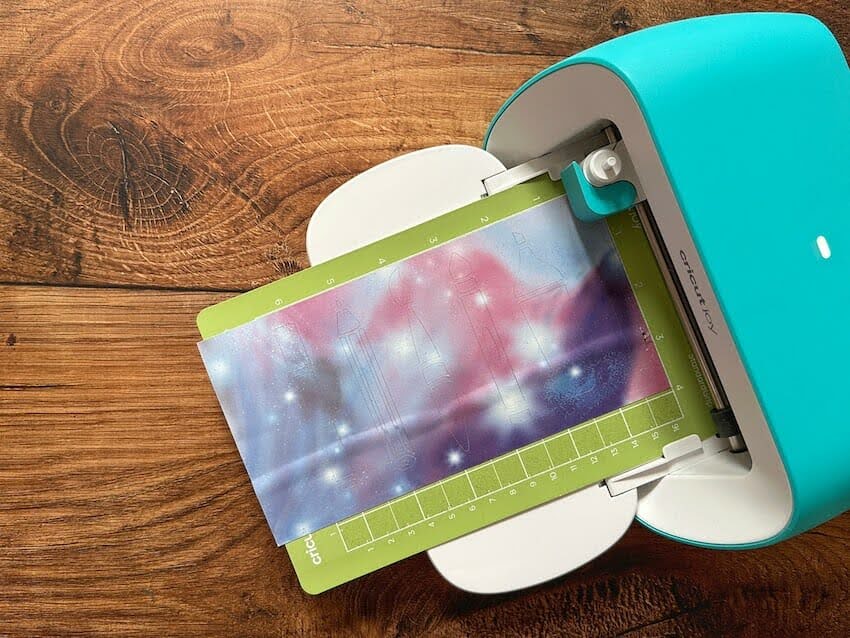
- Mechanical Cutting: The Infusible Ink Transfer Sheet is placed on a cutting mat with the ink side facing upward. The machine executes the design with a fine-point blade.
- Weeding and Preparation: Unlike vinyl, the excess material is removed by gently "cracking" the paper and using tweezers for intricate parts. The substrate must be cleaned with a lint roller to remove microscopic fibers that could create "blue specks" during the heat transfer.
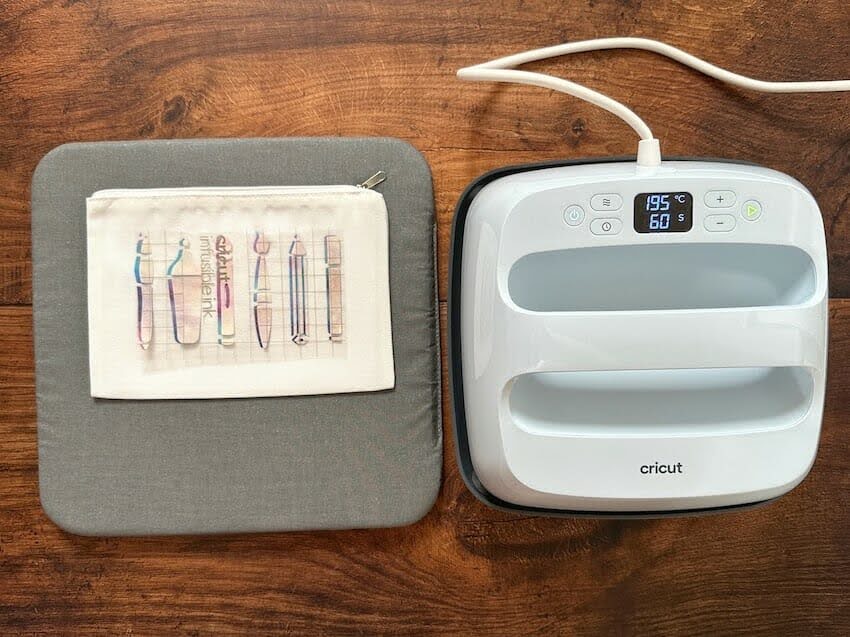
- Thermal Application: A heat press is applied at a steady 385°F for 40 to 60 seconds. The use of butcher paper is mandatory to protect the heat plate from gas leakage.
Case Study 2: Hard Surface Customization (Ceramic Coasters)
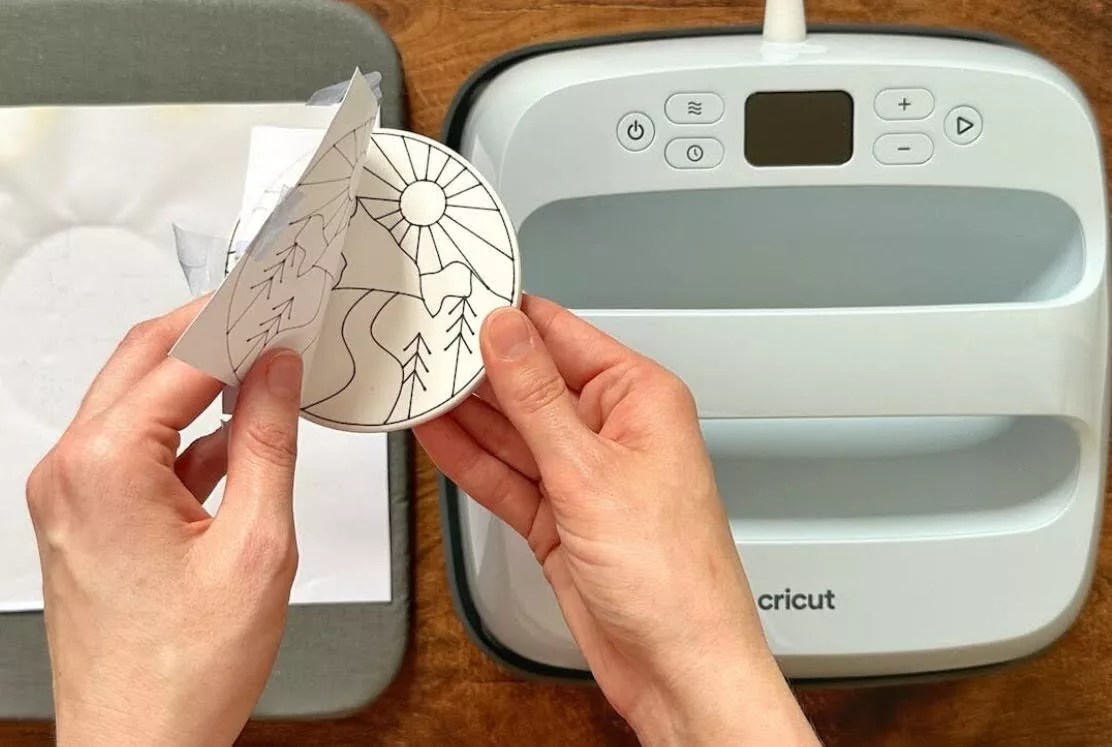
For ceramic or acrylic items, the use of Infusible Ink Pens allows for hand-drawn or machine-sketched designs.
- Drawing Phase: The design is drawn onto standard laser copy paper. If using a cutting machine, the pen is loaded into the accessory clamp to "plot" the design.
- Surface Decontamination: Ceramic surfaces are cleaned with a lint-free cloth and, occasionally, isopropyl alcohol to ensure no oils or fingerprints interfere with the bond.
- Reverse Transfer: The paper design is taped securely to the coaster using heat-resistant tape. For coasters, the heat is often applied to the back of the coaster to ensure the ceramic reaches the necessary temperature to accept the ink.
Analytical Risk Mitigation: Maintenance and Durability
The primary value proposition of Infusible Ink is its durability. In comparative testing, designs created with Infusible Ink have shown no signs of degradation after 50 standard wash cycles, whereas HTV often begins to show edge-lifting after 15 to 20 cycles.
However, the permanence of the ink requires strict adherence to maintenance protocols to prevent UV-induced fading or chemical breakdown:
- Laundering: Fabrics should be washed in cold water with mild detergent. The use of bleach or fabric softeners is discouraged, as these can interact with the polymer bond.
- Hard Goods: While ceramic coasters are durable, they should be hand-washed or cleaned with non-abrasive glass cleaners. Exposure to high-intensity dishwashing cycles may eventually dull the finish of the polymer coating.
Industry Perspectives and Future Implications
Industry analysts view the democratization of sublimation as a precursor to more advanced home-manufacturing trends. "We are seeing a shift where the line between ‘handmade’ and ‘professional’ is blurring," notes one manufacturing consultant. "Tools like Infusible Ink allow a single individual to compete with the quality of a professional print shop, provided they understand the technical constraints of the material."
The environmental impact is also a point of discussion. While sublimation reduces the physical waste of plastic films associated with vinyl, it relies heavily on polyester and other synthetic materials which have a higher environmental footprint than natural fibers. Future developments in the industry are expected to focus on "bio-sublimation"—developing inks that can bond with organic fibers or recycled polymers.
Final Assessment
Cricut Infusible Ink represents a sophisticated intersection of chemistry and creativity. By mastering the variables of heat, pressure, and substrate compatibility, creators can produce items that meet professional retail standards. Whether utilized for personal gift-giving or as the foundation for a small business, the technology provides a permanent solution to the challenges of traditional heat-transfer methods, ensuring that the vibrancy of a design lasts as long as the material it inhabits. As the maker economy continues to expand, such high-performance materials will remain essential for those seeking to bridge the gap between amateur crafting and professional production.