


The landscape of home-based manufacturing and personalized crafting has undergone a significant transformation with the introduction of Cricut Infusible Ink, a professional-grade heat transfer system that utilizes sublimation technology to create permanent, factory-quality designs. Unlike traditional methods that rely on adhesive-backed films, this technology allows creators to produce high-fidelity, vibrant designs on various substrates, ranging from apparel and tote bags to ceramic coasters and home decor. By moving beyond the surface-level application of standard heat-transfer vinyl (HTV), Infusible Ink represents a shift toward durability and professional aesthetics in the "prosumer" crafting market.
The Technical Foundation: Understanding Sublimation
To understand the impact of Cricut Infusible Ink, one must first examine the underlying science of sublimation. In a standard heat transfer process, a layer of vinyl or pigment is bonded to the top of a fabric or solid surface using a heat-activated adhesive. This creates a physical layer that can be felt by hand and is susceptible to mechanical stress, such as cracking, peeling, or fading over time.
In contrast, Infusible Ink operates via a sublimation process. During application, the solid ink held on a transfer sheet or drawn by a marker is subjected to high heat (typically between 385°F and 400°F). At these temperatures, the ink undergoes a phase change, transitioning directly from a solid to a gas without passing through a liquid state. Simultaneously, the molecular structure of the polymer-based substrate—such as polyester fibers or polymer-coated ceramics—opens up. The gaseous ink permeates these openings and, as the material cools, becomes trapped within the fibers or coating. The result is a design that is chemically bonded to the material, making it wash-proof, flake-proof, and virtually indistinguishable from the texture of the original item.
Historical Context and Market Evolution
The launch of Infusible Ink by Cricut, Inc. served as a response to the growing demand for professional-grade results among hobbyists and small business owners. Historically, sublimation was reserved for industrial facilities due to the high cost of specialized printers, expensive inks, and the technical knowledge required to manage color profiles. By pre-printing sublimation ink onto "Transfer Sheets" and developing "Infusible Ink Pens," Cricut effectively democratized the technology.
This innovation coincided with the rapid expansion of the global personalized gift market, which was valued at approximately $26.3 billion in 2022 and is projected to grow significantly through 2030. As platforms like Etsy and Shopify lowered the barrier to entry for micro-entrepreneurs, the demand for tools that could produce "retail-ready" goods at home spiked. Infusible Ink filled this niche by providing a bridge between amateur crafting and industrial manufacturing.
The Product Ecosystem: Sheets, Pens, and Blanks
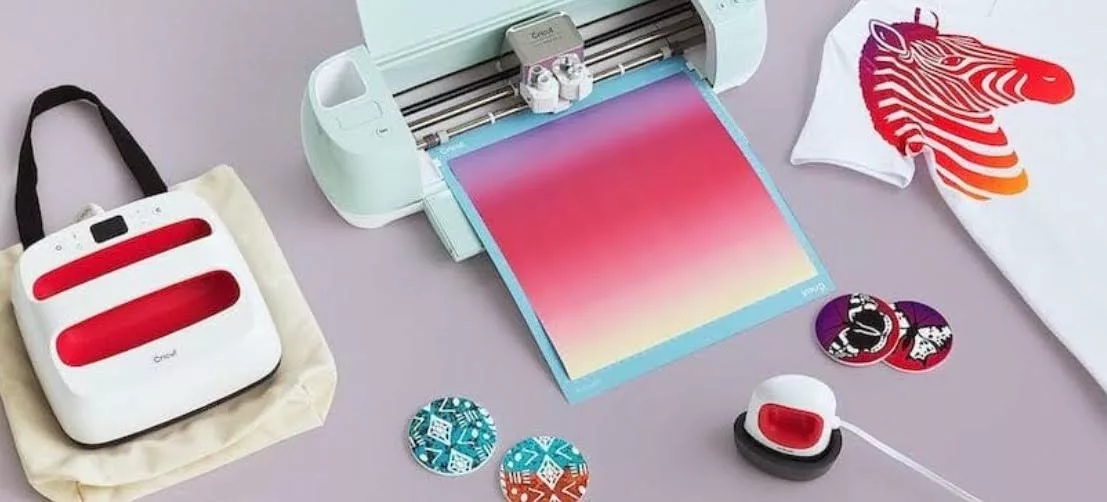
The Infusible Ink system is comprised of three primary components, each designed to work in synergy to ensure successful transfers.
1. Infusible Ink Transfer Sheets
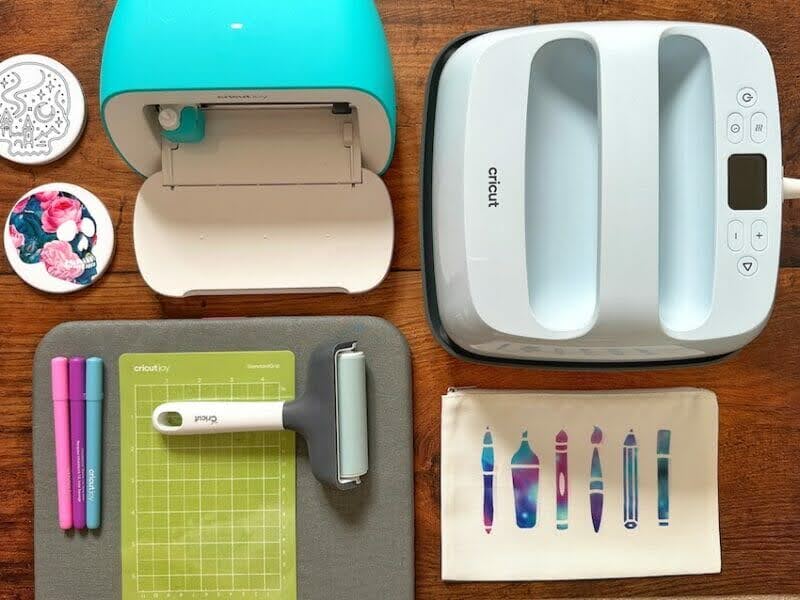
These are pre-inked sheets available in a wide array of solid colors and patterns. They are designed to be cut by electronic cutting machines, such as the Cricut Explore, Maker, or Joy series. When unheated, the colors on these sheets often appear dull or muted; however, the true vibrancy is revealed only after the heat-activation process.
2. Infusible Ink Pens and Markers
For those seeking a hand-drawn or sketched aesthetic, the pens and markers allow for freehand drawing or machine-drawn precision. These tools use the same sublimation ink formula and can be used on standard laser copy paper. Once the design is drawn (in reverse), it is heat-pressed onto the final substrate.
3. Compatible Blanks
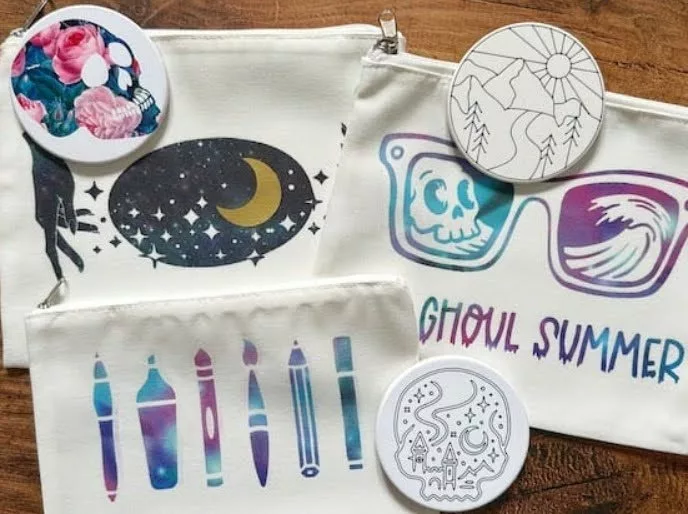
The most critical constraint of the system is the requirement for specific materials. Because the ink requires polymers to bond, it cannot be used on 100% cotton or untreated natural wood. Cricut provides a line of "blanks" specifically engineered for this process, including polyester-blend T-shirts, tote bags, and ceramic coasters with specialized coatings. Industry analysts note that while third-party sublimation blanks exist, the use of branded materials ensures a higher success rate due to standardized polymer densities.
Procedural Workflow: Case Study on Fabric Application
The application of Infusible Ink onto fabric, such as a cosmetic bag or a T-shirt, follows a strict chronological protocol to ensure a permanent bond.
Phase 1: Design and Digital Preparation
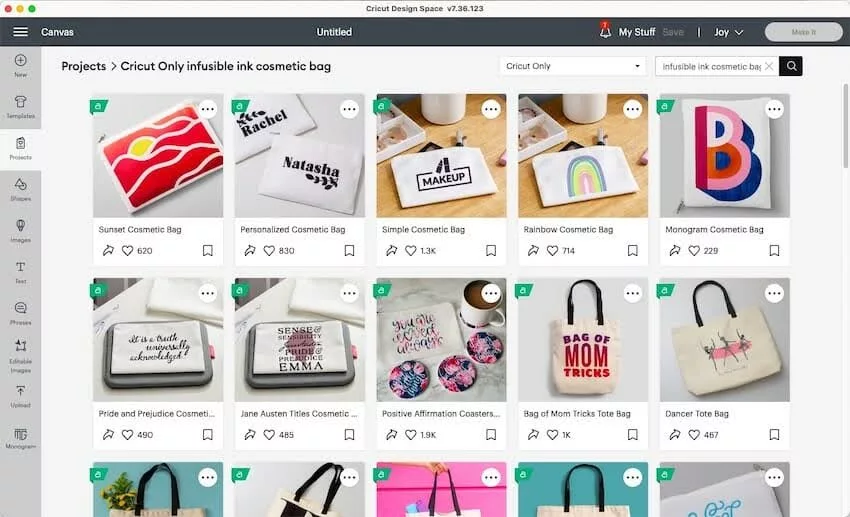
The process begins in a digital design environment, such as Cricut Design Space. Users select or create a vector-based design. A critical step in this phase is "Mirroring." Because the design is placed face-down on the substrate, any text or directional imagery must be flipped horizontally before cutting to ensure the final result is oriented correctly.
Phase 2: Mechanical Cutting and Weeding
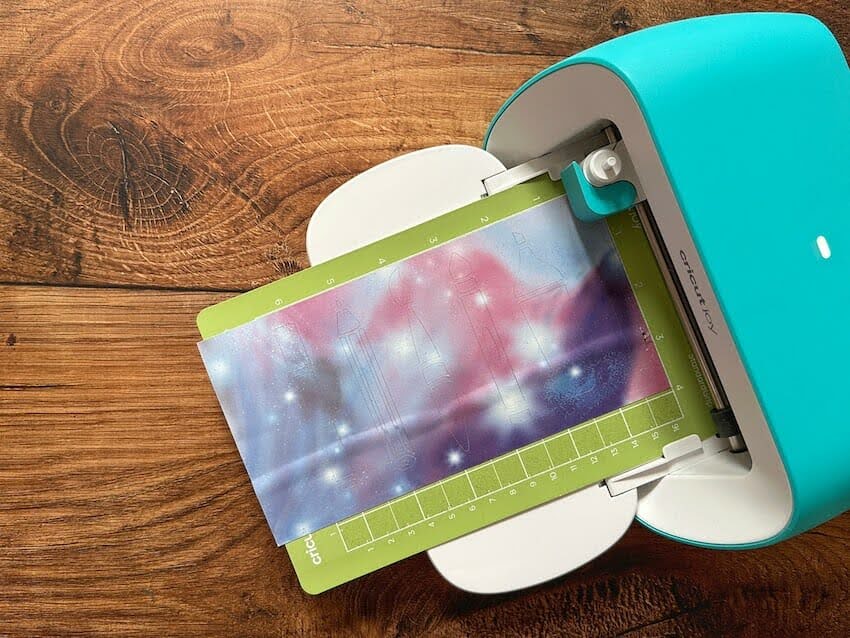
The Transfer Sheet is placed onto a cutting mat with the ink side facing up. The machine executes the cut based on the digital file. Following the cut, the "weeding" process involves removing the excess ink sections that are not part of the design. Unlike vinyl, Infusible Ink sheets have a paper-like consistency, and weeding is typically done by gently rolling the paper to "pop" the pieces out rather than using a sharp tool.
Phase 3: Thermal Transfer
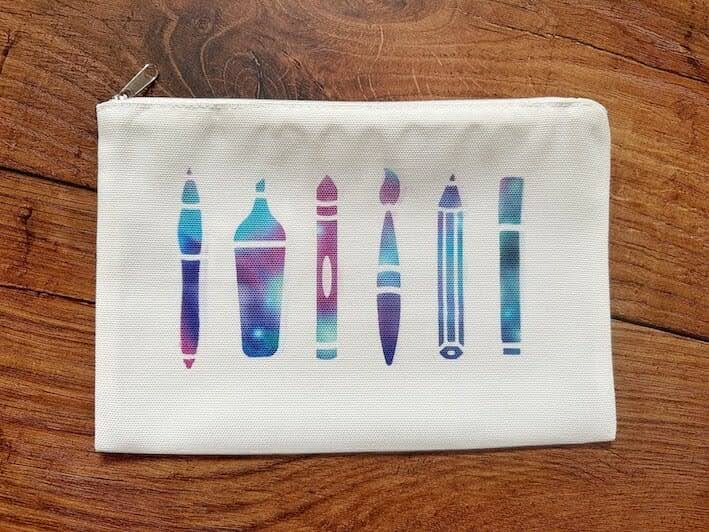
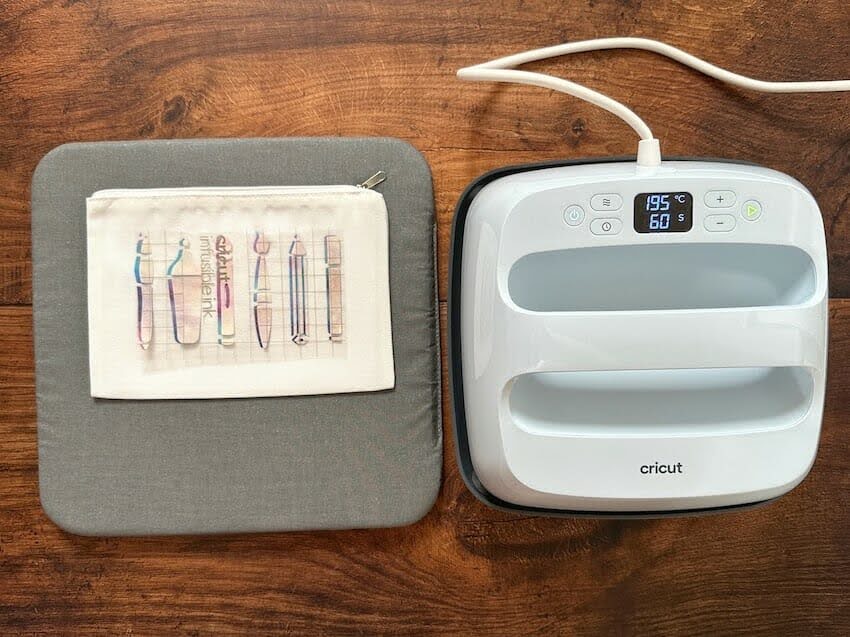
The substrate is prepped by removing lint with a roller and pre-heating to remove moisture. The design is placed face-down, covered with butcher paper (to protect the heat press from gas leakage), and pressed. For fabric, this usually requires 385°F for 40 sec to 60 sec with light pressure.
Procedural Workflow: Case Study on Hard Surfaces
The application of Infusible Ink to ceramic coasters involves a slightly different set of variables, primarily concerning heat distribution and safety.
Phase 1: Artistic Execution
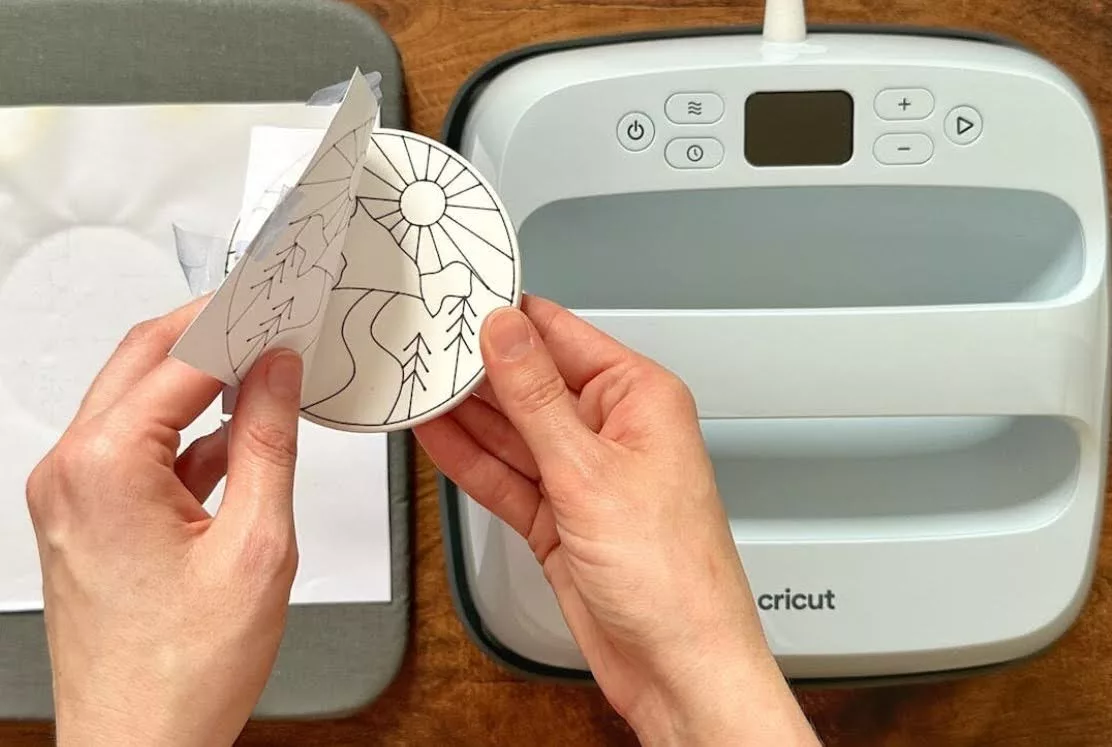
Using Infusible Ink Pens, the design is drawn onto laser copy paper. If using a cutting machine to draw, the pen is loaded into the tool carriage. Users must ensure that the paper remains clean, as any stray ink marks will transfer permanently to the ceramic.
Phase 2: Alignment and Adhesion
The coaster is cleaned with a lint-free cloth and isopropyl alcohol. The design is placed face-down on the polished side of the coaster. To prevent "ghosting"—a blurring effect caused by the design shifting during the gas phase—heat-resistant tape is used to secure the paper firmly to the ceramic.
Phase 3: Thermal Activation
Ceramic acts as a heat sink, requiring a longer press time. Standard settings involve placing the coaster face-down on a heat mat, with the heat press applied to the back of the coaster for approximately 240 seconds at 400°F. This allows the heat to saturate the ceramic and activate the ink on the surface.
Comparative Analysis: Infusible Ink vs. Heat Transfer Vinyl (HTV)
Data from consumer testing highlights several key differences between Infusible Ink and HTV:
- Durability: HTV typically lasts for 25 to 50 washes before showing signs of wear. Infusible Ink is rated for the lifetime of the garment.
- Texture: HTV adds weight and a "plastic" feel to the fabric. Infusible Ink has zero "hand feel," meaning the fabric remains as soft as it was before the transfer.
- Color Complexity: HTV requires layering different colors of vinyl, which can become bulky. Infusible Ink Transfer Sheets allow for complex, multi-colored patterns in a single press.
- Substrate Limitations: HTV is versatile and can be applied to almost any fabric, including 100% cotton. Infusible Ink is restricted to high-polyester counts (65% or higher recommended) and polymer-coated solids.
Safety and Maintenance Protocols
The high temperatures required for Infusible Ink necessitate rigorous safety standards. Users are advised to work in well-ventilated areas, as the sublimation process releases minor fumes during the gas transition. Furthermore, the use of butcher paper is mandatory to prevent "blowout"—where gaseous ink settles on the heat press plate, potentially ruining future projects.
For long-term maintenance of infused products, industry experts recommend:
- Fabric: Machine wash inside out with cold water and mild detergent. Avoid bleach and fabric softeners, which can eventually break down the polymer bonds.
- Ceramics: Hand wash with non-abrasive cleaners. While many infused ceramics are technically dishwasher safe, the high-heat drying cycles of some machines can cause slight fading over several years.
Broader Implications for the DIY Economy
The integration of sublimation technology into the home environment via Cricut Infusible Ink has significant implications for the "maker movement." It allows for the production of high-quality merchandise without the overhead of industrial machinery. This has empowered a new wave of "micro-manufacturers" who can compete with traditional retail on quality while offering the advantage of extreme customization.
Furthermore, the permanence of the ink contributes to a more sustainable approach to personalized fashion. Unlike adhesive-based designs that may eventually end up in landfills due to peeling or cracking, ink-infused garments maintain their aesthetic integrity for much longer, extending the lifecycle of the product.
As digital fabrication tools continue to evolve, the distinction between "hobbyist" and "professional" equipment continues to blur. Cricut Infusible Ink stands as a primary example of this convergence, providing a sophisticated chemical process in a user-friendly format that has redefined the standards of home-based customization.