


Standing at a jewelry counter, the allure of a dazzling diamond can be captivating, but understanding the fundamental differences between lab-grown diamonds and cubic zirconia is crucial for making an informed purchase. This guide delves into the science, durability, brilliance, and economic considerations of these popular diamond alternatives, empowering consumers to select the ideal sparkle without compromising their vision or budget. PriceScope, as the largest diamond and jewelry forum, offers invaluable insights from experts and real shoppers, providing honest comparisons on lab-created diamonds, simulants, optical properties, and long-term value. Whether the quest is for an engagement ring, anniversary gift, or everyday earrings, PriceScope aims to equip individuals with the knowledge necessary for a confident and satisfying choice.
The Genesis of Lab-Grown Diamonds: Science Meets Beauty
Lab-grown diamonds represent a significant advancement in gemology, offering authentic diamonds with the same chemical, physical, and optical properties as their natural counterparts, but created in controlled laboratory environments. These gems are engineered through sophisticated methods that either mimic the Earth’s geological pressures or utilize gas-based deposition techniques, allowing for the creation of high-quality diamonds in a matter of weeks, rather than the eons required for natural formation. Since their emergence in the mid-20th century, lab-grown diamonds have gained considerable traction for providing comparable beauty and durability at a more accessible price point, coupled with enhanced customization options and greater supply chain transparency.
The synthesis process begins with a small diamond seed, often sourced from previous lab-grown diamond production. This seed serves as the foundational crystal upon which new carbon atoms are deposited, meticulously replicating the natural diamond’s tetrahedral atomic structure. This identical structure ensures that lab-grown diamonds pass all standard authenticity tests and possess the same inherent properties, such as exceptional hardness and a high refractive index, which contribute to their brilliant sparkle. Unlike simulants, they are classified as real diamonds and are evaluated using the same rigorous grading criteria: cut, color, clarity, and carat weight.

The ability to control trace elements during the synthesis process allows for the creation of diamonds in a spectrum of colors, from the most desirable colorless grades (D on the GIA scale) to vibrant fancy yellows and blues. This controlled manufacturing process offers a level of precision and predictability that is not possible with natural diamonds, which are subject to the unpredictable conditions of Earth’s mantle.
A Historical Perspective: From Industrial Utility to Gemstone Luxury
The concept of synthesizing diamonds dates back to the 1950s, with early efforts focused primarily on industrial applications. General Electric pioneered the High-Pressure High-Temperature (HPHT) method in 1954, initially producing diamonds for abrasive tools. By the 1970s, technological advancements enabled the production of gem-quality diamonds, although these early stones were typically small and often exhibited color tints.
The 1980s and 1990s saw further refinements, with the development and increasing prominence of the Chemical Vapor Deposition (CVD) method. This evolution was driven by progress in materials science and the growing commercial interest in creating diamonds for ornamental purposes. Today, the global production of lab-grown diamonds has scaled dramatically, with significant manufacturing hubs in the United States, India, and China catering to both industrial and jewelry markets. This timeline reflects a transition from scientific novelty to a mainstream gemstone option, influenced by technological innovation and evolving consumer preferences for ethically sourced and traceable products.
The HPHT Manufacturing Process: Mimicking Earth’s Interior
The High-Pressure High-Temperature (HPHT) method is one of the primary techniques for creating lab-grown diamonds. This process involves replicating the extreme conditions found deep within the Earth’s mantle. Specialized presses are used to generate pressures of approximately 5-6 gigapascals and temperatures ranging from 1,300 to 1,600 degrees Celsius.

In this environment, a small diamond seed is placed in a chamber alongside a carbon source, such as graphite, and a metallic solvent (like nickel or iron). The extreme heat and pressure cause the carbon to dissolve in the metal solvent and then recrystallize onto the diamond seed, causing the crystal to grow layer by layer over a period of several days to weeks. Careful cooling of the chamber is essential to prevent thermal shock and cracking of the newly formed diamond. While HPHT is effective in producing high-clarity diamonds, trace amounts of the metallic flux can sometimes be incorporated into the crystal structure as inclusions.
Various types of HPHT presses, including belt, cubic, and split-sphere designs, have been developed to optimize efficiency and scale of production. While this method is adept at creating colorless and colored diamonds, post-growth treatments may sometimes be employed to enhance color or clarity. The energy-intensive nature of HPHT underscores the need for precise engineering controls to ensure consistent crystal growth and quality.
The CVD Manufacturing Process: Layering Carbon with Precision
The Chemical Vapor Deposition (CVD) method offers an alternative approach to synthesizing diamonds, operating at lower pressures than HPHT. This technique involves depositing carbon atoms from a gas mixture onto diamond seeds within a vacuum chamber.
The process begins with placing diamond seeds, often multiple on a substrate, into the chamber. A precisely controlled mixture of gases, typically methane (as the carbon source) and hydrogen, is introduced. A plasma, generated through microwaves or a hot filament, breaks down these gases at temperatures between 700 and 1,200 degrees Celsius. The liberated carbon atoms then adhere to the diamond seeds, gradually building up layers of diamond crystal over a period of approximately 4 to 6 weeks. Periodic pauses in the process may be necessary to remove graphite byproducts and maintain optimal single-crystal growth.

A significant advantage of CVD is its ability to produce larger diamonds with fewer metallic inclusions compared to HPHT. However, the resulting diamonds may sometimes contain non-diamond carbon or exhibit different types of inclusions. Post-growth treatments, such as HPHT annealing, are often applied to CVD diamonds to improve their color and clarity. The precision of the CVD process allows for greater control over the diamond’s structure and purity, making it well-suited for applications where optical clarity is paramount.
Cubic Zirconia: A Brilliant Simulant
Cubic Zirconia (CZ) is a widely recognized and affordable diamond simulant, meticulously engineered to mimic the visual appeal of diamonds. Unlike diamonds, which are composed of pure carbon, CZ is a synthetic crystalline material made from zirconium dioxide. Its creation involves a sophisticated skull melting process, where zirconium oxide powder is mixed with stabilizers like yttrium or calcium oxide to maintain its cubic crystalline structure. This mixture is heated to extremely high temperatures, exceeding 4,900 degrees Fahrenheit, using radio-frequency induction in a water-cooled crucible. As the molten material cools, it solidifies into crystals, which are then cut and polished for jewelry.
The commercial production of CZ gained momentum in the 1970s, offering consumers a budget-friendly alternative that closely resembled the sparkle and brilliance of diamonds. While naturally occurring zirconium dioxide exists in mineral form, all CZ used in jewelry today is lab-created to ensure consistent quality and purity. The material’s appeal lies in its flawless nature and often colorless appearance, making it a popular choice for fashion jewelry and temporary diamond substitutes. However, it is crucial to understand that CZ is a simulant, meaning it imitates diamond’s appearance but does not share its chemical or physical properties.
The History of Cubic Zirconia: From Accidental Discovery to Market Dominance
The journey of cubic zirconia began in 1937 with the scientific description of minute natural crystals of zirconium dioxide. However, it was not until the 1960s that French and Soviet scientists began experimenting with synthesizing larger, usable versions. By the early 1970s, Soviet scientists had perfected a commercial production method, leading to its market introduction around 1976. This breakthrough rapidly transformed the jewelry industry, as CZ quickly became the leading diamond imitation due to its affordability and striking visual similarity to natural diamonds.

Production scaled significantly throughout the 1980s, with tens of millions of carats produced annually. Patents and technological refinements further fueled its widespread adoption. Today, CZ remains a prominent material in the fashion and bridal markets, with advancements including the introduction of colored variants to broaden its aesthetic appeal. The historical development of CZ is intrinsically linked to materials science advancements during the Cold War era, where high-temperature techniques were adapted from industrial applications, indirectly influencing consumer goods markets and establishing CZ as an accessible alternative in fashion jewelry.
The Skull Melting Process: Crafting a Diamond Look-Alike
The manufacturing of cubic zirconia relies on a high-tech process known as skull melting. This method involves combining zirconium oxide powder with stabilizing agents, such as yttrium oxide or calcium oxide, to ensure the material retains its cubic crystalline structure. The mixture is placed within a specially designed crucible, typically made of copper and actively cooled with water. Intense radio-frequency induction heating raises the material’s temperature to over 4,900 degrees Fahrenheit, melting the core. The rapid cooling of the crucible’s outer walls creates a solid outer shell, or "skull," which contains the molten material.
As the molten zirconium dioxide cools and solidifies within this controlled environment, crystals begin to form and grow. The gradual cooling process, which can take several hours to days, is critical for developing uniform crystal structures and minimizing defects. Once solidified, the mass is extracted from the crucible, and the individual crystals are separated, inspected for quality, and then precisely cut and polished into various shapes suitable for jewelry settings. This laboratory-controlled environment ensures a level of uniformity and flawlessness that is rarely found in natural gemstones.
The precision of the skull melting process is paramount; even minor variations in temperature or the ratio of stabilizing agents can impact the final crystal’s clarity, color, and overall market value. Modern refinements to this process include the addition of trace elements, which allow for the creation of colored CZ stones, such as pink or blue, further enhancing its versatility. The efficiency of this method contributes to the significantly lower cost of cubic zirconia compared to diamonds.

Comparing the Core Characteristics: Lab-Grown Diamonds vs. Cubic Zirconia
The fundamental differences between lab-grown diamonds and cubic zirconia lie in their chemical composition, physical properties, and the resulting impact on their appearance, durability, and long-term value.
Chemical Composition: Carbon vs. Zirconium Dioxide
At the heart of the distinction lies their elemental makeup. Lab-grown diamonds are composed entirely of carbon atoms arranged in a highly ordered crystalline lattice, identical to that of natural diamonds. This pure carbon structure is responsible for their unparalleled hardness, brilliance, and thermal conductivity.
Cubic zirconia, on the other hand, is a synthetic compound primarily consisting of zirconium dioxide (ZrO₂). This material is structurally different from diamond and lacks the carbon basis. While CZ can be engineered to exhibit diamond-like sparkle, its inherent chemical composition dictates its distinct physical properties, including its hardness and thermal conductivity, which differ significantly from diamond.
Appearance: Brilliance, Fire, and Sparkle
Both lab-grown diamonds and cubic zirconia are prized for their ability to sparkle and refract light, but they achieve this through different optical properties.

Lab-grown diamonds, with a refractive index of approximately 2.42, exhibit a balanced interplay of brilliance (white light reflection), fire (dispersion of light into spectral colors), and scintillation (the play of light and shadow as the stone moves). Their optical performance is virtually indistinguishable from natural diamonds, offering a sophisticated and dynamic sparkle.
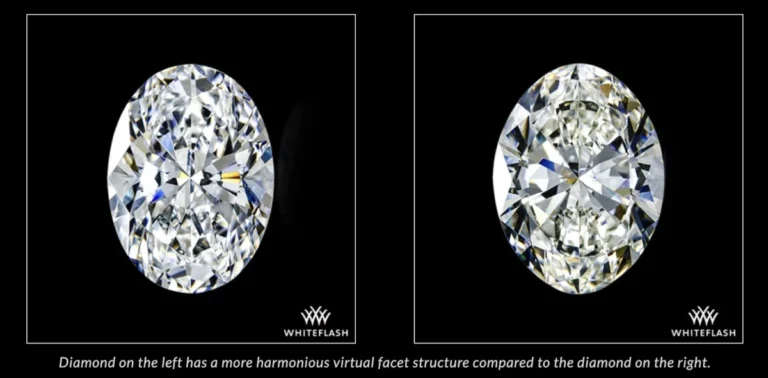
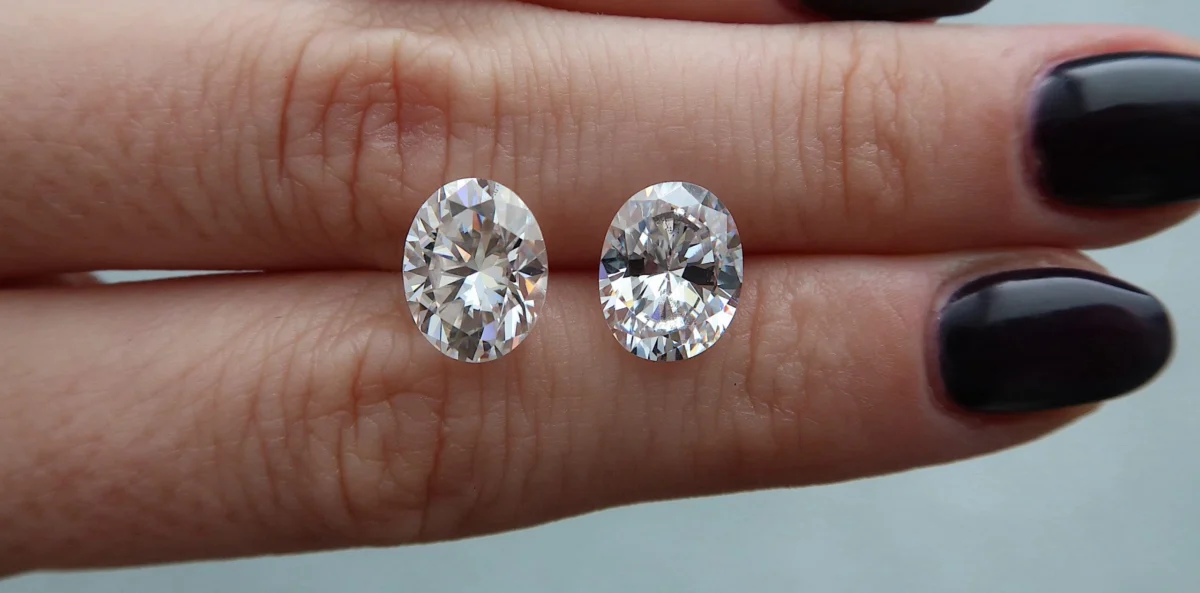
Cubic zirconia possesses a higher dispersion rate than diamond, meaning it tends to produce more pronounced, rainbow-like flashes of color, often referred to as "fire." While this can be visually striking, it can also appear overly intense or artificial compared to the nuanced fire of a diamond. CZ’s refractive index ranges from 2.15 to 2.18, resulting in a brilliance that is often described as slightly softer than that of a diamond. Because CZ is manufactured to be flawless, it can sometimes appear unnaturally perfect, lacking the subtle inclusions that give natural and lab-grown diamonds character.
Durability and Hardness: The Mohs Scale Comparison
The durability of a gemstone is a critical factor, especially for jewelry intended for daily wear. This is typically measured using the Mohs scale of mineral hardness, which ranks materials on a scale from 1 (softest) to 10 (hardest).
Lab-grown diamonds, being true diamonds, score a perfect 10 on the Mohs scale. This exceptional hardness means they are highly resistant to scratching and abrasion, making them ideal for engagement rings and other pieces that experience significant wear. They are exceptionally durable and can last for generations with proper care.
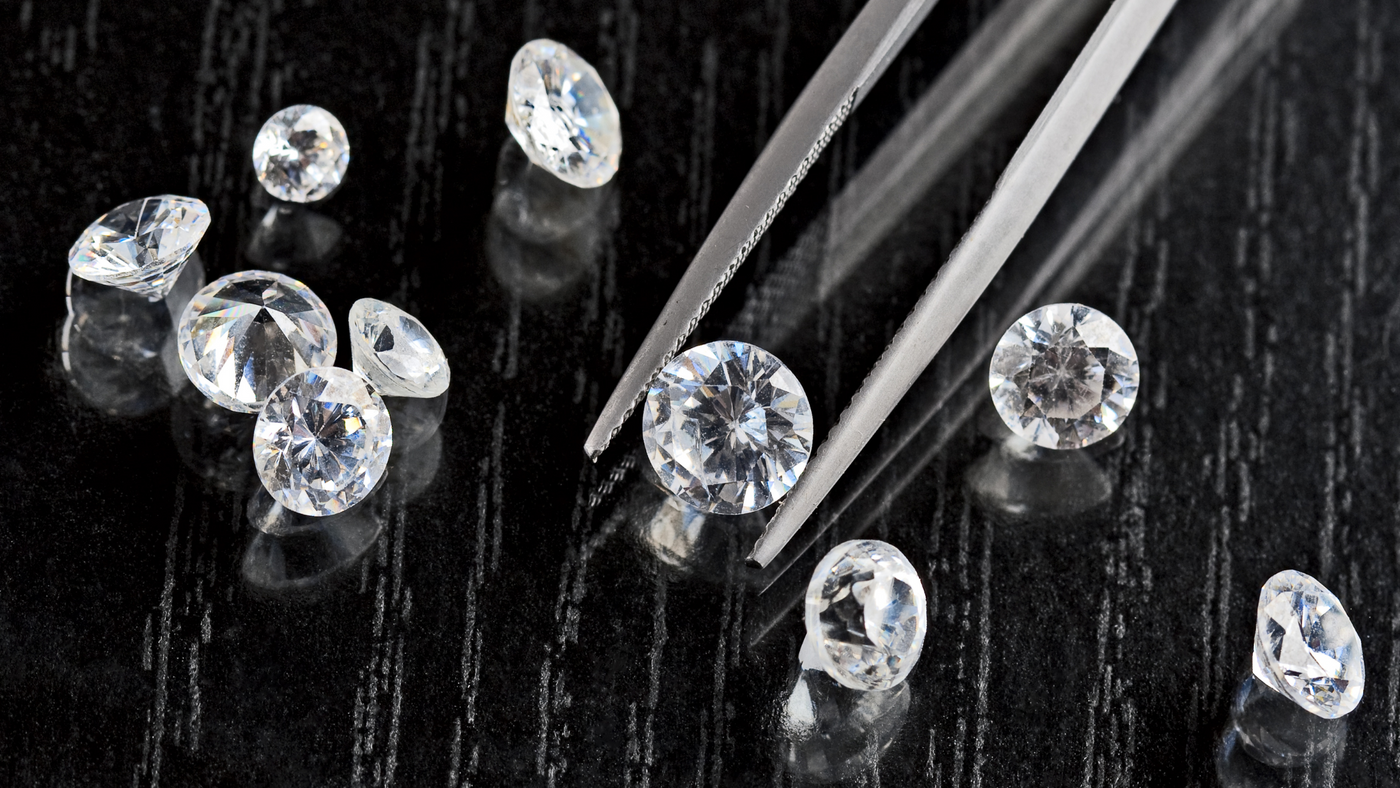
Cubic zirconia ranks between 8 and 8.5 on the Mohs scale. While this is considered hard and offers good resistance to scratching for occasional wear, it is notably softer than diamond. Over time, the facet edges of CZ can become abraded, and the surface can develop micro-scratches and a cloudy appearance due to exposure to oils, chemicals, and everyday friction. This can diminish its original brilliance and sparkle.
Environmental Impact and Ethical Considerations
When considering the environmental and ethical aspects of gemstones, both lab-grown diamonds and cubic zirconia offer alternatives to traditional diamond mining, which can have significant environmental and social impacts.
Lab-grown diamonds are produced in controlled laboratory settings, eliminating the need for destructive mining practices, habitat disruption, and the potential for conflict-related sourcing. The energy consumption associated with the HPHT and CVD processes is a factor, but many manufacturers are increasingly investing in renewable energy sources and improving energy efficiency. Transparency in the supply chain for lab-grown diamonds is generally higher than for mined diamonds.
Cubic zirconia is also manufactured in laboratories, avoiding mining-related environmental issues. The production process involves high temperatures and the use of chemicals, but its overall environmental footprint is generally considered lower than that of diamond mining. However, the long-term environmental impact of widespread CZ production and disposal also warrants consideration. Ultimately, the "greener" choice often depends on the specific manufacturing practices and energy sources employed by individual producers for both lab-grown diamonds and cubic zirconia.

Color and Clarity: Nuances in Perfection
The appearance of color and clarity in both types of stones is a key differentiator.
Lab-grown diamonds are graded for color and clarity using the same standards as natural diamonds, from D (colorless) to Z (light yellow or brown), and various clarity grades (internally flawless to included). The controlled growth process allows for the production of diamonds across the entire color spectrum, including vibrant fancy colors, and often results in high clarity due to fewer natural inclusions. Certification by reputable gemological laboratories, such as the GIA, provides buyers with verified information about a lab-grown diamond’s specific characteristics.
Cubic zirconia is typically manufactured to be flawless and colorless. While this uniformity can be appealing, it can also contribute to an unnatural appearance. Producers can add trace elements to create colored CZ stones, but these colors may appear more intense and less nuanced than those found in diamonds. Over time, CZ can develop a yellowish or hazy tint due to its porous nature and susceptibility to chemical reactions, which can alter its original color and clarity.
Price Point: Accessibility and Value Retention
The most significant difference for many consumers lies in the price.

Lab-grown diamonds offer substantial savings compared to natural diamonds, typically retailing for 30-50% less for comparable quality. This price advantage makes larger carat weights, higher clarity, or better color grades more attainable. Despite their lower cost, lab-grown diamonds are true diamonds and retain value as such, with their price influenced by the 4Cs and market demand.
Cubic zirconia is considerably more affordable than both natural and lab-grown diamonds. A one-carat CZ stone can often be purchased for as little as $10-$30, reflecting the low cost of materials and high-volume production. This extreme affordability makes it an accessible option for fashion jewelry or temporary replacements. However, CZ has minimal resale value and does not hold its luster as long as diamond.
Making the Informed Choice: Lab-Grown Diamonds vs. Cubic Zirconia
The decision between a lab-grown diamond and cubic zirconia hinges on individual priorities, budget, and the intended purpose of the jewelry piece.
When to Choose Cubic Zirconia: Maximum Affordability and Initial Impact
Cubic zirconia is an excellent choice for shoppers on a very tight budget who desire maximum sparkle and visual impact for fashion jewelry, statement pieces, or for special occasions where the piece might not be worn daily. Its ability to produce vivid rainbow flashes can be highly attractive, and its low cost allows for experimentation with larger sizes or intricate designs without significant financial commitment. If the primary goal is an eye-catching adornment with no expectation of heirloom status or long-term durability, CZ delivers immediate visual appeal at an unparalleled price. However, its susceptibility to scratching and eventual dulling means it is best suited for occasional wear or pieces that can be replaced economically.

When to Choose Lab-Grown Diamonds: Authenticity, Durability, and Timeless Value
Lab-grown diamonds are the superior choice for those who prioritize the authenticity, durability, and timeless appeal of a genuine diamond. Possessing the exact same chemical, physical, and optical properties as natural diamonds, they offer the classic brilliance and refined sparkle that is synonymous with fine jewelry. Their perfect 10 Mohs hardness rating ensures exceptional resistance to scratches and wear, making them ideal for everyday wear, particularly in engagement rings and other significant pieces intended to last a lifetime.
With the savings offered compared to natural diamonds, buyers can often afford a larger or higher-quality lab-grown diamond. Reputable vendors like Whiteflash, James Allen, and Blue Nile provide detailed grading reports (often from GIA or IGI), 360-degree imaging, and robust customer service, enabling informed purchases. If the objective is to own a real diamond with enduring beauty, exceptional durability, and verifiable quality, lab-grown diamonds present an intelligent and valuable option.
Navigating the Market: PriceScope’s Role in Empowering Consumers
In the journey to find the perfect piece of jewelry, understanding the nuances between different diamond alternatives is paramount. PriceScope, as a leading diamond and jewelry forum, plays a crucial role in centralizing research and providing unbiased information. The platform facilitates comparisons of certified lab-grown diamonds from trusted vendors, offers detailed analysis of cut quality, tracks pricing trends, and fosters community discussions where experienced buyers share real-world insights. This comprehensive approach helps consumers navigate the complexities of the market, avoid common pitfalls, and make confident decisions that align with their personal needs and preferences.
The wealth of information available on PriceScope, from educational guides on the 4Cs to vendor quote request tools and active community forums, empowers consumers to move beyond abstract specifications to practical guidance. Whether the choice leans towards the bold, budget-friendly shine of cubic zirconia or the authentic, enduring appeal of a lab-grown diamond, thorough research and community insights are key to ensuring a cherished purchase that will be valued for years to come. The platform’s commitment to providing straightforward information from individuals who have personally invested and lived with their jewelry choices underscores its value in turning abstract specifications into practical, confidence-building advice.