Last weekend, The New York Times published a significant article challenging conventional wedding paradigms, asserting that nuptial celebrations need not be inherently long, loud, overwhelming, or uncomfortable. The piece, which quickly garnered attention within the wedding industry and broader community, centered on the emergent trend of sensory-friendly weddings and the increasing recognition of neurodivergence in wedding planning. This mainstream coverage underscores a profound shift in how couples approach their special day, moving away from rigid traditions towards events prioritizing individual well-being and genuine connection. What particularly resonated with industry insiders was the article’s clear framing and its deliberate choice to feature voices from a community that has long championed these alternative approaches, notably drawing heavily from Offbeat Wed’s extensive network.
The Evolution of Wedding Norms: A Historical Perspective
For generations, weddings have been culturally ingrained as spectacles of endurance, both social and emotional. Traditional ceremonies and receptions often involve long hours, crowded spaces, loud music, rigid timelines, specific dress codes, and intense social performance. These elements, while perceived as standard, can be profoundly challenging for individuals with neurodivergent conditions such as autism, ADHD, or social anxiety, as well as anyone with sensory sensitivities. Historically, discomfort, exhaustion, and overwhelm have been tacitly accepted as an unavoidable part of the wedding experience, with anxiety often misconstrued as a personal failing rather than a predictable response to demanding environments.
The wedding industry, valued globally at hundreds of billions of dollars annually, has largely operated on established templates, offering little room for deviation. Bridal magazines, wedding planners, and cultural expectations have reinforced a singular vision of the "perfect" wedding, often overlooking the diverse needs and capacities of couples and their guests. This adherence to tradition, however, has begun to face increasing scrutiny as societal awareness of neurodiversity grows and individuals seek to personalize their life events in ways that truly reflect their identities and ensure comfort.
The New York Times Spotlight: Centering Neurodivergent Voices
Published on January 24, 2026, the New York Times article served as a critical inflection point, validating a movement that has been quietly gaining momentum. It explicitly named the ways traditional weddings inadvertently demand significant social, sensory, and emotional endurance, posing a question that many in the industry found revolutionary: "Do we actually have to do it this way?" The article showcased several couples and vendors who are actively reimagining wedding celebrations to be more inclusive and accommodating.

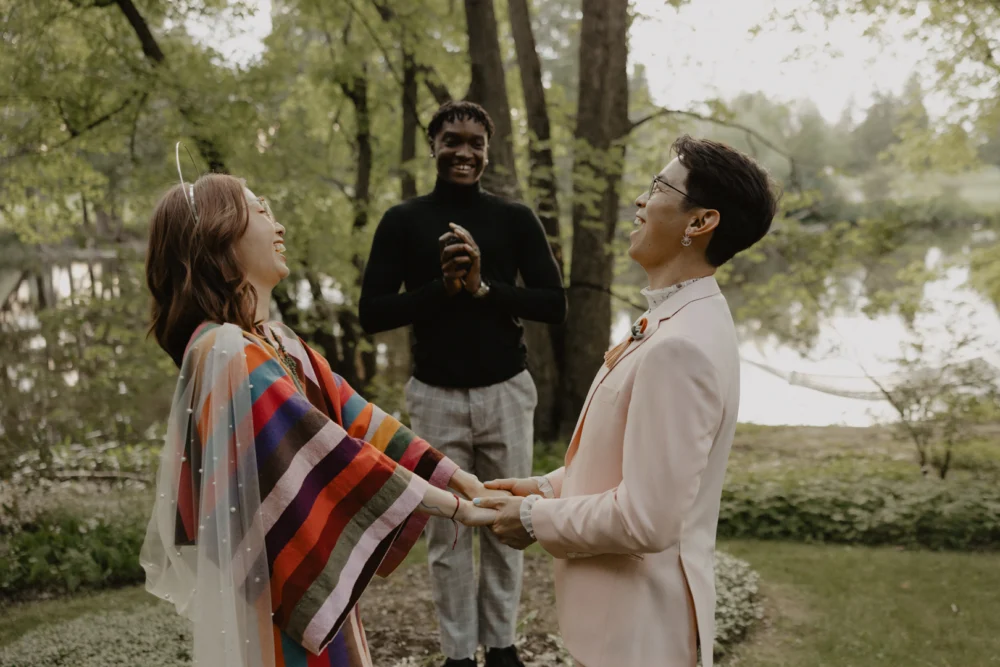
Among the featured individuals were Ryookyung Kim and Philip Chan, who opted for a multi-part wedding, limited guest count, skipped traditional dances, incorporated a designated quiet room, and meticulously controlled their sound environment. Their story, previously highlighted by Offbeat Wed in 2023, exemplifies a conscious effort to respect personal capacity. Another prominent example was Amanda Paterson, whose wedding Offbeat Wed featured just weeks prior to the NYT piece. Paterson meticulously designed her entire wedding attire around texture sensitivity, even weighting her bouquet to provide a grounding object during potentially overwhelming moments. Jackie Barnes, whose essay on her autism diagnosis stemming from wedding planning was published by Offbeat Wed years ago, also shared her experience, underscoring how even carefully planned, smaller events can be overwhelming without specific accommodations. Each of these narratives powerfully illustrated the principle of "respecting capacity" as a cornerstone of modern wedding planning.
Beyond couples, the Times article also brought to light the work of forward-thinking vendors. Planners like Jake Taylor of Functions & Gatherings openly discussed their role in empowering couples to opt out of discomfort-inducing traditions. Photographers such as Maya Lovro detailed their practice of vigilantly observing for signs of sensory overload and discreetly creating space for couples to decompress. The article also cited examples of dress shop owners who are rethinking lighting, sound, fabric choices, and sales pressure to create more sensory-friendly shopping experiences. This collaborative effort across the vendor spectrum signifies a systemic shift towards empathy and personalized service within the industry.
Offbeat Wed’s Pioneering Role and Community Impact
A significant aspect of the New York Times article was its deep reliance on the Offbeat Wed community. Ariel Meadow Stallings, founder of Offbeat Wed, confirmed that she assisted in sourcing many of the featured individuals. Three of the spotlighted couples had their weddings previously published on Offbeat Wed, and two of the quoted vendors are long-standing members of its vendor community. This connection highlights that the New York Times’ reporting was not merely "trend-hunting" or "parachute reporting," but rather an acknowledgment of a sustained, thoughtful movement cultivated by Offbeat Wed over many years.
Offbeat Wed, founded in 2007, has a long history of documenting and advocating for alternative wedding styles. Stallings has observed the evolution of identity expression through weddings for over two decades. In the early 2000s, themes revolved around subcultures; by the mid-2010s, fandoms and cultural references dominated. The 2020s, Stallings notes, have seen this identity expression turn inward. "We went from, ‘I’m going to have a punk wedding,’ to, ‘I’m having a Harry Potter wedding,’ to ‘I want to have a wedding that honors that I’m on the spectrum, and my partner has A.D.H.D. and social anxiety,’" Stallings was quoted as saying in the Times piece. She further emphasized that for her, sensory-friendly weddings represent more than a stylistic change, challenging the ingrained belief that "exhaustion and overwhelm and anxiety is just part of what a wedding is."
This long-standing commitment by Offbeat Wed has positioned it as a vital hub for couples and vendors seeking to redefine wedding experiences. The platform has actively curated stories that demonstrate how weddings can be designed to mitigate stress, clarify expectations, and offer guests genuine choices in their participation, moving beyond mere aesthetic inspiration to focus on practical infrastructure for well-being.
Beyond Spectacle: Redefining Wedding Etiquette for Well-being

One of the most profound implications of this shift, as articulated by Ariel Meadow Stallings, is the redefinition of wedding etiquette. While this particular insight was not fully captured in the New York Times article, it forms a cornerstone of the movement. Stallings posits that neurodiverse considerations at weddings represent the "ultimate etiquette." Historically, etiquette served to reduce social friction by setting clear guidelines for interaction in charged environments. Modern weddings, however, often abandoned this function in favor of spectacle and "tradition cosplay," imposing unspoken endurance tests on participants.
By prioritizing nervous system regulation, neurodivergent-friendly weddings are, in essence, reclaiming etiquette’s original purpose: helping individuals navigate crowded, emotional environments with greater ease. This approach involves acknowledging that being in such a space can be demanding, and designing the event accordingly. It means anticipating stress points, making rules and expectations legible, and offering guests real choices about how they engage. For example, providing quiet spaces, clear timelines with built-in breaks, and sensory-conscious choices in food, music, and lighting all contribute to a more humane and considerate event.
This perspective elevates consideration for individual well-being above adherence to arbitrary customs. When weddings prioritize how people genuinely feel, rather than solely how they appear or perform, the positive effects radiate outwards. Events become more honest, more flexible, and ultimately, more humane, fostering an environment where both the couple and their guests can truly be present and comfortable.
Industry-Wide Adaptation and Future Outlook
The New York Times article’s publication is not an isolated incident but a reflection of a broader, ongoing transformation within the wedding industry. Vendors across various specializations—planners, photographers, officiants, florists, and designers—are actively rethinking traditional elements. This includes adjusting timelines to allow for breaks, carefully managing sound and lighting, offering flexible clothing options, and modifying performance expectations to suit individual comfort levels. This adaptation signals that the movement towards neurodivergent-friendly weddings is not a fleeting trend, but a sustained response to evolving couple demands and increasing guest needs.
Offbeat Wed has adapted its own platform to support this evolution. Recognizing that finding inclusive and accessible vendors was less about availability and more about trust—knowing "who was safe to ask"—the publication evolved its vendor guide. Now, vendors can self-identify as LGBTQ+, disabled, or neurodivergent, serving as a clear signal of shared language and a commitment to accommodation. This allows couples to connect with professionals who understand their specific needs without having to explain themselves from scratch. This year, Offbeat Wed has further shifted its focus from "inspiration as spectacle" to "infrastructure," providing practical resources and connections for creating truly personalized and supportive wedding experiences.
The mainstream recognition provided by The New York Times validates the tireless efforts of individuals and communities like Offbeat Wed who have been advocating for more inclusive wedding practices. It signals that what was once considered "niche" is rapidly entering the mainstream consciousness, encouraging more couples to question traditional norms and design celebrations that genuinely honor their identities and capacities. This shift promises a future where weddings are not just celebrations of love, but also exemplary models of empathy, understanding, and radical accommodation, benefiting everyone involved. For the many couples and guests who have long felt out of place in conventional wedding settings, this development offers profound relief and a blueprint for truly authentic celebrations.