


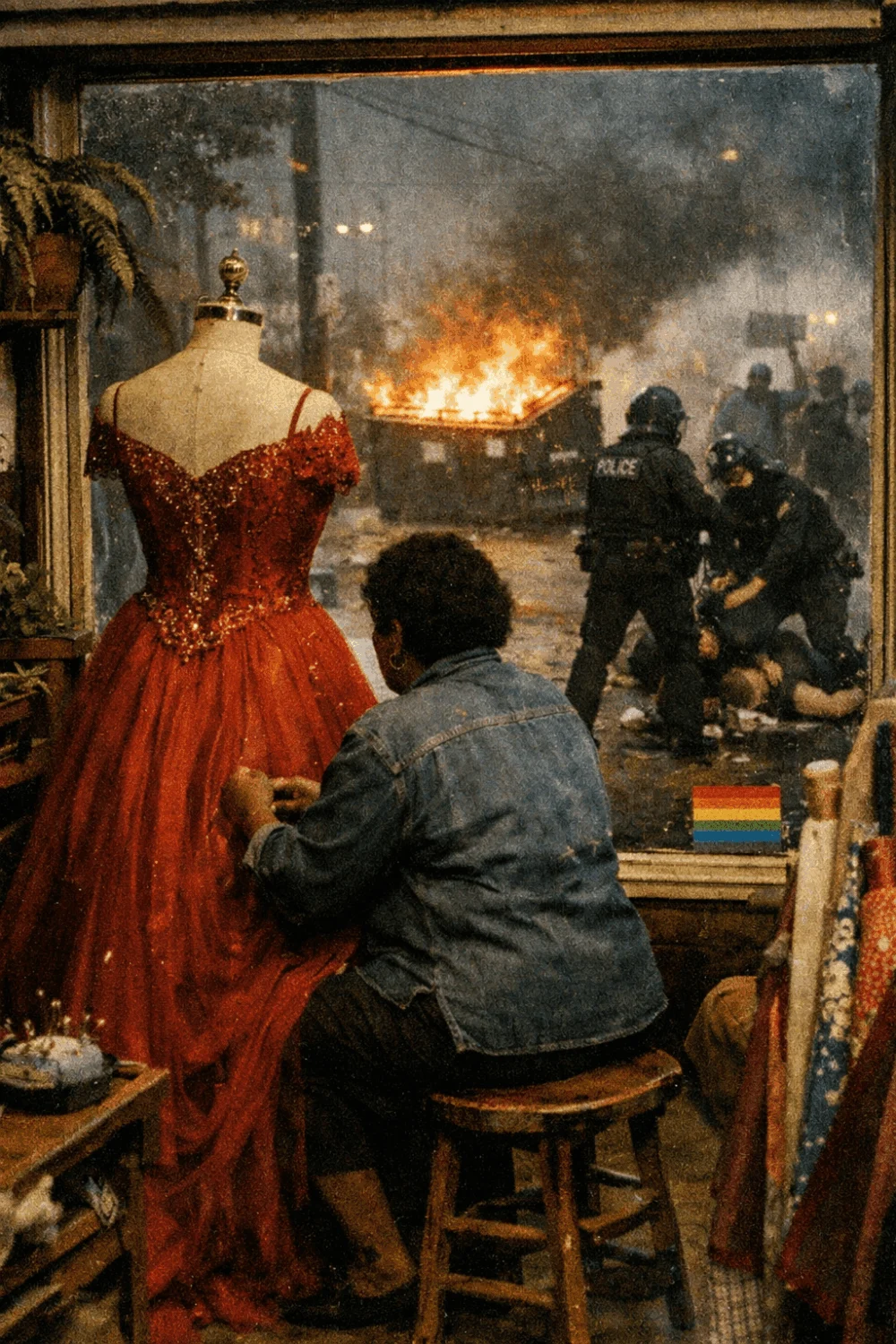
The contemporary landscape for small business owners and creative professionals is increasingly defined by a pervasive sense of instability, commonly referred to as a "polycrisis." This phenomenon, characterized by the simultaneous and interconnected occurrence of multiple large-scale global challenges—encompassing political, economic, environmental, technological, and social spheres—is fostering unprecedented levels of burnout, dread, and moral fatigue among entrepreneurs. Far from being isolated incidents, these crises compound one another, creating a constant state of uncertainty that profoundly impacts mental well-being and operational viability.
Understanding the Polycrisis Phenomenon
The term "polycrisis" has gained significant traction in recent years, particularly following its popularization by historian Adam Tooze and discussions at the World Economic Forum. It describes a situation where seemingly disparate global challenges interact in ways that exacerbate their individual impacts, leading to systemic risks that are greater than the sum of their parts. Unlike a singular crisis, which might allow for focused recovery efforts, a polycrisis demands a multi-faceted and adaptive response across various domains, often overwhelming individuals and institutions.
Economically, the polycrisis manifests through persistent inflationary pressures, supply chain disruptions, volatile energy markets, and the specter of recession. Businesses, particularly small enterprises, grapple with rising operational costs, unpredictable material availability, and shifts in consumer spending habits. Environmentally, the escalating climate crisis presents itself through more frequent and intense extreme weather events—wildfires, floods, droughts—which not only cause direct damage but also disrupt supply chains, displace populations, and create resource scarcity. Politically and socially, geopolitical conflicts, democratic backsliding, rising social polarization, and the lingering effects of global health crises like the COVID-19 pandemic contribute to a fractured and anxious global atmosphere. Technologically, the rapid advancement of artificial intelligence (AI) and other disruptive innovations brings both promise and peril, raising concerns about job displacement, ethical implications, and the spread of misinformation.
This intricate web of challenges means that the traditional business environment of relative predictability has been fundamentally altered. For small business owners and creatives, who often operate with thinner margins and fewer resources than larger corporations, the implications are particularly acute. The constant barrage of negative news and the struggle to anticipate future conditions can lead to a profound sense of "lost future," where imagining better days or planning long-term growth becomes exceedingly difficult.
The Mental Health Toll on Entrepreneurs

The psychological burden of operating a business amidst such instability is substantial. Data consistently highlights a significant mental health crisis within the entrepreneurial community. A survey of small business founders, for instance, revealed that approximately 72% contend with mental health issues, yet a striking 81% feel compelled to conceal these struggles, often presenting a facade of unwavering competence. This pressure to maintain an "everything’s fine" image is particularly intense for marginalized or creative business owners, who may already be striving to legitimize their work in conventional markets or overcome systemic biases.
Psychologists, such as Dr. Steve Himmelstein from New York, note that clients frequently report feeling "overwhelmed and overstimulated, bombarded with bad news each day." This chronic exposure to adverse information, coupled with the direct impacts of the polycrisis on their livelihoods, fosters widespread despair. The difficulty of focusing on tasks like product launches or client work when global instability, climate disasters, and political chaos loom large is a common experience.
Creative entrepreneurs, including those identifying as neurodivergent, LGBTQ+, or operating within counterculture niches, often feel this disconnect most acutely. Their businesses are frequently deeply intertwined with their personal values, identities, and a desire to create something meaningful. Watching the wider world experience profound crises can feel like an existential gut punch, challenging the very purpose and viability of their work. The inherent financial precarity and demanding "hustle culture" associated with small business ownership are now turbocharged by this pervasive "permacrisis" background noise, leading to elevated rates of burnout and moral exhaustion. Bottling up these struggles only exacerbates isolation, making open discussion and shared coping mechanisms critical.
Strategies for Navigating the "Trash Tornado": Tragic Optimism and Tactical Delusion
In response to this daunting environment, mental health professionals and business strategists are advocating for novel approaches to psychological resilience and operational planning. One such concept is "tragic optimism," a term coined by Viktor Frankl, a Holocaust survivor and psychiatrist. Dr. Himmelstein, who trained under Frankl, emphasizes that tragic optimism is not about toxic positivity or ignoring reality; rather, it is about accepting the harsh realities of suffering and uncertainty while simultaneously finding meaning and maintaining hope for the future.
This involves a conscious mental reframing where individuals, despite the prevailing despair, commit to believing in a brighter tomorrow. For entrepreneurs, this might translate into "daydreaming about their lives one or two years out in a more perfect world," as Himmelstein describes his clients’ "homework." This act of imagining a positive future, even when current conditions are dire, is crucial for combating the despair that shrinks imagination and stifles planning. It encourages individuals to gently redirect their focus toward what remains within their control: their core values and the unique contributions their businesses make.
Another practical framework for resilience comes from therapist Kathleen Smith, who distinguishes between "reacting" and "responding" to crises. Panicked reactions, such as doom-scrolling or complete avoidance of news, might offer temporary anxiety relief but do not address underlying problems. A more thoughtful "response," conversely, involves clearly defining one’s values and mission, then taking consistent, even tiny, daily actions aligned with those principles. Smith suggests asking: "If politics or the climate (or whatever) is important to you, what’s your plan?" This could range from organizing community aid on a grand scale to ensuring a client project is eco-friendly or inclusive in a way that feels like a direct counter-action to chaos. The key is to "operationalize" values, translating abstract beliefs into concrete, purposeful work.

This approach posits that even micro-scale actions, like a wedding photographer prioritizing local vendors or a baker offering vegan options to reflect ethical commitments, contribute to a broader cultural shift. While a single creative endeavor may not "save the polar bears or democracy," it can sustain the entrepreneur, inspire clients, and collectively foster positive change. Trusting that "good thinking is contagious if you calmly live out your principles" becomes a powerful antidote to the feeling of powerlessness.
Authenticity and Empathy: The New Marketing Imperatives
In an era defined by instability and widespread anxiety, traditional marketing approaches that prioritize a sanitized, "business as usual" facade often fall flat. Creative entrepreneurs are increasingly recognizing that authenticity and empathy are not merely desirable traits but essential assets for connecting with clients and building resilient brands. When the world feels ablaze, consumers crave genuine human connection and shared values over polished, inauthentic messaging.
Offbeat vendors have long understood the power of authenticity, and this insight is now becoming mainstream. As photographer Amanda Matilda, a member of the Offbeat Wed vendor community, articulates, "In today’s world, it’s extra important to be who you are and stand for your beliefs, even if that turns away other people." For Amanda, this means being transparent about her politics and morals, even using strong language in client communications. Her perspective is that her ideal clients are not deterred by her genuine expression; rather, they seek to support businesses whose values align with their own.
This signifies a broader shift: customers want to engage with real humans, not "beige corporate robots." Being upfront about core values—whether it’s advocating for immigrant rights, gender inclusivity, anti-racism, disability access, or climate-conscious practices—helps the right clients find and trust a business. Reports from business publications, even prior to the full onset of the polycrisis, highlighted how moments of crisis (e.g., the 2020 quarantine) were "the perfect time to reaffirm your brand values and put them to work." This means that core business values should not be abandoned when times get tough; instead, they should guide communications and demonstrate a business’s stance.
Empathy is equally crucial. Acknowledging that people are exhausted and anxious and demonstrating compassion can significantly enhance brand loyalty. During crisis peaks, many businesses have successfully pivoted from hard selling to providing free, helpful content or virtual services. A baker might host a free online cupcake decorating class for community solidarity, or an officiant might offer discounted services to couples facing particular hardships. These gestures recognize the shared struggle and position the business as a supportive entity, fostering loyalty that extends beyond the immediate crisis. This approach prioritizes being human and useful over transactional profiteering.
However, a critical trap to avoid is "performative positivity." Social media algorithms sometimes incentivize a perpetually cheerful facade, but forcing a business to appear perfectly fine when the owner is personally struggling is unsustainable and often transparently inauthentic. Instead, creative professionals are increasingly setting healthier boundaries and communicating them upfront. Examples include declaring "sanity hours" where the studio is closed, or informing clients of slower email responses during environmental crises like wildfire season. Far from alienating clients, such honesty often garners greater respect, modeling self-care in a chaotic world and giving others permission to be human too.

Purpose: The Enduring Anchor
At the heart of navigating the polycrisis is the reaffirmation of purpose. Entrepreneurs, particularly those in creative fields, rarely embark on their ventures solely for financial gain. There is almost always a deeper "why"—a passion for creating beauty, serving a specific community, uplifting underrepresented narratives, or achieving personal freedom. In times of profound crisis, this purpose can feel obscured, leading to existential questions about the relevance of one’s work ("does wedding decor matter during civilizational collapse?!"). Yet, purpose is precisely what provides an anchor in turbulent seas.
Research, including studies from institutions like McKinsey, suggests that individuals who find meaning in their work exhibit greater resilience and recover from stress more quickly. This underscores that creative work, even if niche or quirky, holds significant value. It brings color, hope, and creativity to a world that desperately needs it. As the original article powerfully states, "A burning world needs more beauty. An era of hate requires even more expressions of love and joy." For those in the wedding industry, whose medium is inherently beauty, joy, and love, the imperative to continue creating these experiences is profound.
The polycrisis demands resilience, adaptability, and a deep connection to one’s core mission. Creative entrepreneurs are called to prioritize their mental health, treating it as an integral part of their professional responsibility. They must adapt their workflows and marketing strategies to reflect genuine human experience, fostering authentic connections with clients. Finding solace in community and continually reaffirming the purpose that underpins their work are not just coping mechanisms but pathways to sustained engagement and impact. The polycrisis is an undeniable reality, but the capacity of creative businesses to adapt, connect, and infuse the world with beauty and meaning remains an equally potent force. In this ongoing chaos, the act of continuing to create, to connect, to believe in love, and to facilitate gatherings for celebration and support represents a vital victory.