The journey of an heirloom diamond often begins with a story—perhaps a whispered promise over a grandmother’s kitchen table, or a poignant legacy presented in a small velvet box after a farewell. Regardless of its origin, you now possess a diamond imbued with profound personal history, nestled within a setting that, while cherished for its past, may not align with your contemporary aesthetic or lifestyle. The inevitable question arises: what is the actual financial commitment required for an heirloom diamond reset? Many resources skirt around definitive figures, leaving you to navigate a sea of "it depends." This comprehensive guide aims to provide clarity, breaking down the costs, influencing factors, crucial pre-reset checks, and even scenarios where resetting might not be the optimal path.
The fundamental reframing of this decision is critical: the diamond itself, the most significant component of an engagement ring’s value, is already yours. Your quest is not for an entirely new ring, but rather for a new setting—a meticulously crafted frame to showcase your treasured stone. This guide will walk you through the realistic cost spectrum, the primary elements that dictate pricing, essential due diligence before any work commences, and candid assessments for when preserving the original setting or exploring alternative uses is the more prudent choice.
Understanding the Financial Landscape of an Heirloom Diamond Reset
Dispelling the ambiguity, a professional heirloom diamond reset typically ranges between $500 and $2,500. This broad spectrum, corroborated by industry insights from sources like The Knot, encompasses a variety of services and design complexities. At the most straightforward end, a basic stone transfer into an existing, ready-made setting can be as modest as $80 to $250, with an average around $300, according to Scott’s Custom Jewelers. Some designers offer transparent, flat-fee models; Melanie Casey, for instance, charges a standard $500 to incorporate your stone into any of her proprietary settings.
However, the realm of fully custom design occupies a distinct financial tier. When a skilled jeweler undertakes the creation of a unique, one-of-a-kind setting meticulously designed from scratch around your specific diamond, project costs can commence around $5,500 and escalate significantly based on intricacy and materials. Kinn, a fine jewelry studio specializing in repurposing, indicates that their bespoke Repurpose projects start at $2,500. This initial figure typically covers more streamlined designs with less extensive customization and simpler setting styles. Notably, Kinn observes that most clients ultimately invest more, often discovering during the collaborative design process the extensive possibilities for personalization—whether through increased gold weight, the addition of complementary stones, adjustments to proportions, or the development of a truly unique, custom-tailored piece. There is no definitive upper limit for such projects, as the final cost is a direct reflection of the design’s ambition, with primary drivers being the quantity of precious metal, the inclusion of additional gemstones, and the overall level of bespoke craftsmanship.
Deconstructing the Reset Price: What You Are Truly Paying For
The quoted price for a diamond reset extends far beyond the mere cost of new metal. It encapsulates a multifaceted service that includes the specialized labor involved in safely extracting a diamond from an often decades-old, potentially delicate setting. It covers the acquisition of the new setting itself, or the comprehensive design, prototyping, and casting processes for a custom piece. The cost of the precious metal, calculated by weight, is a significant component. Crucially, it includes the intricate, highly skilled work of precisely setting the stone into its new home. Perhaps the most invaluable, yet invisible, item on any quote is the jeweler’s guarantee—their professional assurance that your irreplaceable heirloom diamond will endure the entire process without damage. This peace of mind, backed by expertise and insurance, is an investment in itself.
The variability in quotes for the same stone—receiving three different numbers from three different jewelers—is not a sign of inconsistency but rather a reflection of differing project scopes. One quote might be for a simple swap into a pre-manufactured catalog setting, another for a modification of a semi-custom design, and a third for a completely original piece built from an initial sketch. None of these approaches are inherently incorrect; they simply represent distinct services at varying price points. Understanding the factors that genuinely influence an engagement ring’s price, even when the center stone is provided, empowers you to be a more discerning and informed consumer in this conversation.
The Four Pillars of Cost: Factors That Move the Price
Once you grasp these four primary levers, you gain the ability to interpret any quote and precisely identify where the investment is allocated. According to experts at Kinn, the most substantial factors influencing the cost are the quantity of gold or other precious metal required, the intensity of the labor involved, and the inherent complexity of the new design. A significant portion of this work precedes the physical creation of the new piece. This initial phase involves the meticulous unmounting of the existing stone, a thorough inspection and retesting against any provided appraisals, and a definitive confirmation of the stone’s precise characteristics.
From this foundational assessment, the design process unfolds, carefully constructed around the exact dimensions and unique proportions of your specific heirloom diamond. For a truly bespoke creation, Kinn elaborates that this can entail developing a detailed design concept, generating a precise Computer-Aided Design (CAD) model, 3D printing a wax prototype for physical review, meticulously testing its proportions and fit, and making any necessary adjustments before the final piece is cast in gold or platinum. These highly personalized steps are integral to bespoke work, and the extent of effort required can vary considerably from one stone to another, directly impacting the final cost.
The Non-Negotiable First Step: Get the Stone Checked
This critical warning precedes the exciting design phase for a reason. A diamond that has resided securely in its original setting for half a century or more can conceal hidden imperfections. Chips along the girdle (the stone’s widest edge) or internal fractures might only become apparent once the jeweler carefully unmounts it, as highlighted by WeddingWire’s comprehensive resetting guide.
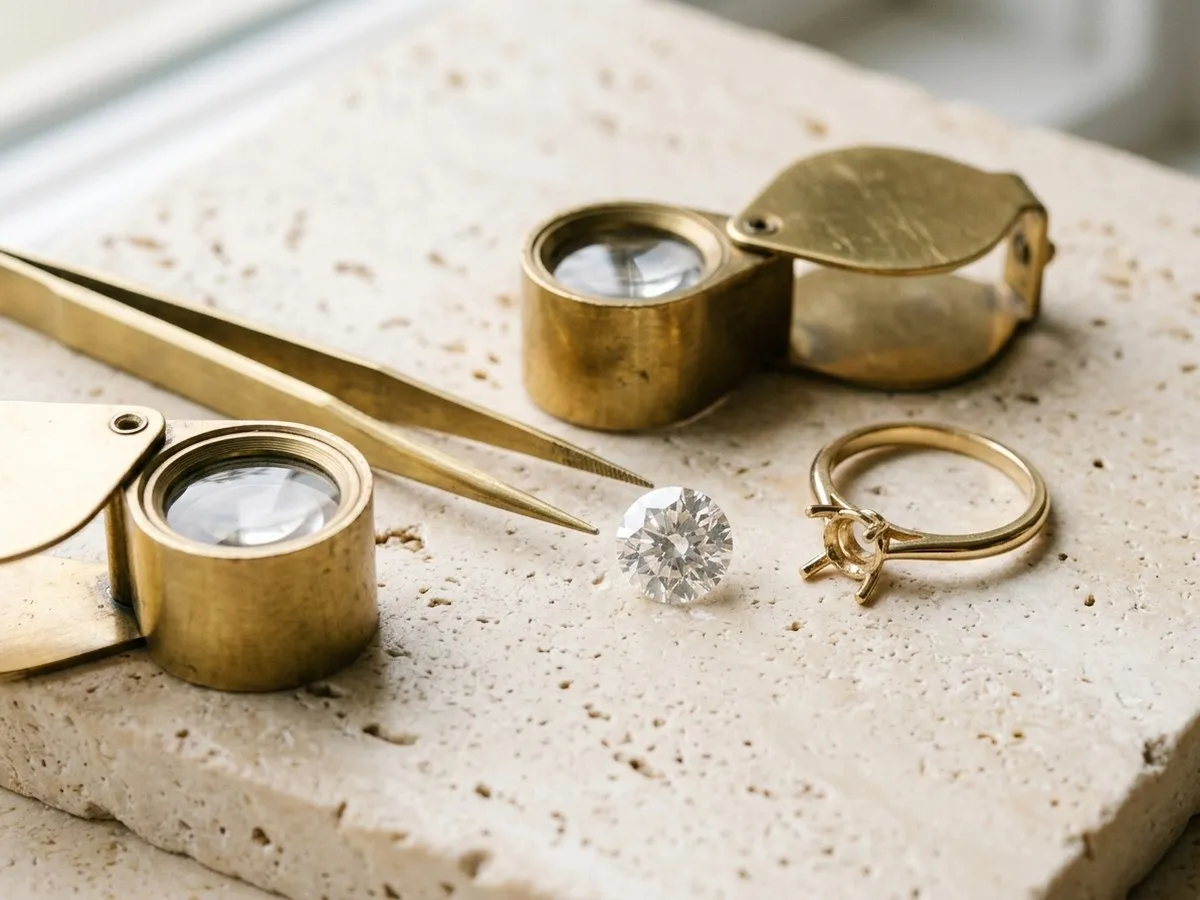
Therefore, commissioning any design work before a thorough inspection is a significant oversight. A reputable jeweler will examine the stone under magnification, meticulously assess its structural integrity, determine its capacity to withstand the stress of removal and re-setting, and advise if any pre-emptive work or repairs are necessary. Discovering an issue—such as a chip requiring re-polishing or a fracture demanding a more protective setting—after a new setting has already been ordered can transform a projected $600 project into a $2,000 undertaking, causing both financial strain and timeline delays. To gain a deeper understanding of the specific criteria a jeweler evaluates, our guide to judging a diamond beyond the traditional Four Cs offers valuable insights in accessible language.
Callout: Inspection First, Always. Before any design conversation or financial commitment, insist on a professional examination of the heirloom stone under magnification. Request the findings in writing. This crucial step safeguards the stone’s integrity, protects your budget from unforeseen expenses, and ensures a realistic project timeline.
Reset or Buy New? A Candid Financial and Emotional Reckoning
Many articles shy away from this crucial comparative analysis, but an honest assessment is essential. An heirloom diamond reset is not automatically the more economical choice, and to suggest otherwise would be a disservice. A transparent evaluation requires weighing both options impartially:
Heirloom Diamond Reset:
- Pros:
- Sentimental Value: Preserves family history and connection.
- Unique Story: Each piece tells a distinct narrative.
- Sustainability: Utilizes existing resources, reducing demand for new mining and associated environmental impact.
- Cost Efficiency (Center Stone): You already own the most expensive component.
- Bespoke Potential: Opportunity to create a truly personalized design.
- Cons:
- Potential for Hidden Costs: Unforeseen repairs to the stone post-unmounting.
- Design Limitations: The stone’s existing shape and dimensions might constrain certain modern designs.
- Longer Timeline: Custom work inherently requires more time.
- Risk of Damage: Though minimized by skilled jewelers, a small risk of damage during unmounting/setting always exists.
Purchasing a New Ring (New Center Stone & Setting):
- Pros:
- Complete Design Freedom: Choose any stone shape, size, and setting style without compromise.
- Modern Aesthetics: Access to the latest trends and innovations in jewelry design.
- Warranty & Certifications: New stones typically come with comprehensive grading reports and retailer warranties.
- Predictable Costs: Clear pricing upfront, often with financing options.
- Cons:
- Higher Upfront Investment: The cost of a new center stone significantly increases the total.
- Lacks Personal History: No inherent family legacy or sentimental story.
- Environmental Impact: While options like lab-grown diamonds exist, newly mined diamonds carry a larger environmental footprint.
Why, then, choose to reset? Because "cheapest" and "wisest" are often distinct concepts. The objective is not necessarily to spend the absolute minimum, but to invest judiciously. Channeling your resources into a setting for a stone you already possess, one that embodies generations of family history, represents an exceptionally wise allocation of a wedding budget. While a newly created lab-grown diamond can meticulously replicate the Four Cs of your grandmother’s diamond, it can never replicate its Fifth C: its unparalleled story. Your investment in a reset is not merely for a piece of jewelry; it is an investment in the privilege of wearing that profound narrative daily throughout your marriage, a choice made with deliberate purpose and emotional resonance.
This is where the choice of a maker becomes paramount. Kinn, a distinguished fine jewelry studio crafting 14k solid gold pieces in Los Angeles and New York, has built its Custom Repurpose service precisely on this philosophy. Their foundational ethos—"then, now, always"—underscores their commitment to transforming cherished family stones into contemporary settings designed for everyday wear. Their engagement settings, starting around $2,000, come with a two-year warranty and complimentary resizing. Kinn openly acknowledges that they are not the "bargain" option, nor do they claim to be. They represent an investment option for those who recognize that a stone with such a rich history deserves a setting meticulously built around its unique character and story—which, fundamentally, is the essence of a meaningful reset.
Beyond the Engagement Ring: Alternative Transformations for Your Heirloom
Should the concept of an engagement ring not resonate with your vision for the heirloom diamond, or if you already have an engagement ring, a wealth of other beautiful and meaningful transformations awaits. Repurposing the stone into another form of jewelry is not only permissible but often encouraged, opening up diverse aesthetic and functional possibilities:
- Pendant or Necklace: A timeless and elegant choice, allowing the diamond to rest close to the heart. This option is particularly suitable for delicate stones that might face too much daily impact as a ring. Designs can range from simple solitaires to more intricate bezel or halo settings.
- Earrings: For smaller diamonds, a pair of stud earrings offers classic sophistication. Larger stones can be set as drops or incorporated into more elaborate chandelier styles.
- Bracelet Charm: A subtle way to carry the diamond, especially if it’s smaller or you prefer understated jewelry. It can be integrated into an existing charm bracelet or become the centerpiece of a new one.
- Cocktail Ring: For those who appreciate bold statements, a substantial heirloom diamond can be reset into a dramatic cocktail ring, designed for special occasions rather than daily wear.
- Men’s Jewelry: The diamond can be incorporated into a signet ring, a sophisticated tie tack, or even a subtle lapel pin, offering a masculine interpretation of the heirloom’s legacy.
- Family Birthstone Jewelry: If the diamond can be combined with other family birthstones, it creates a deeply personal "family tree" piece.
- Brooch: An elegant, vintage-inspired option, particularly for larger or uniquely shaped diamonds.
- Wedding Band Accent: Smaller heirloom diamonds can be carefully integrated into a custom wedding band, serving as subtle accents.
If the path of repurposing guides you toward a custom, made-to-order creation, exploring guides on unique engagement rings can provide valuable insights into the various design routes. Given that heirloom stones often harmonize beautifully with vintage-inspired aesthetics, this style direction is frequently an excellent starting point for design exploration.
The Heirloom Reset Timeline: Planning for Your Story
Embarking on an heirloom reset project necessitates a more extended timeline compared to purchasing a new ring directly off a retail shelf. This is because each design must be meticulously tailored and constructed around an existing, unique stone. Consequently, it is prudent to anticipate a project duration of several months, from the initial consultation through to the completion of the finished piece, with more intricate designs naturally requiring additional time.
According to the team at Kinn, bespoke Repurpose projects typically require 6 to 8 weeks for the production phase alone, once the design has been definitively finalized. However, this production period follows a crucial evaluation and design phase. This initial stage encompasses the careful unmounting and inspection of the existing stones, a thorough verification of their precise specifications, the iterative development of the design concept to perfectly accommodate the stone’s exact dimensions, the creation of a detailed CAD model, the 3D printing and rigorous testing of a wax prototype, and the implementation of any necessary adjustments.
As Kinn elucidates, unlike designing around a stone they source themselves, a repurpose project involves working within the parameters of an existing artifact. The design process must adapt to the inherent characteristics of the heirloom stone, rather than the stone being selected to fit a pre-conceived design. This fundamental distinction underpins the highly specific and deliberate process involved in crafting each unique piece.
To ensure a seamless experience, it is imperative to plan backward from any significant target date. For instance, if a proposal is envisioned for the holiday season, the heirloom stone should ideally be entrusted to the jeweler by early fall. If the reset piece is intended for the wedding ceremony itself, it is advisable to work backward from your wedding date, incorporating a generous buffer into your timeline. Heirloom work, with its inherent emotional and material value, is precisely the kind of project that should never be rushed.
Selecting Your Jeweler: Essential Questions Before Entrusting Your Heirloom
Before you hand over your invaluable heirloom diamond, a thorough consultation with potential jewelers is critical. Screenshot this list of questions and bring it to every meeting; a truly professional and trustworthy jeweler will answer all seven points without hesitation. Any reluctance, particularly concerning liability, should be a clear signal to continue your search.
- What is your experience with heirloom stone resets? Request to see a portfolio of previous work, specifically showcasing similar projects.
- What is your process for unmounting and resetting the stone? Understand their safety protocols and techniques to prevent damage.
- How do you handle insurance and liability for my stone while it’s in your possession? Insist on written confirmation of their insurance coverage for your specific piece. This is non-negotiable.
- What is the estimated timeline for this project, from design approval to completion? Get a clear, phased breakdown of the expected duration.
- What is included in the quoted price, and are there any potential additional costs I should be aware of? Seek a detailed, itemized quote to avoid surprises.
- What kind of warranty do you offer on the new setting and the craftsmanship? Understand what is covered and for how long.
- Can you provide references from previous heirloom reset clients? Hearing directly from others who have entrusted their family treasures can offer invaluable reassurance.
Hesitation on questions related to insurance, liability, or process transparency is a critical red flag, indicating a need to seek another jeweler.
When to Preserve the Original: Recognizing When "Don’t Reset" is the Wisest Counsel
A truly responsible guide to heirloom resetting must include scenarios where the most prudent advice is to leave the piece untouched. Not every heirloom is a candidate for transformation, and recognizing these instances is a mark of savvy decision-making:
- The Stone’s Fragility: Some gemstones, like opals, pearls, or certain emeralds with significant inclusions, are inherently too delicate to withstand the pressures of unmounting and re-setting. Attempting to force a reset could result in irreversible damage.
- Exceptional Historical Value of the Original Setting: If the existing setting is a rare antique, a distinct example of a particular era’s craftsmanship, or possesses significant historical provenance, its intrinsic value might be greater than any potential new design. In such cases, restoration of the original setting, rather than complete dismantling, is often the more respectful and financially sound choice.
- Structural Compromise of the Original Setting: If the current setting is severely worn, structurally unstable, or has extensive damage, the act of attempting to remove the stone could jeopardize its integrity. The risk of damaging the stone during removal might outweigh the benefits of a new setting.
- Deep Sentimental Attachment to the Original Design: For some, the original setting, despite its age or style, holds immense sentimental weight directly tied to the giver or a specific memory. In these cases, altering it diminishes its emotional value.
- Reset Cost Outweighs Perceived Value/Benefit: If the cost of a reset approaches or exceeds the value of a comparable new piece, or if the desired aesthetic change is minimal, the financial justification for a reset may be weak.
The team at Kinn emphasizes that the foremost consideration is always the stone’s ability to safely endure removal and re-setting. This involves a thorough evaluation of its condition, shape, existing chips or inclusions, and whether a new setting would introduce undue stress. They also highlight that sometimes the original setting itself is exceptional and possesses inherent value, leading them to recommend restoration over deconstruction. Furthermore, some stones are simply not suited for rings; a more delicate gem might find a safer, longer life as a pendant, where it is significantly less exposed to daily impacts.
Kinn also notes that clients occasionally approach them believing a complete overhaul is necessary, when in fact, a more subtle intervention is the better solution. Preserving the original design while updating the chain, reinforcing or rebuilding a worn setting, or adding a personalized engraving can be enough to revitalize a piece without a full reset. As they articulate, repurposing doesn’t always necessitate starting anew.
There’s also an environmental benefit worth acknowledging: the use of recycled and reclaimed stones and metals is a core reason why resets are among the most sustainable choices in fine jewelry. Should you proceed with a reset, you can take satisfaction in contributing to more eco-conscious consumption practices.
Your Next Steps: A Recap for Informed Decision-Making
To summarize the essential takeaways as you approach a jeweler’s studio: remember that you already own the diamond, positioning you as a shopper for a setting, not an entire ring. Budget approximately $500 to $2,500 for the majority of professional heirloom diamond resets. Be intimately familiar with the four primary factors that influence this cost. Above all, prioritize getting your heirloom stone meticulously inspected before committing to any design or financial outlay. And, critically, if an honest assessment reveals that leaving the original piece untouched is the most prudent course of action, recognize that this, too, is a profoundly savvy decision.
Whatever path you ultimately choose, rest assured you are approaching this decision thoughtfully, on your own terms, and ensuring your investment aligns with deeply personal meaning. A ring passed down through your family has already taken care of the most substantial financial component.
One final, yet frequently overlooked, step: once your beautifully transformed heirloom ring graces your hand, secure its future with comprehensive jewelry insurance. A piece so irreplaceable, rich with history and sentiment, demands documentation to match its profound value.