For couples navigating the search for an engagement ring that blends distinctive beauty with practical value, sapphires have emerged as a compelling and increasingly popular alternative to traditional diamonds. This resurgence is driven by a confluence of factors, including a desire for personalization, a growing emphasis on ethical sourcing, and a recognition of the gemstone’s inherent durability and rich symbolic meaning. Far from being merely a budget-friendly option, sapphire engagement rings represent a conscious choice for those seeking a unique expression of their commitment, offering a spectrum of vibrant colors and a storied history that resonates deeply with modern sensibilities. This article delves into the multifaceted appeal of sapphires, exploring their historical significance, market dynamics, aesthetic versatility, and practical considerations for prospective buyers, drawing on a specific market snapshot from August 2026 to provide current pricing insights.

The Enduring Allure of Sapphires: A Historical Perspective
While diamonds have dominated the engagement ring market for the better part of the 20th century, sapphires boast an equally rich, if not longer, history as symbols of love and commitment. Ancient civilizations revered sapphires, associating them with royalty, wisdom, and divine favor. Persians believed the earth rested on a giant sapphire, whose reflection colored the sky. The ancient Greeks and Romans held sapphires in high esteem, believing they protected their wearers from harm and envy. Medieval clergy wore sapphires as a symbol of heaven, and commoners believed the stone would protect them from evil.

The gemstone’s prominence in engagement jewelry saw a significant uplift in the 19th and early 20th centuries, often favored by European aristocracy. However, it was a particular royal engagement in 1981 that indelibly etched the sapphire into modern romantic consciousness: Prince Charles’s proposal to Lady Diana Spencer with an iconic 12-carat oval blue sapphire surrounded by 14 solitaire diamonds. This moment ignited a global fascination with sapphire engagement rings, a legacy powerfully continued when Prince William presented the same ring to Catherine Middleton in 2010. This chronology highlights not just a trend, but a reaffirmation of sapphire’s place as a gem worthy of lasting affection and a symbol of enduring loyalty and truth—qualities that perfectly align with the essence of marriage.
Why Sapphires are a Savvy Choice in Today’s Market

The renewed interest in sapphire engagement rings is not solely attributable to royal influence. Contemporary couples are increasingly prioritizing unique aesthetics, ethical considerations, and financial prudence. Sapphires offer a compelling proposition across all these fronts.
1. Affordable Luxury and Value Proposition:
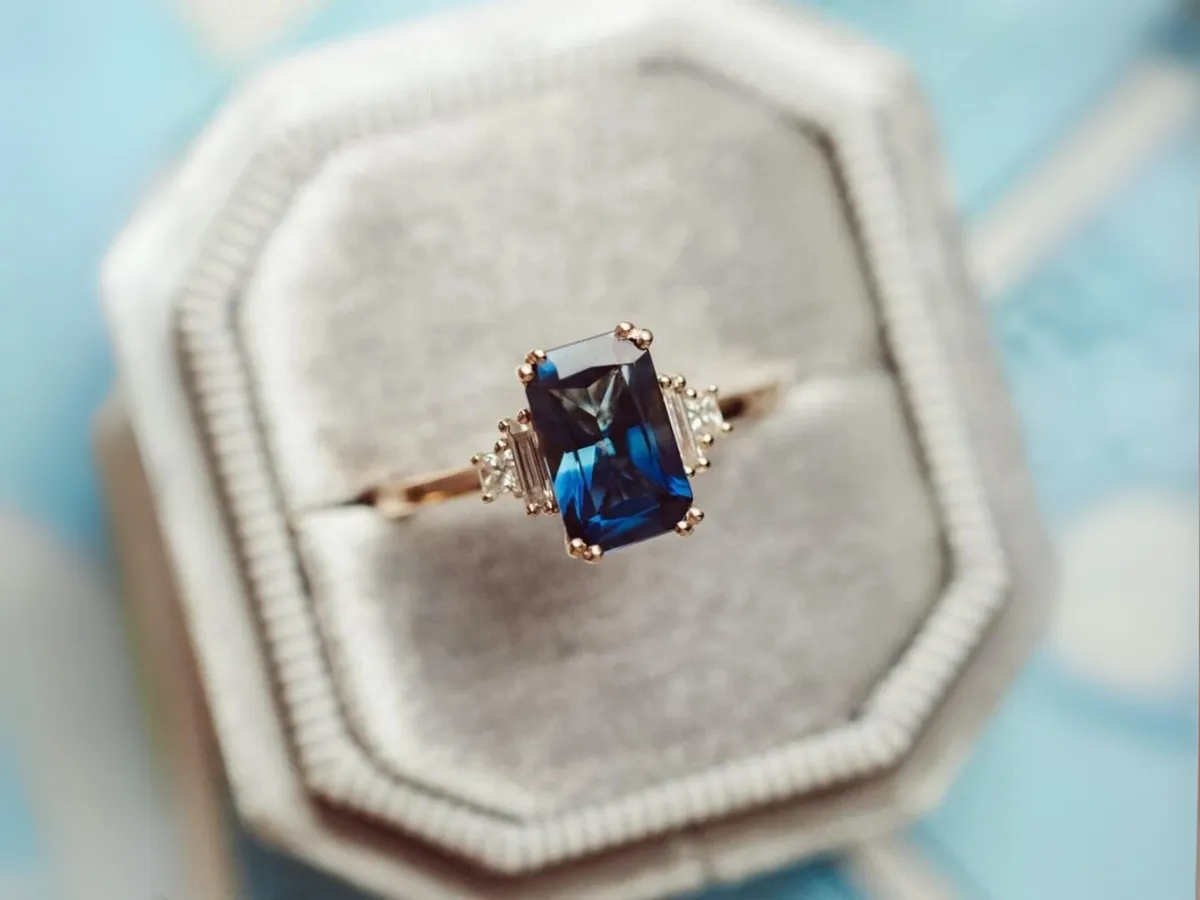
Diamonds, particularly larger, high-quality stones, come with a substantial price tag, often driven by aggressive marketing and perceived scarcity. Sapphires, while equally breathtaking in their beauty, present a more accessible luxury. This allows couples to acquire a larger, more visually impactful gemstone for a fraction of the cost of a comparable diamond, or to allocate more of their budget to an intricate setting or higher-quality metal. For instance, a substantial 3-carat lab-created emerald-cut blue sapphire ring in 14k gold, as observed in August 2026, could be acquired for approximately $535, a price point virtually unattainable for a diamond of similar carat weight and visual presence. This economic flexibility is a significant draw for budget-savvy brides and grooms, enabling them to achieve a luxurious look without financial strain.

2. Richness in Color and Meaning:
While classic deep blue remains the most recognized sapphire hue, the gemstone’s appeal extends far beyond this traditional shade. Sapphires naturally occur in a dazzling array of "fancy" colors, including pink, yellow, teal, lavender, peach, green, and even colorless white sapphires, which can serve as a diamond simulant. This kaleidoscopic variety empowers couples to select a gem that truly reflects their individual personality, style, and unique love story. The symbolism associated with sapphires—wisdom, loyalty, truth, and faithfulness—adds another layer of profound meaning, making it a deeply personal choice for an engagement ring. Moreover, for those adhering to wedding traditions, a blue sapphire serves as the "perfect something blue" for the big day, adding a touch of sentimental charm.
3. Durability for Everyday Wear:
An engagement ring is intended for daily wear, requiring a gemstone that can withstand the rigors of an active lifestyle. Sapphires excel in this regard, boasting a rating of 9 on the Mohs scale of mineral hardness. This places them second only to diamonds (which rate a 10), making them exceptionally durable and resistant to scratches and chips. This inherent toughness ensures that a sapphire engagement ring will maintain its beauty and integrity for a lifetime, a practical consideration that underscores its value as an heirloom piece.

Understanding the 4 Cs for Sapphires
Just like diamonds, sapphires are evaluated based on the "4 Cs": Color, Clarity, Cut, and Carat Weight. However, the prioritization and assessment criteria for sapphires differ significantly.

- Color (The Foremost Factor): For sapphires, color is paramount. The most prized blue sapphires exhibit a rich, intense, velvety blue hue, often described as "cornflower blue" or "royal blue," with even saturation throughout the stone. The presence of secondary colors (like purple or green undertones) can affect value. For fancy sapphires, the vibrancy and purity of their specific hue—be it a delicate peach, a vivid yellow, or an intriguing teal—are critical. Stones with weak or uneven coloration are less desirable.
- Clarity: Sapphires, being natural gemstones, often contain inclusions (internal characteristics). Unlike diamonds, where flawless clarity is highly valued, some inclusions are acceptable and even expected in sapphires, provided they do not detract from the stone’s beauty or compromise its durability. Eye-clean sapphires (those with no visible inclusions to the naked eye) are most desirable. Lab-created sapphires, by contrast, often exhibit near-perfect clarity due to their controlled growing conditions.
- Cut: The cut of a sapphire significantly impacts how its color is displayed and how much light it reflects. A well-executed cut will enhance the gem’s brilliance and evenness of color, minimizing "windows" (areas where light passes straight through) or excessive extinction (dark areas). Sapphires are cut into various shapes, including traditional rounds, ovals, pears, emerald cuts, cushions, and more unique forms, each designed to optimize the stone’s inherent characteristics.
- Carat Weight: As with any gemstone, carat weight refers to the sapphire’s size. While larger sapphires are generally more valuable, the increase in price is not always linear and is heavily influenced by the quality of the other three Cs. A smaller sapphire with exceptional color and clarity can be more valuable than a larger one of lesser quality.
Ethical Sourcing and Sustainability: A Growing Imperative
The modern jewelry consumer is increasingly conscious of the environmental and social impact of their purchases. This shift has propelled the demand for ethically sourced and sustainable options, an area where sapphires offer distinct advantages.

- Natural Sapphires: Responsible mining practices ensure that natural sapphires are extracted with minimal environmental damage and fair labor conditions. Consumers seeking natural stones can look for certifications from reputable organizations that trace the gemstone’s origin.
- Lab-Grown Sapphires: Lab-created sapphires are chemically, physically, and optically identical to their natural counterparts, but they are grown in controlled laboratory environments. This process bypasses the environmental impact of mining and often comes at a significantly lower cost. For couples prioritizing sustainability and affordability, lab-grown sapphires represent an excellent, conflict-free choice. Prominent jewelers like Brilliant Earth offer a wide selection of lab-grown sapphires, catering to this eco-conscious market segment. The market for lab-grown gemstones has seen significant growth, with industry reports indicating a rising preference among younger demographics for these sustainable alternatives.
A Market Snapshot: Sapphire Engagement Ring Costs (August 2026)
Based on an analysis of fifteen distinct sapphire rings available from various retailers in August 2026, a clear pricing structure emerges, offering valuable insights for prospective buyers. The data reveals that the overall cost is heavily influenced by the setting, the metal type, and the presence and quality of diamond accents, often more so than the sapphire itself.

- Entry-Level (Approx. $50 – $100): At the most accessible end, rings feature sterling silver bands with lab-created sapphires and cubic zirconia accents. These are often suitable as "proposal rings," travel rings, or placeholders. An example is an emerald-cut blue sapphire with baguette side stones in a vintage-inspired silver setting, retailing around $50 (regularly $100) on platforms like Etsy.
- Mid-Range (Approx. $175 – $550 on Etsy; $1,390 – $1,930 for Designer): Stepping up, a solid 14k gold band with a real sapphire typically ranges from $175 to $550 from independent makers on Etsy, who often offer competitive pricing due to lower overheads. Made-to-order designer pieces in solid gold with subtle diamond accents, like a Capucinne marquise white sapphire ring with London blue topaz side stones, begin around $1,390.
- Mainstream Jewelers (Approx. $1,895 – $2,980): Established jewelers such as Blue Nile and Kay Jewelers offer sapphire rings with diamond halos in the $1,895 to $2,980 range. These often feature natural or high-quality lab-grown sapphires, surrounded by smaller diamonds. Significant discounts are common, making it crucial for buyers to verify the actual price at checkout. For example, a Neil Lane pear sapphire halo ring at Kay was marked down from $3,499.99 to $1,999.99.
- High-End Fine Jewelry (Approx. $4,280 – $4,740): At the top end, rings boast natural sapphires with close to a carat of surrounding diamonds, typically set in 18k gold or platinum. An oval sapphire and diamond halo ring from Blue Nile, featuring nearly a full carat of diamonds, was priced at $4,740. This segment underscores the principle that diamond accents significantly elevate the overall cost.
The overarching takeaway for the savvy shopper is strategic allocation of budget: if cost is a primary concern, opting for a quality sapphire in a simpler setting, or with fewer diamond accents, can yield a stunning ring without "breaking the bank." Conversely, for those prioritizing maximum sparkle, the majority of the budget will likely be directed towards the diamond components and premium metals.
Diverse Aesthetics: Exploring Sapphire Hues and Settings

The versatility of sapphires extends to the vast array of designs and settings they complement.
- Classic Blue Sapphire Solitaires: For a timeless look, a deep blue sapphire set as a solitaire remains an iconic choice. The Emerald Cut Solitaire from Etsy, starting around $175 in sterling silver or $535 in 14k gold, exemplifies minimalist elegance with a striking 3-carat lab-created sapphire. Brilliant Earth’s Lab Grown Sapphire Nadia Ring ($2,980) offers a refined solitaire with an 8mm lab-grown sapphire, customizable in shape and metal, representing the purest form of solitaire design.
- Halo Settings for Enhanced Sparkle: Halo designs, where the central sapphire is encircled by smaller diamonds, amplify the ring’s brilliance and create a larger visual presence. An Oval Sapphire and Diamond Halo Ring from Blue Nile ($4,740) showcases a natural blue sapphire with nearly a full carat of diamonds, emphasizing that the diamond halo can be a primary cost driver. For a more budget-friendly halo, the Oval Cut Lab Sapphire Engagement Ring from Etsy (from about $207), which includes a matching eternity band, offers exceptional value.
- Vintage-Inspired Designs: Sapphires are perfectly suited for vintage aesthetics, evoking old-world charm. The Solitaire Vintage Setting Engagement Ring from Etsy (from about $50) with an emerald-cut blue sapphire and baguette side stones in sterling silver offers an accessible nod to classic designs. More elaborate pieces, like the Sapphire and Diamond Floral Ring from Blue Nile ($4,280), feature an oval sapphire at the center of diamond "petals," a genuinely vintage silhouette that distinguishes it from modern halos.
- Alternative Sapphire Colors for Unique Expression: Breaking away from tradition, "fancy" colored sapphires offer unparalleled uniqueness.
- Peach Sapphires: The Lab Grown Peach Sapphire Camellia Ring from Brilliant Earth ($2,640) showcases a delicate 7mm peach sapphire with floral-inspired lab diamond accents, offering a soft, romantic, and modern hue.
- Teal Sapphires: Gaining significant traction, teal sapphires, exemplified by Capucinne’s Elle Round Teal Sapphire Three Stone Ring (from $1,550), provide deep ocean tones that stand out.
- Lavender Sapphires: For truly distinct elegance, a lavender sapphire, such as Capucinne’s Liz Pear Lavender Sapphire Ring (from $1,930), offers a unique pastel hue, especially stunning in rose gold.
- Yellow Sapphires: The Yellow Sapphire Emerald Cut Engagement Ring from Etsy (from about $438), with sparkling side stones, radiates a cheerful, sophisticated glow, offering a vibrant alternative.
Practical Guidance for Prospective Buyers

Navigating the purchase of a sapphire engagement ring requires thoughtful consideration.
- Establish a Clear Budget: Before beginning the search, define your spending limit. Sapphires’ wide price range means that a budget-first approach allows for focused exploration within feasible options, ensuring a satisfying purchase without financial stress.
- Prioritize the 4 Cs for Sapphires: Remember that for sapphires, color is typically the most critical factor. Seek out vivid, evenly distributed hues. While clarity is important, minor inclusions are often acceptable and natural. Evaluate the cut for its ability to enhance the stone’s color and brilliance.
- Investigate Ethical Sourcing: For peace of mind, inquire about the gemstone’s origin. Many reputable jewelers offer ethically sourced natural sapphires or provide high-quality lab-grown alternatives. Look for certifications or clear statements on sourcing practices to ensure transparency.
- Choose a Setting that Complements the Stone and Personality: The setting plays a crucial role in the ring’s overall aesthetic and how the sapphire is perceived. Consider how different metals (white, yellow, rose gold, platinum) interact with the sapphire’s color. Halo, solitaire, three-stone, or vintage-inspired settings each offer distinct looks. Select a style that genuinely reflects the wearer’s taste and lifestyle.
- Confirm Lead Times for Made-to-Order Pieces: A critical, often overlooked detail is the production time for custom or made-to-order rings. Many of the most beautiful sapphire designs are handcrafted, requiring several weeks or even months from order placement to delivery. For instance, some designer pieces mentioned require approximately two months. If a proposal date is set, factor in this lead time to avoid last-minute stress. Always confirm directly with the retailer or artisan.
Broader Market Implications and Future Outlook

The increasing popularity of sapphire engagement rings signifies a broader shift in the luxury jewelry market. Consumers are moving away from monolithic traditions, embracing individuality, value, and ethical responsibility. This trend supports independent artisans and online retailers, who often offer diverse, customizable, and competitively priced sapphire options. The demand for gemstones beyond diamonds is likely to continue growing, pushing jewelers to expand their offerings and innovate in design. Sapphires, with their combination of beauty, durability, rich symbolism, and ethical appeal, are perfectly positioned to remain at the forefront of this evolving landscape, offering couples a truly meaningful and magnificent symbol of their union.
In conclusion, sapphire engagement rings are more than just an alternative; they are a statement of discerning taste, thoughtful expenditure, and profound meaning. They offer an unparalleled opportunity to craft a unique love story, whether through a classic blue solitaire, a sparkling halo, a nostalgic vintage design, or a bold, unconventional hue. For couples ready to embark on this journey, exploring the diverse options available at reputable jewelers and online platforms promises a discovery that speaks directly to the heart and aligns seamlessly with a modern approach to love and luxury.