



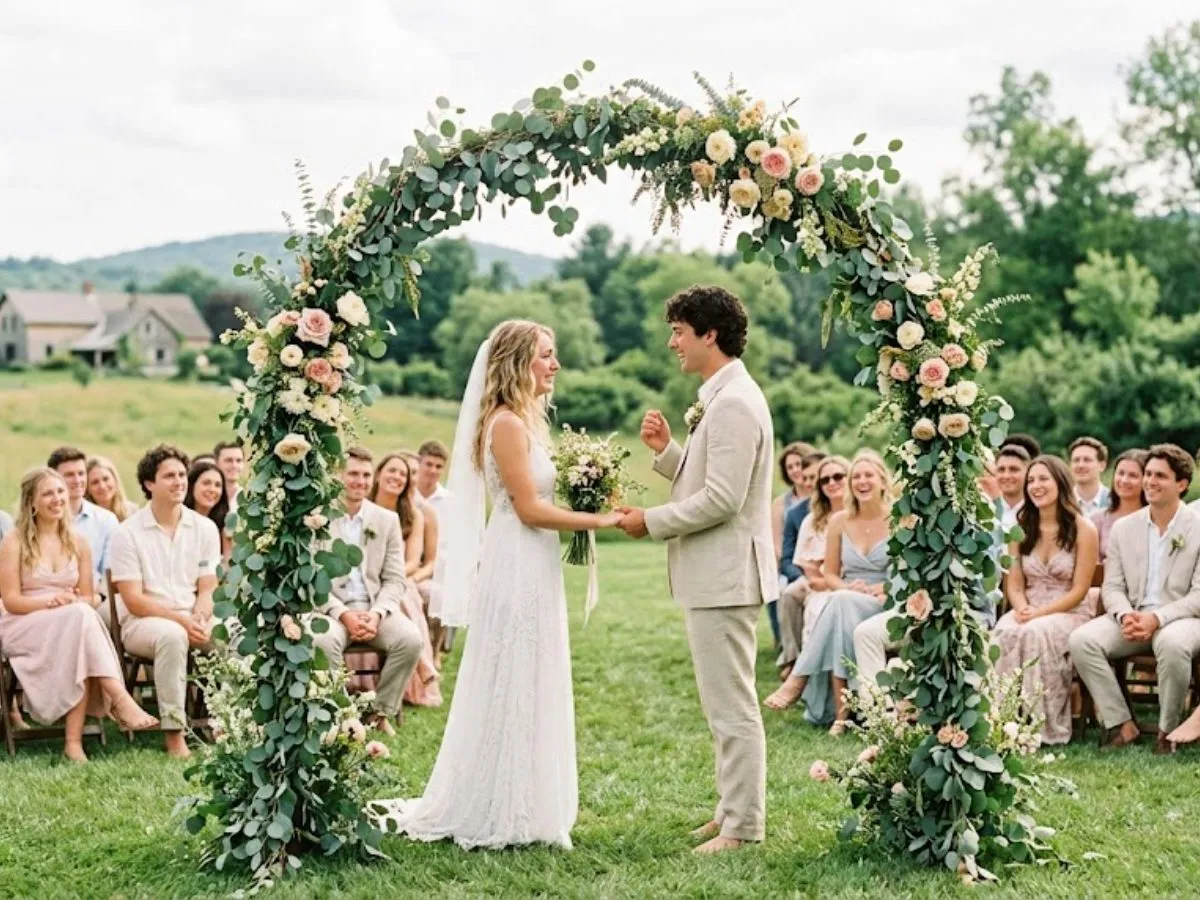
A significant cultural shift is underway in the wedding landscape, with Generation Z increasingly pushing back against the prevailing pressure to overspend on matrimonial celebrations. New research from Talker Research indicates a widespread sentiment among young adults that modern weddings are synonymous with excessive cost, leading to widespread discomfort with expected expenditures and a strong desire to reallocate funds towards long-term financial security. This sentiment signals a pivotal moment for the wedding industry, necessitating a reevaluation of traditional marketing and service delivery models as couples prioritize authenticity, personal values, and future stability above ostentatious displays.
The findings, derived from an online survey of 2,000 Gen Z American adults (aged 22 and older) conducted by Talker Research between May 7 and 13, 2026, reveal a generation deeply concerned with the financial implications of tying the knot. The most striking revelation is that when asked for a single word to describe modern weddings, "expensive" emerged as the most common response, chosen by 20% of respondents. This overshadowed traditional descriptors such as "romantic," "fun," or "meaningful," underscoring a fundamental disconnect between industry aspirations and consumer perception. This primary association with cost rather than celebration highlights the profound impact of financial pressures on prospective couples.
Further drilling down into the data, the survey illuminates the pervasive nature of wedding budget pressure. A staggering 75% of Gen Z adults reported feeling pressured to spend money on weddings that they genuinely do not wish to spend. This statistic quantifies a widespread unease that many individuals experience privately, struggling with decisions ranging from elaborate guest favors to premium venue upgrades. The pressure extends beyond the couple, impacting guests as well. Travel and accommodations were identified by 30% of respondents as the most difficult wedding-related expense to justify, with a specific "breaking point" identified around $1,239. This threshold represents the approximate cost at which attending or hosting a wedding becomes financially unreasonable for many, providing a tangible benchmark for couples planning destination events or for guests evaluating their participation.
Perhaps the most telling finding for the future of wedding spending is that 46% of those surveyed would rather redirect wedding expenses toward saving or investing for their future. This strong preference for financial prudence over immediate consumption speaks volumes about Gen Z’s priorities, which are heavily influenced by the economic realities they face. Unlike previous generations, many Gen Z individuals grapple with significant student loan debt, rising housing costs, and a precarious job market, making long-term financial security a paramount concern. The desire to channel wedding funds into investments, down payments, or emergency savings reflects a pragmatic approach to life planning, where a wedding is seen as a stepping stone to a secure future rather than an end in itself.
The evolution of wedding costs over the past few decades provides crucial context for understanding Gen Z’s current stance. Historically, wedding celebrations have transformed from intimate, community-focused events to increasingly elaborate affairs. Post-World War II, a booming economy and the rise of mass consumerism began to inflate expectations. The 1980s saw a significant escalation in wedding grandeur, fueled by celebrity culture and an burgeoning bridal industry. This trend accelerated in the late 20th and early 21st centuries, propelled by the advent of social media. Platforms like Pinterest and Instagram created a constant, curated stream of aspirational wedding content, showcasing lavish decor, exotic destinations, and personalized details that became the new benchmarks for "the perfect day." This digital age fostered a sense of competition and FOMO (fear of missing out), subtly pushing couples to emulate increasingly expensive ideals. The "wedding industrial complex," a term used to describe the vast network of vendors, media, and cultural expectations that encourage high spending, has flourished in this environment, often framing expenses as non-negotiable elements of a truly memorable event.
A significant contributing factor to this pressure is the widespread use of the "average wedding cost" figure by industry stakeholders. This number, often quoted in the tens of thousands of dollars, is statistically misleading. As detailed by financial experts and echoed by the "Budget Savvy Bride" (B$B) platform, the average (mean) cost is disproportionately skewed upwards by a small number of extremely expensive, high-budget weddings. A more accurate representation of typical spending is the median cost, which is the true middle point where half of couples spend less and half spend more. The median is consistently and dramatically lower than the average, creating a significant gap where budget pressure thrives. When couples are presented with an inflated "average," their reasonable, value-driven budgets can feel inadequate, leading them to question their choices and consider spending more than they initially intended. This statistical manipulation is a powerful tool in encouraging upward spending, presenting luxury as the norm rather than an outlier.
The pressure to spend more comes from several distinct sources, acting in concert to influence couples’ decisions. Social media, as previously mentioned, is a primary culprit. The endless highlight reels of impeccably styled, high-budget weddings create an unrealistic standard, often presented by individuals or businesses with a vested interest in promoting lavish aesthetics. Couples comparing their real, practical budgets to these carefully curated, often sponsored, displays are engaged in a rigged comparison. Beyond the digital realm, vendor upselling is a direct and potent source of pressure. Wedding professionals, naturally, aim to maximize their sales, and tactics such as offering "enhancement packages," suggesting "must-have" upgrades, or implying that certain elements are standard can incrementally add thousands to a budget. These conversations often occur when couples are already emotionally invested, making it difficult to resist. Finally, family expectations play a significant role. Relatives, particularly parents or grandparents, may harbor traditional ideas about "how a wedding should be done," often rooted in their own experiences or societal norms of their generation. These expectations, while often well-intentioned, can create familial pressure to adhere to customs or levels of extravagance that conflict with the couple’s financial realities or personal desires.
The Gen Z mindset, as observed by academic experts, offers a valuable perspective on this evolving landscape. Donna Fickes, Ph.D., a lecturer at James Madison University’s Hart School of Hospitality, notes that "After years of more casual dating norms, many Gen Z couples are approaching marriage as a highly intentional life decision rather than simply the next expected milestone. That mindset is reflected in how they spend on weddings. Instead of trying to impress others or follow tradition for tradition’s sake, they’re asking, ‘Does this reflect who we are and the life we’re building together?’ As a result, we’re seeing budgets become more values-driven, with couples investing in experiences and elements that carry personal meaning while eliminating expenses that don’t." This intentionality suggests a rejection of superficiality in favor of substance, leading to celebrations that are authentic reflections of the couple.
Jennie Rosier, an associate professor of communication studies at James Madison University and director of the Relationships, Love, Happiness Project, further elaborates on this broader cultural context. Rosier explains, "Gen Z is coming of age in a cultural moment where the traditional markers of adulthood such as homeownership, financial stability, and even weddings feel increasingly out of reach. Many couples are pushing back against the expectation that commitment has to look a certain way, choosing smaller weddings, alternative celebrations, or prioritizing the relationship itself over expensive rituals. At the same time, Gen Z appears to be moving toward a more intentional approach to commitment after years of dating cultures shaped by apps, ambiguity and casual connections. Rather than viewing marriage as the next automatic life step, many are treating it as a deliberate choice that reflects their values, readiness and shared goals." This analysis highlights the intersection of economic realities, changing social norms, and a deeper desire for meaningful connection as drivers of Gen Z’s approach to marriage and its associated celebrations.
For couples seeking to navigate this pressure without guilt, a concrete game plan is essential. The first and most powerful step is to decide on a total budget before engaging with any vendors. This proactive approach establishes a firm financial ceiling, empowering couples to resist upsells and make choices aligned with their means. Walking into conversations with a clear number transforms negotiations and anchors decisions to personal financial realities rather than external expectations.
Secondly, identify and prioritize the top three elements that genuinely matter most for the wedding. Whether it’s photography, food, music, or a specific ambiance, allocating the majority of the budget to these core priorities allows couples to invest deeply where it counts. For everything else, the philosophy of "good enough" should prevail. Guests typically remember the overall feeling and experience of a wedding, not minor details like the specific linen choices or the brand of champagne. Focusing resources ensures that the most impactful aspects of the day are exceptional, while less critical elements remain functional and pleasant.
A highly effective strategy for budget control is to cut the guest list before cutting anything else. Nearly every significant wedding cost—catering, rentals, bar service, favors, cake—is directly proportional to the headcount. Reducing the number of guests offers the most substantial financial savings and often results in a more intimate, personal celebration. While this decision can be emotionally challenging, it provides a practical framework for aligning the wedding’s scale with the couple’s financial comfort.
Given the survey’s findings, rethinking travel and destination wedding costs is crucial. The $1,239 breaking point for travel and accommodations serves as a valuable indicator. If a proposed destination wedding or extensive guest travel pushes costs beyond this threshold for either the couple or their guests, it warrants serious reconsideration. Opting for a more local, simpler celebration is not a compromise but a legitimate and often more considerate choice, especially when considering the financial burden on attendees.
Finally, and perhaps most importantly, couples are encouraged to put the money saved towards their actual future, not just the party. With 46% of Gen Z expressing a preference for investing or saving, redirecting unspent wedding funds into a down payment, an emergency fund, or other long-term financial goals aligns with a generation’s core priorities. Every dollar saved from resisting wedding budget pressure is a dollar invested in the couple’s shared future, providing a stronger foundation for their life together and reducing financial stress in the crucial early years of marriage. This intentional financial planning reinforces the idea that a beautiful wedding is one that supports, rather than detracts from, a couple’s long-term well-being.
Navigating conversations when external pressure arises requires clear, concise communication. When a vendor attempts an upsell, a simple, firm statement like, "That sounds lovely, but it’s not in our budget for this wedding. We’re good with the base package," is sufficient. No further justification is required. For family members offering unsolicited opinions or pushing for traditional elements, couples can respond with, "We really appreciate you, and we’ve thought hard about what matters to us. This is the plan we’re excited about." If a relative offers to financially contribute to an upgrade, that presents a different discussion, but if it’s merely an opinion, the couple’s plan can remain steadfast. When the pervasive comparison spiral of social media hits, the most effective strategy is to simply close the app. Recognizing that online portrayals are curated highlights, often detached from financial reality, helps to reset expectations and refocus on what truly matters to the couple.
In conclusion, the Talker Research data definitively confirms that wedding budget pressure is a tangible and widespread phenomenon, particularly among Gen Z. The collective perception of weddings as "expensive," the overwhelming feeling of pressure to overspend, and the strong inclination to prioritize financial security over lavish celebrations underscore a significant cultural shift. This is not merely about cutting costs; it’s about redefining the meaning and purpose of a wedding in contemporary society. A wedding that genuinely reflects a couple’s values, aligns with their financial realities, and contributes to their long-term well-being is not a compromise but the ultimate expression of a meaningful commitment. By understanding the sources of pressure and employing strategic financial planning, couples can achieve a beautiful and memorable celebration that serves as a joyful beginning to a secure future.