The journey to this unique celebration was marked by a significant pause. Calyn and Mike had initially envisioned a wedding steeped in New Orleans culture, a reflection of their heritage and shared appreciation for its rich traditions. However, their plans took an unexpected turn when they discovered they were expecting a child. Rather than rushing to fit a wedding into a tight schedule before the baby’s arrival, the couple made a conscious decision to postpone the entire event. This choice, while perhaps unconventional in an industry often driven by strict timelines, underscored their priority: their nascent family. Their daughter arrived first, a new chapter beginning, and the wedding gracefully waited its turn, allowing their love story to evolve naturally before being formally consecrated. By the time Calyn and Mike exchanged vows, their daughter was not merely a guest but a cherished participant, nestled comfortably in Calyn’s arms throughout much of the ceremony, a living embodiment of the family they had already become.
Nature’s Grandeur: A Redwood Amphitheater Ceremony
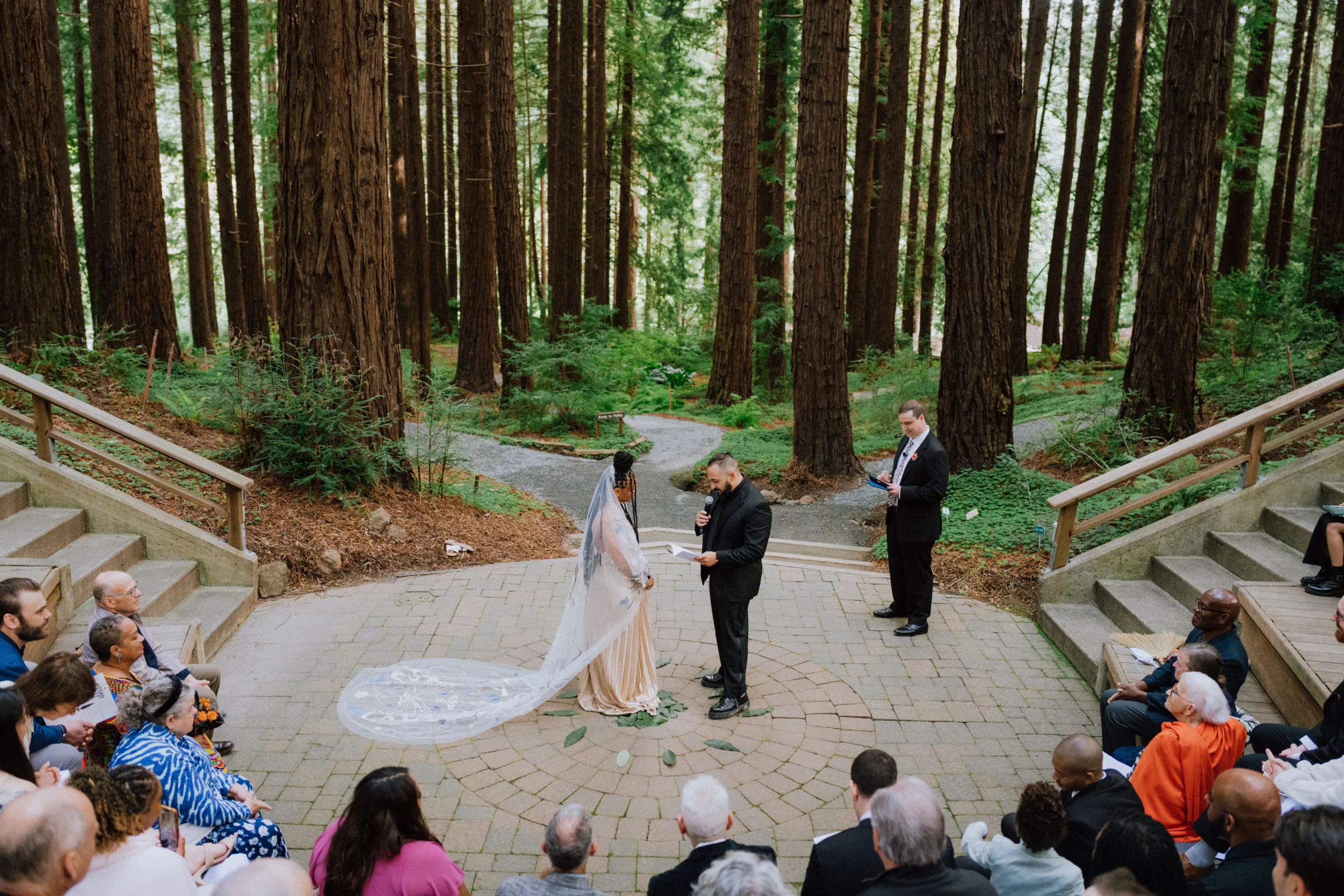
The chosen venue, the University of California Botanical Garden in Berkeley, provided a breathtaking backdrop that itself embodied a blend of natural grandeur and meticulous cultivation. Spanning 34 acres, this internationally renowned garden is home to a staggering collection of over 10,000 rare and endangered plant species from around the globe. Founded in 1890, it serves as a vital resource for scientific research, conservation, and public education, actively contributing to global botanical understanding. For Calyn and Mike’s ceremony, they selected the Redwood Amphitheater, a truly remarkable space. This tiered wooden seating bowl is not merely near redwoods; it is meticulously integrated into an actual grove of towering coastal redwoods (Sequoia sempervirens). These majestic trees, among the tallest and oldest living organisms on Earth, provided an awe-inspiring, cathedral-like atmosphere. Their immense height made the gathering of guests appear small from above, emphasizing the profound connection to nature. This choice moved beyond a mere aesthetic preference; it spoke to a desire for a setting that felt organic, enduring, and deeply rooted, mirroring the qualities they wished for their marriage. It offered a stark, refreshing contrast to the often opulent yet impersonal confines of traditional reception halls, inviting guests to be fully immersed in a living, breathing ecosystem.
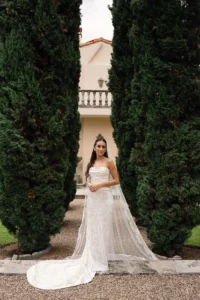
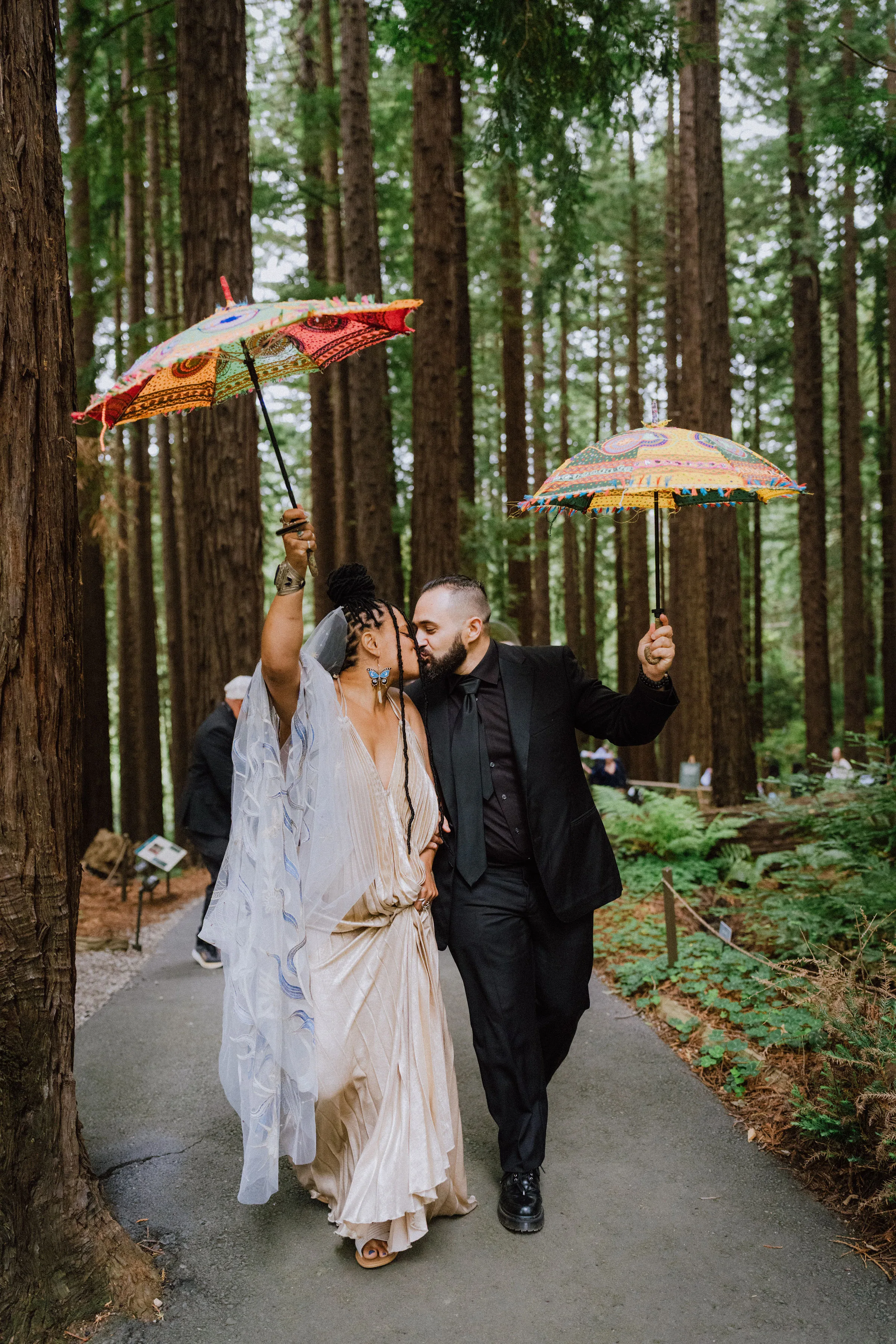
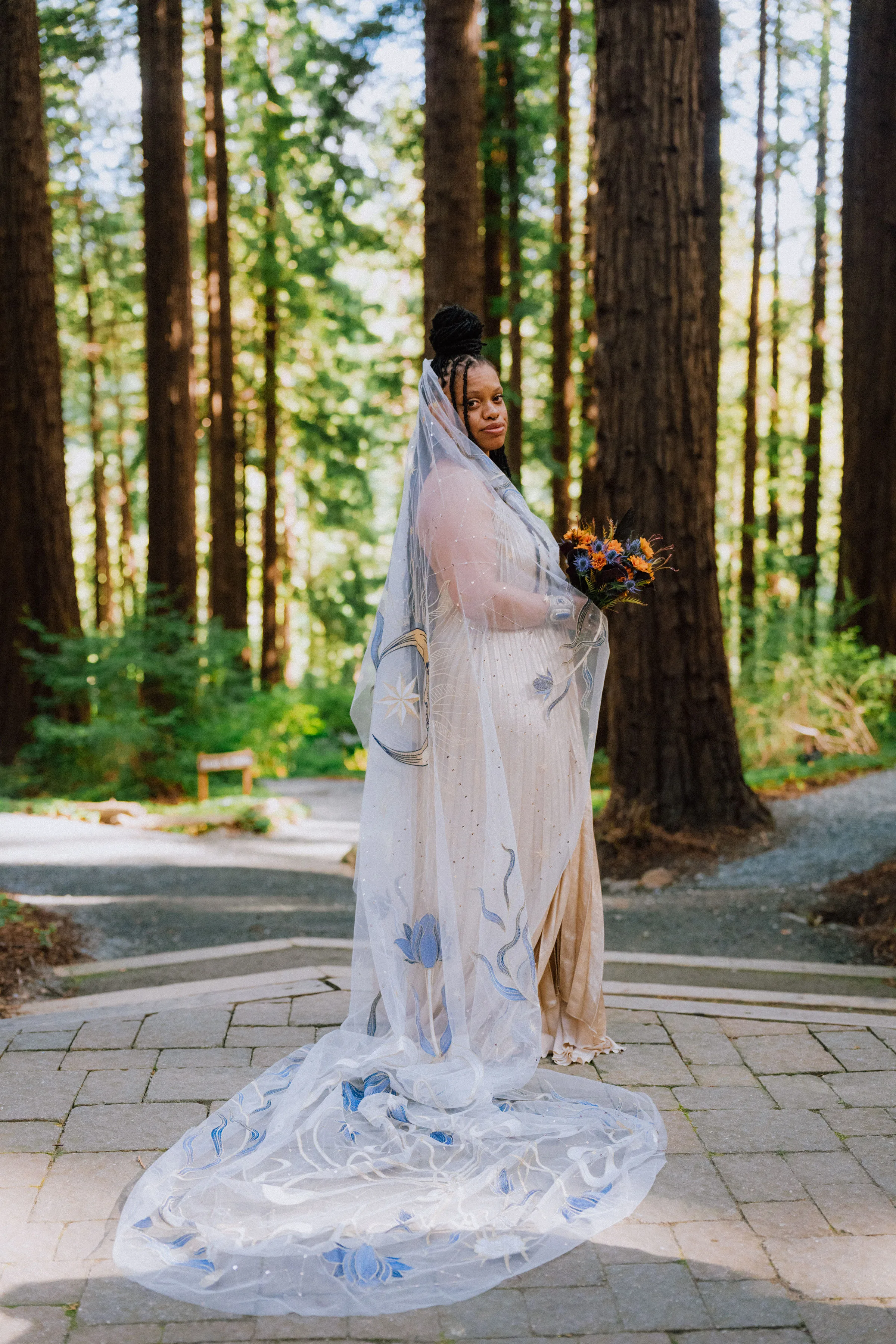
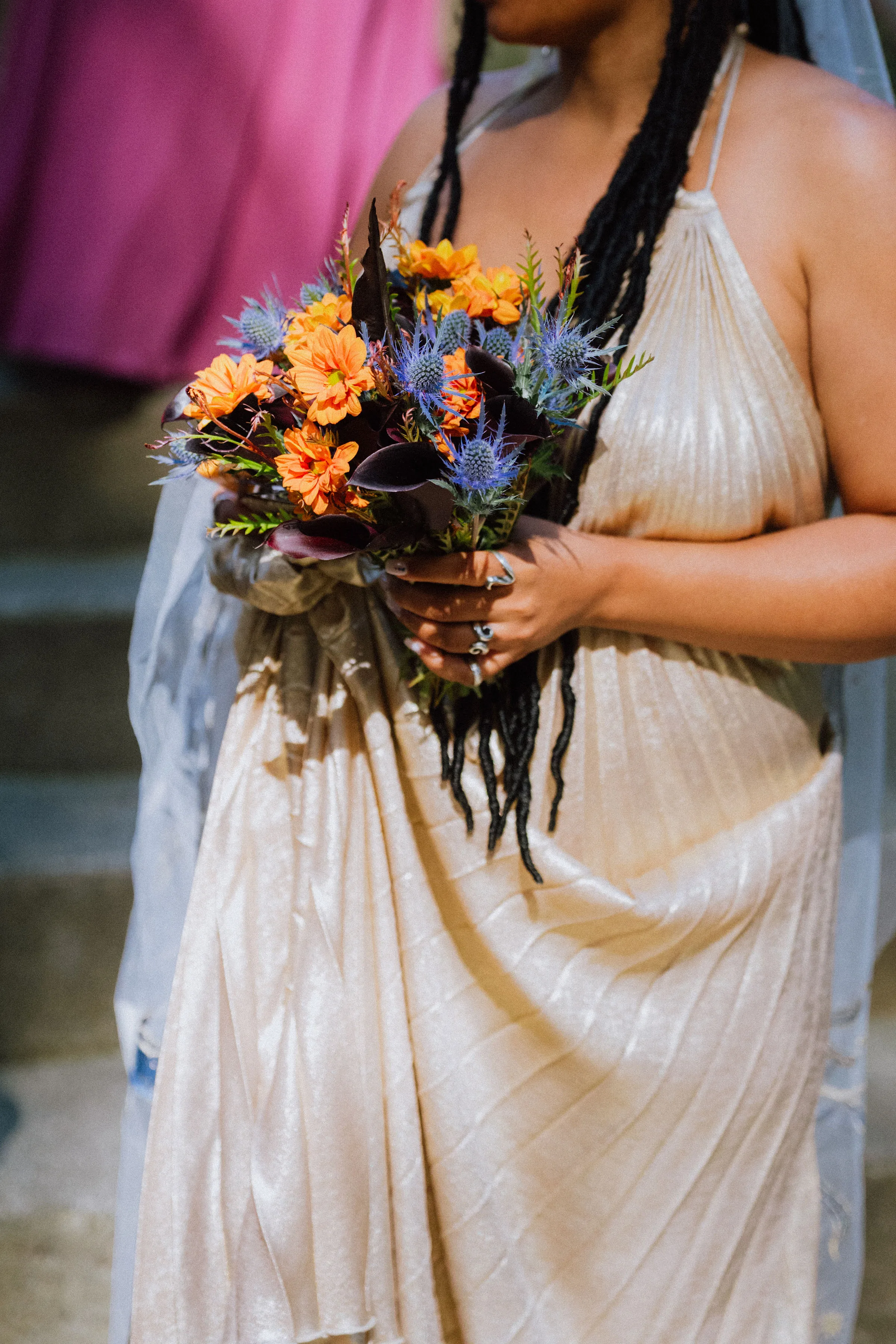
Calyn’s entrance was a vision of understated elegance and cultural homage. She walked down the aisle sheltered by a vibrant red and gold tasseled parasol, a direct nod to the iconic New Orleans Second Line tradition. Her champagne-colored pleated gown was complemented by a sheer, hand-painted veil that trailed several feet behind her. The veil, a distinctive piece from Rue De Seine, a New Zealand bridal label celebrated for its illustrated, non-traditional designs, featured delicate vines and botanical linework in pale blue, subtly echoing the natural beauty of the garden itself. The selection of Rue De Seine highlighted the couple’s preference for artistry and individuality over conventional bridal aesthetics, ensuring every detail resonated with their personal style and the unique setting. Despite it being a typically overcast Bay Area May day, the soft, diffused light proved ideal for photography, lending a timeless quality to the imagery.
A Confluence of Traditions: Vows Under the Redwoods
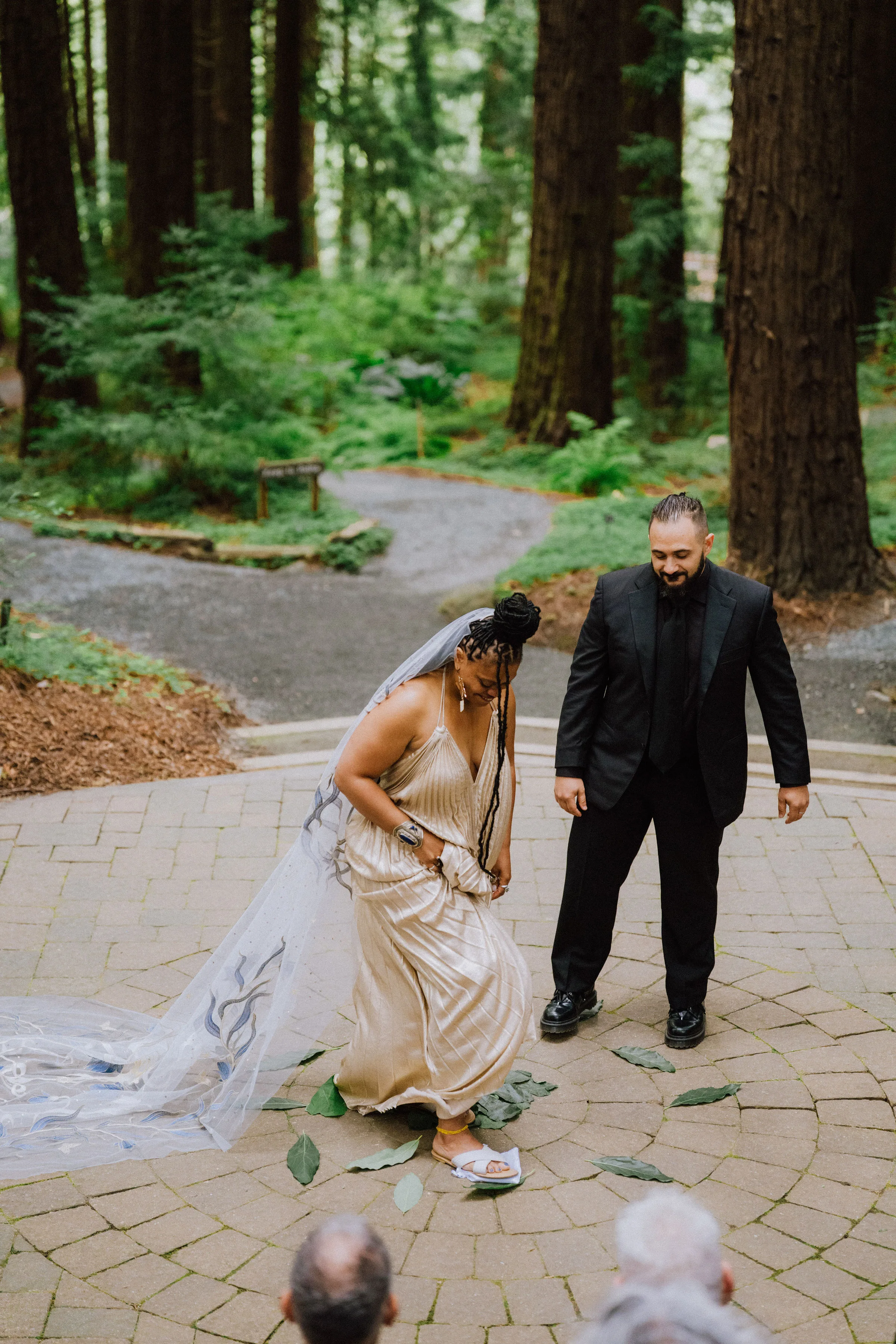
The ceremony itself was a deeply personal and culturally rich affair, meticulously crafted to honor the diverse heritages of both Calyn and Mike. The space was demarcated by a simple yet profound circle of scattered leaves on the brick ground, within which the officiant, the couple, and their daughter stood. This intimate circle served as a symbolic boundary, encompassing their union and the traditions they brought together. The vows were punctuated by significant rituals from their respective backgrounds: the breaking of the glass, a Jewish tradition symbolizing the fragility of life and the irreversibility of the marriage covenant, and immediately followed by the jumping of the broom, an African American tradition honoring ancestors and symbolizing the sweeping away of the past to embrace a new beginning. The back-to-back execution of these powerful rites underscored the unity and mutual respect for their distinct cultural narratives.
Adding intellectual and emotional depth, a reading from bell hooks’ seminal work on love was included. The passage focused on love not as a fleeting emotion one passively awaits, but as an active, conscious practice, a choice made daily. This philosophical anchor resonated deeply with the couple’s journey, particularly their decision to postpone their wedding to nurture their family first. It affirmed their belief in love as an ongoing commitment and effort.
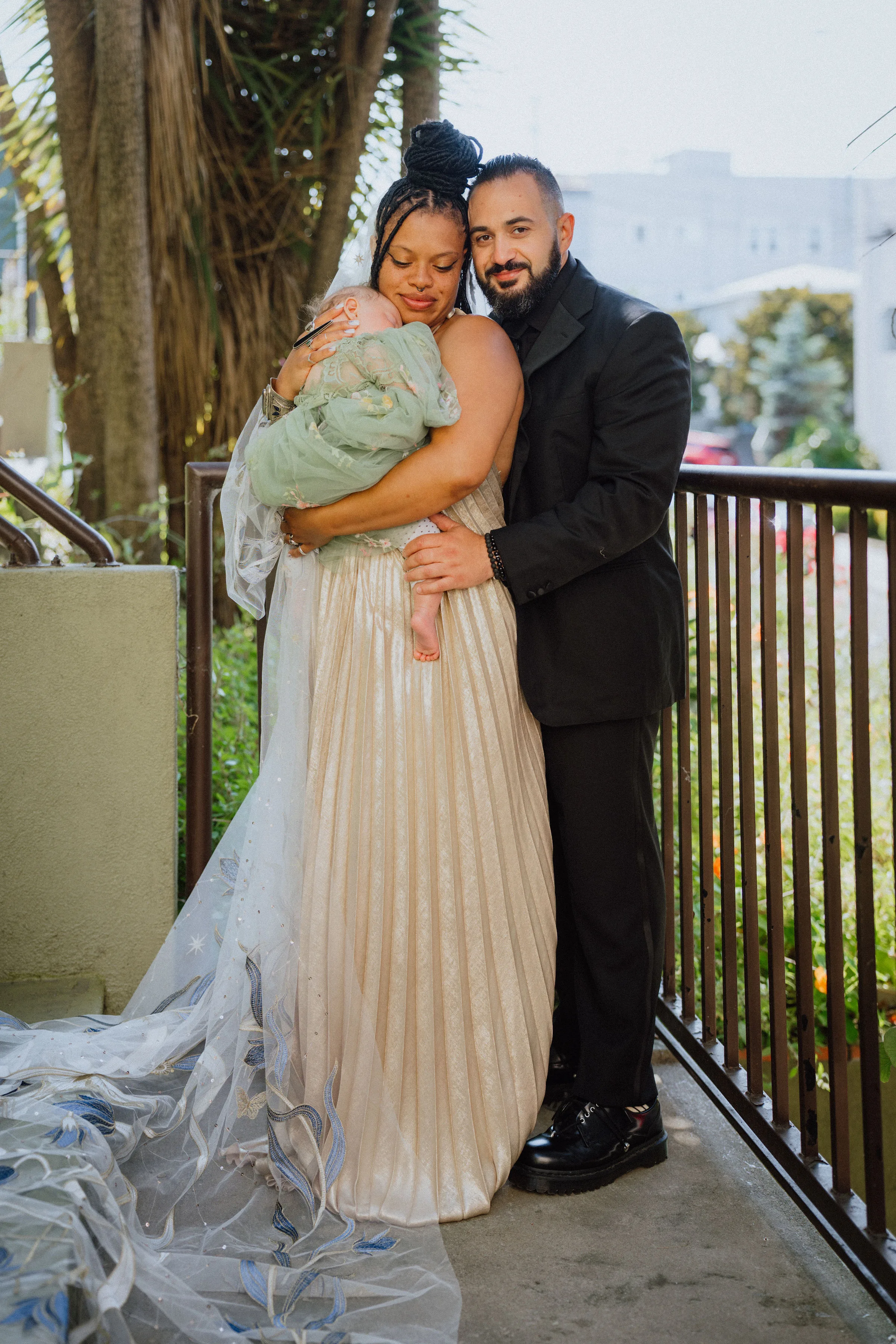
Central to the ceremony’s intimate charm was the continuous presence of their daughter. Dressed in her own cream lace gown, she remained comfortably in Calyn’s arms, an undeniable, integral part of the proceedings. At one point, Mike playfully held the microphone towards her, eliciting laughter from the guests, acknowledging her undeniable role in their story. Her presence wasn’t merely symbolic; it was the very reason for the revised timeline, making her a testament to the organic growth of their family and the profound love that underpinned their commitment. This decision challenged the traditional wedding narrative, where children might be relegated to peripheral roles, instead embracing her as the heart of their new beginning.
The Second Line Finds Berkeley: A Joyful Procession
As the formal ceremony concluded, a vibrant transformation swept through the tranquil botanical garden. The unmistakable sounds of brass instruments began to emerge from the redwood groves, signaling the arrival of a truly special element: the New Orleans Second Line. Leading this spirited procession were MJ’s Brass Boppers, a Bay Area band whose musicians, many of whom grew up in New Orleans, brought authentic Crescent City energy to the California landscape. The full second line ensemble—featuring trombone, sousaphone, saxophone, snare drum, and tambourine, with several members proudly sporting New Orleans Saints caps—rounded a bend in the garden path.
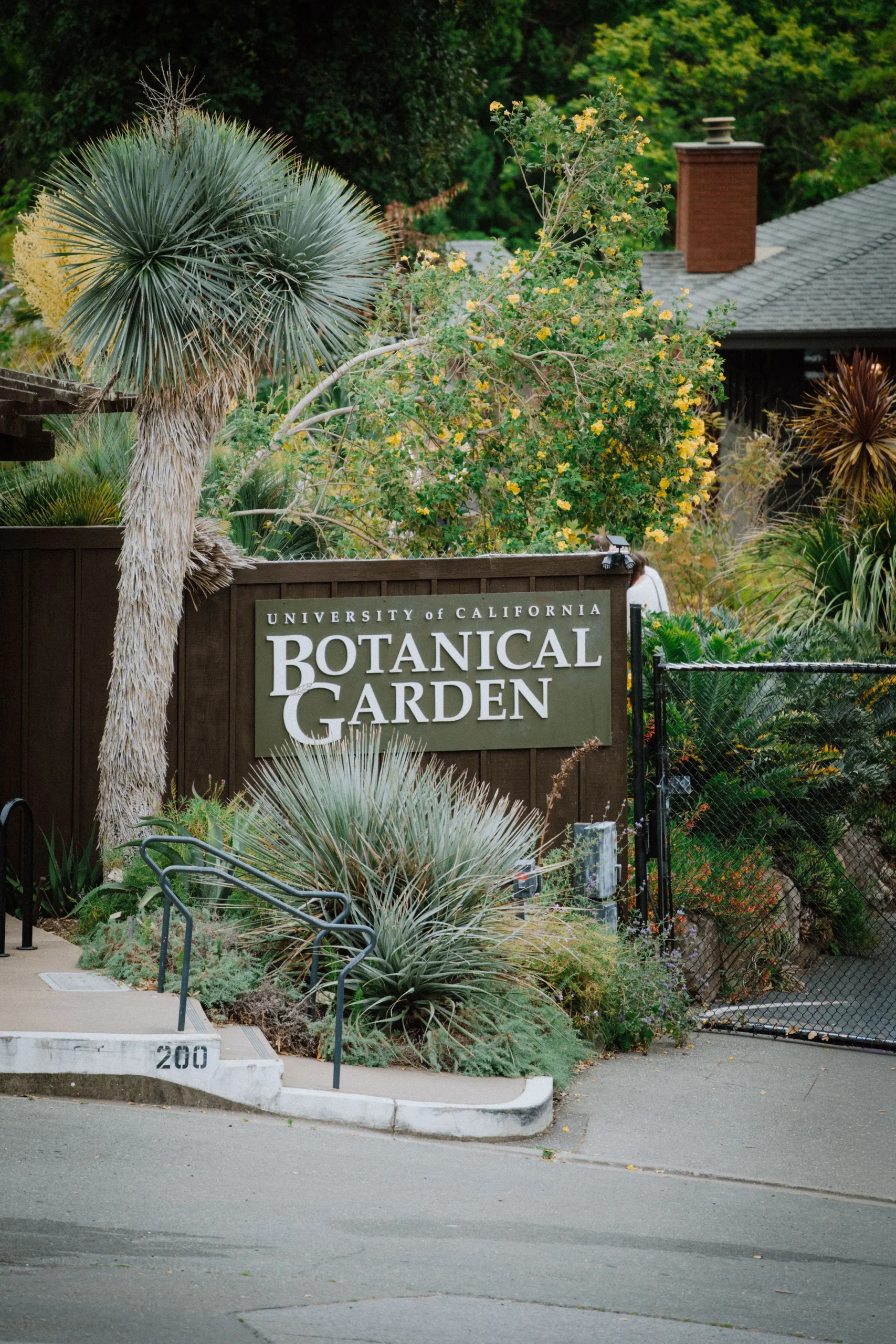
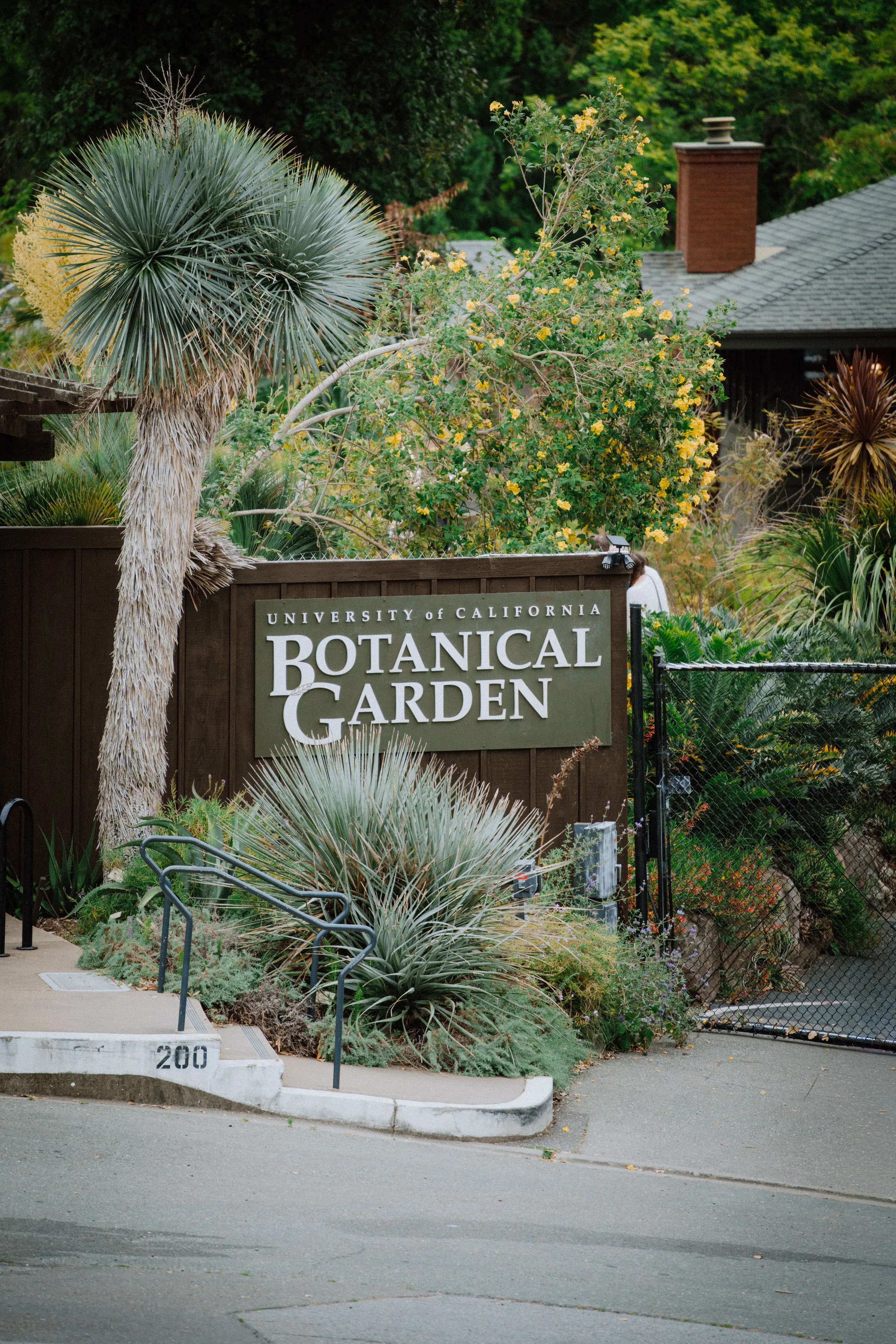
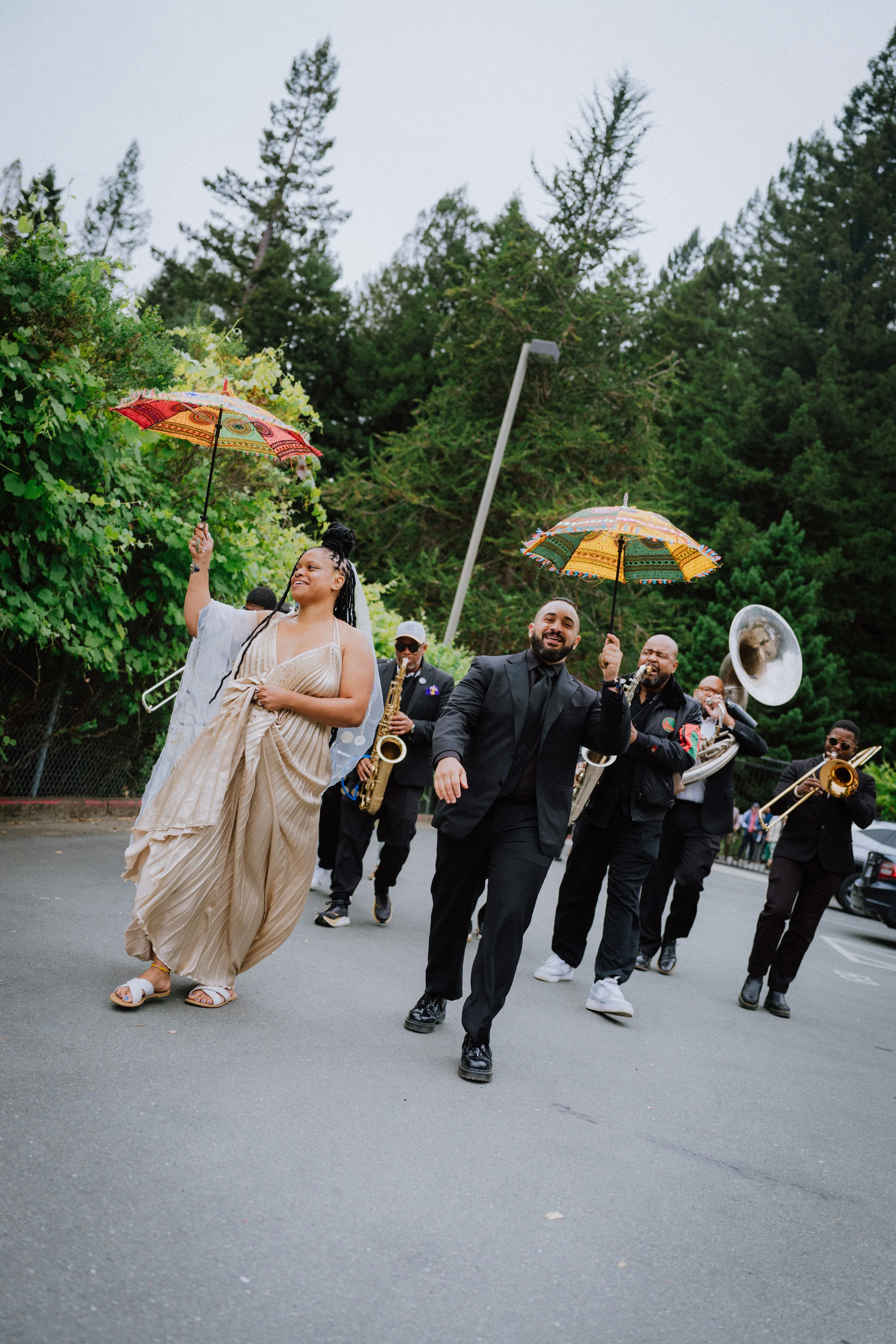
This was no ordinary musical interlude; it was a full-fledged parade. The band led the entire wedding party and guest list on a celebratory march through the winding garden paths. The sight of the boisterous, dancing crowd, accompanied by the infectious rhythms, passing a stoic UC Berkeley Botanical Garden sign, created a delightful juxtaposition of formal academia and spontaneous revelry. Calyn, still holding her vibrant red and gold parasol, twirled it high overhead, joined by one of the readers, embodying the joyful spirit of the tradition.
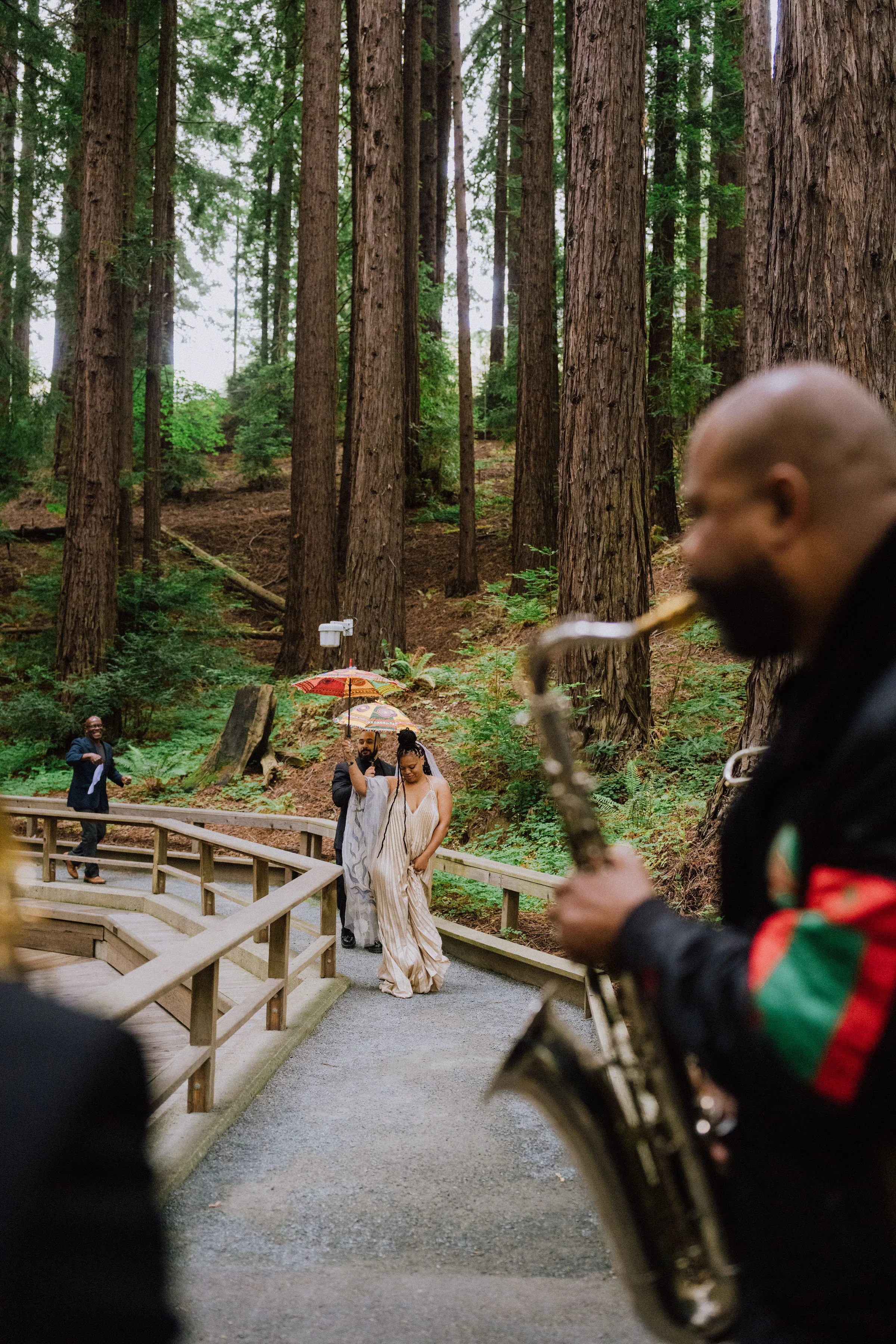
The Second Line is a deeply rooted New Orleans tradition, an energetic street parade where the "main line" consists of the brass band and the "second line" is the crowd of dancing, following participants. Its origins lie in West African ring dance traditions brought to Louisiana by enslaved people, evolving through social aid and pleasure clubs. Historically, it plays a dual role in New Orleans culture, appearing at both funerals and celebrations, symbolizing both solemn passage and triumphant emergence. For Calyn and Mike, incorporating a Second Line served as a vibrant, living bridge between their cultural backgrounds, replacing a more conventional grand entrance into cocktail hour. It was a powerful, unscripted transition that embodied their refusal to shrink their vision, choosing instead to infuse their celebration with profound cultural meaning and unbridled joy. This choice spoke volumes about a couple who prioritized authenticity and the shared experience of their community over rigid wedding etiquette, transforming a serene garden into a pulsating street party.
"Geaux Stupid": A Linguistic and Cultural Fusion
The meticulous layering of cultural elements extended to even the smallest, most insightful details. A subtle yet significant inside joke, "Geaux Stupid," was embedded within the day’s narrative. This phrase is a clever linguistic fusion, combining "Geaux," the phonetic spelling of "go" as used in Louisiana French Creole and common in New Orleans slang (particularly associated with LSU sports), with "Stupid," a term from Bay Area hyphy slang, meaning to go wild or intensely enjoy oneself. This specific expression only truly resonates with those familiar with both New Orleans bounce music and Bay Area hyphy culture, two distinct, vibrant subcultures that are deeply personal to the couple. It acted as a private lexicon, a shared secret that celebrated their dual cultural identities without needing external validation or explanation. This intentionality in language mirrored their broader approach to the wedding: a deeply personal event crafted for their community, rich with layered meanings.
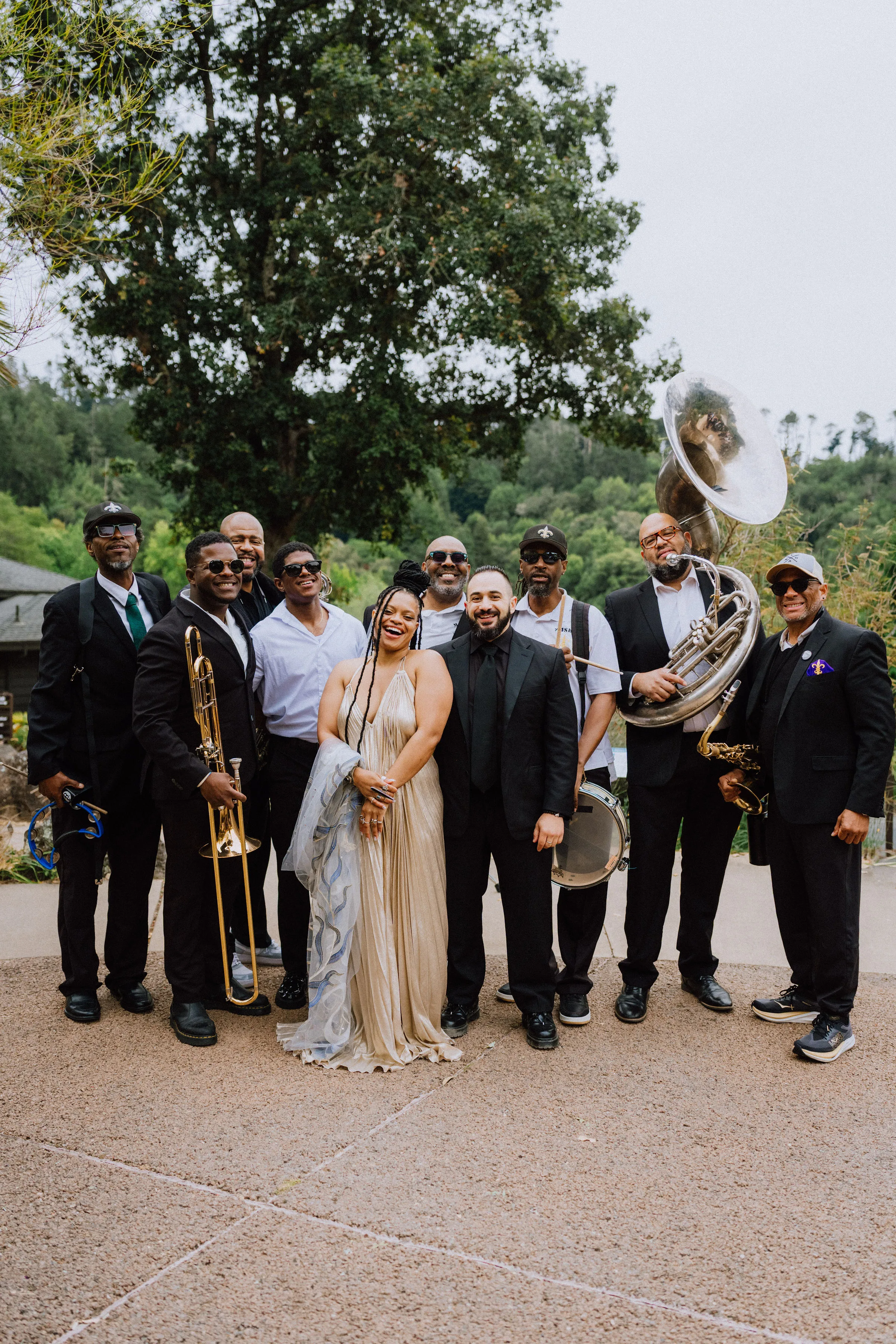
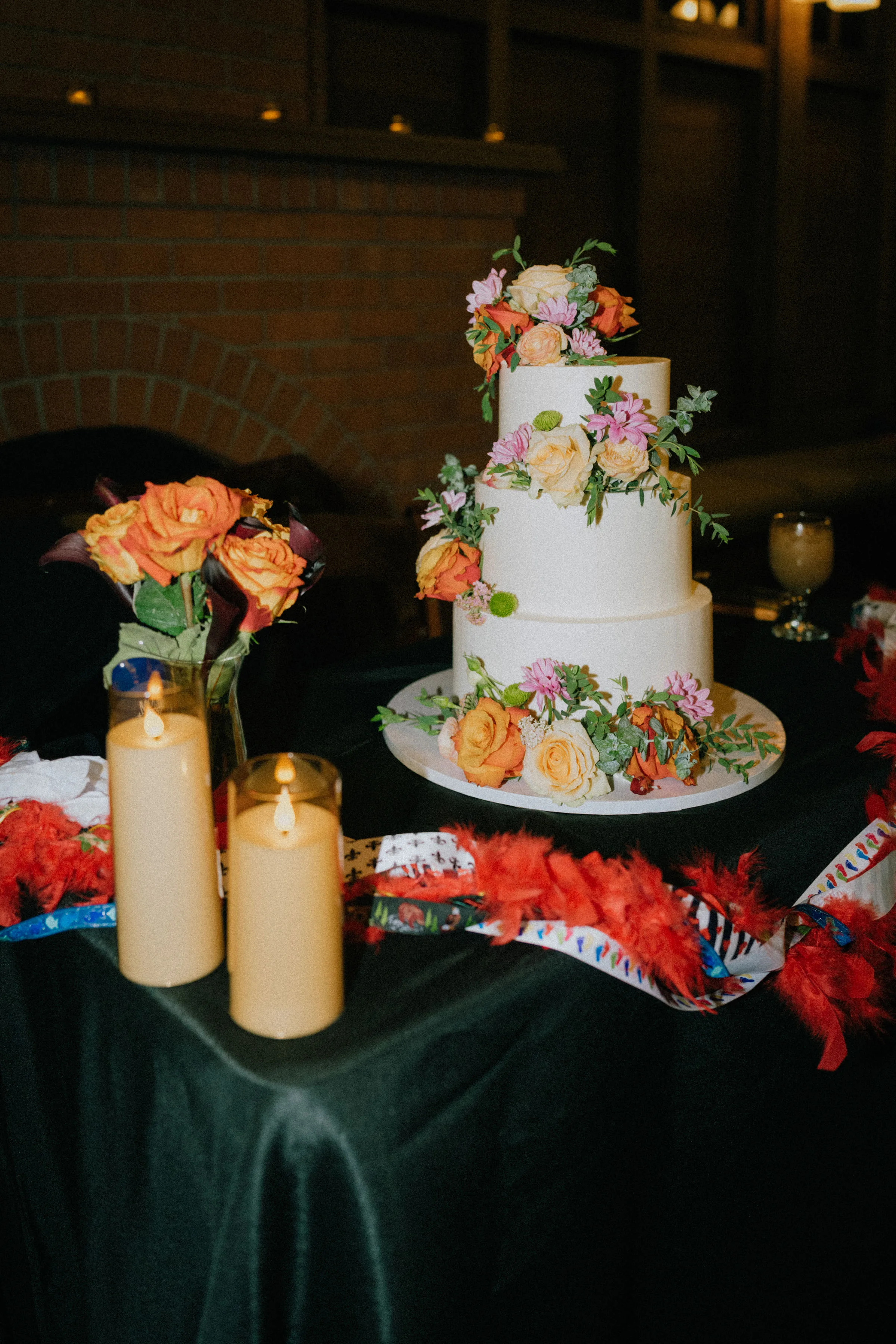
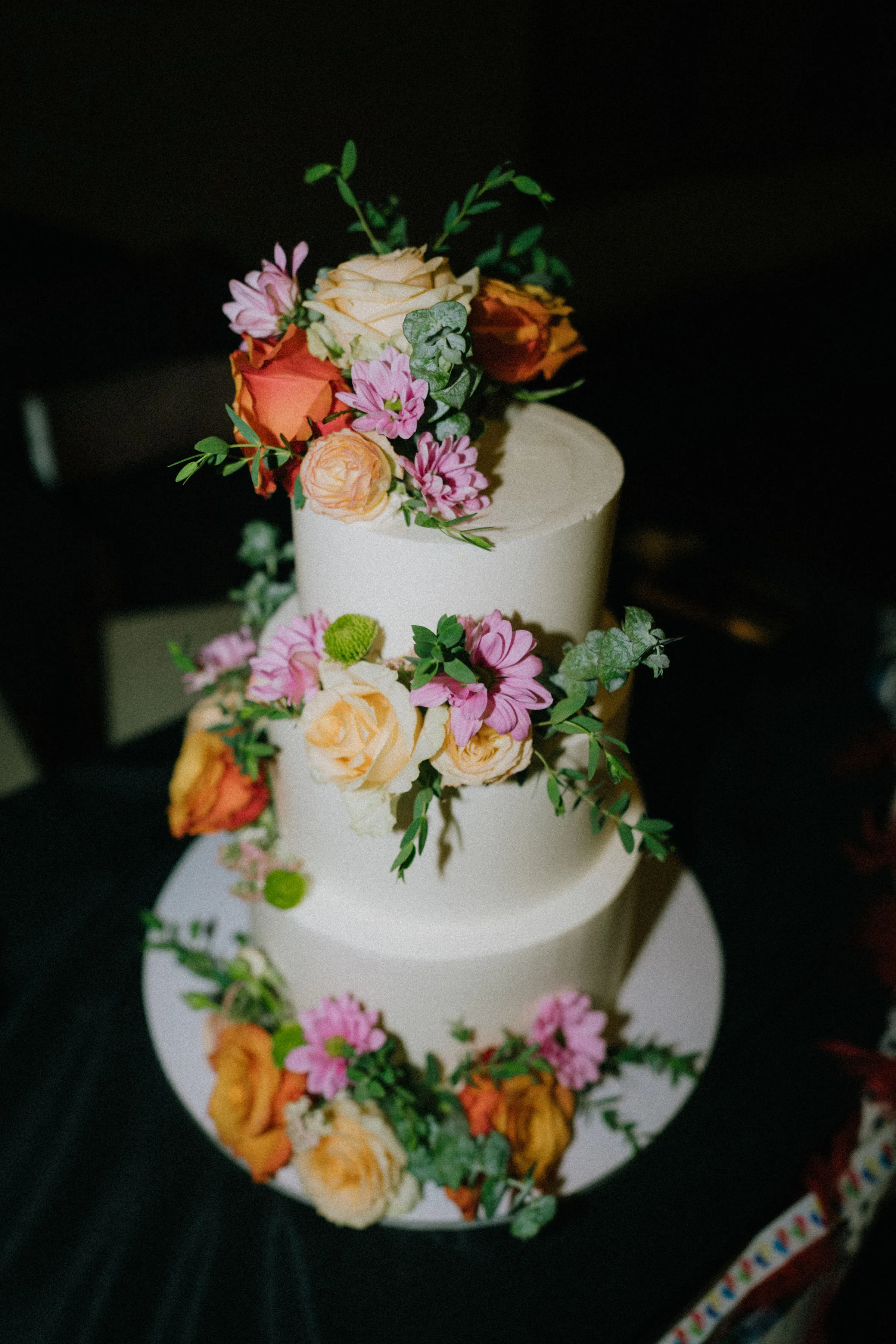
This same discerning instinct guided their selection of vendors, reflecting a conscious effort to support businesses that aligned with their values and identities. They intentionally hired professionals who were part of their community or shared their cultural understanding. This included MJ’s Brass Boppers, the Bay Area band led by native New Orleanians, ensuring the authenticity of their Second Line. For catering, they chose an Emeryville restaurant renowned for its rich mole sauces and modern Mexican home cooking, showcasing a commitment to diverse culinary traditions and local businesses. The wedding cake, a stunning creation from Cotton Cake Bake Shop in San Leandro, was a three-tiered masterpiece adorned with an abundant, artfully loose arrangement of peach garden roses, coral ranunculus, magenta daisies, and lush greenery, eschewing stiff, formal arrangements for a more organic, natural aesthetic that harmonized with the botanical setting. Their DJ, deeply rooted in Bay Area sports and hyphy culture, further ensured the musical landscape of the reception continued the cultural fusion, keeping the energy authentic and vibrant. This thoughtful curation of vendors was not just about quality; it was about investing in and celebrating their extended community, making every aspect of the wedding a reflection of their integrated lives.
The True Value of the Wait
The wedding that finally unfolded on May 24, 2026, was fundamentally different from the one Calyn and Mike would have had on their original timeline. The postponement, initially a response to an unexpected joy, ultimately transformed their celebration into something far more profound and authentically "them." It wasn’t a rushed event to beat a due date or fit societal expectations; it was a deeply personal, family-centric celebration. Their daughter, already an established member of their family, was seamlessly integrated, not as an afterthought, but as a central figure, her presence enhancing the joy and meaning of the day.
The extra months of waiting allowed the couple’s vision to mature, to truly catch up with the beautiful reality of their evolved life. It provided space for deeper reflection on what truly mattered: not just the union of two individuals, but the celebration of an already thriving family unit. The guest list comprised friends and family who had witnessed their journey, seen their family take shape, and understood the significance of this culminating ceremony. This wedding became a powerful testament to the idea that love, commitment, and family are not contingent on a piece of paper or a specific date. It showcased how modern couples are increasingly redefining traditional wedding narratives, prioritizing personal meaning, cultural authenticity, and the organic flow of their lives over rigid expectations. In the Berkeley redwoods, amidst the echoes of New Orleans brass and the quiet strength of ancient trees, Calyn and Mike celebrated not just a marriage, but the vibrant, unique, and deeply loved family they had already built. The wait, far from being a delay, ultimately built a richer, more meaningful foundation for their future together.