


The retail landscape is witnessing an unprecedented wave of transformation, often driven by the siren call of artificial intelligence. In a striking example, David’s Bridal, the once-dominant American bridal retailer that has navigated two bankruptcies since 2018, recently announced a radical rebranding. The company now positions itself as a "high-velocity media, content, entertainment, and technology engine," with CEO Kelly Cook declaring its fundamental shift from a "legacy retailer" to a "tech-powered multihyphenate." This strategic pivot, dubbed "Aisle to Algorithm," aims to leverage AI and data to connect engaged couples with vendors, but it arrives amidst a broader trend of struggling consumer brands adopting "AI" as a panacea for deep-seated operational and financial challenges. The move also raises significant questions about accountability and trust, particularly for the independent wedding vendors and customers who were left unpaid in the wake of its recent financial restructuring.
The phenomenon of traditional businesses attempting to rebrand as AI companies is not isolated. Just weeks prior, Allbirds, the sustainable shoe company that saw its market valuation plummet from a 2021 peak of four billion dollars to approximately $150 million, declared its intention to pivot into "AI compute infrastructure" under the new moniker NewBird AI. The abrupt shift from eucalyptus-fiber sneakers to facilitating computer chip brokering epitomizes a perceived desperation among beleaguered consumer brands to align with the booming AI sector, often without a clear, demonstrable core competency in the new domain. This pattern suggests a collective corporate belief that merely affixing "AI" to a company’s identity can magically rectify years of operational mismanagement, market misreading, or unmanageable debt.
A Turbulent Financial History: David’s Bridal’s Repeated Bankruptcies
To understand the context of David’s Bridal’s audacious pivot, a review of its recent financial history is crucial. The company, which had been a staple in the American wedding industry for decades, first filed for Chapter 11 bankruptcy in November 2018. At the time, it cited a heavy debt load of over $400 million, coupled with changing consumer preferences, increased online competition, and a general decline in mall traffic as primary contributors to its financial distress. The company successfully emerged from this initial bankruptcy in January 2019, having shed approximately $400 million in debt and closing a significant number of its over 300 stores.
However, the respite was short-lived. By April 2023, David’s Bridal filed for Chapter 11 bankruptcy for a second time. This filing came with an even more dire outlook, as the company announced plans to sell itself and potentially liquidate if a buyer wasn’t found. The company’s struggles were exacerbated by the ongoing shifts in the bridal market, including a growing preference for more casual, less expensive, or even second-hand wedding attire, a trend the company itself cited in its bankruptcy filings. The rise of online retailers and direct-to-consumer brands further eroded its market share, while its extensive brick-and-mortar footprint and inventory management proved unsustainable.
The second bankruptcy culminated in July 2023 when CION Investment Group acquired David’s Bridal for an undisclosed sum, saving it from outright liquidation but not without significant repercussions for its creditors. The acquisition was structured as an asset sale, meaning CION acquired certain assets, but the liabilities of the former entity were largely left behind.
The Unpaid Debt: A Legacy of Betrayal for Independent Vendors and Customers
The immediate aftermath of David’s Bridal’s second bankruptcy and subsequent sale cast a long shadow over its reputation, particularly concerning its treatment of independent contractors and customers. A December 2023 report by The Philadelphia Inquirer detailed the distressing experiences of numerous independent vendors—including photographers, alteration specialists, and stylists—who had performed work for David’s Bridal but were never compensated. These small businesses, often operating on thin margins, found themselves in a precarious position as the bankruptcy proceedings unfolded.
In September 2023, two months after the CION sale, the United States Bankruptcy Court for the District of New Jersey formally dismissed the case. This dismissal meant that, effectively, there were no remaining assets from the sale to satisfy the claims of the many independent vendors who had already rendered services. As David’s Bridal’s co-counsel starkly informed The Inquirer, "given the dismissal of the case, unpaid creditors will remain unpaid." This outcome underscores a critical ethical failure, leaving a trail of financial hardship and shattered trust among the very community the company now seeks to engage through its new AI-powered platform.
Customers also bore the brunt of the financial collapse. WeddingWire and Reddit forums from the summer of 2023 were flooded with reports of gift cards and store credits being unilaterally voided without prior warning. This was particularly egregious given that, prior to the sale, David’s Bridal had published a customer FAQ section explicitly reassuring shoppers that their gift cards and store credits would continue to be honored. This promise, like the debts owed to independent vendors, evaporated with the finalization of the bankruptcy, further eroding consumer confidence and demonstrating a pattern of broken assurances.
The "Aisle to Algorithm" Strategy: Deconstructing the AI Pivot
David’s Bridal’s "Aisle to Algorithm" strategy, formally announced in March 2025, represents what the retail press frequently terms an "asset-light pivot." In essence, this model involves shedding capital-intensive assets such as owned inventory and store leases—precisely the elements that contributed to the company’s previous bankruptcies. CEO Kelly Cook openly articulated this, telling CNBC that the move was designed to "shield the company from the existential risks that pushed it into bankruptcy twice before."
While the "asset-light" approach may mitigate direct financial risks for the restructured entity, it fundamentally shifts those risks onto its partners. This means small business owners and independent vendors are now expected to fulfill drop-ship orders, license the brand name, and advertise on David’s Bridal’s newly established media properties. The company’s new operational model implicitly relies on these external partners absorbing the inventory costs, logistical complexities, and marketing expenditures, while David’s Bridal positions itself as an intermediary, facilitating connections and monetizing data.
At the core of this new strategy are several key initiatives:
- Acquisition of Love Stories TV: In December 2024, David’s Bridal acquired Love Stories TV, a prominent wedding video platform. This acquisition provides the company with a substantial library of wedding content and, crucially, access to a large audience of engaged couples.
- Launch of Pearl Media Network: Concurrent with the Love Stories TV acquisition, David’s Bridal launched the Pearl Media Network. This retail media network is designed to sell advertising placements to wedding vendors, leveraging the company’s "first-party customer data" to offer targeted reach. Vendors pay to feature their services within this network.
- Introduction of Pearl Planner: In August 2025, the company rolled out Pearl Planner, an AI-powered tool marketed as a personalized vendor recommendation engine for engaged couples. While couples can use the tool for free, vendors are required to pay a fee to be matched with potential clients, thus generating revenue for David’s Bridal.
This model clearly outlines a strategy to transform David’s Bridal from a traditional bridal apparel retailer into a data-driven advertising and lead-generation platform. The focus has shifted from selling dresses directly to monetizing the journey of wedding planning, placing the company in direct competition with established wedding marketplaces.
The Wedding-Tech Extraction Model: Echoes of The Knot’s Dominance
The operational blueprint David’s Bridal is now adopting is far from novel within the wedding industry. For years, dominant players like The Knot Worldwide (which includes WeddingWire) have successfully employed a similar "extraction model." The Knot, as the incumbent wedding marketplace, has spent over a decade building a vast digital ecosystem that connects engaged couples with wedding vendors. Its business model heavily relies on charging vendors for premium listings, advertising placements, and lead generation services, effectively acting as a gatekeeper between vendors and their potential clients.
However, The Knot’s model has not been without significant criticism and challenges. Independent wedding vendors frequently express frustration over increasing advertising costs, algorithm changes that favor paying advertisers over organic reach, and a perceived lack of transparency in lead quality. Many small businesses report that the cost of advertising on these platforms has become disproportionately high relative to the return on investment, forcing them into an uncomfortable reliance on a system that often feels extractive rather than truly collaborative. This sentiment is amplified by the fact that many vendors feel compelled to pay to appear prominently, fearing that without such investment, they will become invisible in a saturated digital marketplace.
David’s Bridal is entering this already contentious market with a significant disadvantage: a history of financial instability and a legacy of unpaid debts to the very demographic it now seeks to monetize. The proposition that a twice-bankrupt retailer, with a dismissed creditor list brimming with small businesses, can suddenly become a "trusted data steward" and a reliable matchmaker for the independent wedding economy is met with considerable skepticism. The underlying bet appears to be that a new "AI-flavored iteration" of vendor extraction will generate sufficient margin to outrun the specter of a third bankruptcy, rather than fundamentally rethinking its value proposition to the industry.
The Inherent Flaws: Why This AI Pivot May Fail
The Allbirds pivot, from sustainable shoes to AI compute infrastructure, presented as a somewhat tragic narrative of a company unable to sustain its original market. David’s Bridal’s pivot, however, represents a more concerning maneuver. It is not merely pivoting away from a market it struggles to serve; it is pivoting deeper into a market where the most structurally vulnerable participants are precisely the small independent vendors it has demonstrably failed to pay in the past.
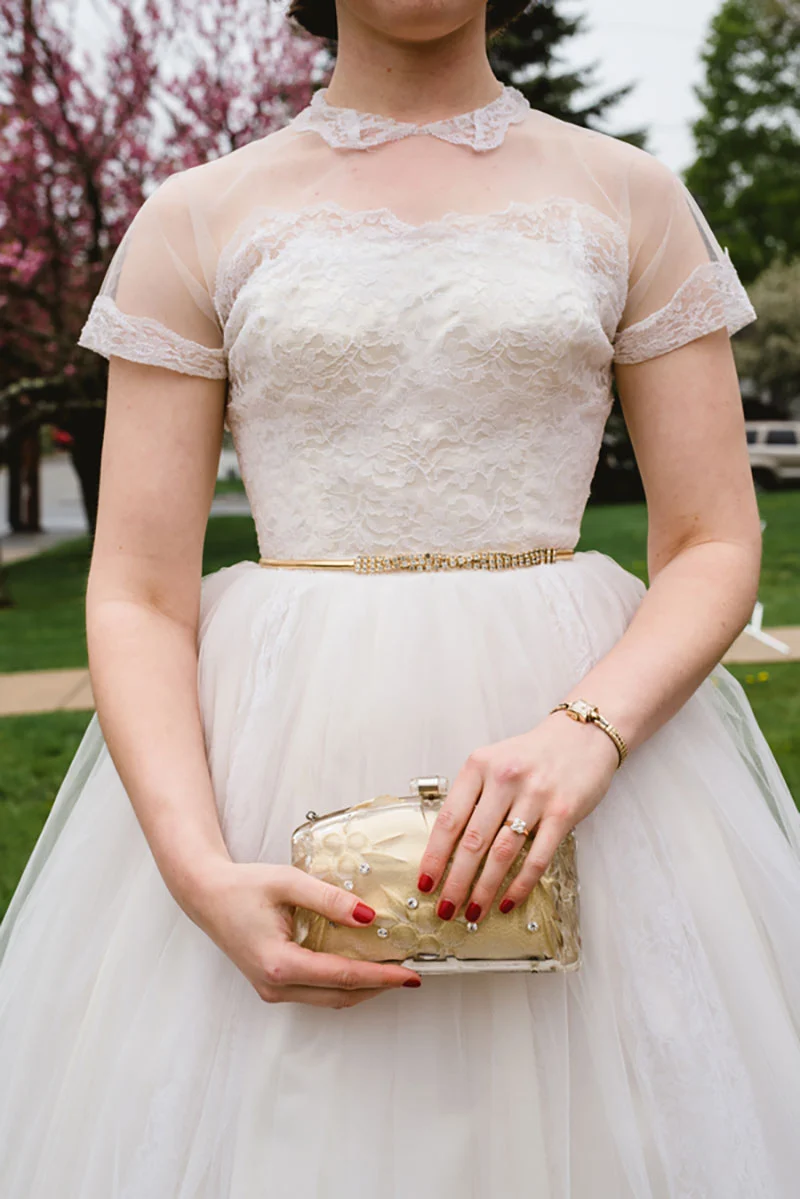
A key point of contention is David’s Bridal’s own previous assessment of its market challenges. In one of its bankruptcy filings, the company partly attributed its decline to an increasing number of brides opting for less traditional wedding attire, including thrifted wedding dresses—a preference long championed by platforms like Offbeat Wed. A more intuitive response to this market shift might have been to adapt its product offerings, embrace customization, or cultivate a stronger relationship with the burgeoning second-hand market. Instead, the company chose to develop an AI algorithm designed to match these very nontraditional customers with the independent vendors who had always served them, and then monetize this connection through advertising.
This approach reveals a fundamental misalignment. A customer buying a dress from an independent boutique engages with a business whose core model is dedicated to fitting them in a wedding dress, offering personalized service, and fostering a relationship based on trust and expertise. In contrast, a boutique owner paying a marketing fee to David’s Bridal is funding a company whose stated business model is now to be a "tech-powered multihyphenate." One model inherently supports the human-centric, highly personal nature of the wedding industry; the other is an abstract, data-driven revenue generation mechanism with a questionable track record.
The "AI-pivot playbook" relies heavily on consumer and vendor unawareness or apathy. It banks on couples seeing a familiar logo and assuming continuity and trustworthiness. It anticipates that vendors will be swayed by "techy AI slop talk" about "first-party data no competitor can match" and believe that "this time will be different." It presumes the wedding industry will simply absorb another middleman, particularly one strapped with a chatbot, because inertia favors established platforms.
However, genuine trust and robust market relationships cannot be artificially generated or rebranded. Slapping "AI" onto a struggling retail brand does not erase a creditor list of unpaid vendors and magically transform it into a trusted marketplace. The wedding industry, at its core, is built on real human relationships, intricate taste, bespoke craftsmanship, and the very specific, intimate work of fitting clothing onto a human body. These elements are difficult to automate, and certainly cannot be ethically extracted by a company that has twice demonstrated its willingness to stiff its partners when financial pressures mount.
The wedding industry has witnessed similar narratives unfold. Independent vendors formed the backbone of the wedding economy long before the rise of digital marketplaces, before David’s Bridal’s first bankruptcy, and before its second. They will undoubtedly endure beyond any potential third. The critical question that remains is whether these independent wedding professionals will continue to entrust their marketing budgets and their livelihoods to companies that have repeatedly shown how little they value the contributions of small businesses. The success of David’s Bridal’s AI pivot hinges not just on technological prowess, but on its ability to rebuild trust—a commodity far more valuable and harder to acquire than any algorithm.