


The Troubled Trajectory of a Bridal Giant
David’s Bridal, established in 1950, grew to become the largest bridal retailer in the United States, synonymous for decades with accessible wedding attire. However, the company has faced profound challenges in recent years, leading to two Chapter 11 bankruptcy filings within a span of five years.
The first bankruptcy occurred in November 2018. At the time, David’s Bridal cited an unsustainable debt load exceeding $400 million, coupled with intense competition from online retailers and a shift in consumer preferences towards less formal and more budget-conscious wedding attire. This period saw the company shuttering numerous stores and attempting to restructure its finances while continuing operations. Despite emerging from bankruptcy in January 2019 with a significantly reduced debt burden, the underlying market pressures persisted.
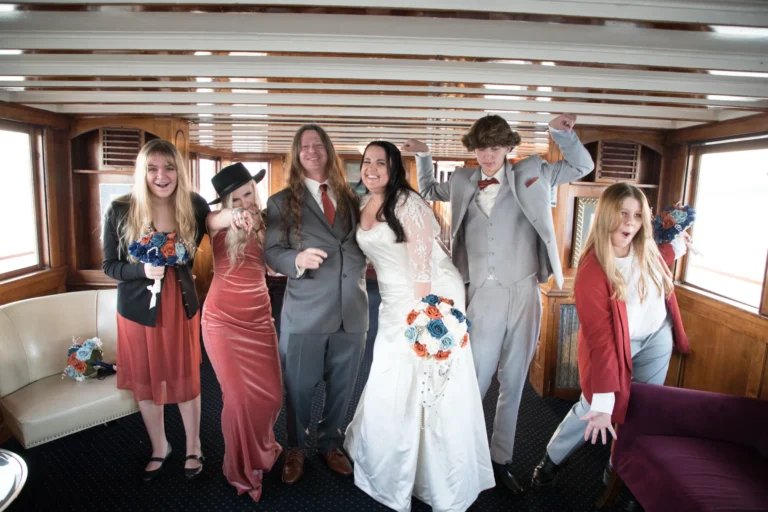
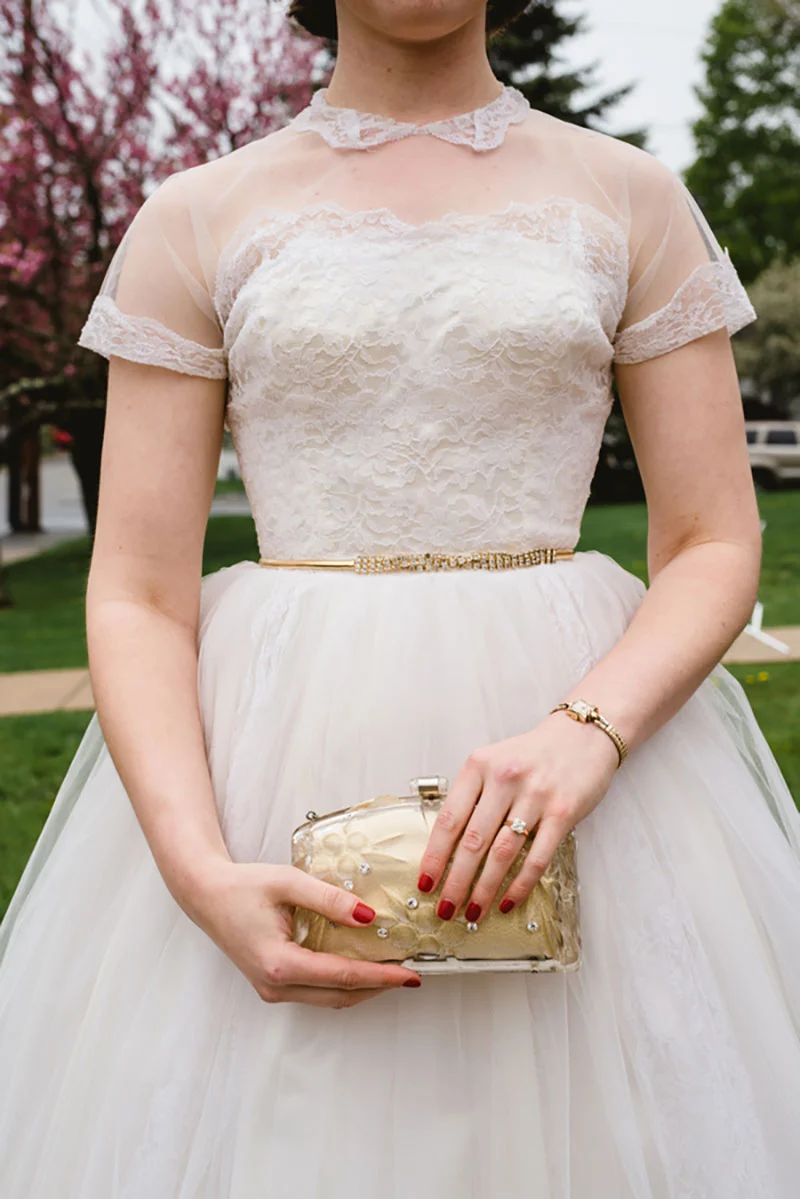
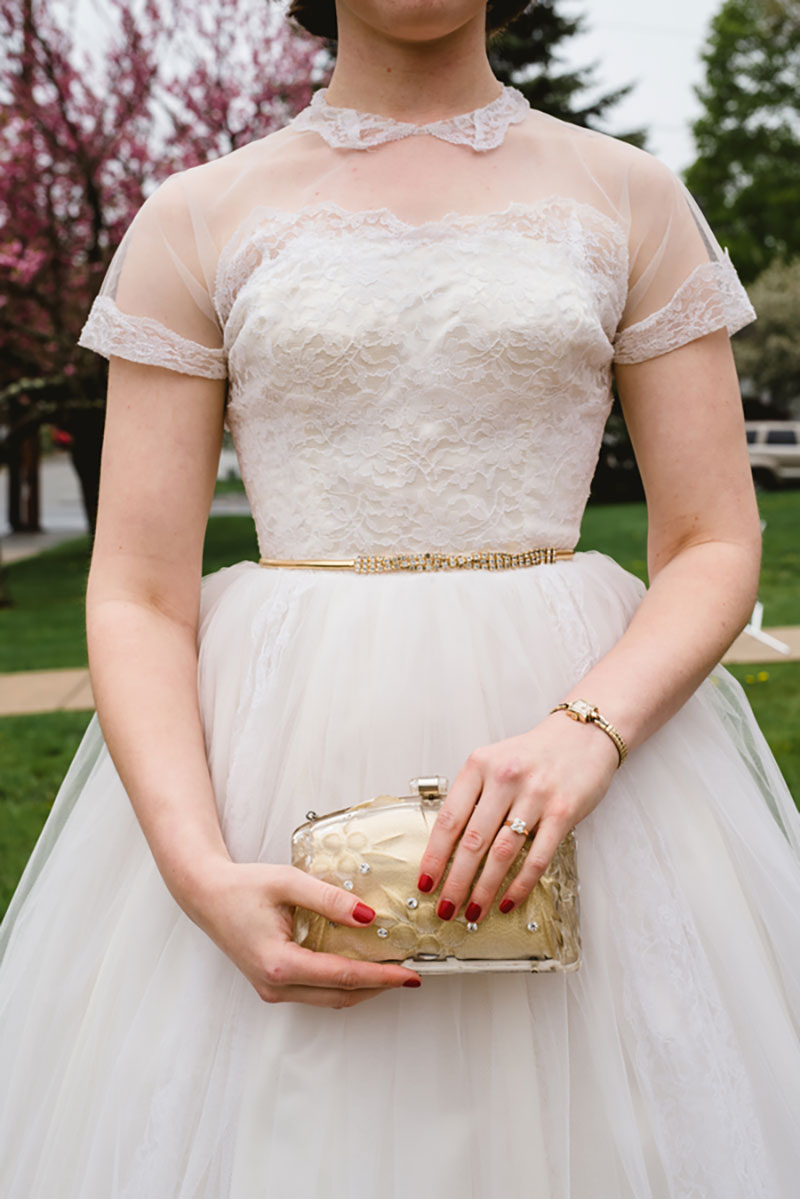
The COVID-19 pandemic delivered another severe blow to the wedding industry, exacerbating David’s Bridal’s struggles. Lockdowns, event cancellations, and reduced guest lists led to a dramatic decline in demand for wedding gowns and accessories. Even as the industry recovered, the competitive landscape had fundamentally changed. Brides were increasingly opting for independent boutiques, online customizers, or even second-hand and vintage dresses, a trend the company itself acknowledged in bankruptcy filings as contributing to its woes. The picture accompanying this article, showing a bride in a $50 thrifted dress, perfectly illustrates the evolving consumer mindset that legacy retailers like David’s Bridal struggled to adapt to.
By April 2023, David’s Bridal filed for Chapter 11 bankruptcy for the second time. The filing listed assets between $100 million and $500 million, against liabilities in the same range. The company announced plans to sell its assets and wind down its operations, leading to widespread store closures and significant layoffs. This second filing plunged thousands of employees and numerous independent contractors into uncertainty.
The Aftermath of Bankruptcy: Unpaid Creditors and Voided Gift Cards
The human and financial cost of David’s Bridal’s bankruptcies extended far beyond its corporate balance sheet. In December 2023, reports from outlets like the Philadelphia Inquirer highlighted the devastating impact on independent contractors and small businesses that had provided services to David’s Bridal. These included photographers, seamstresses, stylists, and other vendors who performed work for the retailer but were left with unpaid invoices.
Following the second bankruptcy filing, the company’s assets were eventually sold to CION Investment Group in July 2023. However, the sale proceeds were insufficient to cover all outstanding debts. In September 2023, the United States Bankruptcy Court for the District of New Jersey dismissed the case, a procedural outcome that effectively meant there were no remaining assets to pay unsecured creditors. The grim reality was encapsulated in an email from David’s Bridal’s co-counsel to the Inquirer: "given the dismissal of the case, unpaid creditors will remain unpaid." This statement underscored the significant financial burden shifted onto small, independent businesses, many of whom could ill afford such losses.
Customers also bore the brunt of the financial collapse. Numerous reports surfaced on platforms like WeddingWire and Reddit forums throughout the summer of 2023, detailing instances of gift cards and store credits being voided without prior warning. Despite earlier assurances from the company that these would be honored post-sale, these promises did not materialize, leaving many brides-to-be out of pocket and without the means to purchase their dresses or accessories. This erosion of trust among both vendors and consumers would prove to be a significant hurdle for any future iteration of the brand.
The "Aisle to Algorithm" Pivot: David’s Bridal Reimagined as an AI Powerhouse
Against this backdrop of financial distress and damaged reputation, David’s Bridal announced its radical "Aisle to Algorithm" strategy in March 2025. CEO Kelly Cook articulated the company’s transformation from a "legacy retailer" into a "high-velocity media, content, entertainment, and technology engine," describing it as a "tech-powered multihyphenate." This pivot is characterized as an "asset-light" model, a term commonly used in retail to describe shedding capital-intensive assets like owned inventory and expensive store leases. Cook explicitly stated to CNBC that this strategic shift aims to insulate the company from the "existential risks" that triggered its previous bankruptcies.
The core of this new strategy revolves around developing and leveraging digital platforms and data. In December 2024, David’s Bridal acquired Love Stories TV, a wedding video platform, laying the groundwork for its new media ecosystem. This was followed by the launch of the Pearl Media Network, a retail media network designed to sell advertising space to wedding vendors, leveraging David’s Bridal’s "first-party customer data." The culmination of this transformation came in August 2025 with the introduction of Pearl Planner, an AI-powered tool intended to match engaged couples with suitable vendors. While couples can use Pearl Planner free of charge, vendors are required to pay a fee to be featured and matched through the platform.
This "asset-light" approach, while touted as a shield from traditional retail risks, effectively transfers much of the operational and financial risk onto the very small businesses and independent vendors who supply the services and products. Instead of owning inventory or managing physical stores, David’s Bridal aims to profit by facilitating connections and selling advertising, essentially becoming a digital middleman in the wedding ecosystem.
The Broader Context: A Trend of "AI Pivots" and "AI Washing"
David’s Bridal’s transformation is not an isolated incident but rather part of a discernible trend among struggling consumer brands attempting to rebrand as technology companies, often with "AI" prominently featured in their new identity. Just weeks prior to David’s Bridal’s announcement, Allbirds, the sustainable shoe company, announced its rebranding as NewBird AI, pivoting into "AI compute infrastructure" after its stock plummeted from a $4 billion valuation in 2021 to a fraction of that. Similarly, companies across various sectors, from fashion to food, have begun integrating "AI" into their business models and public messaging, often in ways that seem tangential to their core offerings.
This phenomenon has been dubbed "AI washing" by some industry observers, where companies superficially adopt AI terminology to boost investor confidence or signal modernity, rather than genuinely integrating transformative AI capabilities. For David’s Bridal, the shift into media and matchmaking, while leveraging data and algorithms, represents a move from a product-centric model to a platform-centric one, hoping to capitalize on the booming interest and investment in AI.
The global wedding industry, estimated to be a multi-billion dollar market annually, presents a tempting target for such platform models. In the U.S. alone, the average cost of a wedding can range from $20,000 to $30,000, creating a vast ecosystem of vendors and services. However, this market is already dominated by established players in the wedding tech space.
The Knot and the Wedding-Tech Extraction Model
The "Aisle to Algorithm" strategy places David’s Bridal directly in competition with long-standing wedding marketplaces like The Knot Worldwide (which also owns WeddingWire). The Knot has spent over a decade perfecting a similar "vendor extraction" model, where it connects couples with vendors and monetizes these connections through advertising, premium listings, and subscription fees paid by vendors.
However, The Knot’s model has not been without its criticisms. Independent wedding vendors frequently express frustration over the high costs of advertising, the perceived lack of return on investment, and the increasingly crowded marketplace that makes it difficult to stand out. Many vendors report feeling compelled to pay for listings on these platforms simply to maintain visibility, even if the leads generated are not high quality. Furthermore, The Knot has faced antitrust scrutiny and allegations of anti-competitive practices, including claims of stifling competition and disadvantaging smaller vendors. In 2021, the company paid $4.8 million to settle a class-action lawsuit alleging that it charged unfair advertising fees.
The market David’s Bridal is entering is therefore not an untouched frontier but a highly competitive and often contentious space. Critics argue that a twice-bankrupt retailer, known for stiffing its creditors, is ill-positioned to suddenly become a "trusted data steward" and "matchmaker" for the independent wedding economy. Instead, this move is viewed by many as a desperate gamble: betting that a new, AI-flavored iteration of vendor extraction will generate enough profit margins to stave off a third bankruptcy.
Implications and Future Outlook
The implications of David’s Bridal’s pivot are multifaceted, impacting consumers, independent vendors, and the broader wedding industry.
For independent vendors, the "asset-light" model translates to a relocation of risk. Instead of David’s Bridal bearing the financial burden of inventory and physical infrastructure, vendors are now expected to pay for access to customer data and matchmaking services, with no guarantee of equitable returns. Given the company’s track record of defaulting on payments to independent contractors, there is significant skepticism within the vendor community about David’s Bridal’s reliability as a partner. Many fear that this new model will simply create another layer of financial obligation for small businesses, without offering genuine value or stability. The wedding industry is built on personal relationships, trust, and the unique craftsmanship of artisans and service providers. Introducing a technology-driven middleman with a questionable past could further strain these delicate relationships.
For consumers, particularly engaged couples, the immediate impact might appear benign. Pearl Planner offers a free tool to simplify vendor selection. However, the underlying dynamics could lead to a less diverse and potentially more expensive vendor landscape if David’s Bridal’s platform gains significant traction. If vendors feel pressured to pay for listings, these costs may ultimately be passed on to the couples. Furthermore, the erosion of trust stemming from voided gift cards and unfulfilled promises from previous bankruptcies means that many consumers may approach any new David’s Bridal offering with caution. The company’s attempt to leverage its familiar brand logo to project "continuity and trustworthiness" might be undermined by its recent history.
The broader wedding industry faces the prospect of increased market consolidation and a further shift towards platform-based monetization. While innovation is essential, the concern is that these "AI pivots" are less about genuine technological advancement and more about finding new ways to extract value from a fragmented market, often at the expense of its most vulnerable participants. The success of this model hinges on the ability of David’s Bridal to overcome its damaged reputation and convince vendors that it can deliver meaningful value where others have struggled.
Ultimately, the wedding industry has a long memory. Independent vendors, who form the backbone of this economy, were present long before David’s Bridal’s first bankruptcy, endured its second, and are likely to persist beyond any future corporate upheavals. The critical question for these vendors is whether they will continue to engage with companies that have historically demonstrated a lack of commitment to their financial well-being. The "AI pivot" of David’s Bridal represents a bold, yet controversial, attempt to redefine its existence, but its success will ultimately depend not just on technological prowess, but on its ability to rebuild trust and provide tangible, equitable value to the community it seeks to serve.