

As couples embark on the journey of marriage, the traditional honeymoon landscape is undergoing a significant transformation. Modern newlyweds increasingly seek not just relaxation, but profound, once-in-a-lifetime experiences that forge indelible memories, echoing long after the confetti settles. This shift towards experiential travel is particularly pronounced in the honeymoon market, where aspirations for adventure, cultural immersion, and awe-inspiring natural wonders are now taking precedence over conventional resort stays. A comprehensive analysis, leveraging recent travel industry data, illuminates the global appetite for these extraordinary post-nuptial journeys, providing an essential guide for couples planning their ultimate adventure.
Methodology and Data Integrity
The foundation of this analysis rests upon a rigorous methodology designed to offer actionable and reliable insights. The initial ranking of the world’s most-wanted bucket list experiences was derived from a travel report published by Duel.com in October 2026. This report meticulously cataloged global monthly search demand for various travel experiences, providing a robust indicator of consumer interest and aspirational travel trends. However, Duel.com’s role concluded with this ranking. All subsequent financial data, operational fees, and regulatory stipulations presented herein have been independently verified against official park authorities, governmental tourism bodies, and direct operator sources. This verification process was diligently completed in October 2026, ensuring the most current and accurate information available.
For flight cost estimations, data was meticulously collected on October 15, 2026, using Google Flights. These figures represent the lowest round-trip economy fares for two adults departing from the New York metropolitan area. The selection of New York as a departure hub provides a relevant benchmark for North American travelers, given its status as a major international gateway with extensive flight connections. Hotel pricing reflects typical nightly rates for four-star accommodations, averaged from the first page of Google Hotels results for dates coinciding with each destination’s optimal travel season. It is crucial for prospective travelers to understand that all quoted prices are dynamic and subject to daily fluctuations, serving as a realistic starting point rather than a fixed quote. This detailed approach ensures that couples are equipped with a transparent and pragmatic financial outlook for their dream honeymoon.
The Ascendance of Experiential Honeymoons
The demand for "bucket list" honeymoons signifies a broader evolution in global travel preferences. No longer content with merely escaping, couples are actively seeking to collect unique stories and challenge themselves, transforming their honeymoon into a narrative of shared discovery. This trend is fueled by several factors, including the pervasive influence of social media, which showcases extraordinary travel experiences and inspires others to pursue similar adventures. Furthermore, younger generations, particularly Millennials and Gen Z, consistently express a preference for experiences over material possessions, extending this philosophy to their post-wedding celebrations. The global travel industry has observed a sustained uptick in bookings for adventure tourism, cultural tours, and eco-travel packages, with specialized honeymoon planners noting a significant increase in requests for itineraries centered around iconic natural wonders or historical sites. Industry analysts suggest that the pent-up demand for travel following global disruptions has further accelerated this shift, with couples prioritizing significant, long-planned trips over more impromptu getaways.
Chronology of Planning: Key Milestones for Iconic Journeys
Embarking on a bucket list honeymoon necessitates a strategic planning timeline, as many of these coveted experiences are subject to limited availability, seasonal constraints, or strict regulatory frameworks. Understanding this chronology is paramount to securing a seamless and stress-free trip.
Early Planning (9-18 months in advance):
For destinations like Machu Picchu, the Galapagos Islands, and Mount Kilimanjaro, early booking is not merely recommended but often essential. Machu Picchu enforces a strict daily visitor cap of 5,600 people during high season, with tickets tied to specific entry times and routes. Securing these tickets the moment travel dates are firm is critical to avoid disappointment. Similarly, Galapagos Islands cruises, typically small-boat expeditions, have limited capacity, and prime cabins or specific itineraries can sell out over a year in advance. Mount Kilimanjaro treks, which can span up to nine days, require booking with reputable operators well in advance, as permits and experienced guides are finite resources. Many 2026 Kilimanjaro departures were already fully booked by October of the preceding year, underscoring the competitive nature of these high-demand adventures.
Mid-Range Planning (6-9 months in advance):
This period is crucial for securing international flights at optimal prices and navigating visa requirements. For destinations such as the Great Wall of China, the Taj Mahal, and the Pyramids of Giza, international travel often necessitates specific visa applications that can take weeks or months to process. China’s entry requirements, for instance, are tied to passport details, requiring careful attention to application procedures. India also has specific visa categories for tourists that need advance planning. Flight prices, particularly for long-haul routes to Australia, New Zealand, and South America, tend to be most favorable when booked several months out.

Closer to Departure (1-3 months in advance):
While major bookings should be complete, this phase focuses on logistical fine-tuning and preparing for on-the-ground realities. For the Great Barrier Reef, understanding "stinger season" (typically November to May) and being prepared to wear protective suits is important. In Milford Sound, checking vehicle fuel levels before departing Te Anau is a practical necessity, as services are non-existent en route. In Cappadocia, hot air balloon flights are entirely weather-dependent, and travelers are advised to book their ride for their first possible morning to allow for rescheduling in case of cancellation due due to wind conditions. For the Galapagos Islands, travelers must remember that the park fee ($440 for two) is payable in cash, in US dollars, upon arrival. Even for domestic trips like the Grand Canyon, checking for any trail closures, especially after events like the 2026 Dragon Bravo fire, is prudent for hikers.
The World’s Most Sought-After Honeymoon Experiences: A Detailed Look
Oceanic Wonders and Fjords: Australia and New Zealand
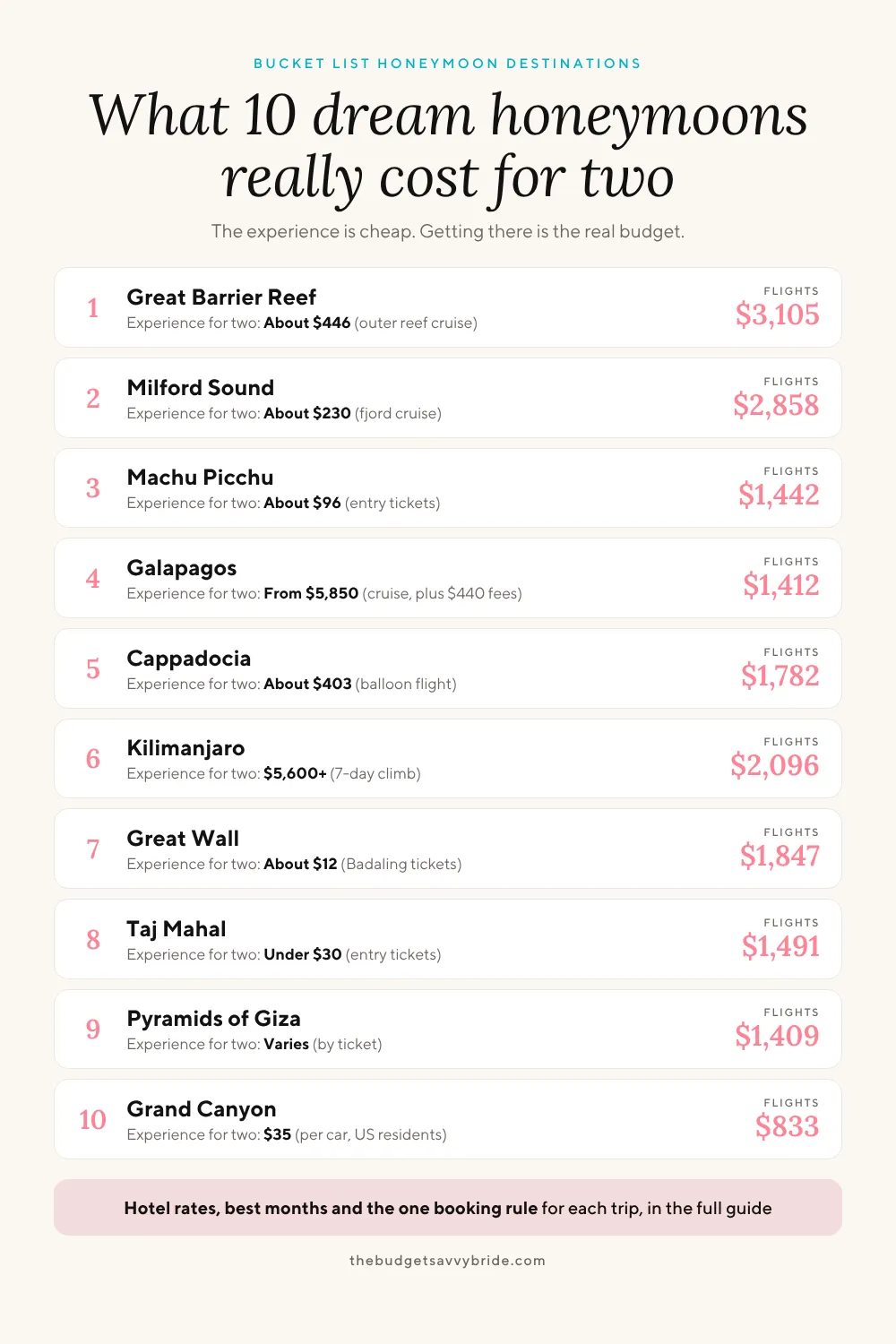
- 1. Great Barrier Reef, Australia: Topping the list for its unparalleled marine biodiversity, the Great Barrier Reef remains a perennial favorite. Based in Cairns, couples can embark on outer reef cruises (approximately $446 for two), combining snorkeling or diving with explorations of the Daintree Rainforest and pristine beaches. The reef, a UNESCO World Heritage site, is a testament to natural grandeur, but also faces ecological challenges, making responsible tourism paramount. Conservation efforts are ongoing, and visitors are educated on sustainable practices. Flights from New York start around $3,105, with hotels ranging from $110-$185 per night. Optimal visiting months are May to October.
- 2. Milford Sound, New Zealand: Often described as the "eighth wonder of the world," Milford Sound captivates with its sheer cliffs, cascading waterfalls, and serene fjord waters. A cruise (around $230 for two) offers an intimate and romantic encounter with this dramatic landscape. The fiord’s unique ecosystem, part of the Te Wahipounamu UNESCO World Heritage Area, supports diverse wildlife. With over a million annual visitors, the New Zealand Department of Conservation actively manages tourism impact, advocating for early morning visits to mitigate crowds. Adding New Zealand to an Australian itinerary offers an efficient way to experience two distinct bucket list adventures on one long-haul flight. Flights from New York average $2,858, with hotels in the region typically $210-$470. Warmer months are ideal for visiting.
Ancient Civilizations and Natural Marvels: Peru, Ecuador, India, China, and Egypt
- 3. Machu Picchu, Peru: This ancient Incan citadel, perched high in the Andes, blends adventure with profound historical resonance. Approximately 1.6 million people visited Machu Picchu in 2025, yet the experience retains an ethereal quality, particularly as morning clouds lift to reveal the majestic ruins. A Machu Picchu honeymoon typically involves an early bus ride up the mountain from Aguas Calientes or a multi-day trek. Entry tickets, costing around $96 for two, are strictly controlled to preserve the site’s integrity. The Peruvian government’s ongoing efforts to balance tourism with conservation are reflected in the daily visitor caps and timed entry routes. Flights from New York are around $1,442, with hotels from $115-$190. May to October is the best time to visit.
- 4. Galapagos Islands, Ecuador: For couples seeking an immersive wildlife experience, the Galapagos Islands offer an unparalleled journey. In 2025, 290,404 visitors witnessed the unique biodiversity that inspired Darwin’s theory of evolution. A small-boat cruise serves as a floating hotel, allowing intimate encounters with giant tortoises, sea lions, and endemic bird species. The Ecuadorian government maintains stringent conservation regulations, and visitor impact is closely monitored. The mandatory park fee of $440 for two (cash only) underscores the commitment to protecting this fragile ecosystem. Flights from New York are around $1,412, with cruise costs (including accommodation) starting from $5,850. The Galapagos are a year-round destination.
- 7. Great Wall of China: A symbol of human endeavor and resilience, the Great Wall offers a historically rich experience without a prohibitive entry cost. The Badaling section, a popular and well-preserved segment, costs approximately $12 for two during peak times. The sheer scale and historical significance of the Wall make it an unforgettable stop on a broader tour of China. The Beijing Municipal Government manages access, requiring tickets to be booked under visitors’ real names with passport details, highlighting the formal nature of entry. Flights from New York are around $1,847, and hotels range from $75-$170. September to November offers the best weather.
- 8. Taj Mahal, India: Conceived as an eternal monument to love, the Taj Mahal stands as an iconic honeymoon destination. Attracting roughly 6.9 million visitors in India’s 2024-25 fiscal year, its exquisite Mughal architecture and poignant history resonate deeply with couples. Entry fees are under $30 for two, making it one of the most accessible bucket list experiences. Planning is crucial, as the Taj Mahal is closed on Fridays. The Indian government promotes responsible tourism to manage the immense popularity of the site. Flights from New York are around $1,491, with hotels from $45-$130. October to March is the ideal period.
- 9. Pyramids of Giza, Egypt: The last surviving wonder of the ancient world, the Pyramids of Giza offer a profound connection to antiquity. Located a short distance from central Cairo, they are often paired with a visit to the Grand Egyptian Museum, which houses an unparalleled collection of artifacts. The experience cost varies by ticket type, but access to the plateau is generally affordable. The Egyptian Ministry of Tourism actively works to enhance the visitor experience, managing crowds and preserving the sites. Going first thing in the morning is highly recommended to avoid both the intense heat and the peak tourist influx. Flights from New York average $1,409, with hotels from $45-$120. October to April offers the most comfortable climate.
Adventure and Awe: Turkey, Tanzania, and the USA
- 5. Cappadocia Hot Air Balloons, Turkey: Cappadocia’s unique "fairy chimney" landscapes, formed by volcanic activity and erosion, provide a stunning backdrop for hot air balloon flights. Approximately 754,000 people experienced this iconic sunrise spectacle in 2025. The cost for a balloon ride is about $403 for two, offering an unforgettable aerial perspective of the region’s geological and cultural heritage, including ancient cave dwellings. The Turkish civil aviation authority regulates these flights, with daily decisions on operations based on wind conditions. Flights from New York are around $1,782, with unique cave hotels ranging from $65-$185. Spring and autumn are the best seasons.
- 6. Mount Kilimanjaro, Tanzania: The "Roof of Africa" presents the ultimate physical and mental challenge for adventurous couples. Kilimanjaro, Africa’s tallest mountain, offers breathtaking views that are truly earned. A climb typically costs between $5,600 and $5,900 for two, covering guides, porters, and permits, with two nights of accommodation included before and after the trek. The Tanzanian National Parks Authority meticulously manages the mountain, ensuring safety and environmental protection. Prospective climbers must heed travel advisories, such as the US State Department’s Level 3 "Reconsider Travel" rating for Tanzania, and secure comprehensive travel insurance covering high-altitude trekking. Flights from New York average $2,096. January to March and June to October are optimal climbing windows, spanning about nine days for the full experience.
- 10. Grand Canyon, USA: The only domestic entry on this list, the Grand Canyon provides a dramatic, no-passport-required bucket list experience. The park welcomed 4,419,494 visitors in 2025, highlighting its enduring appeal. Entry is $35 per car for US residents, making it exceptionally accessible. The National Park Service continually monitors and manages the vast landscape, including responding to natural events like the Dragon Bravo fire that impacted the North Rim in 2026. Flights from New York to Phoenix (a common gateway) are the most affordable at $833, with hotels ranging from $150-$275. Spring and fall offer the best hiking weather.
Economic Implications and Industry Responses
The surge in demand for bucket list honeymoons carries significant economic implications for destination countries and the global travel industry. While the individual experience costs for sites like the Great Wall ($12) or the Taj Mahal (under $30) are minimal, the real expenditure lies in flights and accommodation. For instance, flights for two to Cairns for the Great Barrier Reef ($3,105) are approximately seven times the cost of the reef cruise itself ($446). This cost structure means that the bulk of tourism revenue flows into airlines, hospitality sectors, and ground transportation, creating substantial economic benefits for local communities through job creation and infrastructure development.
Tourism boards in these popular destinations are actively responding to this trend, crafting specialized "honeymoon adventure" packages and leveraging digital marketing to attract discerning couples. Travel agencies are increasingly specializing in experiential and luxury honeymoons, offering bespoke itineraries that combine adventure with comfort. Airlines, in turn, are adapting by enhancing routes to these iconic locations and offering premium services tailored to honeymooners. However, the increased visitor numbers also present challenges related to sustainable tourism, prompting many governments, such as New Zealand’s Department of Conservation and the Galapagos Government Council, to implement stricter visitor management and conservation policies to protect fragile ecosystems and cultural heritage sites.

Strategic Financial Planning for Aspirational Couples
Achieving a bucket list honeymoon does not necessarily require an unlimited budget but rather a strategic financial plan focused on the largest cost components: flights and hotels.
Budget Segmentation:
- Easy Add-ons: The Great Wall, Taj Mahal, Pyramids of Giza, and Grand Canyon are ideal for integration into a broader trip, such as a multi-country tour or a regional road trip. Their low on-the-ground costs make them accessible iconic stops.
- Build a Week Around It: Machu Picchu, Cappadocia, Milford Sound, and the Great Barrier Reef can each serve as the anchor for a week-long honeymoon, allowing for deeper exploration of the surrounding regions (e.g., Cusco and the Sacred Valley, Istanbul and a cave hotel, or a dual Australia-New Zealand adventure).
- Once-in-a-Lifetime Splurge: The Galapagos Islands and Mount Kilimanjaro are typically comprehensive, week-long to nine-day adventures that constitute the entirety of the honeymoon, demanding a more significant financial commitment.
Leveraging Financial Tools:
- Travel Rewards Programs: Wedding planning involves substantial expenditures, which can be strategically channeled through travel rewards credit cards to accumulate significant points or miles. These can then be redeemed for flights or hotel stays, effectively offsetting a considerable portion of the overall cost. However, the golden rule remains: always pay off balances in full each month to avoid interest charges that negate any rewards.
- Honeymoon Funds: Modern wedding registries have evolved to include honeymoon funds, allowing guests to contribute directly to experiences like a reef cruise, a balloon ride, or even a portion of flights and accommodation, instead of traditional household gifts. This increasingly popular option empowers couples to fund their dream trip without incurring debt.
Conclusion: Your Dream Honeymoon Within Reach
The allure of a bucket list honeymoon is no longer an exclusive fantasy. The analysis presented demonstrates that with meticulous planning and a clear understanding of the true cost components—where flights and accommodation often overshadow the experience itself—these extraordinary journeys are well within the realm of possibility for many couples. The shift towards experiential travel underscores a desire for deeper connections, shared adventures, and stories that will resonate for decades.
By focusing on holistic budgeting, leveraging financial strategies like travel rewards and honeymoon funds, and adhering to crucial planning timelines, couples can transform their post-nuptial aspirations into tangible realities. Whether it’s snorkeling the vibrant Great Barrier Reef, witnessing the sunrise over Cappadocia’s fairy chimneys, or standing at the ancient citadel of Machu Picchu, the world’s most desired destinations await. The key lies in choosing the experience that ignites mutual passion, then diligently planning the entire journey, not just the headline attraction.