
The decision to repurpose an heirloom diamond, steeped in family history and personal significance, often begins with a singular question: what will it actually cost? This query, frequently met with vague estimations, obscures a process that, when understood, reveals itself as an investment in legacy rather than merely a transaction for a new piece of jewelry. The fundamental reframe for anyone considering an heirloom reset is this: the primary asset, the diamond, is already owned. The endeavor, therefore, shifts from acquiring a new ring to commissioning a new setting, transforming a cherished stone into a contemporary expression of enduring love and familial connection. This comprehensive guide delves into the precise cost ranges, the variables that influence pricing, crucial preparatory steps, and candid assessments of when resetting might not be the optimal choice, all within a professional journalistic framework.
Understanding the Financial Landscape of Heirloom Diamond Resets
Contrary to popular belief, obtaining a clear estimate for an heirloom diamond reset is achievable. Industry averages, supported by data from sources such as The Knot, indicate that most professional resets fall within a range of $500 to $2,500. This spectrum encompasses various levels of service and design complexity. At the more accessible end, a straightforward stone transfer into a pre-fabricated, ready-made setting can cost as little as $80 to $250, with an average around $300, as reported by jewelers like Scott’s Custom Jewelers. Some designers, prioritizing transparency and streamlined processes, offer flat fees; Melanie Casey, for instance, charges a standard $500 for resetting a client’s stone into any of her existing designs.
However, the cost trajectory significantly ascends for fully custom work. When a jeweler undertakes the creation of a unique, one-of-a-kind setting meticulously designed around a specific heirloom stone, projects typically commence at $5,500 and can escalate substantially based on the intricacy and materials involved. Fine jewelry studios like Kinn, renowned for their bespoke Repurpose projects, cite starting prices around $2,500. This initial figure usually covers a more direct design approach with limited customization and a relatively simple setting. Experience suggests, however, that many clients ultimately invest more, as the collaborative design process often unveils opportunities for enhanced personalization, such as increasing gold weight, incorporating additional accent stones, refining proportions, or developing an entirely bespoke concept. There is, effectively, no upper limit to custom work, as the final price is directly correlated with the client’s design ambitions, the volume of precious metal, the inclusion of supplementary gems, and the overall level of customization demanded.
Deconstructing the Cost: Beyond the Metal
The price quoted for a diamond reset encompasses considerably more than the raw material cost of the new metal. It represents a comprehensive service that includes:
- Expert Stone Removal: Safely extracting an irreplaceable diamond from an often decades-old setting, which can be delicate and technically challenging. This requires specialized tools and a profound understanding of stone integrity.
- The New Setting: This could be the cost of a pre-manufactured setting selected from a jeweler’s catalog or the comprehensive design, prototyping (CAD/wax modeling), and casting of a custom piece, each with varying cost implications.
- Precious Metal by Weight: The market value of the chosen metal—whether it be gold (14k, 18k, 22k in various hues like yellow, white, or rose) or platinum—is a direct cost component. Platinum, known for its density and hypoallergenic properties, typically commands a higher price per gram than gold.
- Skilled Stone Setting: The meticulous labor involved in securely mounting the heirloom diamond into its new home. This process demands exceptional precision, a steady hand, and years of experience to ensure both aesthetic appeal and the stone’s long-term security.
- Jeweler’s Guarantee and Expertise: An intangible yet invaluable component, this covers the jeweler’s professional liability, insurance coverage for the stone while in their care, and the assurance that the precious diamond will survive the transformation intact. This critical element, though invisible on an itemized quote, often represents the greatest value, reflecting the trust placed in the artisan’s skill and integrity.
Discrepancies in quotes from different jewelers for the same stone are common, reflecting varying approaches to the project. One jeweler might propose a simple swap into a catalog setting, another a modification of a semi-custom design, and a third a completely bespoke creation from an initial sketch. Each approach constitutes a distinct project with its own cost structure, underscoring the importance of understanding the specific services being priced.
Key Determinants of Resetting Costs
Four primary factors dictate the final cost of an heirloom diamond reset, acting as levers that jewelers adjust based on client preferences and design specifications. Industry experts, including the team at Kinn, consistently highlight these elements:
- Metal Type and Weight: The choice between various gold karats (14k, 18k) and colors (yellow, white, rose) or platinum significantly impacts the price. Platinum, denser and more durable, is typically more expensive per gram than gold. The overall weight of the metal required for the setting, dictated by its thickness, width, and structural integrity, also directly affects cost. A robust, heavier setting, designed for daily wear and enhanced durability, will naturally command a higher price than a delicate, minimalist one. For instance, a substantial 18k gold solitaire setting might weigh 3-5 grams, while an intricate platinum halo setting could be 5-8 grams or more, with current market prices for these metals fluctuating.
- Design Complexity: A simple solitaire design requires less labor and material than an intricate halo setting, a pavé band, or a design incorporating filigree or elaborate engraving. Custom designs involving unique shapes, multiple stone accents, or complex structural elements demand extensive design time (CAD modeling, wax prototyping), specialized casting techniques, and more intricate hand-finishing, all contributing to increased costs. A CAD rendering alone can add several hundred dollars to a project, reflecting the specialized software and designer’s time.
- Inclusion of Additional Stones: While the primary heirloom diamond is provided, many clients opt to enhance their new setting with accent stones, such as smaller diamonds, sapphires, or other gemstones. The type, quality, size, and quantity of these additional stones will add to the overall expense. For instance, a halo of small, high-quality diamonds can significantly increase the total cost due to both material and the labor-intensive process of micro-pavé setting. The cost of these accent stones can range from a few dollars for very small melee diamonds to hundreds or thousands for larger, high-quality side stones.
- Labor and Craftsmanship: The skill level and reputation of the jeweler play a crucial role. Highly experienced jewelers specializing in custom and heirloom work often charge premium rates for their expertise, meticulous attention to detail, and proven track record of handling irreplaceable stones. The process, especially for bespoke pieces, involves numerous stages, including careful unmounting, inspection, retesting against appraisals, precise measurement, CAD development, wax printing and testing, casting, setting, and final polishing. Each step is labor-intensive and requires specialized skills, with hourly rates for master jewelers ranging from $75 to $200 or more, depending on location and expertise.
The Indispensable Pre-Reset Stone Inspection
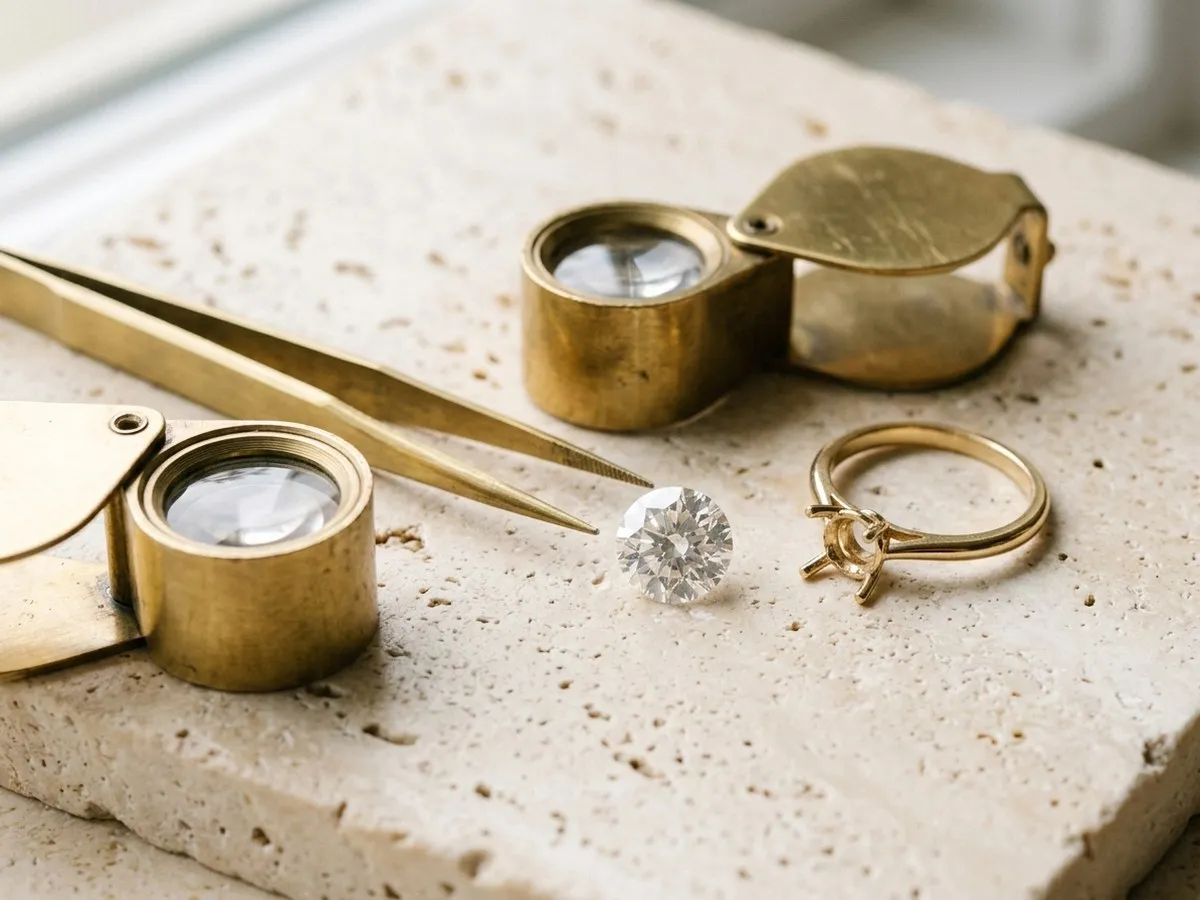
Before any design conversations commence or commitments are made, a thorough inspection of the heirloom stone is paramount. A diamond that has resided in its original setting for decades may conceal existing flaws, such as minute chips along its girdle or internal fractures, which only become apparent once the stone is unmounted and examined under magnification. As noted by WeddingWire’s resetting guide, failing to identify these issues beforehand can transform a projected $600 project into a $2,000 endeavor if repairs or unexpected complications arise post-design.
A reputable jeweler will meticulously examine the stone under high magnification, assessing its structural integrity and determining its capacity to withstand the removal and resetting processes. They will identify any pre-existing damage or vulnerabilities and advise on potential risks or necessary pre-emptive work, such as minor re-polishing of the girdle if chips are found. This initial assessment protects the stone, the client’s budget, and the project timeline. It is crucial to obtain these findings in writing, safeguarding all parties involved. This proactive step ensures transparency and prevents costly surprises, aligning with best practices in the fine jewelry industry, often preventing disputes down the line.
Resetting vs. Purchasing New: A Holistic Evaluation
The decision between resetting an heirloom diamond and purchasing a new ring, whether with a natural or lab-grown stone, is not solely a financial one. While the immediate cost of a reset might appear attractive given the existing diamond, a comprehensive evaluation requires weighing both financial implications and profound sentimental value.
Financial Considerations:
- Heirloom Resetting: While the initial setting cost may range from $500 for a basic swap to $5,500+ for custom work, the primary expense of the diamond itself is already covered. This can represent significant savings compared to acquiring a new, comparable natural diamond, which can easily range from $5,000 to $50,000 or more depending on carat weight and quality.
- New Purchase (Lab-Grown Diamond): A new lab-grown diamond, often visually and chemically identical to a natural diamond, can be significantly more affordable than its mined counterpart, typically 30-50% less for comparable quality. When combined with a new setting, the total cost for a new lab-grown diamond ring might sometimes be competitive with, or even lower than, a complex custom heirloom reset, especially for larger stones. For example, a 1-carat lab-grown diamond with a simple setting might range from $2,500-$5,000.
- New Purchase (Natural Diamond): Acquiring a new natural diamond of comparable size and quality to a significant heirloom can be a substantial investment, often exceeding the cost of even the most elaborate custom reset by many multiples. The global diamond market saw average prices for natural diamonds increase by 1-2% in 2023, reflecting steady demand.
Emotional and Intrinsic Value:
The true distinction lies in the "fifth C": Context and Connection. A new lab-grown diamond, despite matching or exceeding a grandmother’s diamond in terms of the traditional Four Cs (carat, cut, color, clarity), cannot replicate the intrinsic narrative and familial heritage embodied in an heirloom. Resetting an heirloom diamond is an investment in carrying forward a tangible piece of family history, a daily reminder of love and legacy. This profound sentimental value often outweighs purely financial comparisons, making it a "wisest" choice rather than merely the "cheapest." It transforms an inherited object into a wearable symbol of enduring tradition and personal story, a decision that resonates deeply with an increasing number of consumers prioritizing meaning and heritage.
Versatile Repurposing: Beyond the Engagement Ring
While an engagement ring is a common choice for an heirloom diamond reset, the stone’s versatility extends to numerous other cherished forms. Clients who adore the diamond but prefer not to wear it on their left hand have a plethora of elegant options:
- Pendant Necklace: A timeless and often safer choice for more delicate stones, a pendant allows the diamond to be worn close to the heart, offering significant visibility with reduced risk of daily impact compared to a ring. Designs can range from simple solitaires to intricate bezel or halo settings, often suspended on a delicate chain.
- **