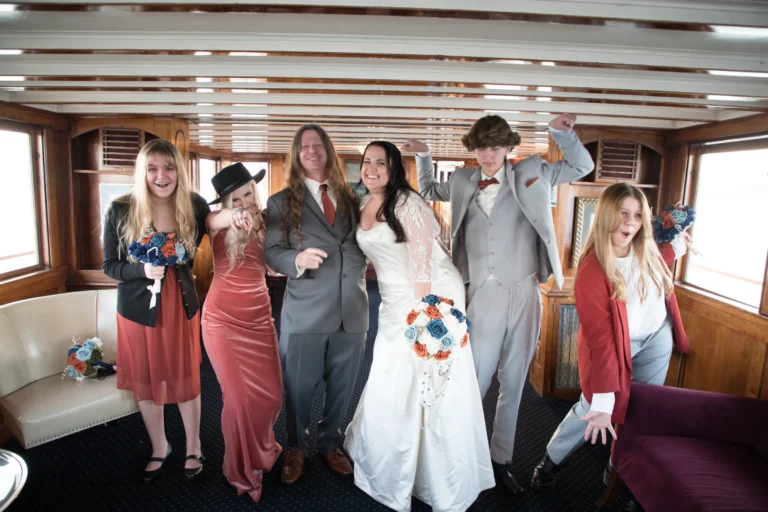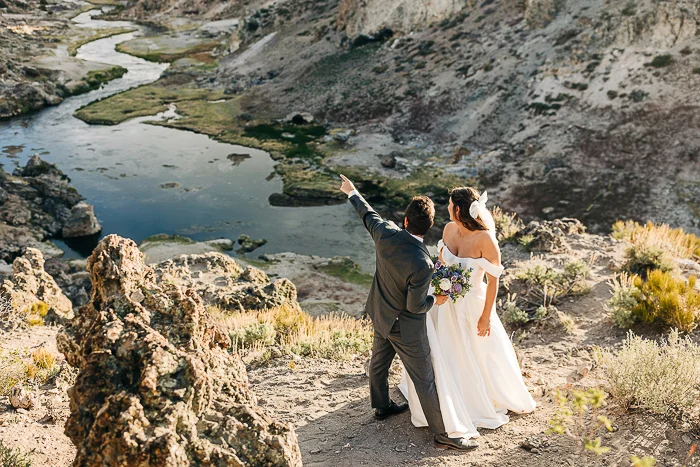


The wedding industry, long a bastion of human artistry and personal connection, is now grappling with the pervasive influence of artificial intelligence, prompting an urgent demand for transparency from couples. What began as nervous, one-off direct messages to photographers has rapidly escalated into a widespread call for clear, public declarations on AI usage, a critical shift that industry experts advise addressing proactively, ideally before the impending influx of next year’s inquiries. This imperative for an AI disclosure policy extends beyond photographers, reaching all vendors whose services touch a couple’s most cherished day.
The Unfolding AI Debate in Wedding Photography
The apprehension surrounding AI-generated wedding imagery is no longer a whisper but a growing roar across social media platforms and client interactions. Couples are increasingly vocal, posting videos and engaging in discussions that question the authenticity of their wedding albums, often accusing photographers of surreptitiously employing AI. This burgeoning concern has sharply divided the professional photography community into two distinct and vocal factions: those embracing AI as an efficiency tool and those vehemently opposing it on ethical and artistic grounds.
A pivotal moment illustrating this industry schism occurred earlier this month when Love My Dress, a prominent UK wedding publication, published a deeply reflective piece. The article detailed a bridal designer whose entire marketing campaign, encompassing every image and video, had been generated by AI. In response to this revelation and the broader ethical debate it ignited, Love My Dress publicly reaffirmed its commitment to never featuring AI-generated imagery, signaling a clear stance on authenticity within its curated content.
While some industry players adopt a firm stance against AI, others, like consultants for vendor communities, maintain an "AI-agnostic" position. This approach prioritizes supporting individual businesses in their strategic decisions regarding AI, whether that involves daily integration or complete avoidance. However, even vendors who choose to steer clear of AI must possess a foundational understanding of how AI tools discover and process information. With an increasing number of prospective clients utilizing AI-powered search mechanisms to find services, ensuring "AI discoverability" becomes a crucial aspect of modern marketing, irrespective of a vendor’s personal stance on AI usage.
Dissecting AI Adoption: Generative vs. Assistive Technologies
Recent data underscores the widespread integration of AI within the photography sector. A comprehensive survey conducted by VSCO this spring among 401 working photographers revealed that approximately 88% are currently utilizing AI in some capacity. Intriguingly, 34% of these photographers admitted to being cautious about how clients perceive their AI usage. This statistic highlights a significant internal conflict: while professionals leverage AI for operational benefits, they simultaneously navigate client anxieties surrounding the technology. The core of this anxiety often stems from a fundamental misunderstanding of AI’s diverse applications.
It is crucial to differentiate between two primary categories of AI in photography, as clarified by industry publications like fstoppers:
- Generative AI: This category involves AI that can alter expressions, swap faces, create entirely new visual elements, or fabricate complete images or moments that did not occur in reality. Examples include generating a non-existent background, creating fictional guests, or compositing a couple into a scene they were never physically present in.
- Assistive AI: This refers to AI tools designed to streamline and enhance existing workflows, learning from a photographer’s editing style and applying it more rapidly. Common applications include intelligent culling software that identifies blinks or out-of-focus shots, advanced noise reduction algorithms, automated color correction, and selective retouching aids.
The distinction is paramount: there is a profound difference between a photographer using AI to invent images or moments and one employing assistive AI to expedite the processing of genuinely captured photographs of real people experiencing real moments. While industry professionals quickly grasp this nuance, the general public, particularly engaged couples, often does not. This knowledge gap fuels a perception that AI use inherently equates to fabrication, leading clients to envision manipulated faces and invented scenarios, even when photographers are merely using AI to flag blinks or reduce noise, thereby reclaiming valuable time for creative work or personal life.
The silence from photographers on their AI practices inadvertently exacerbates this problem. In the absence of clear communication, clients are left to assume the worst, potentially leading to mistrust and damaged professional relationships. What couples genuinely seek is reassurance that the cherished moments depicted in their galleries are authentic and truly transpired. A transparent, public wedding photographer AI policy serves as the definitive answer to this fundamental question.
A Proactive Approach: The DellaMorte Photography Model
One exemplary model of proactive transparency comes from Daniella of DellaMorte Photography, an Offbeat Wed vendor member based in Central Florida. Daniella took the initiative to publish her comprehensive AI policy on her website before clients began directly inquiring about her AI practices. Her detailed policy meticulously outlines every AI-powered tool that interacts with client files, offering a "receipts underneath" approach that demystifies her workflow.
Daniella’s policy explicitly names tools such as Aftershoot for intelligent culling, Lightroom’s AI Denoise for image refinement, and Evoto for add-on retouching services. She transparently distinguishes between processing that occurs locally on her own machine and operations that involve sending parts of an image to external company servers. Furthermore, her policy demonstrates a deep commitment to informed disclosure by acknowledging and addressing vendors’ past controversies, such as Evoto’s short-lived headshot generator, which the company subsequently removed after admitting it "missed the mark."
A particularly endearing and effective aspect of Daniella’s policy is her explicit exception for generative AI: its use is reserved solely for fantasy composites, such as humorously depicting a couple fleeing a T-rex, always with the full knowledge and consent of both parties and clearly labeled as fictional. Her transparency extends even to the creation of her policy itself, openly stating that she utilized AI to proofread the document – a subtle yet powerful reinforcement of her commitment to honesty.

Constructing a Robust Wedding Professional AI Policy
Inspired by proactive leaders like Daniella, every wedding professional, particularly photographers, should consider drafting and publishing their own public AI policy. An effective policy should operate on two distinct but interconnected layers: a clear, concise statement of principles at the forefront, followed by detailed "receipts" that substantiate those principles.
Here is an expanded framework for a wedding professional AI policy, adaptable for various roles within the industry:
AI Policy Template: [Your Business Name]
Last updated [Month, Year]
Our Commitment to Authenticity and Transparency
At [Business Name], we understand that your wedding day is a collection of unique, irreplaceable moments, and we are committed to preserving the genuine essence of these memories. Every image and visual representation we provide aims to reflect the true events and emotions of your day. We believe in harnessing technology responsibly to enhance our craft without compromising the authenticity of your experience.
The Short Version: Every photo, video frame, or visual representation in your final delivery depicts something that genuinely occurred on your event day. We utilize advanced AI tools to enhance our technical workflow and improve efficiency. We unequivocally do not use AI to create or alter people, faces, bodies beyond agreed-upon retouching, invent moments, or fabricate scenes that did not happen.
How AI Assists Our Work (Assistive AI):
Our use of AI is primarily assistive, designed to streamline repetitive tasks and elevate the technical quality of our output. Specific applications include:
- Image Culling: We use AI-powered software like [e.g., Aftershoot, Photo Mechanic Plus AI] to efficiently sort through thousands of images, identifying and flagging blinks, missed focus, or duplicate shots. This allows us to focus our human expertise on artistic selection.
- Image Enhancement: AI tools assist with foundational image adjustments such as [e.g., precise color correction, advanced noise reduction (e.g., Lightroom’s AI Denoise), lens correction, and sharpening]. These processes refine the technical aspects of an image while preserving its original content.
- Retouching & Post-Processing: For specific retouching requests (e.g., skin smoothing, minor blemish removal, background clean-up), we may employ AI-powered plugins or software [e.g., Evoto, Imagen AI] to expedite the process under strict human oversight. We personally review and approve every adjustment.
- [For Planners/Designers]: AI may assist in generating initial mood boards, conceptual layouts, or logistical planning tools, always serving as a starting point for human creativity and decision-making.
- [For Florists/Decorators]: AI might be used for inventory management, supply chain optimization, or generating visual mock-ups based on real flower databases, which are then refined by our designers.
What AI Never Does Here (Generative AI):
To uphold the integrity of your memories, we strictly prohibit the use of generative AI for:
- Fabricating Content: We do not add or remove people, change facial expressions beyond natural retouching, or alter body shapes in a way that misrepresents reality.
- Inventing Moments: We will not create scenes, interactions, or elements that did not genuinely occur during your event.
- Altering Environments: We do not swap backgrounds, invent weather conditions, or place you in locations where you were not physically present.
- [For Videographers]: We do not use AI to generate fictional footage, manipulate spoken words, or create non-existent audio elements.
Data Privacy and Image Processing:
Your privacy and the security of your images are paramount.
- Local Processing: [Tool A, e.g., Aftershoot] processes images entirely on our own secure computers.
- Cloud Processing: [Tool B, e.g., Evoto, Imagen AI] sends parts of an image or metadata to [company’s] secure servers for processing. We have verified their privacy policies, and [Only if you’ve verified it in each company’s terms: these companies explicitly state they do not train their AI models on our clients’ photos for commercial purposes without explicit consent].
Creative Exceptions:
On rare occasions, and only with your explicit request and enthusiastic consent, we may create fantasy composites or highly stylized conceptual images. These will always be clearly labeled as such and understood by all parties as fictional, artistic interpretations.
Opt-Out Option:
Should you prefer that your gallery be edited with minimal or no AI tools, please inform us before booking our services. We can discuss the potential implications, such as [e.g., a longer delivery time, certain minor distractions like exit signs or blemishes may remain, a different pricing structure]. This preference will be formally noted in your contract.
AI Elsewhere in Our Business:
We embrace AI for internal operational efficiencies to enhance our client experience. For example, we may use AI for [e.g., proofreading emails and blog posts, generating social media content ideas, optimizing website SEO, transcribing meeting notes]. Rest assured, every client communication and final creative decision still originates from and is approved by a human member of our team.

Questions?
Your understanding and trust are invaluable. We encourage you to ask any questions you may have about our AI policy at [Contact Email/Phone]. We are committed to transparency and will update this page whenever our tools or processes evolve.
Beyond Photography: AI’s Broad Impact on Wedding Vendors
The conversation around AI transparency is not exclusive to photographers. Any wedding vendor whose services involve visual assets, client communication, or creative output must anticipate similar inquiries. Florists, planners, venues, videographers, and even bridal designers can expect couples to eventually ask about their AI practices.
- Venues: If a venue’s portfolio includes digitally enhanced images, such as sky swaps or AI-generated landscaping, a policy is essential. Virtual tours created with AI elements should also be disclosed.
- Florists & Designers: AI can assist in mood board generation, design visualization, or even inventory management. Transparency about these assistive uses, and a firm stance against generating artificial floral arrangements or design elements, is vital.
- Planners: AI might draft inquiry replies, assist with logistical planning, or even generate initial guest lists. Couples will want to know that the personal touch remains paramount.
Offbeat Empire, the publisher of the original article, also maintains a clear AI policy, stating that it does not present AI-generated imagery as authentic photographs of real weddings or people. This commitment from media platforms sets a precedent for ethical content curation. Similarly, innovative projects like Baratunde Thurston’s "Life With Machines" offer insightful examples of thoughtful disclosure statements regarding AI integration.
The Ethical Undercurrent: Why "Anti-AI" Needs a Policy Too
The debate around AI transcends mere technological adoption; for a significant segment of the population, it has become a deeply moral and ethical issue that heavily influences purchasing decisions. As one commenter on social media eloquently put it: "I would never hire a photographer who’s using AI. Quality concerns aside, it’s all trained on stolen materials, drains horrendous amounts of resources, and pollutes our most vulnerable communities. Any AI use at all – especially generative AI – in programs, photos, music, etc. is a huge red flag for me that the vendor doesn’t share my values."
For wedding professionals who align with these sentiments and choose to minimize or completely avoid AI, a public AI policy is equally, if not more, crucial. Articulating what one doesn’t use, and why, serves as a powerful magnet for like-minded couples. Just as an inclusivity statement attracts clients who share specific social values, an "AI-free" or "AI-minimal" policy can connect vendors with clients who prioritize human artistry, ethical sourcing, and environmental consciousness.
However, precision in language is paramount. In an increasingly AI-integrated digital ecosystem, claiming "zero AI anywhere in my work processes" may be an unachievable promise. Many everyday tools, from smartphone cameras to advanced features in popular editing software like Lightroom (e.g., Content-Aware Fill, Denoise), incorporate AI. Even fundamental services like Google Search now integrate AI Overviews, meaning that basic online interactions are often AI-mediated unless specific measures are taken to bypass them. A misstep in claiming absolute AI abstinence, if later discovered by a discerning client, could erode trust more severely than if no statement had been made at all. Therefore, clarifying whether the policy pertains to generative AI, specific assistive tools, or a broader philosophical stance is essential.
The Regulatory Landscape and Future Outlook
The urgency of publishing an AI policy is further underscored by evolving global regulations. While engagement season, typically running from December through February, is a key driver for timely communication, broader legislative frameworks are also taking shape. As of August 2, 2026, the European Union’s AI Act’s transparency obligations became generally applicable and enforceable across the EU. This landmark legislation aims to ensure AI systems are human-centric, trustworthy, and respect fundamental rights, introducing stringent disclosure requirements for AI-generated content and high-risk AI applications.
While most wedding professionals in the United States, Canada, or Australia may not directly fall under the EU AI Act’s jurisdiction, regulatory norms often follow the lead of major markets. It is highly probable that similar transparency requirements or industry best practices will emerge in other regions in the near future. Proactive adoption of clear AI policies now positions businesses favorably for future compliance and demonstrates foresight to a discerning clientele.
For vendor members of platforms like Offbeat Wed, the advice extends beyond merely publishing a policy on a personal website. Integrating this policy into the FAQ section of a directory listing is a strategic move. Modern search tools, often powered by AI themselves, are designed to extract and quote clear, public statements when users inquire about a vendor’s practices. This enhances discoverability and immediately addresses client concerns at the point of inquiry.
It is important to reiterate that while this article provides comprehensive guidance, it is based on industry consultation and journalistic analysis, not legal advice. For businesses seeking legally robust AI disclaimer clauses for contracts, specialized legal resources like The Legal Paige offer tailored solutions for wedding and commercial agreements.
Ultimately, the advent of AI marks a significant inflection point for the wedding industry. Transparency is no longer merely a good practice; it is rapidly becoming a fundamental expectation and a cornerstone of trust. By embracing clear, public AI policies, wedding professionals can navigate this evolving landscape with integrity, safeguard their reputations, and continue to build lasting relationships with couples who seek authentic memories of their most special day.