The term "wedding maxxing," often initially misinterpreted as a trend in maximalist decor, denotes a sophisticated financial allocation strategy currently gaining traction among couples planning their nuptials. Far from an aesthetic choice, wedding maxxing is a deliberate economic decision to prioritize spending on elements that directly enhance the guest experience, while strategically reducing expenditure on physical objects that often serve a singular purpose and possess high resale potential. This emerging philosophy reflects a broader recalibration of consumer values within the wedding industry, where overall costs remain substantial, but the distribution of those funds is undergoing a significant transformation.
The Evolution of Wedding Spending: A Recent History
For decades, the trajectory of wedding costs has been consistently upward, driven by societal expectations, evolving trends, and the inherent desire for a memorable celebration. However, recent economic shifts, including inflation, rising costs of living, and a growing emphasis on sustainability and authenticity, have prompted couples to critically re-evaluate where their wedding dollars yield the most value. The traditional model, often characterized by lavish decor, bespoke stationery, and numerous single-use items, is gradually yielding to a more discerning approach. This paradigm shift suggests that while the aspirational value of a wedding remains high, the form that value takes is changing. Couples are increasingly seeking depth of experience over an accumulation of ephemeral goods, signaling a maturation in consumer behavior within this significant life event.
Defining Wedding Maxxing: Beyond Aesthetics
To clarify, wedding maxxing is fundamentally about allocation, not aesthetics. While maximalism refers to a decor style characterized by layers, vibrant colors, and an abundance of elements, wedding maxxing is a strategic decision concerning the deployment of each dollar. This strategy can manifest in either a minimalist or maximalist aesthetic on the wedding day itself, as the underlying principle is purely financial: to spend up on what guests experience, and spend down on what they take home or throw away. This distinction is crucial for understanding the contemporary wedding landscape. Items that often feel urgent during the planning phase – such intricate signage, bespoke favors, or elaborate table settings – are frequently forgotten by guests shortly after the event. Conversely, elements that profoundly shape the day’s atmosphere and leave a lasting impression – such as the quality of food, the caliber of entertainment, or the seamless flow orchestrated by a coordinator – are the experiences recounted and cherished for years.
Data Illuminates the Shift: Costs and Consumption Patterns
Two key data points underscore this evolving narrative within the wedding sector, with the divergence between them highlighting the core of the wedding maxxing phenomenon.
Overall Wedding Costs Remain High:
Despite the strategic reallocations, the total financial outlay for weddings continues to be substantial. According to Zola’s 2026 First Look Report, which surveyed over 11,500 couples planning weddings in 2026, the average cost of a wedding is projected at $36,000. This figure marks the second consecutive year at this record high, with a remarkable 85% of couples expressing that the investment will be "worth every penny." This data firmly establishes that wedding budgets are not contracting; rather, the strategic channeling of these funds is being refined. The persistent high average cost signifies that couples are still committed to significant celebrations, but their priorities for where that money is best spent are clearly shifting. This indicates a conscious decision-making process rather than a mere cost-cutting exercise.
The Rise of the Secondhand Wedding Market:
In parallel with steady overall wedding costs, there is compelling evidence of a burgeoning secondhand market for wedding-related items. Data provided to The Budget Savvy Bride by BuyWander, an online auction platform specializing in returned and overstock retail inventory, reveals a significant migration of wedding objects from traditional retail to resale channels. In the 12 months leading up to August 2026, BuyWander listed an impressive 58,282 wedding-related items, achieving a robust sell rate of 96% with 55,879 items sold. These items, collectively valued at approximately $3.17 million in retail, were sold for a combined total of $665,871, demonstrating substantial savings for buyers.
BuyWander identifies wedding-related items as its fastest-scaling category, reporting a staggering 23-fold increase in monthly wedding volume and a record-high month in July 2026. While these are first-party figures, the trend they illustrate is undeniable: physical wedding objects are increasingly being sourced outside conventional retail channels. Jordan Allen, Co-Founder and CEO of BuyWander, encapsulates this trend: "Wedding maxxing is really just value-conscious shopping catching up with the rest of retail. Consumers have already gotten comfortable buying open-box electronics or returned furniture at lower prices, and we’re seeing that same mindset extend to weddings. In the last 12 months, more than 58,000 wedding-related items have been listed on BuyWander, and we’ve seen wedding dresses sell for as little as $5 at auction. You’re bidding on real supply instead of following a traditional retail path." This framing normalizes the practice of buying used wedding decor, equating it to other financially savvy consumer behaviors.
The Rationale: Cost-Per-Use and Lasting Impressions
The fundamental logic underpinning wedding maxxing is rooted in the concept of cost-per-use. Many traditional wedding objects exhibit an exceptionally poor cost-per-use ratio. A custom-made welcome sign, for instance, is typically viewed for a mere six hours. A set of elegant table numbers serves its purpose for a single evening. These items, despite their often considerable initial cost, become largely redundant post-event. Crucially, however, they retain a tangible resale value, as other couples embarking on their wedding planning journeys actively seek such items for their own celebrations. This dynamic fuels a robust secondhand market, making it an economically logical decision to divest from purchasing these items new.
Conversely, spending on experiences operates on an entirely different principle. A meticulously planned dinner, a vibrant and packed dance floor, or perfectly timed logistical coordination cannot be resold. The financial investment is consumed in the moment of its delivery. Yet, it is precisely this ephemeral nature that imbues these experiences with profound and lasting value. They become indelible memories, shared stories, and the essence of the celebration itself. Anna Gantt, Marketing Director at The Barn at Coley Creek, a budget-friendly wedding venue in North Carolina, frequently observes this sentiment firsthand: "We often hear things like signage or trendy items that only serve one purpose can end up feeling like they wasted a lot of money for something that had a short lifespan. After the wedding day is over, our couples have come back to us and say they wish that they would have simplified the decor and put that money toward something more meaningful like food, photography, or their honeymoon." Her observations underscore a growing recognition among couples that the true value of their wedding lies in the quality of the shared experience, not the accumulation of disposable items.
Reallocating Resources: Where the Money Flows
The strategic reallocation of wedding budgets under the wedding maxxing model focuses on enhancing the guest journey and creating a truly memorable event. Seasoned wedding planners consistently advise prioritizing several key categories that collectively elevate the overall experience.
Prioritizing Guest Experience:
These "spend up" categories are chosen for their ability to compound across the entire guest experience, rather than remaining confined to a single visual element. High-priority areas typically include:
- Expert Coordination: A professional planner or day-of coordinator is invaluable for ensuring seamless execution, managing logistics, and alleviating stress for the couple and their families. This investment directly impacts the smooth flow and enjoyment of the day for everyone present.
- Quality Catering and Beverages: Exceptional food and drink are consistently ranked among the most memorable aspects of a wedding. This includes not just the main meal, but also cocktail hour offerings, late-night snacks, and diverse beverage options. Interactive food and drink stations, such as specialized cocktail bars or gourmet food trucks, are increasingly popular for their engaging nature.
- Engaging Entertainment: Live music, whether a band or a DJ, significantly contributes to the atmosphere and energy of the celebration. Beyond music, elements like photo booths (with disposable cameras for a nostalgic touch), lawn games, or even live wedding painters provide interactive entertainment that guests remember and appreciate.
- Professional Photography and Videography: While not directly an "experience" in the interactive sense, high-quality visual documentation ensures that the memories of the day are preserved for a lifetime. Couples recognize the irreplaceable value of skilled professionals who can capture the essence and emotion of their wedding.
Anna Gantt reiterates this shift at her venue: "We’re continuing to see couples shift their focus from decorations to the guest experience, regardless of their budget. They want their guests to feel something and have a memorable time, instead of attending and observing the venue space." While these experiential upgrades are more frequently observed in higher-budget weddings, Gantt notes that "couples at any budget can prioritize experiences. It’s really about where they choose to spend their money." This highlights the universal applicability of the wedding maxxing philosophy.
Strategic Savings on Physical Goods:
The "spend down" half of wedding maxxing targets physical items that often incur significant new-retail costs but offer limited long-term value or high resale potential. These categories include:
- Decorations: This encompasses a vast array of items from centerpieces and backdrops to lighting fixtures and drapery. Many couples now opt for rental services or source these items secondhand.
- Signage: Welcome signs, directional signs, menu boards, and seating charts, while functional, are typically used once.
- Favors: Small gifts for guests, often left behind or quickly forgotten, are frequently seen as an unnecessary expenditure. Edible favors or donations to charity in guests’ names are popular alternatives.
- Table Extras: Items like specialized glassware (beyond what the caterer provides), custom napkins, or elaborate place cards often fall into this category.
- The Wedding Dress: Even the iconic wedding dress, traditionally a significant investment, is increasingly being considered for secondhand purchase, rentals, or even auction. The discounts available in this segment can be substantial, as evidenced by BuyWander’s reports of a $400 wedding dress selling for $37.95 in Spokane, and two dresses selling for as little as $4.60, representing a 97% discount off retail. While these are auction outliers, they illustrate the dramatic price drop once an item is no longer brand new. The increasing acceptance of buying a used wedding dress reflects a broader consumer comfort with sustainable and value-driven purchasing.
The overarching principle here is that for anything decorative, buying secondhand is almost always the most economically sound choice. As no guest at table nine will inquire about the provenance of the candlesticks, the visual impact remains the same, while the financial outlay is significantly reduced.
Budget Savvy Bride’s Internal Data: A Real-World Test
To assess the practical application of wedding maxxing beyond survey data and market trends, The Budget Savvy Bride analyzed its internal database of 940 real weddings published over the years. This extensive archive tracks budget and vendor details, including two key fields that directly align with the wedding maxxing framework: whether a couple hired a planner or day-of coordinator (a "spend up on experience" move) and whether they hired a professional florist (a category often considered a "spend down" target, though flowers can also be a significant experience enhancer).
Initially, the aggregate data across the entire archive presented a picture seemingly contrary to wedding maxxing. Historically, roughly two-thirds of couples featured in the database opted to forgo a coordinator, and a majority still chose to hire a professional florist. This suggested a preference for tangible aesthetics (flowers) over intangible logistical support (coordination).
However, a more granular analysis of recent weddings published since 2022 yielded a compelling shift. Among the 168 weddings published in this newer timeframe, a significant change was observed: half of these recent couples hired a planner or day-of coordinator (71 out of 142 who answered this question). This represents a substantial increase compared to under a third of earlier couples (192 out of 665). Importantly, other spending patterns remained largely stable. Approximately 60% of couples in both the older and newer groups continued to hire a professional florist, and the median total budget for both sets of weddings remained consistent at $10,000. This crucial detail indicates that newer couples were not simply spending more overall; they were actively reallocating existing funds, specifically moving money towards professional coordination. This behavioral shift, evident within a real-world budget context, strongly supports the core tenet of wedding maxxing.
It is important to provide context for this internal dataset: it is not a national representative sample but rather reflects weddings voluntarily submitted to The Budget Savvy Bride. Most of the archive predates 2022, and the recent group is considerably smaller. Additionally, not every couple answered every question. Nevertheless, the trend within the newer data is clear. Furthermore, budget levels inherently influence these decisions. With an average reported total budget of approximately $11,600 across the 893 weddings that reported a budget (significantly lower than the national average of $36,000), couples are operating with a smaller pot to reallocate. At this budget level, the more pragmatic version of wedding maxxing often becomes a choice between what will be visibly photographed and what will not. Flowers, being highly photogenic, consistently pass this test, explaining why their professional hiring rates remained steady. Coordination, historically less visible and therefore often overlooked, is now increasingly being prioritized by newer couples, even if it doesn’t appear in photos. This demonstrates a growing appreciation for the underlying experiential value of a well-managed day.
Navigating the Secondhand Market: Resale vs. Auction
For couples embracing the "spend down" aspect of wedding maxxing, understanding the nuances of the secondhand market is paramount. This market broadly divides into two primary channels: resale and auction.
Resale typically involves purchasing items at a listed price, often through dedicated platforms, online marketplaces, or local community groups. This method offers a degree of predictability regarding item condition and price, generally entailing lower risk.
Auction, conversely, involves bidding on returned and overstock inventory, often starting at very low prices. While potentially offering significantly larger savings, this channel carries higher risk due to variable item condition, limited or no return policies, and the competitive nature of bidding. Currently, there are no truly dedicated wedding auction sites; rather, general returns-and-overstock auction platforms like BuyWander have developed robust wedding categories within their broader offerings.
Auction Considerations:
Before engaging in auction bidding, couples must undertake careful due diligence:
- Condition Notes: Thoroughly read and understand the item’s condition notes. Assume "returned" implies a reason for its return, which may range from minor cosmetic flaws to functional issues.
- Maximum Bid: Set a firm maximum bid beforehand and adhere to it strictly to avoid overspending in the heat of an auction.
- Return Policy: Critically examine the return window and policy before bidding. Many auction items are sold "as-is" with limited or no returns.
- Risk Absorption: Assess whether your wedding timeline and budget can absorb the possibility of an item arriving unusable, requiring a last-minute replacement purchase that could negate any initial savings.
The Catch Nobody Mentions: Local Pickup Only:
A critical, often overlooked detail with many auction platforms, including BuyWander, is the requirement for local pickup only, with no shipping available. This significantly limits accessibility. As of August 2026, BuyWander operated eight locations across the US: Spokane Valley WA, Kent WA, Portland OR, West Valley City UT, West Sacramento CA, Denver CO, Addison IL, and Plymouth MN. While more locations are reportedly planned, couples must verify current locations before becoming attached to specific auction prices. The $37.95 wedding dress in Spokane, for example, was only available to someone within driving distance of that warehouse.
For those not residing near such facilities, nationally available alternatives include:
- Dedicated Resale Sites: Platforms specializing in used wedding decor.
- Local Facebook Marketplace: A popular choice for community-based buying and selling.
- Estate Sales: Opportunities to find unique vintage or gently used items.
- Thrift Stores: A low-tech, cost-effective option requiring patience and a keen eye.
These alternatives, while potentially slower and less dramatic in terms of discounts, offer widespread accessibility.
When Auction Buying is a Bad Idea:
It is prudent to bypass the auction route entirely for items where reliability, fit, and aesthetic perfection are non-negotiable. These include:
- The Wedding Dress: Unless one has ample time for alterations and contingency planning.
- Wedding Rings: Given their symbolic and monetary value, quality assurance is paramount.
- Consumables: Food, beverages, or any items directly consumed by guests.
- Key Vendors: Officiants, photographers, and other service providers where performance is crucial.
There is no justifiable reason to compromise on the quality or reliability of these critical elements; paying retail for peace of mind is often the wiser choice.
What it Looks Like in Practice: Nixi’s Wedding
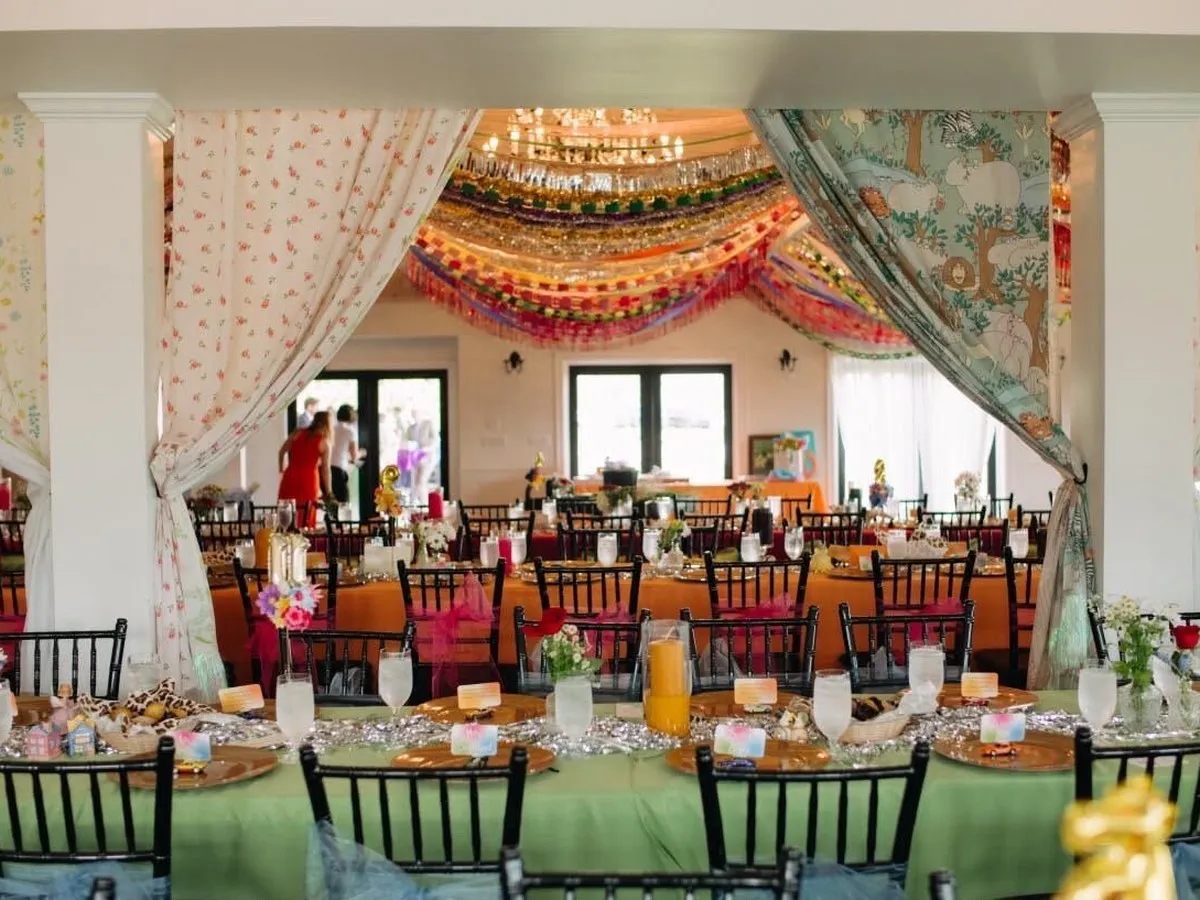
Nixi Swedlund-Tomlinson exemplifies the wedding maxxing philosophy in practice, designing a celebration that embodied this trade-off. For Nixi, saving money was just one facet of her motivation; creativity and originality were equally important drivers. "I always knew I wanted my wedding to be thrifty and crafty. Not just to save money, but to push creativity and originality," she states. "Almost every decision made for my colorful explosion of a wedding was influenced by the vintage we could find or the incredible crafty skills of the women in my life."
Her wedding was a testament to personalized, experience-driven planning. Highlights included: a ceiling draped in eclectic decor, three-foot-tall letters spelling out her and her husband’s last names, unique glassware for every guest, homemade tomato sauce as favors, an eight-foot-long rug hand-latched by her mother, and a wedding cake sourced with a blend of love and eBay finds. None of this was achieved in isolation; Nixi credits a network of friends and family who actively scoured thrift stores for specific items, demonstrating the community aspect of resourceful wedding planning. Her planner, Emily Hinshaw of Emerald Haus, alongside Nixi’s mother, handled the setup, allowing Nixi to enjoy her day without logistical burdens. Her ultimate takeaway resonates deeply with the maxxing philosophy: "Our wedding screamed ‘joy’… because we put in the extra work to find the things that felt right." Nixi’s wedding illustrates that strategic spending can lead to a profoundly personal and joyful experience, proving that value is not solely dictated by price tags.
How to Run the Maxxing Math on Your Own Budget
Couples do not need to adhere to a trending concept to implement this strategic budget reevaluation. A simple, methodical sorting pass through your own wedding line items can achieve the same results:
- List Every Budget Item: Compile a comprehensive list of every anticipated expense for your wedding.
- Categorize Each Item: For each item, clearly identify whether it primarily contributes to the "guest experience" or is a "physical object" that will be used once or taken home.
- Strategically Reallocate: Prioritize increasing allocations to experience-enhancing elements, while actively seeking secondhand options, rentals, or eliminating entirely those items categorized as single-use physical objects.
For a deeper dive into step two, resources on setting wedding budget priorities can guide couples in identifying areas where splurging yields maximum impact and where savings can be comfortably achieved.
Broader Implications and The Future of Weddings
The rise of wedding maxxing carries significant implications for the broader wedding industry. It suggests a potential shift away from the mass production of disposable decor towards a greater demand for bespoke experiences, high-quality rental items, and specialized vendors who excel in service delivery rather than product provision. This trend also aligns with growing consumer consciousness regarding sustainability, as sourcing secondhand items inherently reduces waste and environmental impact. The increased acceptance of pre-owned wedding items could further fuel the growth of online marketplaces, rental companies, and local community exchanges.
Ultimately, wedding maxxing is not about spending less money overall; it is about spending the same money more intelligently. It represents a conscious decision to invest in the elements that profoundly shape the atmosphere and create lasting memories, while judiciously opting out of new-retail prices for items that have a robust and accessible secondhand market. While each couple’s version of wedding maxxing will be unique, influenced by their budget, values, and personal preferences, the underlying principle of prioritizing authentic experience over fleeting material possessions is a powerful and enduring one. The internal data from The Budget Savvy Bride’s real weddings demonstrates that this trade-off adapts with budget constraints, affirming that a wedding can successfully prioritize a florist while forgoing favors, aligning with a personalized vision of value. As couples continue to navigate the complexities of wedding planning, the wedding maxxing philosophy offers a practical and impactful framework for achieving a meaningful celebration without sacrificing financial savvy.