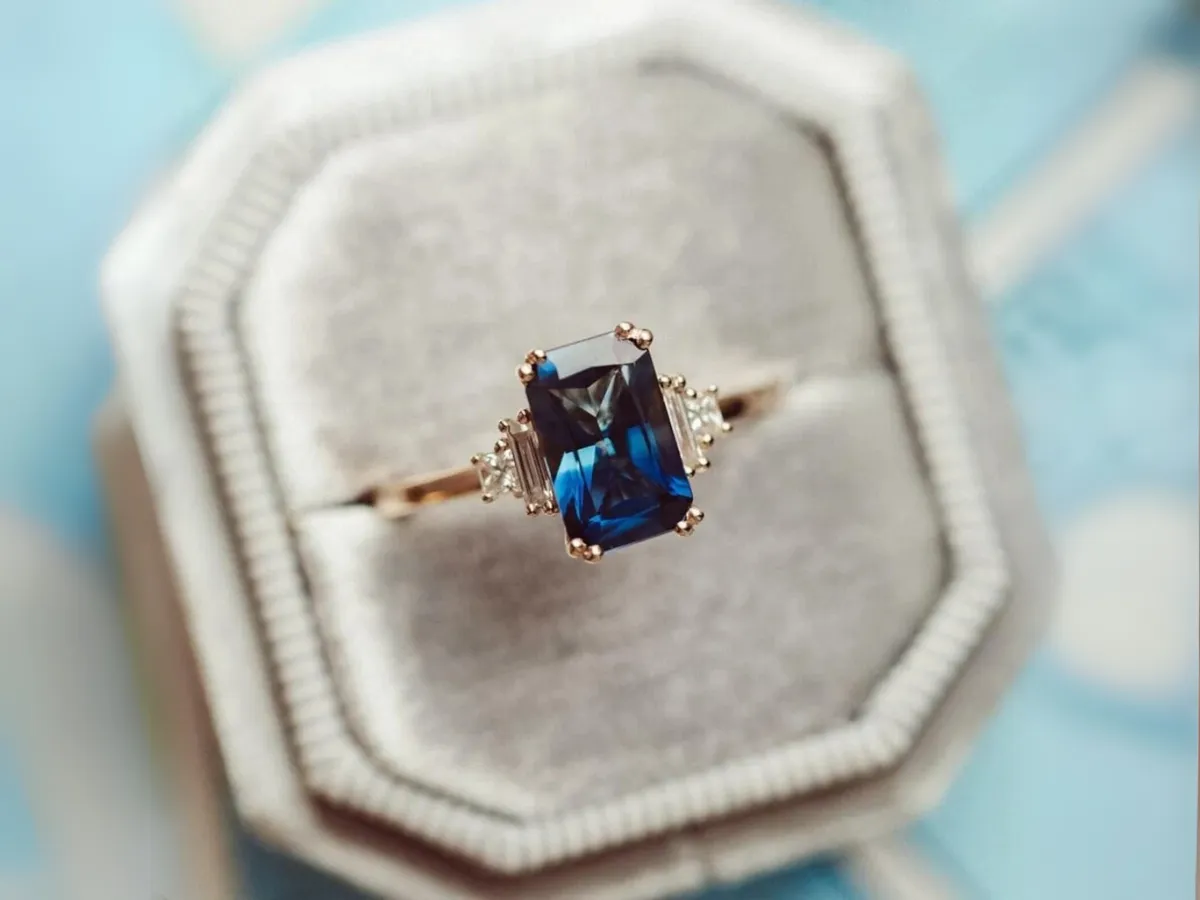
In an evolving landscape of bridal traditions, sapphire engagement rings are commanding increasing attention, offering a compelling blend of historical prestige, symbolic depth, striking beauty, and practical value. As couples seek alternatives to conventional diamonds, sapphires present an economically astute and visually stunning option, symbolizing wisdom, loyalty, and truth—attributes profoundly resonant with the commitment of marriage. Furthermore, their inherent durability and diverse color palette cater to a broad spectrum of personal tastes, establishing them as a frontrunner in the contemporary engagement ring market. This shift reflects a broader consumer trend towards personalization, ethical sourcing, and considered financial decisions, repositioning sapphires not merely as an alternative, but as a distinguished primary choice.

Historical Reverence and Royal Endorsement
The allure of sapphires is deeply rooted in history and culture, predating the modern diamond engagement ring tradition by millennia. Derived from the Latin "sapphirus" and Greek "sappheiros," meaning "blue stone," sapphires were revered by ancient civilizations for their celestial blue hue, often associated with the heavens and divine favor. Ancient Persians believed the earth rested on a giant sapphire, whose reflection colored the sky. Greek and Roman royalty and clergy regarded sapphires as protection against envy and misfortune, believing they brought wisdom, purity, and truth to their wearers. Medieval kings wore sapphires as amulets, believing the gemstones offered protection and brought good fortune. Their association with royalty gained significant modern prominence through the British monarchy, most notably with the engagement ring of Princess Diana, an exquisite oval blue sapphire surrounded by diamonds, a piece later passed to Catherine, Princess of Wales. This iconic ring not only cemented the sapphire’s status as a symbol of enduring love and regal elegance but also ignited a global resurgence in its popularity, inspiring countless couples to consider this majestic gemstone.

The Evolving Landscape of Engagement Rings
The 20th century saw diamonds establish a near monopoly in the engagement ring market, largely due to successful marketing campaigns that coined phrases like "A Diamond Is Forever." However, the 21st century has witnessed a significant diversification in consumer preferences. Younger generations, in particular, are driven by a desire for individuality, a greater emphasis on ethical and sustainable sourcing, and a pragmatic approach to significant financial outlays. This cultural shift has paved the way for colored gemstones to re-enter the mainstream, with sapphires leading the charge due to their unique combination of aesthetic appeal and inherent qualities. The demand for personalized and distinctive rings has spurred jewelers to expand their offerings beyond traditional diamond solitaires, making room for vibrant gemstones that tell a unique story. Market analysts observe that this trend is not merely a passing fad but a sustained evolution in bridal jewelry, reflecting deeper societal values concerning authenticity and responsible consumption.

Economic Considerations: Unpacking the Sapphire’s Value Proposition
One of the most compelling arguments for choosing a sapphire engagement ring is its remarkable affordability relative to diamonds of comparable size and visual impact. While diamonds command a substantial financial investment, sapphires offer a luxurious appearance without the prohibitive price tag, making them an economically astute choice for budget-conscious couples.

Based on an extensive market analysis conducted in August 2026, the cost of sapphire engagement rings exhibits a wide yet accessible range. At the entry level, a sterling silver sapphire ring accented with cubic zirconia can be acquired for approximately $50 to $100. Stepping up to solid 14k gold bands featuring genuine sapphires, independent artisans on platforms like Etsy offer options typically ranging from $175 to $550. For made-to-order designer pieces in solid gold with subtle diamond accents, prices generally fall between $1,390 and $1,930. Mainstream jewelers, such as Kay and Blue Nile, provide sapphire rings with diamond halos in the $1,895 to $2,980 range, frequently offering discounts that position them as competitive luxury choices. At the pinnacle, fine jewelry pieces featuring a natural sapphire surrounded by close to a carat of diamonds can range from $4,280 to $4,740.
This data reveals a crucial insight for prospective buyers: the setting, the choice of metal (e.g., sterling silver, 10k, 14k, 18k gold, platinum), and the presence and quality of accent diamonds (natural or lab-grown) often exert a greater influence on the final price than the sapphire itself. Therefore, a savvy shopper prioritizing the central gemstone can significantly manage costs by opting for simpler bands or fewer diamond accents, demonstrating the flexibility sapphires offer within various budget constraints.

The pricing of sapphires is primarily determined by the "4 Cs," much like diamonds, but with different prioritization:
- Color: This is paramount for sapphires. The most valuable are those with intense, vivid, and evenly distributed hues, often described as "cornflower blue." However, sapphires exist in nearly every color of the rainbow, each with its own pricing nuances.
- Clarity: While clarity is important, sapphires are typically not expected to be "flawless" to the naked eye like some diamonds. Minor inclusions, often called "silk," can even enhance the stone’s beauty by creating a soft, velvety appearance.
- Cut: A well-executed cut maximizes the sapphire’s brilliance and color saturation, regardless of its shape. Common cuts include oval, emerald, pear, cushion, and round.
- Carat Weight: As with any gemstone, larger sapphires are rarer and command higher prices, though the price per carat does not escalate as steeply as with diamonds.
- Origin and Treatment: Sapphires from renowned origins like Kashmir, Sri Lanka (Ceylon), or Myanmar (Burma) often fetch higher prices. Most sapphires undergo heat treatment to enhance their color and clarity, a widely accepted practice that generally does not diminish value unless undisclosed. Unheated natural sapphires of exceptional quality are exceedingly rare and command premium prices.
Durability for a Lifetime of Wear

An engagement ring is intended for daily wear, necessitating a gemstone that can withstand the rigors of everyday life. Sapphires excel in this regard, boasting a rating of 9 on the Mohs scale of mineral hardness. This places them directly below diamonds, which rank at 10, and on par with rubies, another highly durable gemstone. This high hardness means sapphires are exceptionally resistant to scratches and abrasions, making them a practical and enduring choice for a piece of jewelry meant to be worn constantly and passed down through generations. For comparison, emeralds, while beautiful, typically rate between 7.5 and 8 on the Mohs scale, making them more susceptible to scratching. The robust nature of sapphires ensures that their captivating beauty will remain untarnished for a lifetime with minimal care, requiring only simple cleaning with warm water and mild soap.
Beyond Blue: A Spectrum of Personalization

While deep blue sapphires are the most recognized and celebrated, the gemstone family offers a breathtaking array of colors, providing unparalleled opportunities for personalization. These "fancy sapphires" include vibrant pinks, sunny yellows, serene teals, delicate lavenders, soft peaches (often called Padparadscha when natural and exceptionally rare), and even colorless white sapphires, which can serve as a diamond alternative themselves. This extensive color palette allows couples to select a gemstone that truly reflects their individual style, personality, and the unique narrative of their relationship. For instance, a peach sapphire might appeal to a romantic seeking a soft, feminine aesthetic, while a teal sapphire could resonate with someone drawn to unique, ocean-inspired hues. This diversity ensures that a sapphire engagement ring can be as distinctive as the love it symbolizes, moving beyond the traditional blue to embrace a full spectrum of personal expression.
Ethical Sourcing and Sustainability: A Conscious Choice

In an era of increased social and environmental consciousness, the ethical provenance of gemstones has become a significant concern for many consumers. The history of "conflict diamonds" has highlighted the importance of transparent supply chains. Sapphires, while not entirely immune to ethical considerations, often present a more straightforward path to responsible sourcing. Many reputable jewelers offer ethically sourced natural sapphires, often accompanied by certifications from organizations like the GIA (Gemological Institute of America), which verify origin and treatment.
Furthermore, the advent of lab-grown sapphires offers an unequivocally ethical and sustainable alternative. These stones are chemically, physically, and optically identical to their natural counterparts but are created in controlled laboratory environments, eliminating the environmental impact and human rights concerns associated with mining. Lab-grown sapphires are also typically more affordable, making high-quality, vibrant stones accessible to a wider audience. This commitment to ethical and sustainable practices aligns perfectly with the values of modern couples, offering peace of mind alongside unparalleled beauty.

Market Dynamics and Retailer Response
The growing demand for sapphire engagement rings has prompted a significant response from the jewelry industry. Retailers, from luxury brands to independent artisans on e-commerce platforms like Etsy, are expanding their sapphire collections to cater to diverse tastes and budgets. This includes a wider selection of cuts, colors, and settings, emphasizing bespoke and customizable options. Jewelers are increasingly highlighting the unique attributes of sapphires—their durability, rich symbolism, and spectrum of colors—in their marketing efforts. The competitive landscape has also fostered innovation in design, with modern takes on classic solitaires, intricate vintage-inspired pieces, and contemporary halo settings gaining traction. This market adaptation underscores the sapphire’s established position as a compelling and commercially viable choice in the bridal sector, with industry analysts predicting continued growth as consumer preferences continue to diversify.

Guidance for Prospective Buyers
For those embarking on the journey to select a sapphire engagement ring, several key considerations can ensure a successful and satisfying purchase:

- Define Your Parameters: Before beginning your search, establish a clear budget range. Sapphires offer considerable flexibility, allowing couples to prioritize specific features—be it a larger carat weight, a rare color, or an intricate setting—while staying within financial comfort zones. Remember the analysis from August 2026: the setting and accent stones often dictate the price more than the sapphire itself.
- Understand Sapphire Specifics (The 4 Cs): While the diamond "4 Cs" provide a framework, adapt your focus for sapphires. Prioritize color saturation and hue, as these are the most impactful visual characteristics. Evaluate clarity for eye-cleanliness, understanding that some minor inclusions are natural and acceptable. Choose a cut that maximizes the stone’s brilliance and enhances its color.
- Evaluate Ethical Footprint: Inquire about the stone’s origin and any treatments it may have undergone. For those prioritizing sustainability and ethical sourcing, considering lab-grown sapphires is an excellent option, offering guaranteed conflict-free status and often superior clarity and color for the price. Look for certifications from reputable gemological laboratories.
- Select a Setting that Shines: The setting plays a crucial role in the ring’s overall aesthetic and how the sapphire is showcased.
- Classic Solitaires: Exemplified by designs like the Emerald Cut Solitaire Sapphire Engagement Ring from Etsy, these emphasize the stone’s individual beauty.
- Halo Settings: For those desiring extra brilliance, halo designs, such as the Oval Sapphire and Diamond Halo Ring from Blue Nile, encircle the central sapphire with smaller diamonds, creating a larger, more dazzling appearance.
- Vintage-Inspired Designs: Pieces like the Solitaire Vintage Setting Engagement Ring from Etsy or the Sapphire and Diamond Floral Ring from Blue Nile offer intricate details and a sense of timeless charm.
- Unique Color Combinations: The market also offers exquisite rings featuring alternative sapphire colors, such as the Lab Grown Peach Sapphire Camellia Ring from Brilliant Earth, the Elle Round Teal Sapphire Three Stone Ring, or the Liz Pear Lavender Sapphire Ring, both from Capucinne.
- Consider the metal choice—white gold, yellow gold, rose gold, or platinum—as it can dramatically influence the stone’s perceived color and the ring’s overall warmth or coolness.
- Check Lead Times: A critical, often overlooked aspect is the production timeline for made-to-order rings. Many unique sapphire rings, especially from independent designers, require several weeks, sometimes up to two months, from order placement to delivery. Prospective buyers with a specific proposal date should factor this lead time into their planning to avoid disappointment.
In Conclusion
Sapphire engagement rings represent a compelling fusion of heritage, symbolism, and modern sensibility. Their vibrant hues, robust durability, and accessible luxury make them an increasingly popular choice for couples seeking to express their love in a way that is both personal and profound. As the bridal jewelry market continues to evolve, sapphires stand out as a testament to enduring beauty and a conscious approach to commitment. Their versatility, from classic deep blues to a kaleidoscope of fancy colors, ensures that every sapphire engagement ring can be a unique emblem of a couple’s journey. Ready to embark on this search, couples are encouraged to explore the rich offerings from reputable jewelers and online platforms, discovering a gemstone that not only speaks to their heart but also aligns with their values and budget.