

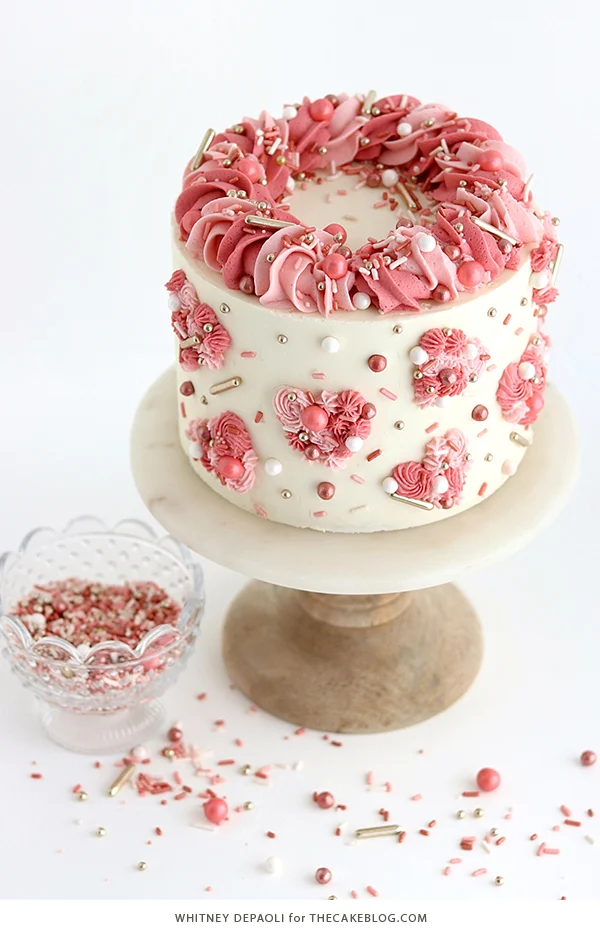
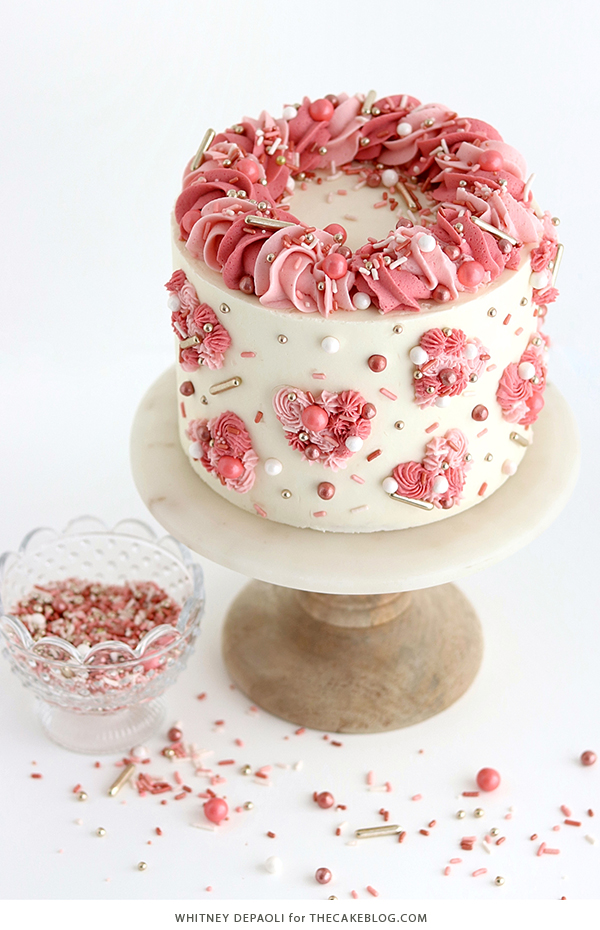
The landscape of seasonal confectionery is undergoing a significant transformation as artisanal techniques once reserved for professional patisseries become increasingly accessible to the home-baking community. Central to this shift is the "Piped Hearts Valentine’s Cake," a design recently codified and popularized by Whitney DePaoli, a frequent contributor to The Cake Blog. This design represents a modern departure from traditional, flat-surfaced Valentine’s cakes, instead emphasizing three-dimensional texture, intricate piping, and a sophisticated color palette. By utilizing a technique that blends geometric imprinting with freestyle buttercream application, the project serves as a bridge between high-concept edible art and achievable home projects.
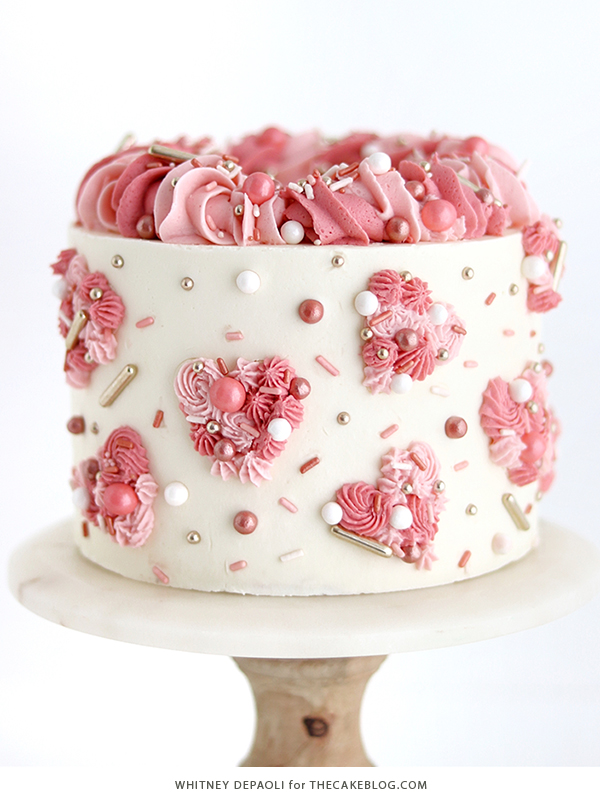
The design is heavily influenced by contemporary social media aesthetics, specifically credited to the stylistic innovations of Instagram-based cake artist @frostedfujicakes. This cross-pollination of ideas highlights the digital era’s role in accelerating culinary trends. As Valentine’s Day remains one of the most lucrative periods for the global baking and confectionery industry—with consumer spending on sweets often reaching billions of dollars annually—the introduction of accessible yet "Instagrammable" designs like the piped heart motif plays a critical role in driving retail sales for baking supplies, from specialized piping tips to food-grade pigments.
The Evolution of Valentine’s Day Confectionery Design
Historically, Valentine’s Day cakes were defined by simple heart-shaped pans, red maraschino cherries, and basic cursive script. However, the current market demands a higher level of visual complexity. Industry analysts note that "visual texture" has become a primary metric for success in the lifestyle and culinary sectors. The Piped Hearts Valentine’s Cake addresses this by moving away from the traditional bright red and white color scheme in favor of "Rose Gold" and "Dusty Rose" tones.
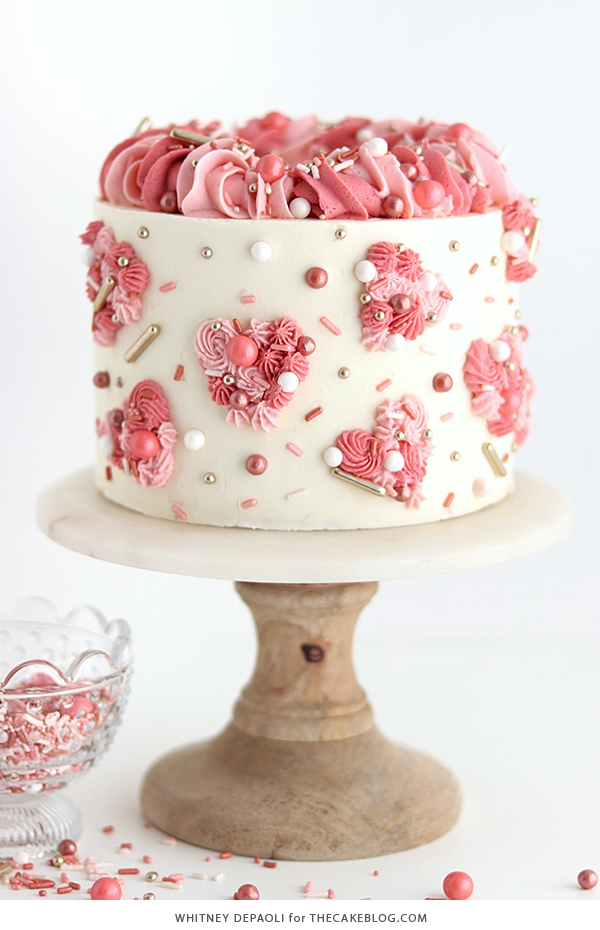
This shift reflects broader trends in interior design and fashion that have bled into the culinary arts. The use of muted, sophisticated pinks suggests a more mature approach to the holiday, catering not only to romantic partners but also to the "Galentine’s Day" demographic—a social phenomenon that has expanded the February 14th market to include platonic celebrations among friends.
Technical Methodology and Procedural Chronology
The creation of the Piped Hearts Valentine’s Cake follows a specific technical protocol that ensures structural integrity and aesthetic consistency. The process is divided into four distinct phases: preparation, imprinting, piping, and garnishing.
Phase I: Preparation and Pigmentation
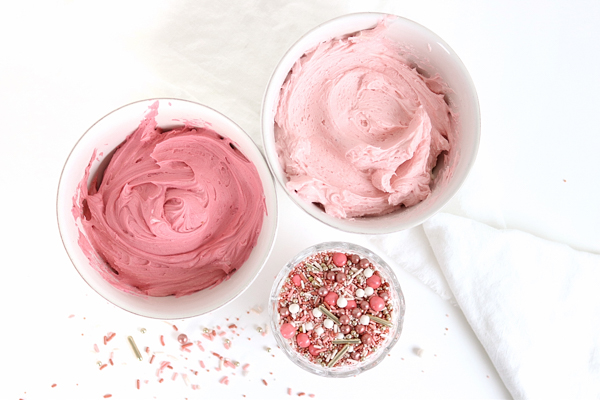
The foundation of the design rests on the quality of the buttercream. While various styles of frosting exist, American buttercream is frequently cited as the preferred medium for this specific technique due to its high crusting potential and stability at room temperature. The coloring process involves the use of concentrated gel pastes, such as Americolor Dusty Rose, which allow for deep saturation without compromising the frosting’s viscosity.
The protocol requires the division of buttercream into multiple vessels to create a gradient effect. For this design, the frosting is divided and fitted into four separate piping bags. The mechanical variety of the cake is achieved through the use of specific stainless steel nozzles:
- Tip 1M (Open Star): Used for creating larger rosettes and the final rope border.
- Tip 199 (Small Star): Utilized for medium-textured fillers.
- Tip 21 (Small Open Star): Employed for fine-detail stars and closing small gaps.
Phase II: The Imprinting Technique
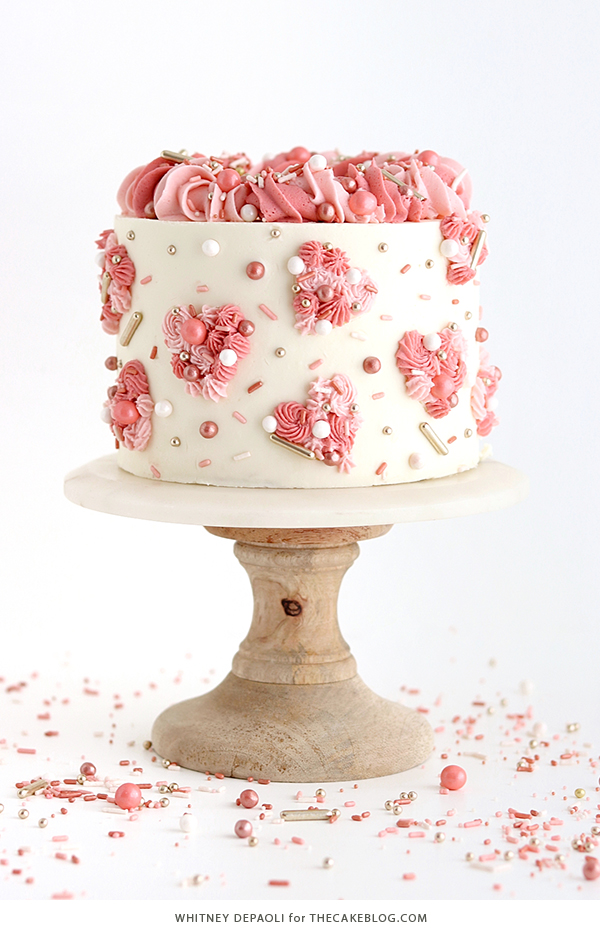
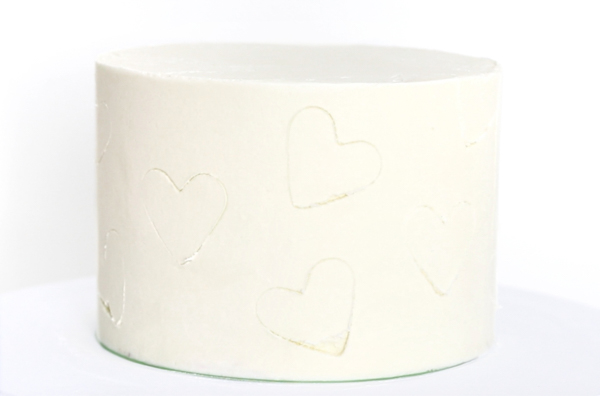
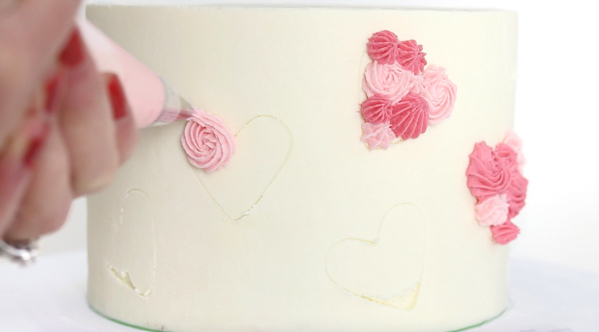
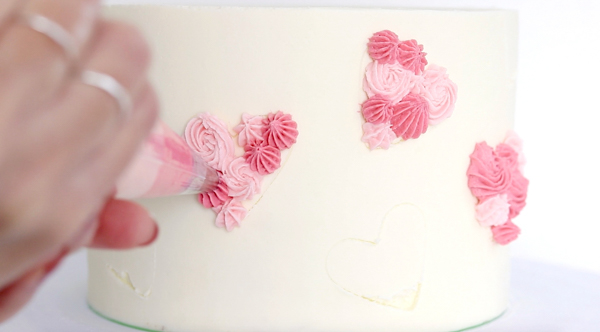
Before any piping occurs, the cake must be properly "crumb-coated" and chilled to provide a firm canvas. The "imprint method" involves using a standard heart-shaped cookie cutter as a stencil. By lightly pressing the cutter into the chilled exterior of the cake, the baker creates a guide that ensures geometric precision. Experts recommend spacing these imprints at least two inches apart to prevent visual clutter and to allow the "negative space" of the smooth frosting to provide contrast against the textured hearts.
Phase III: Multidimensional Piping
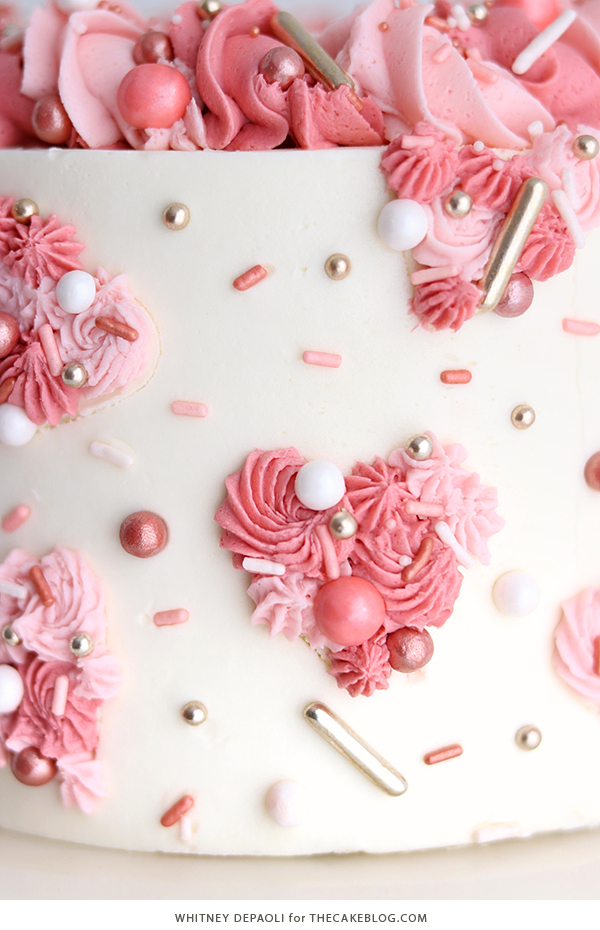
The core of the aesthetic appeal lies in the "fill-in" process. Rather than smoothing the frosting inside the heart, the baker applies a variety of rosettes and stars using the pre-arranged piping bags. This creates a "shag rug" or "tapestry" effect. The variation in tip sizes (1M, 199, and 21) ensures that the hearts have a biological, organic feel despite their rigid geometric borders.
Phase IV: Garnishing and Final Assembly
The final phase involves the application of a bespoke sprinkle mix. This is not merely for decoration but serves a structural visual purpose: the sprinkles fill the minute gaps between the piped stars, reinforcing the heart shape. For professional results, the use of precision tools such as culinary tweezers or the "damp fingertip" method is recommended to ensure placement accuracy without damaging the delicate buttercream peaks.
Economic Context and Market Data
The demand for specialized baking tutorials and high-end cake designs is supported by robust economic data. According to the National Retail Federation (NRF), Valentine’s Day spending in the United States alone often exceeds $20 billion, with candy and food items accounting for a significant portion of that expenditure.
Furthermore, the "DIY" (Do-It-Yourself) luxury movement has seen a 15% year-over-year increase in the sales of professional-grade baking equipment to non-professional consumers. The Piped Hearts Valentine’s Cake is a direct beneficiary of this trend, as it encourages the purchase of multi-pack piping tips, rotating cake turntables, and premium food colorings.
Safety Regulations and Ingredient Compliance
A critical point of discussion in modern cake decorating involves the use of metallic decorations, specifically gold and silver dragées. While these elements are essential for the "Rose Gold" aesthetic of the Piped Hearts cake, they are subject to stringent regulatory oversight.

In the United States, the Food and Drug Administration (FDA) has categorized many metallic-coated sprinkles as "for decoration only" and not for consumption. This is primarily due to the trace amounts of elemental silver or other metals used to achieve a high-shine finish. While these items are considered non-toxic and are approved for food use in many European jurisdictions under different standards, American bakers are advised to provide clear instructions to consumers. The protocol for the Piped Hearts cake specifically notes that long gold rods and certain metallic dragées should be removed or avoided during consumption to ensure guest safety and regulatory compliance.
Official Responses and Professional Insights
Professional pastry chefs have noted that the "imprint and pipe" method used in this tutorial is a significant labor-saving innovation. Historically, achieving such detail would require freehand drawing with a toothpick or the use of expensive edible transfers.
"The democratization of these techniques through contributors like Whitney DePaoli allows the average consumer to produce a product that rivals boutique bakeries," says a representative from the culinary arts industry. "It shifts the value proposition from the purchase of the cake to the experience of creating it."
Additionally, social media engagement metrics indicate that "texture-heavy" cake designs receive 40% more engagement (likes, shares, and saves) than traditional smooth-sided cakes. This data suggests that the Piped Hearts design is optimized for the current digital economy, where visual impact is the primary driver of content virality.
Broader Impact and Industry Implications
The Piped Hearts Valentine’s Cake is more than a seasonal recipe; it is a case study in the modern intersection of social media, retail trends, and culinary technique. By breaking down complex professional aesthetics into a series of logical, repeatable steps, the tutorial empowers a new generation of "prosumers"—amateur bakers who operate with professional-grade tools and expectations.
As the industry moves toward the mid-2020s, the expectation for personalization in the confectionery space continues to grow. The "versatility" mentioned in the original tutorial—the ability to swap the rose gold palette for any color scheme—aligns with the broader consumer demand for "bespoke" experiences. Whether utilized for a romantic dinner, a large-scale Valentine’s event, or a social media showcase, the Piped Hearts technique represents the current pinnacle of accessible, high-impact edible design.
In conclusion, the Piped Hearts Valentine’s Cake serves as a benchmark for contemporary holiday baking. It successfully integrates aesthetic trends from social media with practical, step-by-step methodology, all while navigating the complexities of food safety regulations and market demands. As home bakers continue to seek out projects that offer both a challenge and a high-quality visual reward, designs of this nature will likely remain at the forefront of the culinary zeitgeist.