
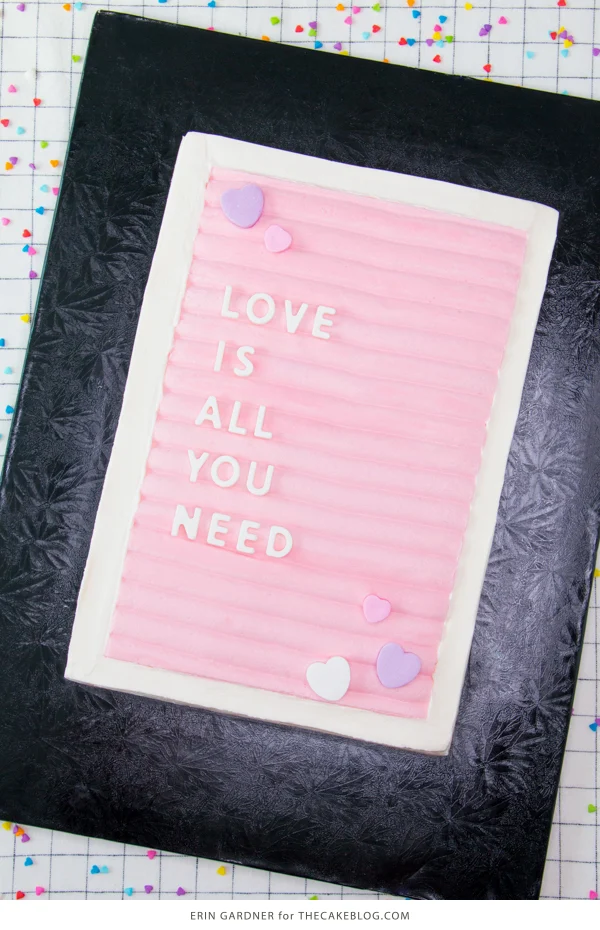
The culinary landscape continues to witness a significant shift toward customizable, text-heavy confectionery designs, a trend exemplified by the recent release of a comprehensive tutorial for the Message Board Sheet Cake. Developed by Erin Gardner, a prominent contributor to the professional baking community and The Cake Blog, this design mirrors the aesthetic of traditional felt letter boards, translating a popular home decor staple into an edible format. This methodology prioritizes accessibility, offering multiple technical paths for both professional pastry chefs and home-based hobbyists to achieve a high-end, communicative result. As the demand for personalized celebratory goods increases, this specific design offers a versatile solution for occasions ranging from Valentine’s Day to corporate milestones and gender reveals.
The Evolution of the Sheet Cake in Modern Confectionery
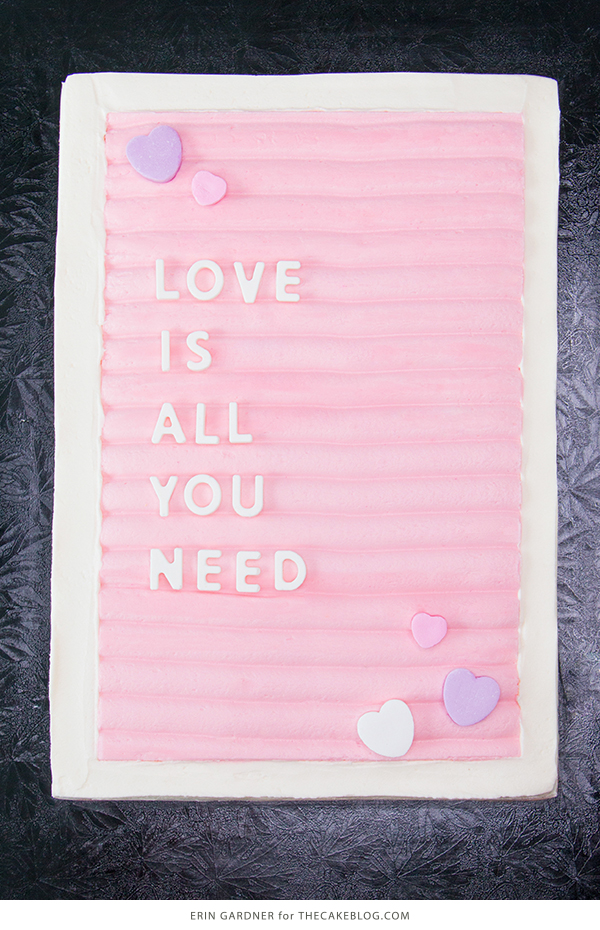
Historically, the sheet cake was categorized as a utilitarian dessert, often favored for its ease of transport and high serving capacity rather than its aesthetic potential. However, the "Message Board" iteration represents a broader movement within the industry to elevated the humble rectangular cake into a canvas for sophisticated graphic design. By utilizing texture—specifically parallel horizontal ridges—bakers can simulate the grooves of a physical message board, allowing for the placement of "moveable" chocolate letters.
Market analysis suggests that the "personalized gift" segment of the bakery market has seen a compound annual growth rate (CAGR) of over 5% in the last three years. This growth is driven largely by social media platforms like Instagram and TikTok, where visual storytelling is paramount. The Message Board Sheet Cake aligns with this trend by providing a literal platform for messaging, making the cake not just a dessert, but a focal point for digital engagement and personal expression.
Technical Execution: The Ridged Texture and Border Construction
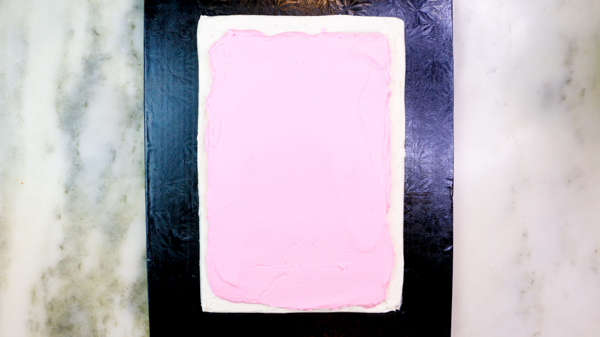
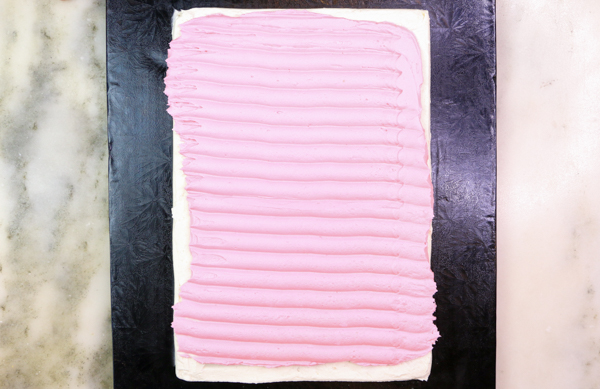
The foundational element of the Message Board Sheet Cake is the creation of a uniform, ridged surface. According to the technical specifications provided by Gardner, the process begins with a level application of buttercream across the top of a standard sheet cake. Achieving a "level" surface is not merely an aesthetic choice but a structural requirement; uneven icing prevents the "letters" from sitting flush against the "board," which can lead to breakage or misalignment.
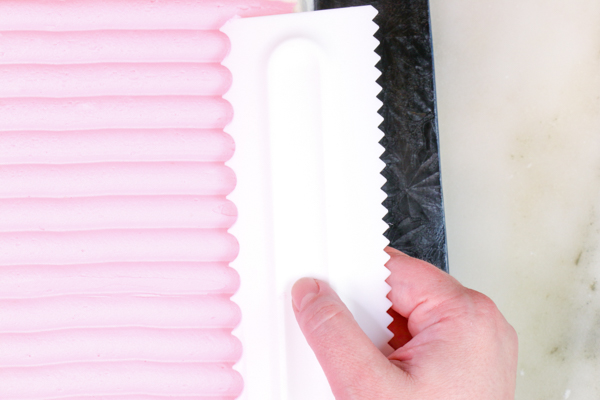
For practitioners with professional-grade equipment, a scalloped cake comb is the preferred tool for creating the horizontal lines. The technique involves dragging the comb through the buttercream with consistent pressure, overlapping the tool by one or two ridges as the baker moves down the cake to ensure a seamless pattern. For those lacking specialized combs, an alternative method involves piping parallel lines using a large round tip. While this secondary method is more accessible, industry data indicates it requires approximately 100% more buttercream (double the volume) to achieve the same coverage, a factor that professional bakeries must consider when calculating food costs and margins.
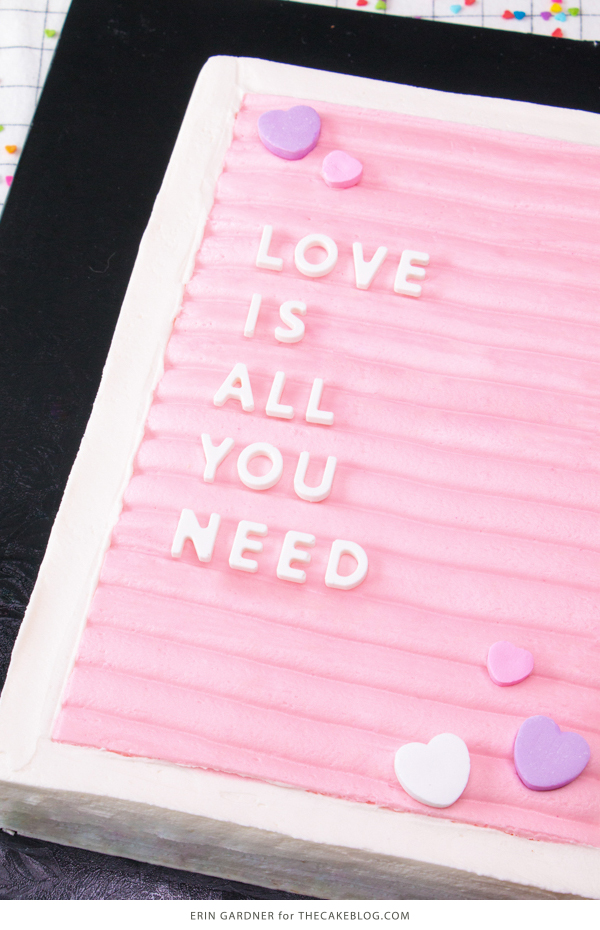
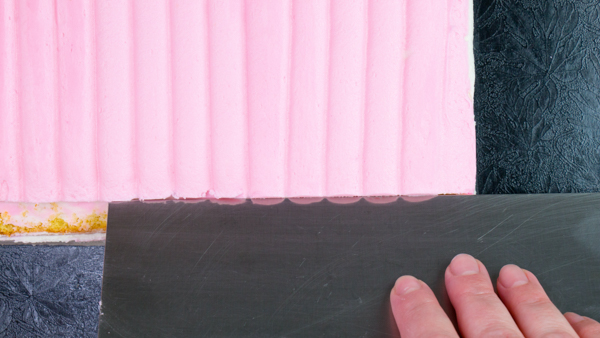
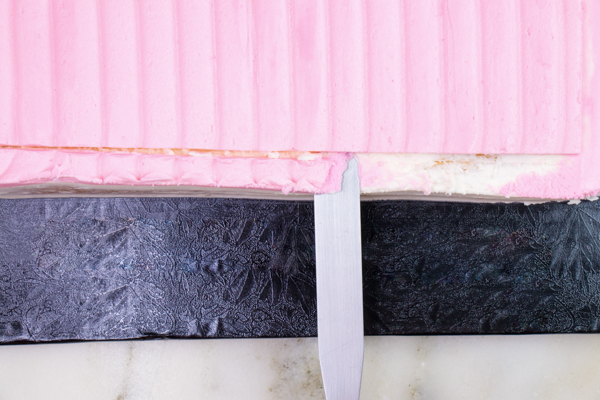
Once the texture is established, the cake must undergo a "chilling phase." This is a critical step in the chronology of production. Firming the buttercream allows for the next stage: the "border excision." Using a warmed bench scraper, the baker removes approximately one inch of the textured frosting from the perimeter of the cake. This creates a recessed area that is then back-filled with a flat border, typically using a basketweave piping tip. This dual-texture approach provides a clean, framed appearance that distinguishes the "message board" from the rest of the cake structure.
The Production of Edible Typography
The "letters" of the Message Board Sheet Cake represent the intersection of confectionery and typography. The tutorial outlines a process using melted white chocolate or compound coatings, which are preferred for their structural stability at room temperature.
Molded vs. Freehand Methodology
- Molding: Using silicone letter molds is the industry standard for achieving a uniform, sans-serif look. The process requires filling the molds, tapping them against a hard surface to eliminate air pockets (which can cause structural weaknesses in the letters), and scraping away excess chocolate to ensure a flat base.
- Piping/Tracing: For custom fonts or in the absence of molds, Gardner suggests a tracing method. By placing parchment paper over a printed template, bakers can pipe chocolate directly onto the paper. This allows for total customization of the "font" to match specific branding or event themes.
From a production standpoint, these letters can be manufactured in bulk and stored, allowing bakeries to offer "customizable" cakes on short notice. This "modular" approach to cake decoration is increasingly popular in high-volume environments where time-management is a key performance indicator.
Chronological Workflow and Assembly
The assembly of the Message Board Sheet Cake requires a strategic approach to spatial layout. Unlike traditional piping, where errors can be difficult to erase, the chocolate letter method allows for "dry runs."
The recommended workflow involves:
- Initial Layout: Arranging the cold chocolate letters on a piece of parchment paper to determine the exact center of the message.
- Grid Alignment: Counting the ridges on the cake to ensure the text is centered vertically and horizontally.
- Application: Placing the letters from the center outward. This prevents the "run-off" effect where a baker reaches the edge of the cake before finishing a word.
- Correction Protocols: If a letter is misplaced, the cake should be returned to refrigeration. Once the base buttercream is firm, the chocolate letter can be safely lifted with a small offset spatula without scarring the ridged texture.
Industry Implications and Consumer Response
The release of this tutorial comes at a time when the "Cottage Food" industry—home-based baking businesses—is seeing record participation. In the United States, updated regulations in several states have increased the sales caps for home bakers, leading to a surge in demand for designs that look professional but do not require expensive heavy machinery like industrial fondant sheeters.
Professional decorators have noted that the "Message Board" style is particularly effective for "Gender Reveal" parties, a market segment currently valued in the hundreds of millions of dollars globally. The ability to "change" the message easily during the decoration process reduces the risk of error in these high-stakes orders.
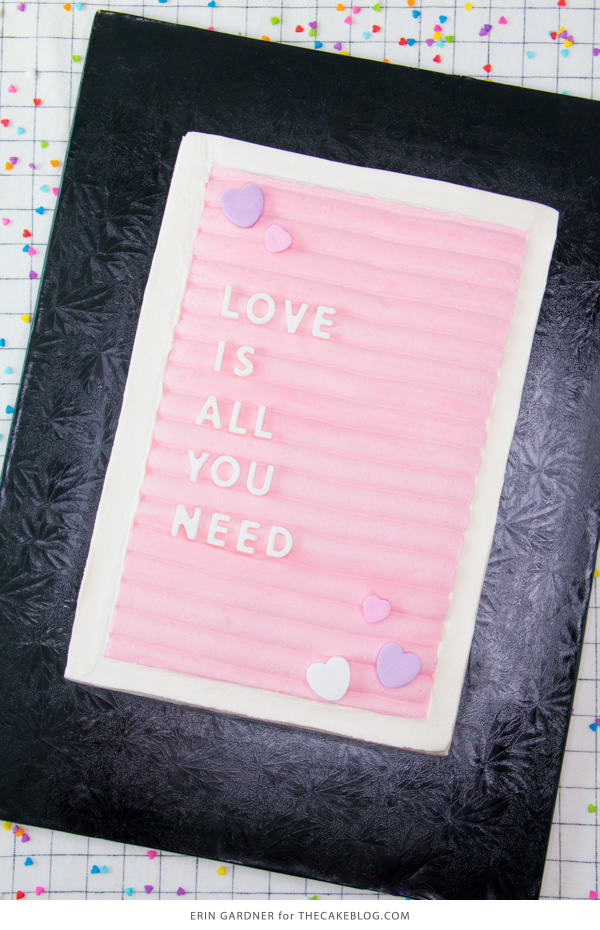
Furthermore, the design’s adaptability is cited as a major strength. While the initial tutorial showcases a pink and white palette for Valentine’s Day, the "board" can be rendered in black or dark gray buttercream with white letters to mimic a traditional classroom chalkboard or a vintage cinema marquee. This versatility ensures the design remains relevant throughout the fiscal year, rather than being tied to a single holiday.
Expert Analysis: The Shift Toward "Clean" Design
Culinary analysts observe that the Message Board Sheet Cake is part of a broader "clean label" aesthetic in pastry arts. This style moves away from the heavy, over-sculpted fondant designs of the early 2010s in favor of buttercream-based textures and minimalist chocolate accents.
"The design works because it respects the geometry of the sheet cake," notes one industry observer. "Instead of trying to hide the rectangular shape, it leans into it, treating the cake as a functional object. It bridges the gap between ‘food’ and ‘graphic design’."
Additionally, the use of chocolate for lettering rather than fondant or gum paste improves the "palatability profile" of the cake. Consumers frequently report a preference for the taste of chocolate and buttercream over the chemically-stabilized doughs used in highly structural cakes.
Conclusion and Future Outlook
The Message Board Sheet Cake tutorial by Erin Gardner provides a blueprint for a design that is both commercially viable and artistically satisfying. By breaking down complex textures into manageable steps and offering alternatives for different skill levels, the tutorial democratizes high-end cake design.
As we move further into the mid-2020s, the confectionery industry is expected to continue its focus on "interactive" and "communicative" desserts. The message board concept is likely to evolve, with bakers experimenting with different "board" textures—such as wood grain or metallic finishes—and incorporating augmented reality (AR) elements where a scanned cake message might trigger a digital greeting. For now, the Message Board Sheet Cake stands as a benchmark for modern, thoughtful, and accessible cake decoration, proving that sometimes the most effective way to celebrate is to simply say it clearly.