


In a striking move reflecting a broader trend among financially beleaguered consumer brands, David’s Bridal, once the largest bridal retailer in the United States, has announced a dramatic pivot, rebranding itself as a "high-velocity media, content, entertainment, and technology engine." This transformation, described by CEO Kelly Cook as a fundamental shift "from a legacy retailer" to a "tech-powered multihyphenate," arrives after the company endured two Chapter 11 bankruptcy filings since 2018, raising significant questions about the viability and ethical implications of such a strategic reorientation, particularly for the independent vendors and customers previously impacted by its financial distress.
The Rise of the "AI Pivot" Phenomenon
David’s Bridal’s strategic overhaul is not an isolated incident but rather indicative of an emerging pattern where struggling consumer-facing companies, facing a challenging retail landscape and investor pressure, attempt to reinvent themselves by embracing the burgeoning field of artificial intelligence. Just weeks prior, Allbirds, the sustainable shoe company whose market valuation plummeted from four billion dollars in 2021 to a fraction of that figure, declared its rebranding as NewBird AI, shifting its focus to "AI compute infrastructure." This trend highlights a desperate maneuver by entities unable to sustain their original business models, hoping to tap into the current investment frenzy surrounding AI and present themselves as innovative technology firms, often with little demonstrable expertise in the sector.
For David’s Bridal, a company whose core business revolved around physical inventory, store leases, and the deeply personal experience of selecting wedding attire, the transition to an "asset-light" technology platform represents a radical departure. While the allure of AI promises efficiency, personalization, and new revenue streams, critics and industry veterans express profound skepticism, viewing these pivots as superficial attempts to re-package mismanagement rather than genuine technological innovation. The perception is that these companies are slapping "AI" onto their corporate identity in a bid to attract capital and deflect from underlying operational and financial issues.
A Troubled Financial History: Two Bankruptcies in Five Years
To fully understand the gravity of David’s Bridal’s current pivot, it is essential to examine its tumultuous financial past. Founded in 1950, David’s Bridal grew to become a dominant force in the bridal market, known for its extensive selection and accessible price points. However, a series of private equity acquisitions and shifting consumer preferences began to erode its foundation. In 2012, Clayton, Dubilier & Rice acquired the company for approximately $1.05 billion, burdening it with significant debt.
Chronology of Distress:
- November 2018: David’s Bridal filed for Chapter 11 bankruptcy for the first time. Citing declining sales due to evolving consumer tastes (including a preference for less traditional and more affordable attire, such as thrifted dresses, a point the company itself highlighted in its filings) and the heavy debt load, the company entered court protection. It successfully restructured, shedding approximately $400 million in debt and exiting bankruptcy in January 2019 under new ownership. The initial filing listed assets of $500 million to $1 billion and liabilities of $1 billion to $10 billion.
- April 2023: Less than five years after its first restructuring, David’s Bridal filed for Chapter 11 bankruptcy again. This second filing came amidst a challenging post-pandemic retail environment, persistent supply chain disruptions, and further shifts in consumer behavior towards more intimate, less formal, and often more budget-conscious weddings. The company announced plans to sell its assets, close a significant number of its 294 stores, and potentially liquidate if a buyer was not found. Its liabilities were once again estimated between $100 million and $500 million, against assets of similar value.
- July 2023: David’s Bridal was acquired out of bankruptcy by CION Investment Corporation, a publicly traded business development company, for an undisclosed sum. The sale, confirmed in a court filing, allowed the brand to continue operations, albeit in a significantly reduced capacity.
- September 2023: The United States Bankruptcy Court for the District of New Jersey dismissed the second Chapter 11 case. Crucially, the sale to CION Investment Corporation did not generate sufficient assets to cover the debts owed to all creditors, particularly unsecured creditors like independent contractors and small businesses.
This repeated cycle of financial distress and bankruptcy protection painted a picture of a company struggling to adapt to a rapidly changing market and burdened by unsustainable financial structures.
The Unpaid and the Unheard: Fallout from Bankruptcy
The immediate aftermath of David’s Bridal’s bankruptcies left a trail of significant financial hardship, particularly for those least equipped to absorb such losses. The implications extended to both its network of independent contractors and its loyal customer base.
Impact on Independent Vendors:
In December 2023, reports from outlets like the Philadelphia Inquirer illuminated the plight of independent contractors who had provided services to David’s Bridal. These individuals—including seamstresses, photographers, stylists, and other small business owners—were left unpaid for work performed prior to the second bankruptcy filing. Despite having completed their services in good faith, they found themselves at the bottom of the creditor hierarchy in the bankruptcy proceedings. The grim reality was confirmed by David’s Bridal’s co-counsel, who, in an email to the Inquirer, stated a sentence that encapsulates the often-harsh outcome for unsecured creditors: "given the dismissal of the case, unpaid creditors will remain unpaid." This outcome represents not just a financial loss, but a profound breach of trust, impacting the livelihoods of small businesses that form the backbone of the wedding industry. For many, these unpaid invoices constituted a significant portion of their income, causing severe financial strain and demonstrating a disregard for the contributions of these crucial partners.
Impact on Customers:
David’s Bridal’s customers also bore the brunt of the financial turmoil. Reports flooded WeddingWire and Reddit forums throughout the summer of 2023 detailing gift cards and store credits being voided without warning. Prior to the sale to CION, the company had issued a customer FAQ, reassuring shoppers that these instruments would continue to be honored. However, this promise, much like the debts to independent vendors, did not survive the bankruptcy process. For couples planning one of the most significant events of their lives, the sudden invalidation of gift cards represented not only a financial loss but also added stress and disappointment during an already high-stakes period. This erosion of consumer trust is particularly damaging for a brand operating in an industry built on dreams, reliability, and emotional connection.
The "Aisle to Algorithm" Strategy: Deconstructing the AI Pivot
Announced in March 2025, David’s Bridal’s new "Aisle to Algorithm" strategy is a textbook example of what the retail press terms an "asset-light pivot." In essence, this strategy involves shedding the very assets that contributed to the company’s vulnerability in its previous bankruptcies: owned inventory and the burden of physical store leases. CEO Kelly Cook explicitly articulated this, stating to CNBC that the move is designed to "shield the company from the existential risks that pushed it into bankruptcy twice before."
However, what is often left unsaid by executives is that an "asset-light" model does not eliminate risk; it merely relocates it. The risk is transferred onto the very small business owners and independent vendors who are now expected to fulfill drop-ship orders, license the brand name, and advertise on the company’s newly minted media properties.
The core of this new strategy lies in these "new media properties":
- Love Stories TV Acquisition (December 2024): David’s Bridal acquired this wedding video platform, integrating its content and user base into its new ecosystem. This acquisition provides a foundation for engaging content and a pool of potential customers.
- Pearl Media Network (December 2024): Concurrently, the company launched Pearl Media Network, a retail media network designed to sell advertising to wedding vendors. This platform leverages David’s Bridal’s "first-party customer data" – insights gathered from its historical customer interactions – to offer targeted advertising placements.
- Pearl Planner (August 2025): The latest addition is Pearl Planner, an AI-powered tool marketed as a vendor recommendation engine for engaged couples. Couples can use this service for free, while vendors pay a fee to be matched with potential clients. This positions David’s Bridal as an intermediary, connecting demand with supply, but doing so through a paid model for vendors.
The pattern is clear: David’s Bridal is transforming from a direct retailer of wedding dresses into a digital marketplace and advertising platform. It aims to monetize its historical brand recognition and customer data by acting as a matchmaker, moving away from the capital-intensive model of owning inventory and physical stores.
The Wedding-Tech Extraction Model: A Familiar Playbook
This new strategy bears striking resemblance to the established — and often criticized — business models of existing wedding marketplace giants, most notably The Knot Worldwide. The Knot, through its various brands including The Knot and WeddingWire, has spent decades building a dominant position by connecting couples with vendors through online listings, advertising, and planning tools.
However, The Knot’s model has faced increasing scrutiny and resentment from the independent vendor community. Common complaints include:
- High Advertising Costs: Vendors often report paying exorbitant fees for premium placements and leads, with diminishing returns.
- Lead Quality Issues: Many vendors express frustration over the quality of leads generated, citing inquiries that are not a good fit for their services or budget.
- Market Dominance and Pressure: The Knot’s near-monopoly in some segments gives it significant leverage, making it difficult for vendors to opt out of advertising on its platforms without losing visibility.
- Antitrust Concerns: The company has faced accusations of anti-competitive practices, with some suggesting its acquisition strategy and market share stifle competition and innovation.
David’s Bridal is attempting to enter this very market, positioning itself as a new, AI-powered competitor. The crucial difference, and a significant point of contention, is its past. A company that has twice declared bankruptcy and explicitly left independent contractors unpaid, while also voiding customer gift cards, is now seeking to establish itself as a "trusted data steward" and "matchmaker" for the independent wedding economy. This raises fundamental questions about credibility and trustworthiness. The proposed model, in essence, is another iteration of "vendor extraction," where a platform monetizes access to customers, placing the financial burden and risk on the small businesses that constitute the wedding industry’s service providers.
The Broader Implications: Trust, Value, and the Future of the Wedding Industry
The pivot by David’s Bridal, and similar companies, relies on a critical assumption: that customers and vendors will either not notice or will overlook its troubled past. The expectation is that a familiar brand name, coupled with the shiny veneer of "AI," will foster continuity and trustworthiness. Vendors, it is hoped, will be swayed by buzzwords like "first-party data" and "unmatched analytics," believing that "this time will be different."
However, the wedding industry is fundamentally built on human relationships, trust, and highly personalized services. The decision to choose a wedding dress, a photographer, a planner, or a venue is deeply personal and often involves significant financial and emotional investment. It is an industry where reputation, reliability, and genuine support for couples and vendors are paramount.
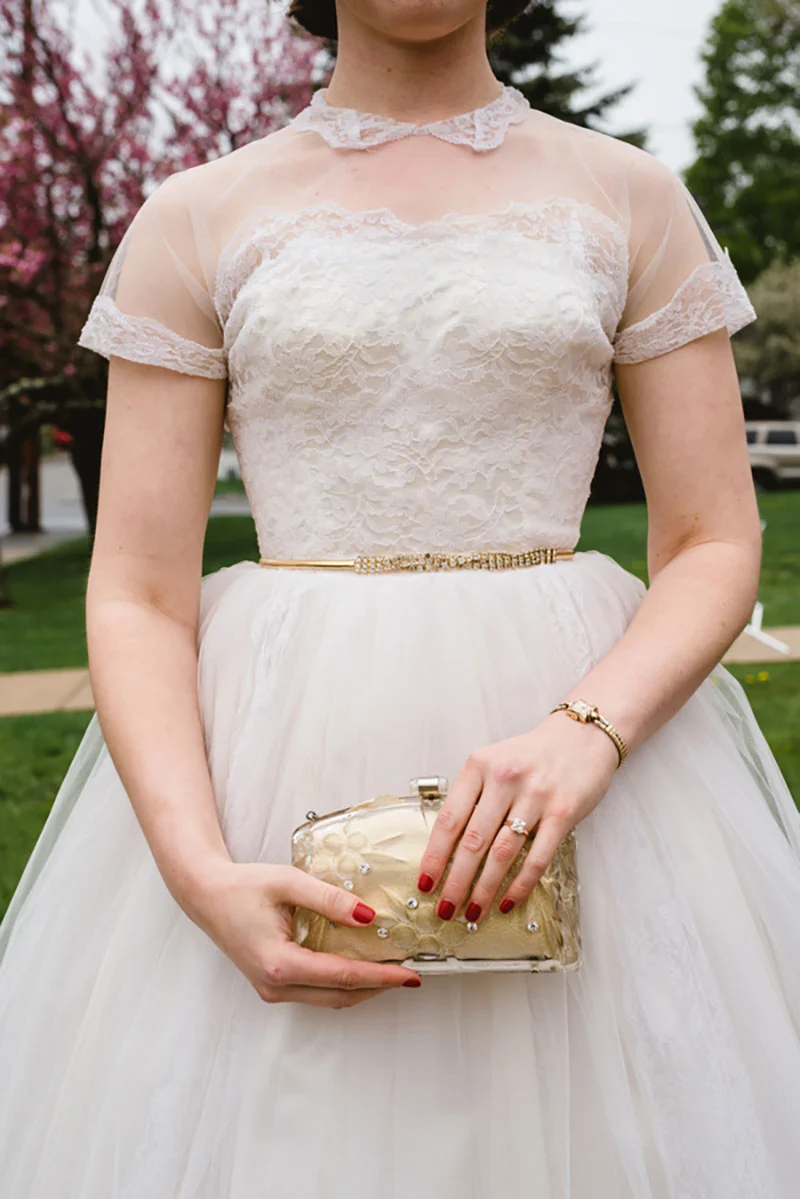
David’s Bridal, in its bankruptcy filings, cited an increasing number of brides opting for less traditional attire, including thrifted wedding dresses, as a contributing factor to its decline. A logical strategic response might have been to adapt its offerings, embrace sustainability, or cater to these evolving preferences directly. Instead, the company has chosen to build an AI algorithm to match these same "nontraditional" customers to the independent vendors who have always served them, and then monetize this connection through advertising. This creates a disconnect: an independent boutique owner earns revenue by fitting a bride in a dress, directly providing value. David’s Bridal, in its new iteration, aims to earn revenue by selling a marketing fee, positioning itself as an intermediary whose primary value proposition is technology, not necessarily the core service.
This "AI pivot" is fraught with challenges and unlikely to succeed in the long term for several reasons:
- Erosion of Trust: A history of non-payment to vendors and voided customer assets is a colossal hurdle for any company attempting to establish itself as a trusted marketplace. Trust, once broken, is incredibly difficult to rebuild, especially in an industry where personal referrals and strong reputations are key.
- Competitive Landscape: The market for wedding planning tools and vendor marketplaces is already mature and competitive, dominated by players like The Knot and WeddingWire. While these incumbents have their own issues, they possess established networks and brand recognition that David’s Bridal, with its tarnished reputation, will struggle to overcome.
- The Human Element: The intricate process of planning a wedding, from bespoke alterations to personalized photography, cannot be fully automated or reduced to an algorithm without losing its essential human touch. The "extraction model" often devalues the expertise and artistry of independent professionals.
- Sustainability of the Model: Relying solely on advertising revenue from independent vendors, many of whom are already feeling squeezed by existing platforms, may not be a sustainable model, particularly for a company needing to recover from significant financial setbacks.
Independent vendors have been the bedrock of the wedding economy long before the rise of digital marketplaces, and they will continue to be. They endured David’s Bridal’s first bankruptcy, its second, and will likely weather whatever comes next. The critical question for these small businesses is whether they will continue to support companies that have repeatedly demonstrated a fundamental lack of value for their contributions. The David’s Bridal saga serves as a cautionary tale, illustrating the complex interplay of financial distress, technological rebranding, and ethical responsibility within a deeply personal and relationship-driven industry.