


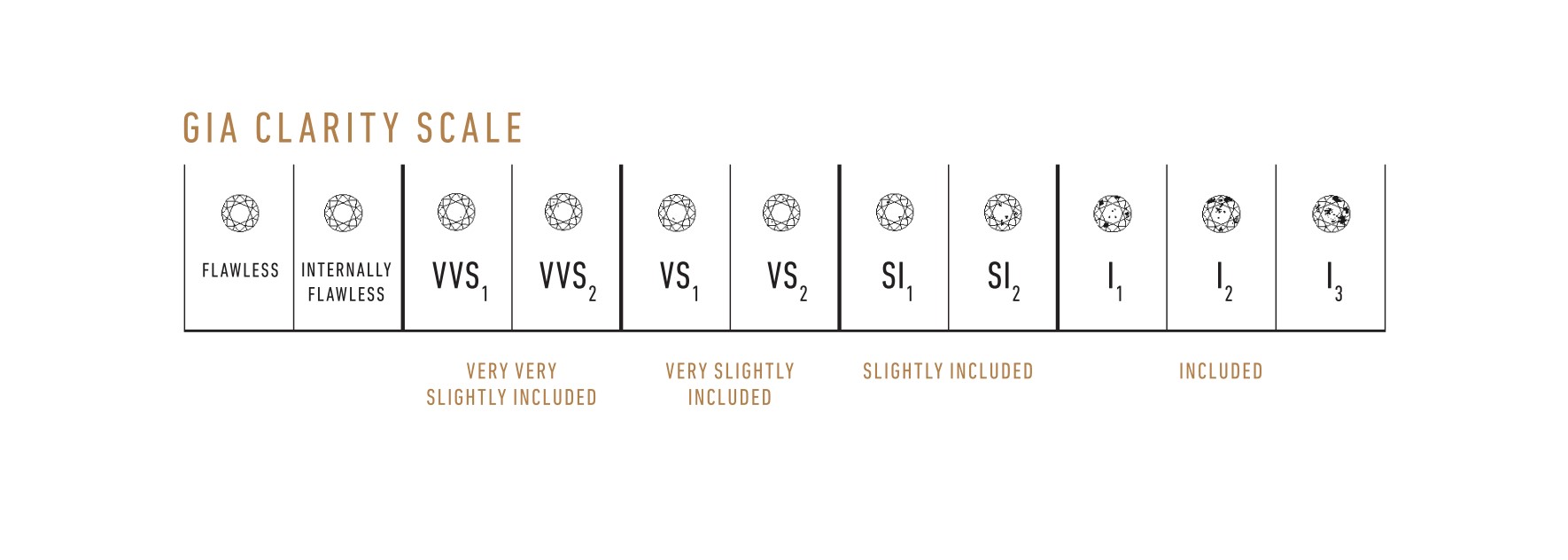
The quest for the perfect diamond, whether natural or lab-grown, often leads consumers to grapple with the intricacies of clarity grades. For those considering lab-grown diamonds, a thorough understanding of clarity can be the key differentiator between an optimal purchase and overspending on imperceptible perfection. This guide delves into the lab diamond clarity chart, from Flawless (FL) to Included (I3), offering insights into spotting inclusions, deciphering grading standards, and selecting diamonds that appear flawless to the naked eye without an exorbitant price tag.
The clarity of a diamond refers to the presence, size, number, position, and visibility of internal inclusions and external blemishes. These imperfections are evaluated using the universally recognized GIA grading scale, the same standard applied to natural diamonds. For lab-grown diamonds, these characteristics arise from the controlled growth processes, such as High Pressure High Temperature (HPHT) or Chemical Vapor Deposition (CVD), and are influenced by factors like temperature, pressure, and the materials used. While lab-grown diamonds often achieve higher clarity grades at a lower cost due to optimized manufacturing conditions, inclusions are still a factor that affects their appearance, sparkle, and overall value, much like their natural counterparts.
The Parallel Universe of Clarity: Lab-Grown vs. Natural Diamonds
A crucial aspect for consumers to grasp is that lab-grown diamonds share identical physical, chemical, and optical properties with natural diamonds. This means that clarity characteristics within a lab-grown diamond behave and appear precisely the same as they would in a mined diamond of the same grade. Grading laboratories, such as the Gemological Institute of America (GIA), apply the exact same rigorous standards to both types of diamonds. Consequently, a VS2 lab-grown diamond possesses the same definition and potential for an eye-clean appearance as a VS2 natural diamond. This equivalence allows buyers to approach lab-grown diamonds with the same established criteria, with a particular focus on achieving an "eye-clean" status—where inclusions remain invisible to the unaided eye—for optimal beauty and brilliance in everyday wear.
The Genesis of Imperfections: How Inclusions Form in Lab-Grown Diamonds
The specific internal and external characteristics that define a diamond’s clarity originate from the unique conditions under which it was formed. In lab-grown diamonds, inclusions can arise from elements inherent to the growth process. For instance, HPHT methods may leave behind metallic traces from the catalyst material used, while CVD processes can sometimes result in non-diamond carbon inclusions. These can manifest as graphitic areas or other growth-related features. While these origins differ from the geological processes that form natural diamonds, their impact on light performance and visual appearance is assessed using the same grading parameters.
The controlled environment of a laboratory often leads to fewer and less severe inclusions compared to the highly variable and often more extreme conditions of natural diamond formation deep within the Earth. However, it’s important to note that clarity characteristics can vary significantly from one manufacturer to another. Therefore, relying on reputable grading reports and strong seller-provided imagery and documentation is paramount for accurate assessment.
The Impact of Inclusions on Sparkle and Appearance
Inclusions, by their very nature, can disrupt the internal journey of light within a diamond. When light enters a diamond, it refracts and reflects, creating the sparkle, brilliance, and fire that make diamonds so desirable. Large, numerous, or centrally located inclusions can obstruct this process, potentially diminishing the diamond’s overall brilliance and transparency. However, minor flaws that are only visible under 10x magnification typically have little to no discernible impact on the diamond’s sparkle to the naked eye. Conversely, more prominent flaws can manifest as haziness, dark spots, or a noticeable reduction in transparency.

The degree to which an inclusion affects the diamond’s appearance is a function of its type, size, and placement. Higher clarity grades, by definition, minimize this interference, preserving the diamond’s inherent fire and scintillation for a dazzling visual effect.
Common Inclusions to Understand:
-
Needle: These inclusions appear as slender, elongated lines, resembling fine threads or sewing needles. They often form along the diamond’s growth directions and can vary in color from transparent to dark, depending on the material composition. In lab-grown diamonds, needles can sometimes form due to internal stresses during the growth process. While small needles are often invisible to the naked eye in higher clarity grades, larger or clustered needles could impact the overall clarity grade and the subtle play of light within the stone.
-
Cloud: Cloud inclusions are characterized by dense clusters of tiny pinpoint inclusions or remnants that collectively create a hazy or milky zone under magnification. These can resemble soft patches of fog. If extensive, they can reduce the diamond’s overall transparency and brilliance. In lab-grown diamonds, clouds can sometimes result from the aggregation of growth remnants during the manufacturing process. Minor clouds may not significantly detract from a diamond’s appearance, but significant ones can lower clarity grades and subtly diminish sparkle by scattering light.
-
Crystal (or Growth Remnant): These inclusions appear as small mineral crystals or diamond-like particles trapped within the host diamond, sometimes resembling embedded shapes. In lab-grown diamonds, such characteristics may be described by graders as growth-related features, depending on the specific growth method and the terminology used by the grading laboratory. The visibility and impact of these crystals depend on their size, color, and contrast against the diamond’s background. Tiny crystals often have a negligible effect on clarity, while prominent ones can be noticeable under magnification and affect the grade by blocking light paths.
-
Feather: Feather inclusions are essentially fractures or breaks within the diamond, appearing as delicate lines that fan out from a central point, reminiscent of a feather. They can range from shallow surface-reaching fractures to deeper internal breaks. If shallow and small, feathers often remain undetectable to the unaided eye. However, deeper feathers, in rare instances, can raise concerns about structural integrity and may affect clarity grading due to their visibility. In very specific circumstances, if a feather reaches the surface or is located in a particularly vulnerable area, it could also present a minor durability concern.
-
Pinpoint: Pinpoint inclusions are the most frequently encountered type. They appear as minuscule dots or specks, often black or white, which are typically only visible under magnification. Pinpoints can occur individually or in groups, sometimes forming larger cloud-like structures. In lab-grown diamonds, these commonly arise from non-diamond carbon or traces from the manufacturing process. Isolated pinpoints generally have a negligible effect on the diamond’s overall appearance, making them acceptable in many value-oriented clarity grades.
Clarity’s Influence on Lab Diamond Prices
The clarity grade is a significant determinant of a lab-grown diamond’s price. This is because the grade directly reflects the presence, size, type, location, and visibility of any inclusions or blemishes, assessed using the GIA scale from FL to I3. Diamonds with higher clarity grades command higher prices primarily because fewer imperfections mean a greater degree of optical purity, which enhances brilliance and transparency.
Distinguishing Lab-Grown Diamonds from Simulants
It is crucial to differentiate between lab-grown diamonds and diamond simulants. Lab-grown diamonds are genuine diamonds, chemically, physically, and optically identical to mined diamonds, produced in controlled environments. Diamond simulants, such as cubic zirconia or moissanite, are entirely different materials. They lack the same durability, hardness, and light-reflecting properties as diamonds, and consequently, are priced significantly lower, even if marketed with high "clarity" claims. True lab-grown diamonds with certified clarity grades represent genuine value based on the 4Cs (Cut, Color, Clarity, and Carat Weight), whereas simulants offer a fleeting visual resemblance without the inherent material qualities or long-term value of a diamond.
Clarity as One Key Factor in Overall Pricing
The final price of a lab-grown diamond is a composite of its clarity, carat weight, color, and cut. Generally, higher clarity grades command higher prices due to the increased difficulty and resources required to produce near-flawless stones. While clarity is vital for maximizing light return and brilliance, its impact on the price of lab-grown diamonds is often moderated compared to natural diamonds, where scarcity significantly drives premiums for top grades.
Savvy buyers often find that prioritizing an excellent cut, which maximizes brilliance and sparkle, over achieving ultra-high clarity grades offers the best value. This is because minor inclusions in lower clarity grades rarely affect the diamond’s naked-eye appearance but can lead to substantial cost savings, allowing for a larger carat size or a better color grade within the same budget.
Price Differences Across Clarity Grades
The price differential between clarity grades becomes more pronounced at the higher end of the scale. For instance, transitioning from Very Slightly Included (VS) to Very Very Slightly Included (VVS) or Internally Flawless (IF) can significantly increase costs. This is attributed to the incremental effort and precision required to achieve these near-perfect clarity levels. In contrast, the price differences between Slightly Included (SI) and VS grades are typically more modest.
For example, SI1 and SI2 grades often yield diamonds that are "eye-clean" (inclusions not visible to the naked eye) at a more accessible price point, making them popular choices for budget-conscious shoppers seeking strong value. In SI grades, inclusions are usually noticeable under 10x magnification but may or may not be visible to the naked eye, depending on their specific characteristics. This allows buyers to allocate savings towards larger carat sizes or better color and cut grades without significantly compromising the diamond’s everyday beauty.
Eye-Clean Clarity and Value Optimization
Many lab-grown diamonds graded VS2 or SI1 achieve an "eye-clean" status, meaning their inclusions are not discernible without magnification. These diamonds offer visual appeal that is virtually indistinguishable from higher clarity grades, but at a considerably reduced price. This makes lower-clarity options highly rewarding, especially given the production consistency in the lab-grown sector, which makes high-clarity diamonds more attainable and less driven by rarity premiums than their natural counterparts.
By focusing on the eye-clean criterion, verified through detailed imagery, videos, or expert consultation, buyers can maximize sparkle and satisfaction while keeping costs reasonable. Often, the price jump between VS and SI clarity grades is minimal, offering an excellent balance of visual perfection and affordability.

Balancing Clarity with Other Diamond Attributes
Clarity’s influence on pricing is not isolated; it interacts with other diamond attributes. For instance, pairing high clarity with near-colorless grades (D-F) can amplify the cost more than when combined with slightly warmer color grades (G-I). In the latter case, SI clarity can offer an excellent balance of performance and affordability.
Cut quality, which dictates how well a diamond reflects and refracts light, often has the greatest impact on perceived brilliance. An excellent cut can effectively mask minor clarity issues, potentially making a well-cut VS or SI diamond appear more brilliant than a higher-clarity diamond with a subpar cut. This interplay underscores the importance of a holistic evaluation, where all the 4Cs are considered in conjunction with each other to achieve the best overall value and aesthetic appeal.
Do Lab-Grown Diamonds Lose Clarity Over Time?
A persistent misconception is that lab-grown diamonds might fade, cloud, or lose their internal clarity over time. This often stems from confusion with diamond simulants like cubic zirconia, which can indeed dull or become hazy with age and wear. However, lab-grown diamonds, being real diamonds, do not experience any inherent degradation in clarity or sparkle from normal wear and the passage of time alone.
Lab-grown diamonds share the same crystalline structure as natural diamonds. Their internal clarity characteristics—the inclusions and blemishes—remain fixed and do not change. If a diamond appears less brilliant over time, the cause is almost always surface residue from environmental factors like dirt, oils, and lotions, rather than any alteration within the diamond itself. Simple cleaning readily restores a diamond’s original luster.
This inherent stability is a direct consequence of their identical composition and structure to natural diamonds. Both are pure carbon, arranged in a tetrahedral lattice, scoring a perfect 10 on the Mohs scale of hardness. Environmental factors encountered in everyday life—such as air, humidity, light exposure, or temperature variations—do not alter the internal inclusions or blemishes that define clarity.
Exceptional Hardness Prevents Structural Changes
The remarkable hardness of lab-grown diamonds, identical to that of natural diamonds, makes them exceptionally resistant to scratches, abrasions, and most forms of physical wear. This inherent property ensures that the diamond’s internal features, meticulously graded for clarity under 10x magnification, remain precisely as certified. They do not develop new flaws or worsen existing ones over decades of wear.
While hard impacts or accidental knocks can potentially chip any diamond at vulnerable points, and routine wear can lead to surface residue that temporarily diminishes sparkle, these are external factors and do not affect the diamond’s core clarity. With sensible handling and care, the original graded clarity of a lab-grown diamond persists unchanged.

No Internal Degradation or Clouding Occurs
Unlike certain simulants that may discolor or become internally hazy due to chemical instability, lab-grown diamonds lack any mechanism for progressive internal alteration. Inclusions formed during the growth process—whether metallic flux remnants in HPHT or graphitic traces in CVD—remain permanently fixed in place. They do not migrate, expand, or multiply with age.
Extensive research, including studies by the GIA on laboratory-grown materials, consistently highlights the stability of their optical properties. Clarity characteristics are found to be comparable to, and sometimes even superior to, those of natural diamonds due to the controlled production environment. Real-world owner feedback corroborates this, with many reporting that their lab-grown diamonds maintain their eye-clean brilliance for years, with no perceived loss of transparency.
Surface Buildup: The Only Common Temporary Issue
What may sometimes be perceived as a "loss of clarity" is, in fact, accumulated surface buildup—dirt, body oils, lotions, or other residues—on the diamond’s facets. This buildup can temporarily dim light performance and make the diamond appear less sparkly. This phenomenon affects all diamonds equally and is entirely unrelated to any internal clarity changes.
Simple cleaning effectively restores a diamond’s full brilliance. Professional ultrasonic cleaning or gentle home care with mild soap and a soft brush are usually sufficient. Once free of surface grime, the diamond exhibits the same fire, scintillation, and transparency as it did when first acquired.
Long-Term Care Ensures Lifelong Use
To ensure enduring clarity and sparkle, it is advisable to store lab-grown diamonds away from harder materials to prevent accidental scratches, remove them during strenuous activities, and clean them regularly. These universal diamond care practices are essential for maintaining both lab-grown and natural diamonds in pristine condition for generations. With such straightforward upkeep, lab-grown diamonds prove to be reliable choices for heirloom pieces, retaining their certified clarity and dazzling appearance indefinitely.
Understanding the GIA Clarity Scale: A Foundation for Smart Decisions
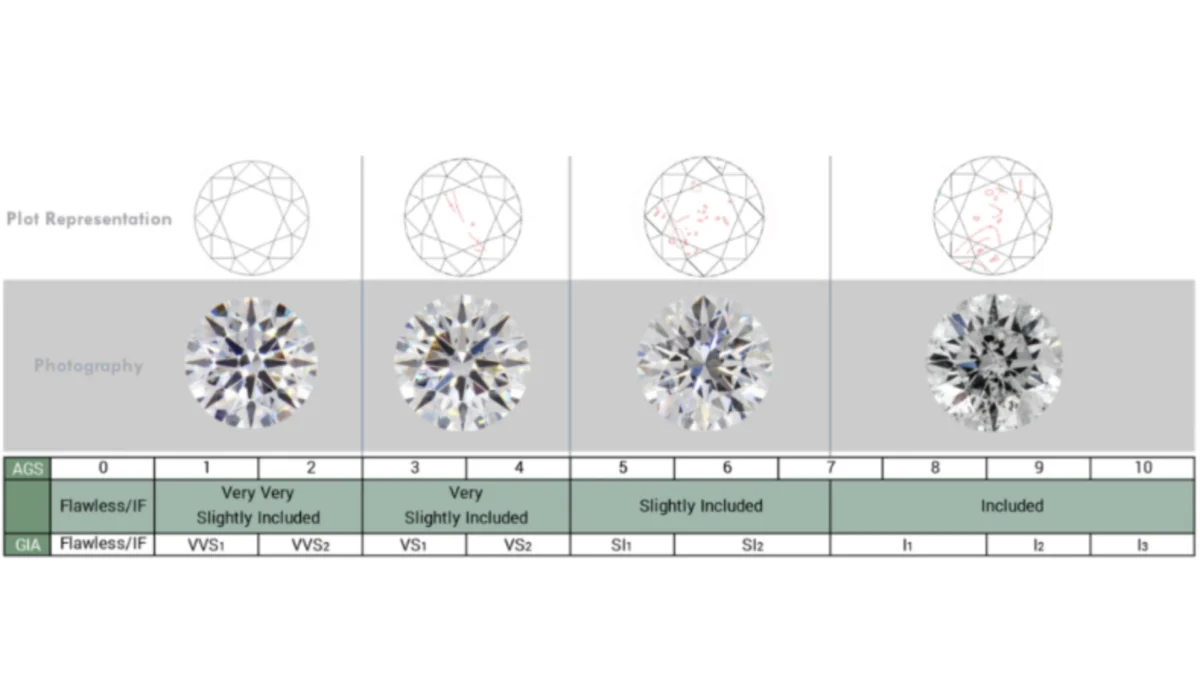
The GIA clarity chart provides a standardized framework for evaluating diamond clarity. This system assesses the presence, size, number, nature, position, and visibility of internal inclusions and external blemishes. Grading is conducted by skilled professionals under 10x magnification, resulting in one of 11 grades, ranging from Flawless (FL) to Included (I3). This scale applies universally to all diamonds, including laboratory-grown ones, as they share identical physical properties and are graded using the same meticulous criteria when full clarity reports are issued. The chart is instrumental in helping buyers understand how visible imperfections impact a diamond’s appearance, transparency, brilliance, and overall quality.

Overview of the GIA Clarity Grading Process
GIA graders meticulously examine diamonds under 10x magnification to determine their clarity grade. This involves a comprehensive assessment of factors such as the size, number, type, location, and visibility (relief) of inclusions and blemishes. Inclusions are internal characteristics formed during the diamond’s growth or from environmental stresses, while blemishes are external imperfections on the diamond’s surface. Both contribute to the final grade, which ultimately reflects the diamond’s overall appearance under close inspection. This methodical approach ensures consistency and reliability in diamond grading worldwide, enabling consumers to compare diamonds accurately regardless of their origin. It is important to note that even minute features invisible to the naked eye can influence the grade, even though many higher-graded diamonds appear visually perfect to the untrained eye.
The Pinnacle of Purity: Flawless (FL) and Internally Flawless (IF) Grades
-
Flawless (FL): The highest possible clarity grade, FL diamonds exhibit no inclusions or blemishes visible under 10x magnification. These diamonds represent the apex of clarity, with no internal or external imperfections detectable by expert graders. Their rarity stems from requiring ideal growth conditions, making FL diamonds highly prized for their exceptional transparency and light performance. Buyers seeking absolute perfection in their diamond often opt for this grade, despite the significant premium it commands.
-
Internally Flawless (IF): Diamonds graded IF have no inclusions visible under 10x magnification. While they may possess minor external blemishes on the surface, their internal purity is exceptional, with only superficial marks preventing a full Flawless designation. IF diamonds offer a near-perfect appearance and sparkle, appealing to those who prioritize internal cleanliness. The distinction between IF and FL is subtle but holds significance in high-end diamond evaluations.
Very, Very Slightly Included (VVS1 and VVS2) Grades
VVS1 and VVS2 grades signify diamonds with inclusions so minute that they are extremely difficult for even a skilled grader to detect under 10x magnification. VVS1 typically presents slightly less noticeable characteristics than VVS2, but both are considered top-tier clarity grades. These diamonds offer outstanding quality with virtually no discernible impact on brilliance or transparency in normal use. Many consumers consider VVS diamonds to be effectively flawless to the unaided eye, providing excellent value for those seeking a premium appearance.
Very Slightly Included (VS1 and VS2) Grades
VS1 and VS2 diamonds contain inclusions that are difficult to observe under 10x magnification and are classified as minor. VS1 inclusions are generally less prominent than those found in VS2, yet both grades retain a high potential for being eye-clean. This range represents a "sweet spot" for many buyers, as the inclusions rarely affect the diamond’s naked-eye beauty or structural integrity. VS-graded diamonds deliver impressive sparkle and transparency at more accessible price points compared to VVS grades.
Slightly Included (SI1 and SI2) Grades

SI1 and SI2 grades feature diamonds with inclusions that are noticeable under 10x magnification. These characteristics are more evident than in VS grades but often remain invisible to the naked eye, depending on their size, location, and type. Crucially, many SI1 diamonds and a significant portion of SI2 diamonds achieve eye-clean status in practical viewing conditions, offering strong value. This category allows for substantial cost savings while generally preserving an excellent real-world appearance for most jewelry applications.
Included (I1, I2, and I3) Grades
Included grades (I1, I2, and I3) indicate diamonds with obvious inclusions that are readily visible under 10x magnification. These flaws can impact transparency, brilliance, and potentially even durability. I1 diamonds show moderate effects, while I3 diamonds exhibit the most pronounced imperfections, significantly affecting overall performance. Lower clarity in this range can result in visible haze, dark spots, or reduced light return. These grades are typically chosen by buyers whose primary priority is maximum size or other attributes, where flawless optics are a secondary concern.
How to Select a Clarity Grade for Optimal Value
The process of selecting a clarity grade involves understanding the GIA scale and, critically, prioritizing an "eye-clean" appearance. For most buyers, the goal is to find a diamond where inclusions are not visible without magnification, thereby preserving sparkle and beauty while optimizing value. The selection involves balancing visual appeal, budget constraints, and other significant factors such as diamond size and cut quality.
Prioritizing Eye-Clean Appearance
The most practical approach for consumers is to focus on whether inclusions are visible to the naked eye. This criterion directly impacts the diamond’s real-world beauty and brilliance. An eye-clean diamond appears flawless in everyday wear, even if it possesses microscopic imperfections that would be revealed under magnification. This strategy allows buyers to achieve stunning visual results without overpaying for clarity grades that exceed their visual needs. Most consumers find that VS2 and many SI1 diamonds meet this eye-clean standard, particularly in common diamond sizes. However, for larger diamonds (over 2 carats) or certain diamond shapes (like emerald or Asscher cuts), inclusions may become more readily apparent, necessitating careful inspection.
Recommended Clarity Grades for Assurance
For complete confidence that no inclusions will be visible to the naked eye, opting for VS2 or higher clarity grades is generally recommended. Diamonds in this range appear flawless to the unaided eye, with inclusions detectable only under 10x magnification by trained professionals. This range is particularly suitable for those prioritizing visual perfection or for pairing with higher color grades (D-F), where even the slightest imperfection might be more noticeable against a bright white background.
Exploring Value in SI Clarity Diamonds

SI1 and SI2 grades present an excellent opportunity for value-conscious buyers. While inclusions are evident under magnification, they are often hidden from the naked eye, especially in well-cut diamonds. Many SI1 diamonds achieve eye-clean status, offering significant savings compared to higher clarity levels. To ensure success with SI-quality diamonds, reviewing high-resolution images, 360-degree videos, and, if possible, seeking expert evaluation is highly advisable. Resources like PriceScope facilitate detailed comparisons and provide community insights to help identify truly eye-clean options within this range.
Balancing Clarity with Color and Other Factors
Clarity’s impact on perceived beauty is amplified or diminished by other attributes. Higher color grades (D-F) often pair best with VS2 or higher clarity to maintain a pristine aesthetic. Conversely, near-colorless diamonds (G-I) can combine effectively with SI clarity to deliver outstanding value without compromising visual appeal.
Other factors, such as cut quality, play a crucial role. An excellent cut can significantly enhance a diamond’s brilliance and scintillation, potentially masking minor clarity issues more effectively than a higher clarity grade alone. Brilliant cuts, such as round and princess shapes, tend to hide inclusions better than step-cut styles (e.g., emerald, Asscher). Therefore, adjusting clarity expectations based on the diamond’s cut and shape is a prudent strategy.
Leveraging Resources for Informed Selection
Communities and advanced online tools are invaluable for verifying eye-clean status through detailed visuals and discussions. PriceScope, an independent diamond education and comparison platform, offers extensive guides on the 4Cs, including clarity, along with search tools for loose diamonds from trusted vendors and forums where members share real-world experiences and photographs to assess inclusions. This empowers consumers to make more informed decisions by providing transparent information and peer advice tailored to specific clarity considerations.
Joining the Conversation: The Power of Community
Understanding the GIA clarity chart is a critical step towards a confident purchase. However, the practical challenge lies in finding an eye-clean diamond within budget, from a trustworthy seller, without succumbing to doubts or overpaying for grades that will not be visually apparent. This is where platforms like PriceScope become indispensable.
By joining thousands of informed diamond shoppers, enthusiasts, and experts in an unbiased community, consumers can access detailed clarity discussions, real-user photos of inclusions, pricing tools, and straightforward guides designed to demystify the process. Whether comparing VS2 versus SI1 lab-grown diamonds or determining which inclusions are most critical for a chosen diamond shape, individuals can find honest advice, supportive guidance, and vetted partnerships with reputable retailers such as Whiteflash, James Allen, and Blue Nile. Exploring these resources can transform the often-complex decision of choosing the right diamond into a more accessible and confident experience.