

The landscape of fine jewelry has been significantly reshaped by the emergence and widespread acceptance of lab-grown diamonds and moissanite. For consumers seeking alternatives to traditional mined diamonds, these two options present compelling choices, each with unique attributes that cater to diverse preferences and budgets. Understanding the fundamental differences between lab-grown diamonds and moissanite is crucial for making an informed purchase that aligns with personal style, values, and financial considerations. This comprehensive analysis delves into the composition, creation, visual characteristics, durability, and economic aspects of both gemstones, offering a clear path for consumers navigating this increasingly popular segment of the jewelry market.
Understanding the Core: Composition and Creation
At the heart of the distinction between lab-grown diamonds and moissanite lies their fundamental composition and the scientific processes used to create them.
Lab-Grown Diamonds: Real Diamonds, Real Origin
Lab-grown diamonds, also referred to as laboratory-created, synthetic, or cultured diamonds, are genuine diamonds. They are chemically, physically, and optically identical to natural diamonds mined from the earth. Their composition is pure carbon, arranged in a cubic crystal structure. The key difference lies in their origin: instead of forming over billions of years deep within the Earth’s mantle, they are meticulously grown in controlled laboratory environments.

Two primary methods are employed for their creation:
- High-Pressure High-Temperature (HPHT): This technique mimics the natural diamond-growing process. A small diamond seed crystal is placed in a high-pressure, high-temperature environment (exceeding 2,000 degrees Fahrenheit and pressures of approximately 1.5 million pounds per square inch). Carbon atoms then crystallize around the seed, layer by layer, forming a larger diamond.
- Chemical Vapor Deposition (CVD): This method involves placing a diamond seed in a vacuum chamber filled with carbon-rich gases. Under controlled temperatures and low pressures, these gases break down, and carbon atoms deposit onto the seed, allowing the diamond to grow.
Both HPHT and CVD processes result in diamonds that are indistinguishable from natural diamonds to the naked eye and possess the same remarkable hardness, brilliance, and fire. Reputable gemological laboratories, such as the Gemological Institute of America (GIA) and the International Gemological Institute (IGI), grade lab-grown diamonds using the same 4Cs (cut, color, clarity, and carat weight) standards applied to natural diamonds.
Moissanite: A Distinctive Gemstone
Moissanite, in stark contrast, is not a diamond. It is a gemstone composed of silicon carbide (SiC). While natural moissanite exists, it is exceedingly rare, found primarily in trace amounts within meteorites and certain geological formations. Consequently, virtually all moissanite used in jewelry today is lab-created.
The development of synthetic moissanite began in the 1990s, with Charles & Colvard being a pioneering company. The creation process involves advanced thermal growth techniques to produce single-crystal silicon carbide boules. This method requires precise conditions to grow crystals of sufficient clarity and size for faceting into gemstones.

While visually similar to diamonds at first glance, the silicon carbide composition gives moissanite distinct optical properties that set it apart from diamond.
Visual Appeal and Light Interaction
The aesthetic qualities of a gemstone are paramount for jewelry. Both lab-grown diamonds and moissanite offer captivating sparkle, but their interaction with light differs subtly yet significantly.
Lab-Grown Diamonds: Classic Brilliance
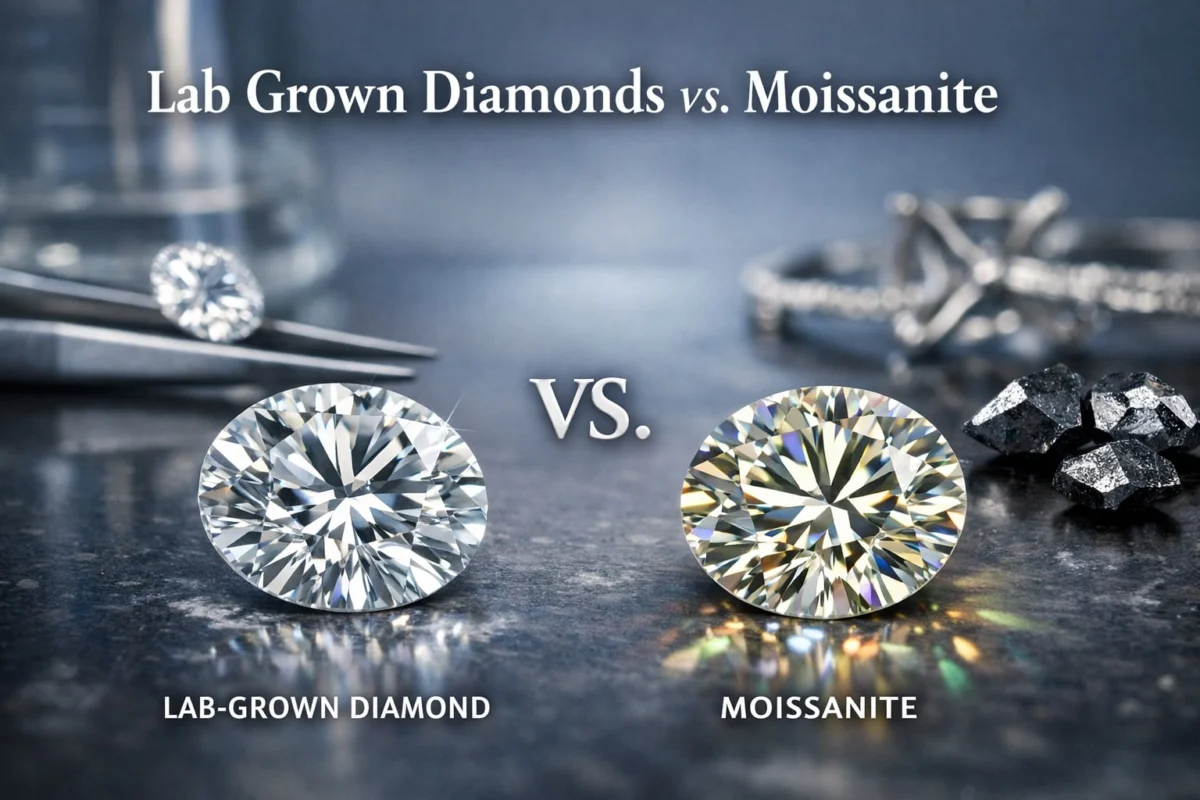
Lab-grown diamonds exhibit the quintessential diamond sparkle that has captivated humanity for centuries. Their brilliance, which refers to the white light reflected back to the viewer, is a result of their high refractive index (approximately 2.42). This leads to a balanced interplay of:
- Brilliance: Intense white light return.
- Fire: The dispersion of light into spectral colors (rainbow flashes).
- Scintillation: The play of light and shadow as the diamond moves, creating sparkle.
The ideal cut of a lab-grown diamond maximizes these qualities, producing a sophisticated and timeless sparkle that is deeply admired. The color grading for lab-grown diamonds follows the same scale as natural diamonds, ranging from D (colorless) to Z (light yellow or brown). Near-colorless (G-I) and colorless (D-F) grades are highly sought after for their pristine appearance.

Moissanite: Enhanced Fire and Sparkle
Moissanite is renowned for its exceptional brilliance and, notably, its enhanced fire. With a higher refractive index than diamond (ranging from 2.65 to 2.69), moissanite bends light more intensely, resulting in more pronounced rainbow flashes. Its dispersion value (0.104) is significantly higher than that of diamond (0.044), contributing to its characteristic vibrant, multi-colored sparkle.
This amplified fire can be particularly striking, especially in larger stones and under bright lighting conditions. While some consumers are drawn to this intense, fiery display, others may prefer the more subtle, classic sparkle of a diamond. Moissanite is typically available in near-colorless to colorless grades, often described using diamond terminology (e.g., "colorless," "near-colorless") to denote its lack of discernible yellow or brown tints.
Durability and Longevity
For jewelry intended for daily wear, particularly engagement rings, durability is a critical consideration. Both lab-grown diamonds and moissanite excel in this regard, though with slight differences.
Lab-Grown Diamonds: The Pinnacle of Hardness
Lab-grown diamonds score a perfect 10 on the Mohs scale of hardness, the same as natural diamonds. This makes them the hardest known natural material, rendering them exceptionally resistant to scratching, chipping, and abrasion. This unparalleled hardness ensures that lab-grown diamonds will retain their beauty and integrity for a lifetime, making them an ideal choice for enduring heirloom pieces.

Moissanite: A Highly Durable Gemstone
Moissanite ranks between 9.25 and 9.5 on the Mohs scale, positioning it as one of the toughest gemstones available. While not as hard as diamond, it is significantly more durable than most other gemstones, including sapphire and ruby. This high degree of hardness makes moissanite highly resistant to scratches and everyday wear, ensuring it maintains its luster and appearance over time. Its toughness makes it a practical and resilient choice for active individuals.
Price and Value Proposition
The economic aspect is often a significant driver in the decision-making process for consumers. Both lab-grown diamonds and moissanite offer substantial cost savings compared to natural diamonds.
Lab-Grown Diamonds: Accessible Diamond Quality
Lab-grown diamonds provide an opportunity to own a genuine diamond with the same physical and optical properties as a mined diamond, but at a considerably lower price point. Depending on the 4Cs and market fluctuations, lab-grown diamonds can be 50% to 70% less expensive than their natural counterparts. This price differential allows consumers to opt for larger carat weights, higher color grades, or superior clarity for the same budget, or to significantly reduce the cost of a diamond jewelry purchase. The market for lab-grown diamonds has seen substantial growth, with pricing continuing to become more competitive as production capabilities expand.
Moissanite: Exceptional Affordability
Moissanite stands out for its remarkable affordability. A 1-carat moissanite gemstone typically costs a few hundred dollars, making it a fraction of the price of a comparable lab-grown diamond or a natural diamond. This substantial cost difference allows for the acquisition of larger stones or the creation of more elaborate jewelry designs without incurring the same financial investment. For consumers prioritizing maximum visual impact and size for their budget, moissanite presents an extremely attractive value proposition.

Trusted Retailers for Informed Choices
Navigating the purchase of lab-grown diamonds and moissanite requires confidence in the retailer’s integrity, transparency, and product quality. Leading online jewelers have established themselves as trusted sources for these gemstones.
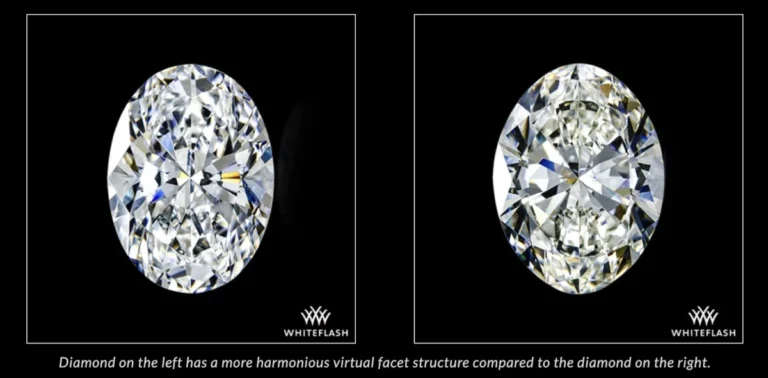
- Whiteflash: Renowned for its commitment to cut quality, Whiteflash offers a curated selection of lab-grown diamonds through its Precision Lab collection. They provide detailed light performance imagery and high-definition videos, enabling buyers to assess a diamond’s brilliance and fire.
- Blue Nile: Blue Nile boasts one of the largest online inventories of loose diamonds, including a comprehensive range of lab-grown options. Their extensive selection allows for easy comparison of various shapes, price points, and specifications.
- James Allen: James Allen distinguishes itself with its innovative 360-degree HD video technology, allowing customers to closely inspect every facet of a lab-grown diamond before making a purchase. They also offer competitive pricing and a wide array of choices.
These retailers consistently provide reliable grading, clear visual representations, and competitive pricing, ensuring that consumers can make informed decisions with confidence. Their commitment to quality and customer service makes them excellent starting points for those exploring lab-grown diamond options.
Key Differences Summarized
| Feature | Lab-Grown Diamonds | Moissanite |
|---|---|---|
| Composition | Pure Carbon (same as natural diamonds) | Silicon Carbide (SiC) |
| Origin | Lab-created, chemically identical to natural diamonds | Lab-created (natural form is extremely rare) |
| Hardness (Mohs) | 10 | 9.25 – 9.5 |
| Brilliance | High, balanced | Very high, often enhanced |
| Fire (Dispersion) | Moderate | Very high, pronounced rainbow flashes |
| Refractive Index | ~2.42 | ~2.65 – 2.69 |
| Grading | GIA, IGI standards (4Cs) | Typically described with diamond-like terms |
| Price | Significantly less than natural diamonds, more than moissanite | Substantially less than lab-grown and natural diamonds |
| Perceived Value | Genuine diamond properties, ethical sourcing | High sparkle, affordability, durable alternative |
Conclusion: Making the Right Choice for You
The decision between lab-grown diamonds and moissanite ultimately rests on individual priorities.
Choose Lab-Grown Diamonds if:

- You desire the exact chemical, physical, and optical properties of a diamond.
- You value the prestige and traditional appeal associated with diamonds.
- You seek a gemstone with unparalleled hardness and durability for a lifetime of wear.
- You want to acquire a genuine diamond at a significantly reduced cost compared to mined diamonds.
- You prioritize having a diamond that is certified and graded to the same rigorous standards as natural diamonds.
Choose Moissanite if:
- You are seeking the most sparkle and vibrant rainbow flashes for your budget.
- Affordability is a primary concern, allowing for larger stones or more intricate settings.
- You appreciate a highly durable gemstone that is well-suited for daily wear.
- You are not concerned with owning a diamond and are open to a beautiful, high-performing alternative.
- You are drawn to the unique, fiery brilliance that moissanite offers.
Both lab-grown diamonds and moissanite represent remarkable advancements in gemology, offering consumers beautiful, durable, and ethically produced alternatives to traditional mined diamonds. By understanding their distinct characteristics and value propositions, individuals can confidently select the gemstone that best aligns with their personal style, budget, and long-term aspirations. PriceScope, as a leading independent resource, offers a wealth of community insights, educational materials, and vendor comparisons to further support consumers in making this significant decision.