


For millennia, diamonds have been symbols of enduring love, prestige, and rarity, meticulously crafted by geological forces deep within the Earth over eons. This romantic narrative, however, is undergoing a profound transformation, driven by scientific innovation that allows for the creation of flawless diamonds in a matter of weeks. Lab-grown diamonds, chemically and physically identical to their mined counterparts, are rapidly challenging the traditional diamond market, offering consumers new choices and sparking a robust debate about value, origin, and consumer preference. A 2024 market analysis reveals a striking 43% surge in lab-grown diamond jewelry unit sales, underscoring the growing consumer embrace of these technologically advanced gems.
The Genesis of Brilliance: How Lab-Grown Diamonds Are Made
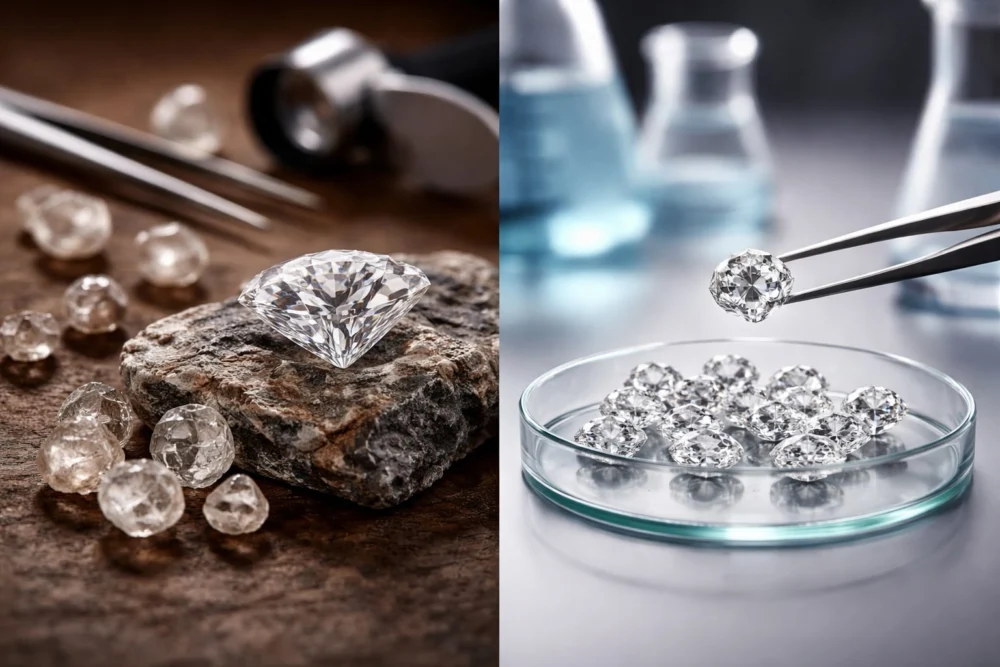
Lab-grown diamonds are not imitations; they are genuine diamonds, meticulously cultivated in controlled laboratory environments. These facilities replicate the extreme conditions under which natural diamonds form, utilizing advanced techniques to accelerate the crystallization process. The result is a diamond with the same hardness, brilliance, and chemical composition as a diamond mined from the Earth.

Two primary methods dominate the production of lab-grown diamonds: High-Pressure, High-Temperature (HPHT) and Chemical Vapor Deposition (CVD).
The HPHT method mimics the natural diamond formation process occurring miles beneath the Earth’s surface. A small diamond seed is placed within a high-pressure, high-temperature press, heated to approximately 2,000 degrees Celsius and subjected to pressures exceeding one million pounds per square inch. Carbon sources are introduced, which then bond to the seed crystal, slowly building the diamond’s structure. This method can yield high-quality diamonds, and it is particularly effective for producing larger stones and certain fancy colors.
The CVD method involves placing a thin diamond seed in a vacuum chamber filled with a carbon-rich gas mixture, such as methane, often combined with hydrogen. The chamber is then heated, and microwave energy or other methods are used to break down the gas molecules. Free carbon atoms then deposit onto the diamond seed, layer by layer, gradually forming a diamond crystal. CVD is known for its ability to produce exceptionally pure diamonds and is often used for creating high-clarity and specific color grades.

The Natural Diamond: A Chronicle of Earth’s Deep Past
Natural diamonds are born from immense geological pressures and temperatures within the Earth’s mantle, typically at depths of 90 to 155 miles. Their formation is a testament to billions of years of planetary evolution, requiring specific conditions of heat and pressure that are no longer prevalent in accessible regions of the Earth’s crust. These diamonds are composed solely of carbon atoms arranged in a precise cubic crystal lattice, a structure that imbues them with unparalleled hardness and brilliance.
The journey of a natural diamond from its inception to the surface is a dramatic one. Formed over millions, and often billions, of years, these gems are brought to the surface through rare and powerful volcanic eruptions that force kimberlite or lamproite pipes from the Earth’s mantle. This rapid ascent prevents the diamonds from reverting to graphite, their less stable carbon allotrope. Over geological time, erosion can expose these diamond-bearing deposits, scattering them into riverbeds and alluvial plains. The mining process, whether open-pit or alluvial, is a complex and resource-intensive undertaking, extracting diamonds that represent a finite and geologically scarce resource.
Certification and Identification: Ensuring Authenticity
Regardless of their origin, diamonds are meticulously graded by independent gemological laboratories. Reputable organizations like the Gemological Institute of America (GIA) and the International Gemological Institute (IGI) employ the universally recognized "4Cs" – cut, color, clarity, and carat weight – to assess a diamond’s quality.

For lab-grown diamonds, certification reports explicitly state their origin, often detailing the growth method used. While visual inspection and even standard gemological tools cannot distinguish between a lab-grown and a natural diamond of equivalent quality, advanced spectroscopic analysis can detect subtle differences in growth patterns, trace elements, and nitrogen concentrations. These scientific methods are crucial for authenticating a diamond’s origin and ensuring transparency in the market.
The presence of inclusions is a common characteristic of both natural and lab-grown diamonds. These internal features, such as mineral fragments or internal fractures, are a natural part of the crystallization process. While inclusions can affect a diamond’s clarity grade, they also contribute to its unique identity. For instance, HPHT diamonds may exhibit metallic flux remnants, a byproduct of the growth medium, while natural diamonds might contain tiny mineral crystals or "feathers." However, at the same clarity grade level (e.g., VS2), the visual impact of these inclusions is comparable.
Market Dynamics and Consumer Choices
The burgeoning popularity of lab-grown diamonds is significantly influenced by their affordability. Typically, lab-grown diamonds are priced 60-80% lower than natural diamonds of comparable quality. This cost differential allows consumers to acquire larger carat sizes, higher clarity grades, or superior color grades within the same budget, offering greater flexibility in personalizing their jewelry choices. A 2-carat lab-grown diamond, for instance, can often be purchased for the price of a 1-carat natural diamond of similar quality.

This economic advantage has led to a notable shift in consumer purchasing patterns. A 2024 market analysis indicated a substantial increase in unit sales for lab-grown diamond jewelry, suggesting a growing preference for value and perceived accessibility. This trend is particularly evident in the engagement ring market, where consumers are increasingly seeking larger and more visually impressive stones without compromising their financial goals.
However, the conversation around value extends beyond the initial purchase price. While lab-grown diamonds offer immediate cost savings, their resale value tends to depreciate more rapidly than that of natural diamonds. This is largely due to the predictable and scalable nature of lab production, which inherently limits scarcity. As production technology advances and capacity expands, the cost of lab-grown diamonds is expected to continue to decrease. In contrast, natural diamonds, with their finite supply and geological rarity, generally exhibit more stable, albeit still depreciating, long-term value retention.
The Emotional and Symbolic Landscape
Beyond the technical specifications and economic considerations, the choice between lab-grown and natural diamonds often hinges on emotional and symbolic factors. For some, the allure of a natural diamond lies in its ancient origin, its journey through billions of years of Earth’s history, and the romance of its natural formation. This connection to deep time and the "once-in-a-lifetime" geological event holds a profound appeal, imbuing the gem with a unique narrative.

Conversely, proponents of lab-grown diamonds often highlight their ethical sourcing, reduced environmental impact (compared to mining), and the technological marvel of their creation. For these consumers, the ability to acquire a diamond of exceptional quality and beauty through a controlled, modern process aligns with contemporary values of sustainability and innovation. The transparency in their origin and the predictable supply chain also contribute to their appeal.
Expert Perspectives and Community Insights
The complexities of the diamond market, encompassing both natural and lab-grown options, can be overwhelming for consumers. Navigating the nuances of certification, understanding the subtle differences in grading reports, and making informed decisions requires access to reliable information and unbiased advice.
Platforms such as PriceScope, a prominent diamond and jewelry forum, serve as vital resources for buyers seeking to demystify the diamond acquisition process. These communities bring together gemologists, seasoned buyers, and industry experts who share their knowledge and experiences. Discussions range from the practicalities of eye-clean clarity grades and the impact of cut quality on brilliance, to vendor reviews and comparative pricing analyses for both lab-grown and natural diamonds.

Resources like the Holloway Cut Advisor (HCA) on PriceScope offer objective assessments of diamond cut performance, providing data-driven insights that complement traditional grading reports. By offering a centralized hub for education, community discourse, and tool-based analysis, such platforms empower consumers to make confident purchasing decisions, cutting through marketing jargon and focusing on the tangible qualities that define a diamond’s beauty and value.
The Future of Diamond Choice
The diamond industry is at a pivotal moment, with lab-grown diamonds carving out a significant and growing segment of the market. While natural diamonds continue to hold their traditional prestige, rooted in rarity and geological history, lab-grown diamonds offer an increasingly compelling alternative for consumers prioritizing value, accessibility, and ethical considerations.
Ultimately, the "better" diamond is subjective and depends entirely on individual priorities, budget, and personal values. Whether one is drawn to the ancient narrative of a natural diamond or the innovative brilliance of a lab-created gem, the market now offers a diverse spectrum of choices, ensuring that the pursuit of this timeless symbol of love and commitment can be tailored to fit a wider array of desires and circumstances. As technology continues to advance, the dialogue surrounding diamonds will undoubtedly evolve, further shaping consumer perceptions and market dynamics in the years to come.