



The burgeoning market for lab-grown diamonds presents consumers with a compelling alternative to traditional mined stones, offering similar aesthetic and physical properties at a more accessible price point. However, navigating the nuances of diamond clarity is crucial to making an informed purchase. Understanding the grading scale, common inclusions, and their impact on a diamond’s brilliance can differentiate between overpaying for imperceptible perfection and securing a visually stunning stone without compromising on value. This guide delves into the intricacies of lab-grown diamond clarity, from the highest Flawless (FL) grade to Included (I3), empowering consumers to make discerning choices.
The clarity of a diamond, whether natural or lab-grown, refers to the presence, size, number, position, and visibility of internal inclusions and external blemishes. These characteristics, formed during the diamond’s genesis, are evaluated using the universally recognized Gemological Institute of America (GIA) grading scale. For lab-grown diamonds, the creation processes, such as High Pressure High Temperature (HPHT) or Chemical Vapor Deposition (CVD), can introduce unique inclusions, though the grading standards remain consistent with those applied to natural diamonds.
Similarities in Clarity Between Lab-Grown and Natural Diamonds
A critical aspect for consumers to understand is that lab-grown diamonds share identical physical, chemical, and optical properties with their naturally occurring counterparts. This means that a specific clarity grade, such as VS2 (Very Slightly Included), will exhibit the same characteristics and potential for eye-clean appearance whether it originates from the Earth or a laboratory. Grading laboratories like GIA apply the exact same stringent standards to both types of diamonds, ensuring a consistent and reliable evaluation of clarity.
This equivalency allows buyers to leverage familiar knowledge when assessing lab-grown diamonds. The concept of an "eye-clean" diamond—where inclusions are invisible to the unaided eye at normal viewing distances—remains paramount for achieving optimal beauty and brilliance in everyday wear, regardless of the diamond’s origin.
How Inclusions Form in Lab-Grown Diamonds
Inclusions in lab-grown diamonds are a direct result of the controlled growth environment. In HPHT diamonds, remnants of the metallic catalyst used in the process can be present. In CVD diamonds, non-diamond carbon or other process-related features might appear. These can manifest as metallic inclusions, graphitic areas, or subtle growth patterns that differ somewhat from the geological processes that form natural diamonds.
Despite these differences in origin, the impact of inclusions on a diamond’s clarity, sparkle, and overall value is comparable. While the controlled laboratory setting can sometimes lead to fewer or less severe inclusions than those found in natural diamonds formed under variable Earth conditions, the quality can vary between manufacturers. Therefore, relying on reputable grading reports and detailed seller-provided imagery remains essential for accurate assessment.
The Impact of Inclusions on Sparkle and Appearance

Inclusions within a diamond can disrupt the path of light, potentially diminishing its brilliance and fire. Large, numerous, or centrally located inclusions are more likely to affect the diamond’s sparkle. However, minor flaws that are only visible under 10x magnification typically have no discernible impact on the diamond’s appearance to the naked eye. More significant imperfections can lead to a perception of haziness, dark spots, or reduced transparency.
The degree to which an inclusion affects a diamond’s appearance depends on its type, size, and placement. Higher clarity grades, by definition, minimize these disruptive effects, ensuring that the diamond reflects and refracts light efficiently for a dazzling display.
Common Inclusions to Know
-
Needle: These appear as thin, elongated lines, resembling fine threads. They form along crystallographic growth directions. While small needles are often invisible to the naked eye in higher clarity grades, larger or clustered needles can impact the overall grade.
-
Cloud: A cloud inclusion is a grouping of many tiny pinpoints or other inclusions that create a hazy or milky appearance under magnification. Significant clouds can reduce a diamond’s transparency and sparkle.
-
Crystal (or Growth Remnant): These are small, mineral-like particles or diamond fragments trapped within the diamond’s crystal structure during its formation. In lab-grown diamonds, these may be described as growth-related characteristics. While tiny crystals may have minimal impact, larger ones can be visible and affect the clarity grade.
-
Feather: A feather inclusion is essentially a fracture within the diamond. These can range from shallow to deep and, if they reach the surface, can potentially affect the diamond’s durability. Small, shallow feathers are often not visible to the naked eye.
-
Pinpoint: These are the smallest and most common type of inclusion, appearing as tiny dots or specks, often black or white, visible only under magnification. They can be scattered individually or grouped into clouds. Isolated pinpoints generally have a negligible impact on a diamond’s appearance.
How Clarity Affects Lab Diamond Prices
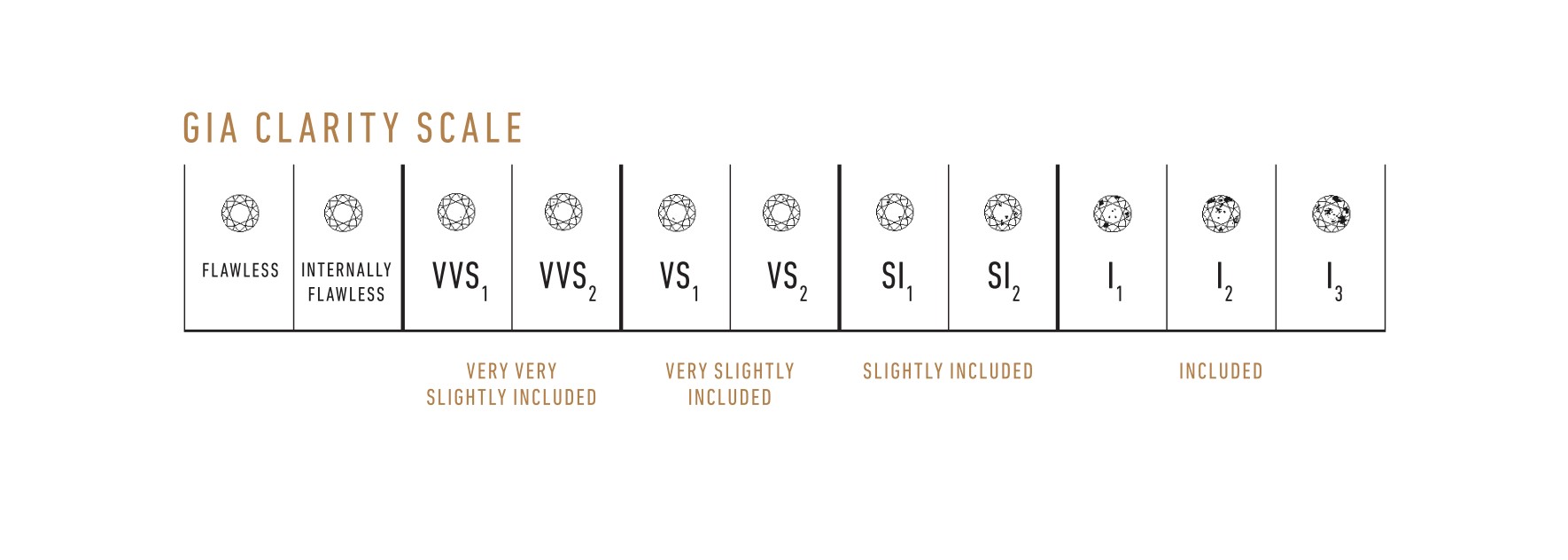
The clarity grade is a significant determinant of a lab-grown diamond’s price. The GIA scale, from FL to I3, directly correlates with the diamond’s inherent quality and rarity. Diamonds with fewer and less visible imperfections command higher prices because they are more difficult to produce consistently and possess superior optical properties.
While clarity is important for maximizing a diamond’s brilliance and transparency, its price impact in lab-grown diamonds is often moderated compared to natural diamonds, where scarcity drives extreme premiums for top clarity grades. Savvy consumers often find that prioritizing an excellent cut for maximum sparkle, alongside a visually appealing clarity grade, offers the best value.
Distinguishing Lab-Grown Diamonds from Simulants
It is crucial to differentiate lab-grown diamonds from diamond simulants like cubic zirconia or moissanite. Lab-grown diamonds are chemically, physically, and optically identical to natural diamonds. Simulants, on the other hand, are made from different materials and lack the same durability and light performance, leading to significantly lower prices. This distinction is vital for understanding value: certified lab-grown diamonds with genuine clarity grades represent true diamond value, while simulants offer a superficial resemblance at a fraction of the cost.
Clarity as One Key Factor in Overall Pricing
The final price of a lab-grown diamond is a result of the interplay between all four Cs: clarity, carat weight, color, and cut. While higher clarity grades generally increase cost, the premiums are less pronounced than in natural diamonds. This is because lab-grown diamond production is more controlled, making near-flawless stones more attainable.
Buyers often discover that achieving an "eye-clean" diamond in the VS2 or SI1 range provides exceptional visual appeal without the substantial price jump associated with VVS or IF grades. This allows for greater flexibility in allocating budget towards a larger carat weight or a better color grade.
Price Differences Across Clarity Grades
The price difference between clarity grades becomes more significant at the higher end of the spectrum. Moving from VS to VVS or IF grades can substantially increase the cost. However, the difference between SI and VS grades is typically more modest. For instance, SI1 or SI2 grades can often yield eye-clean diamonds at a considerably lower price point, making them a popular choice for budget-conscious shoppers.
In SI grades, inclusions are noticeable under 10x magnification but may or may not be visible to the naked eye, depending on their specific characteristics. This variability allows buyers to potentially allocate savings towards other attributes without sacrificing everyday beauty.
Eye-Clean Clarity and Value Optimization

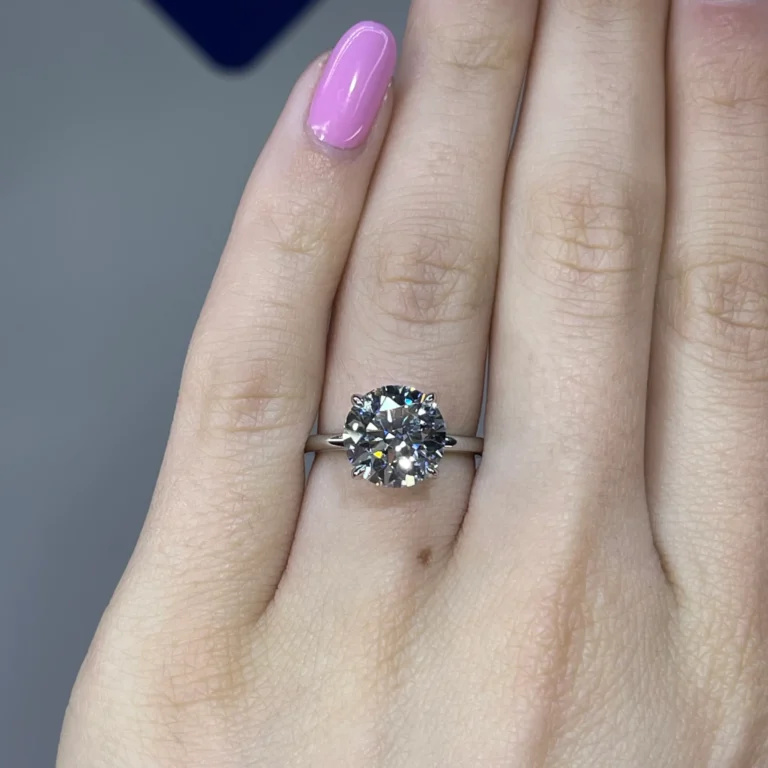
The concept of "eye-clean" clarity is central to maximizing value. Many lab-grown diamonds graded VS2 or SI1 appear flawless to the unaided eye, offering visual appeal comparable to higher grades at a reduced price. This is particularly advantageous in the lab-grown market, where production consistency makes high-clarity diamonds more accessible.
Focusing on eye-clean status, verified through detailed images, videos, or expert consultation, ensures that a diamond offers optimal sparkle and satisfaction while remaining within a reasonable budget. The price jumps between VS and SI ranges are often minimal, making these grades particularly attractive for value-seekers.
Balancing Clarity with Other Diamond Attributes
The influence of clarity on price is also affected by other diamond characteristics. For example, pairing high clarity with top color grades (D-F) can lead to a higher overall cost than when combined with near-colorless grades (G-I). In the latter case, SI clarity can offer an excellent balance of performance and affordability.
Cut quality, which dictates how light interacts with the diamond, often plays a more significant role in perceived brilliance than clarity alone. An excellent cut can mask minor clarity imperfections more effectively than high clarity in a poorly cut stone. Therefore, a holistic evaluation of all attributes is essential for making the best choice.
Do Lab-Grown Diamonds Lose Clarity Over Time?
A common misconception is that lab-grown diamonds might degrade in clarity or appearance over time, similar to some diamond simulants like cubic zirconia, which can develop haziness. However, lab-grown diamonds, being chemically and physically identical to natural diamonds, do not experience any inherent degradation in their internal clarity or sparkle due to normal wear or the passage of time.
The crystalline structure of lab-grown diamonds is the same as that of natural diamonds. Inclusions that are present at the time of grading remain fixed and do not migrate, expand, or multiply. If a diamond appears less brilliant over time, it is almost always due to surface residue from everyday exposure to lotions, oils, and dirt, which can be easily cleaned to restore its original sparkle.
Exceptional Hardness Prevents Structural Changes
Lab-grown diamonds possess the same exceptional hardness (10 on the Mohs scale) as natural diamonds, making them highly resistant to scratches and abrasions. This inherent durability ensures that the internal clarity characteristics, as determined by grading laboratories, remain unchanged. While extreme impacts can cause damage to any diamond, normal wear and tear does not affect the internal clarity of a lab-grown stone.

No Internal Degradation or Clouding Occurs
Unlike some materials that can undergo chemical instability leading to internal clouding or discoloration, lab-grown diamonds lack any such mechanism. The inclusions formed during the controlled growth process are stable and do not change their appearance or position over time. Numerous studies, including those by GIA, have confirmed the stability of optical properties in laboratory-grown diamonds. Owner experiences consistently report that their lab-grown diamonds maintain their eye-clean brilliance for many years, with no perceived loss of transparency.
Surface Buildup Is the Only Common Temporary Issue
The perceived "loss of clarity" is almost exclusively due to surface buildup. This accumulation of residues can temporarily dim the diamond’s light performance, making it appear less sparkly. Simple cleaning, whether professionally or at home with mild soap and a soft brush, will restore the diamond’s full brilliance. This phenomenon affects all diamonds equally and is unrelated to any change in the diamond’s internal structure or clarity.
Long-Term Care Ensures Lifelong Use
Proper care ensures that lab-grown diamonds retain their clarity and sparkle indefinitely. Storing diamonds separately to prevent scratches, removing them during strenuous activities, and regular cleaning are universal practices that maintain their pristine condition for generations. With such straightforward care, lab-grown diamonds are reliable and enduring choices for heirloom pieces.
The GIA Clarity Scale: A Standardized System
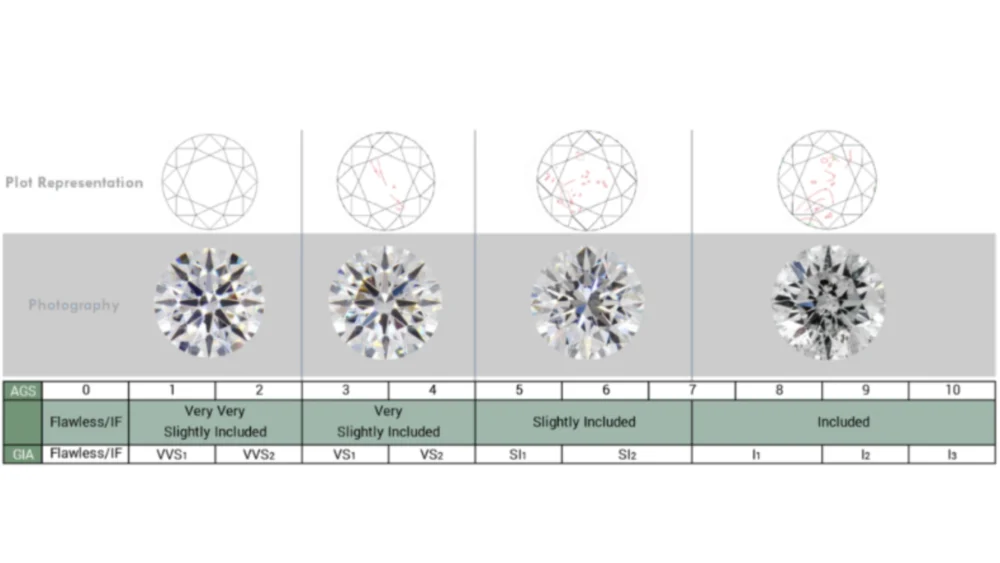
The GIA clarity chart provides a standardized framework for evaluating diamonds, assessing the presence, size, number, type, location, and visibility of both internal inclusions and external blemishes. Grading is performed under 10x magnification by trained professionals, resulting in one of 11 grades, ranging from Flawless (FL) to Included (I3). This scale applies equally to all diamonds, including laboratory-grown ones, due to their shared physical properties.
Overview of the GIA Clarity Grading Process
GIA graders meticulously examine diamonds at 10x magnification, considering multiple factors to assign a clarity grade. Inclusions are internal characteristics that formed during the diamond’s growth or from stresses, while blemishes are external imperfections on the diamond’s surface. Both influence the final grade, which reflects the diamond’s overall appearance under close inspection. This rigorous process ensures consistency and reliability, allowing for accurate comparison of diamonds worldwide.

Flawless (FL) Grade
The highest clarity grade, Flawless (FL), signifies diamonds with no inclusions or blemishes visible under 10x magnification. These diamonds are exceptionally rare, representing the pinnacle of clarity and requiring ideal growth conditions. FL diamonds exhibit exceptional transparency and light performance and are highly prized, commanding a significant premium.
Internally Flawless (IF) Grade
Internally Flawless (IF) diamonds have no inclusions visible under 10x magnification, though they may possess minor external blemishes. This grade indicates exceptional internal purity, with only superficial marks preventing a full Flawless designation. IF diamonds offer a near-perfect appearance and are favored by those who prioritize internal cleanliness.
Very, Very Slightly Included (VVS1 and VVS2) Grades
VVS1 and VVS2 grades feature inclusions that are extremely difficult for even skilled graders to detect under 10x magnification. VVS1 typically has slightly less noticeable characteristics than VVS2, but both are considered top-tier for clarity. These diamonds offer outstanding quality with virtually no impact on brilliance or transparency in normal use, appearing effectively flawless to the unaided eye.
Very Slightly Included (VS1 and VS2) Grades
VS1 and VS2 diamonds contain inclusions that are classified as minor and difficult to observe under 10x magnification. VS1 inclusions are generally less prominent than those in VS2, yet both grades offer high potential for being eye-clean. This range represents a sweet spot for many buyers, as inclusions rarely affect naked-eye beauty or durability, providing impressive sparkle and transparency at more accessible price points.
Slightly Included (SI1 and SI2) Grades
SI1 and SI2 grades show inclusions that are noticeable under 10x magnification. These characteristics are more evident than in VS grades but often remain invisible without magnification, depending on their size, location, and type. Many SI1 and some SI2 diamonds achieve eye-clean status in practical settings, offering strong value and enabling significant savings while preserving an excellent real-world appearance.

Included (I1, I2, and I3) Grades
Included grades (I1, I2, I3) feature obvious inclusions visible under 10x magnification, which can impact transparency, brilliance, and potentially durability. I1 shows moderate effects, while I3 exhibits the most pronounced flaws. These grades are often chosen when budget is the primary concern and maximum size or other attributes outweigh flawless optics.
How to Select a Clarity Grade
The selection of a clarity grade involves balancing visual appeal with budget and other diamond attributes. The primary goal for most buyers is an "eye-clean" diamond, where imperfections are not visible to the naked eye.
Understanding the GIA Clarity Scale
The GIA scale provides a standardized framework, but practical visibility is key. Many diamonds in the VS or SI ranges appear flawless in everyday wear. Focusing on brilliance derived from an excellent cut, rather than striving for absolute microscopic perfection, often leads to a more satisfying purchase.
Prioritizing Eye-Clean Appearance
The true measure of a diamond’s beauty lies in its appearance to the unaided eye. An eye-clean diamond delivers stunning results without overpaying for grades beyond visual needs. Most consumers find VS2 and many SI1 diamonds meet this standard, particularly in smaller to medium-sized stones. For larger diamonds (over 2 carats) or certain shapes, careful inspection becomes more critical.
Recommended Clarity Grades for Assurance
For absolute confidence that inclusions will not be visible to the naked eye, VS2 or higher clarity grades are recommended. These diamonds appear flawless and are suitable for those who prioritize perfection or are pairing with higher color grades where any flaw might be more apparent.

Exploring Value in SI Clarity Diamonds
SI1 and SI2 grades offer excellent value. While inclusions are visible under magnification, they are often hidden to the naked eye. High-resolution images, 360-degree videos, and expert evaluation are crucial for identifying eye-clean options within these grades.
Balancing Clarity with Color and Other Factors
Clarity’s impact on price is influenced by color. High color grades pair best with VS2 or higher clarity for a pristine look, while G-I color diamonds often combine effectively with SI clarity for outstanding value. Cut quality significantly affects sparkle and can help mask minor clarity issues. Brilliant cuts, like round and princess, tend to hide flaws better than step cuts.
Leveraging Resources for Informed Selection
Communities and tools offer valuable insights. Independent diamond education resources and forums provide detailed guides, search tools, and peer reviews to help consumers assess clarity and make informed decisions.
Join the Largest Diamond and Jewelry Forum
Navigating the complexities of diamond clarity can be simplified by engaging with communities of experienced buyers and experts. Resources like PriceScope offer unbiased advice, user-generated photos of inclusions, pricing tools, and connections to trusted retailers. Whether comparing VS2 versus SI1 lab-grown diamonds or understanding inclusions in specific shapes, these platforms provide the support needed for confident purchasing decisions.