

A recent article published by The New York Times has brought significant mainstream attention to a quiet but profound revolution in the wedding industry: the growing demand for and provision of sensory-friendly and neurodivergent-inclusive ceremonies. Published last weekend, the piece challenges long-held assumptions about wedding traditions, asserting that these celebratory events need not be inherently overwhelming, loud, or uncomfortable. This coverage marks a critical moment for a movement that has been steadily gaining momentum, particularly within communities like Offbeat Wed, which has championed alternative and inclusive wedding planning for years.
The article’s premise, while seemingly simple, carries substantial weight, questioning the very fabric of traditional nuptial celebrations. It spotlights how conventional weddings often implicitly demand a high degree of social, sensory, and emotional endurance from participants and guests alike. By centering the experiences of neurodivergent individuals and those with sensory sensitivities, the New York Times piece poses a question that many in the industry are now grappling with: "Do we actually have to do it this way?" This inquiry is resonating deeply, propelling a re-evaluation of event design, guest experience, and the fundamental purpose of a wedding.
The Traditional Wedding Paradigm and Its Challenges
For decades, the standard wedding template has largely remained unchanged: long days filled with numerous events, often featuring loud music, crowded spaces, rigid timelines, formal attire (which can be scratchy or constricting), and intense social performance expectations. This model, while beloved by many, inadvertently creates significant barriers and discomfort for a substantial portion of the population. Individuals who are neurodivergent—encompassing conditions such as autism spectrum disorder (ASD), attention-deficit/hyperactivity disorder (ADHD), sensory processing disorder, and social anxiety—often find these environments profoundly challenging.
The unspoken rules of traditional weddings often treat discomfort as an inevitable part of the experience. Exhaustion is frequently anticipated, overwhelm normalized, and anxiety sometimes misconstrued as a personal flaw rather than a predictable response to a highly stimulating and demanding environment. For someone with sensory sensitivities, the combination of bright lights, strong scents, loud conversations, unpredictable schedules, and the pressure of social interaction can lead to sensory overload, burnout, or even meltdowns. Similarly, individuals with ADHD may struggle with long periods of forced stillness or attention, while those with social anxiety might find large gatherings and performance expectations incredibly draining. The traditional focus on spectacle over individual well-being has, for too long, overlooked these crucial human needs.
A Growing Awareness and the Call for Inclusivity
While precise figures on neurodivergent individuals planning or attending weddings are still emerging, broader studies indicate that approximately 15-20% of the global population is considered neurodivergent. This significant demographic underscores the increasing need for inclusive practices across all industries, including event planning. The heightened public discourse around neurodiversity in recent years, coupled with greater self-identification and understanding, has naturally extended into personal life events like weddings. Couples are increasingly seeking ways to celebrate their unions authentically, which now includes designing events that respect their own neurological profiles and those of their loved ones.
The New York Times article effectively illustrates this shift by profiling couples and vendors who are actively reimagining what a wedding can be. Notably, many of the individuals featured have long been part of the Offbeat Wed community, a platform that has been at the forefront of advocating for and showcasing alternative wedding styles for over two decades. This indicates that the current mainstream attention is not merely a "trend-hunting" exercise but rather a recognition of carefully and thoughtfully built alternatives that have been developed and refined within dedicated communities over many years.
Pioneering Examples of Neurodivergent-Friendly Nuptials
The New York Times piece highlights several compelling examples of couples who have customized their weddings to prioritize nervous system regulation and sensory comfort:

-
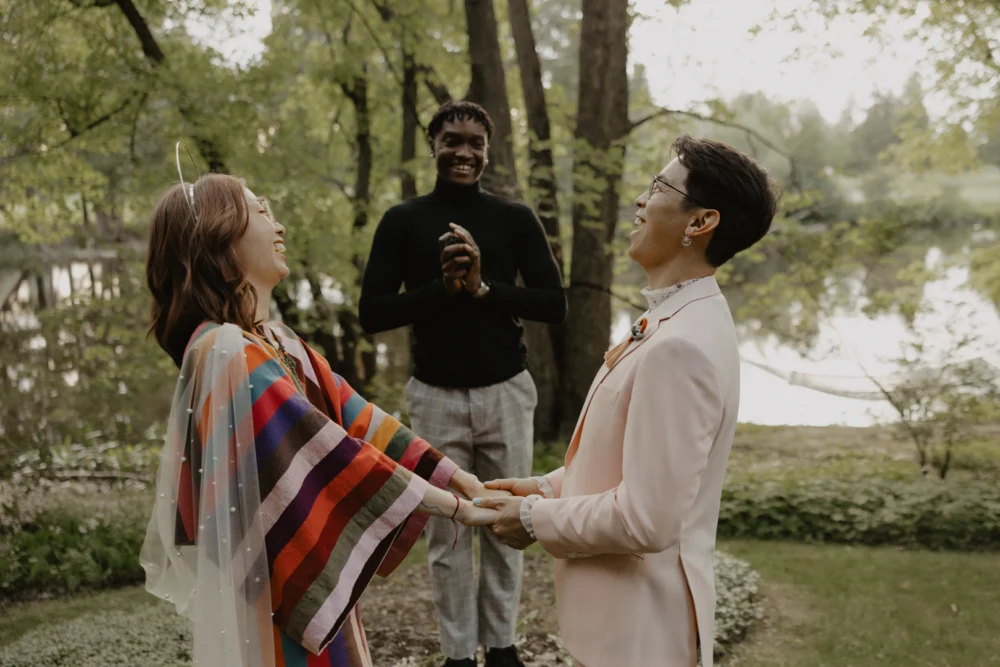
Ryookyung Kim and Philip Chan: This couple, whose wedding was previously featured on Offbeat Wed in 2023, exemplified a modular approach to their celebration. They opted to split their wedding into multiple parts, limiting guest counts for each segment, skipping traditional dances, and incorporating a designated "quiet room." Their meticulous control over their sound environment ensured a more manageable experience. Their choices underscore a proactive strategy to wedding planning that prioritizes individual well-being over rigid adherence to conventional norms, setting a precedent for others seeking similar accommodations.
-
Amanda Paterson: Featured recently on Offbeat Wed, Paterson meticulously constructed her entire wedding ensemble around her texture sensitivities. A particularly innovative detail was weighting her bouquet, providing her with a grounding, tactile object to hold during moments of potential overwhelm. This illustrates how thoughtful design, down to the smallest detail, can significantly enhance comfort and reduce sensory distress.
-
Jackie Barnes: Barnes’s story is particularly poignant, as she traces her own autism diagnosis back to the intense experience of wedding planning. Even a small, carefully planned day proved overwhelming, leading her to realize she was not alone in her struggles. Her essay about this journey, published by Offbeat Wed a couple of years ago, resonated with many, highlighting the systemic nature of wedding-related stress and the need for greater understanding and accommodation.
These stories collectively emphasize the concept of "respecting capacity" – a fundamental shift from the expectation of enduring discomfort to designing events that genuinely accommodate individual needs and limitations.
The Wedding Industry’s Evolution: Vendors Leading the Change
The shift towards neurodivergent-friendly weddings is not solely driven by couples; it’s also being embraced and facilitated by a growing number of wedding professionals. The New York Times article quoted several vendors, many of whom are long-standing members of the Offbeat Wed vendor community, demonstrating a proactive adaptation within the industry.
-
Jake Taylor from Functions & Gatherings: As a wedding planner, Taylor openly discusses his role in empowering couples to "opt out" of traditions that cause discomfort. This involves active listening, offering creative alternatives, and advocating for the couple’s preferences, even if they deviate from established norms. Planners like Taylor are becoming navigators, guiding couples through the labyrinth of wedding expectations to create truly personalized and comfortable experiences.
-
Maya Lovro from Maya Lovro Photography: Photographers like Lovro play a crucial, often subtle, role. She describes actively observing couples for signs of overload and quietly creating space for them to decompress when needed. This might involve stepping away from the camera, guiding them to a quieter area, or simply offering a moment of respite. This kind of empathetic awareness from vendors transforms the wedding day experience from a performance into a supported journey.
Beyond planners and photographers, the article also notes how dress shop owners are rethinking their environments—adjusting lighting, sound, fabric choices, and sales pressure—to create a more inclusive and less overwhelming shopping experience for neurodivergent clients. This holistic approach indicates that the demand for inclusivity is permeating every facet of the wedding industry, from initial planning stages to the day-of execution. The collective shift from "What should a wedding look like?" to "What can our nervous systems actually handle?" signifies a maturation of the industry, moving towards a more human-centered approach.
Offbeat Wed’s Enduring Influence and Ariel Meadow Stallings’s Vision
Ariel Meadow Stallings, founder of Offbeat Wed, has been an eyewitness to and a catalyst for this evolution for over two decades. Her insights, prominently featured in the New York Times article, provide crucial context for understanding the trajectory of wedding trends. Stallings observed that while early 2000s weddings often expressed identity through subcultures and the mid-2010s saw a rise in fandom and cultural references, the 2020s mark a profound "inward turn."

"We went from, ‘I’m going to have a punk wedding,’ to, ‘I’m having a Harry Potter wedding,’ to ‘I want to have a wedding that honors that I’m on the spectrum, and my partner has A.D.H.D. and social anxiety,’" Stallings explained to the Times. This progression highlights a deeper level of self-awareness and a desire for authenticity that prioritizes personal well-being over external display. For Stallings, sensory-friendly weddings are far more than a stylistic preference; they represent a fundamental challenge to the ingrained belief that exhaustion, overwhelm, and anxiety are merely "part of what a wedding is." Her platform, Offbeat Wed, has been instrumental in documenting and fostering this shift, providing a space for couples to share their unique stories and for vendors to connect with clients seeking alternative approaches.
Neurodiverse Weddings as the Ultimate Form of Etiquette
One of the most compelling arguments put forth by Ariel Meadow Stallings, though not fully elaborated in the Times article, is the notion that neurodiverse considerations at weddings represent the ultimate form of modern etiquette. Historically, etiquette served as a social lubricant, designed to reduce friction in charged social situations by providing clear guidelines on interactions, timing, and behavior. However, modern weddings have often abandoned this function, replacing it with spectacle, "tradition cosplay," and a series of unspoken endurance tests.
Neurodivergent couples, by prioritizing nervous system regulation and sensory comfort, are effectively restoring etiquette to its original purpose: helping humans navigate a crowded, emotional environment with greater ease and less stress. This means designing events that anticipate stress points, make rules legible, and offer guests genuine choices about their participation. It’s not necessarily about making weddings quiet or minimal, but about making them respectful of human capacity.
When weddings prioritize how people genuinely feel, rather than just how they appear, the ripple effects are transformative. Events become more honest, flexible, and ultimately, more humane. This shift signals a move towards a deeper social contract, acknowledging that being in an emotionally charged, crowded space is work, and designing accordingly. This focus on capacity, pacing, sensory load, and recovery time—rather than just identity signaling—is redefining politeness in a profound way.
Broader Implications for the Wedding Industry and Society
This growing movement is not an isolated phenomenon; it reflects a broader societal trend towards greater understanding and accommodation of diverse needs. The New York Times article serves as a powerful validation of this ongoing shift. It signals to both couples and vendors that designing for neurodiversity is not a niche request but an increasingly recognized and respected approach to event planning.
For the wedding industry, this means a continued evolution in services and offerings. Vendors who can demonstrate expertise in creating inclusive and accessible experiences will likely gain a competitive advantage. This includes providing flexible packages, offering sensory checklists, having quiet spaces available, being mindful of lighting and sound, and training staff in neurodiversity awareness. The demand for "inclusive, accessible vendors" is growing, and platforms like Offbeat Wed’s vendor guide, which allows professionals to self-identify as LGBTQ+, disabled, or neurodivergent, are crucial in helping couples find professionals who share their language and understanding.
Ultimately, the increased visibility brought by mainstream publications like The New York Times helps normalize these practices and empower more couples to advocate for their needs. It educates the broader public on the diverse ways people experience the world and encourages a more empathetic approach to celebration. This is not merely a passing trend but a fundamental reorientation of how weddings are conceived and executed, ensuring that these joyous occasions are truly joyful and comfortable for everyone involved. The ongoing work of communities like Offbeat Wed, now recognized by a wider audience, paves the way for a wedding landscape that is genuinely inclusive, thoughtful, and respectful of real lives, rather than forcing individuals into a rigid template.