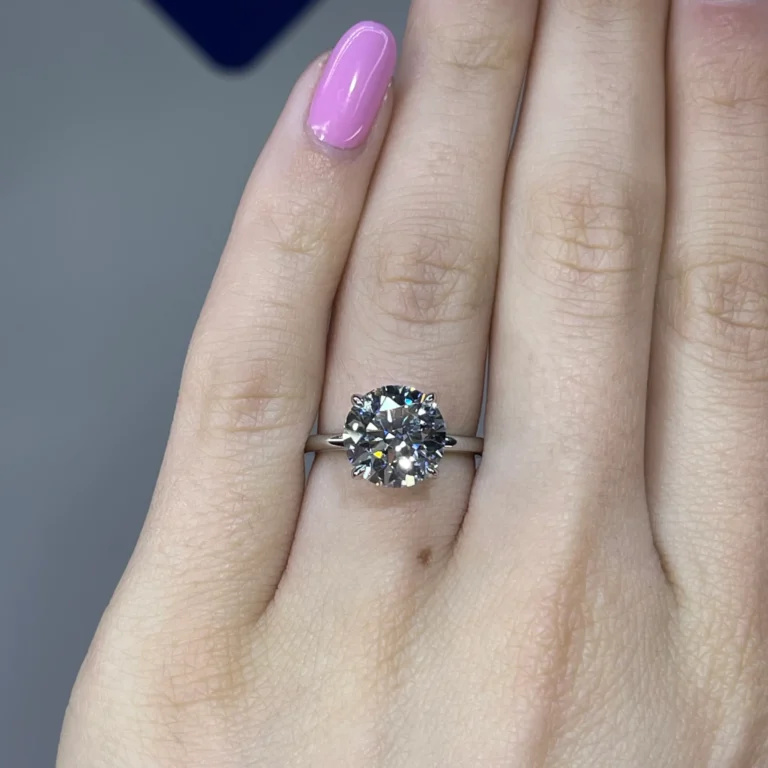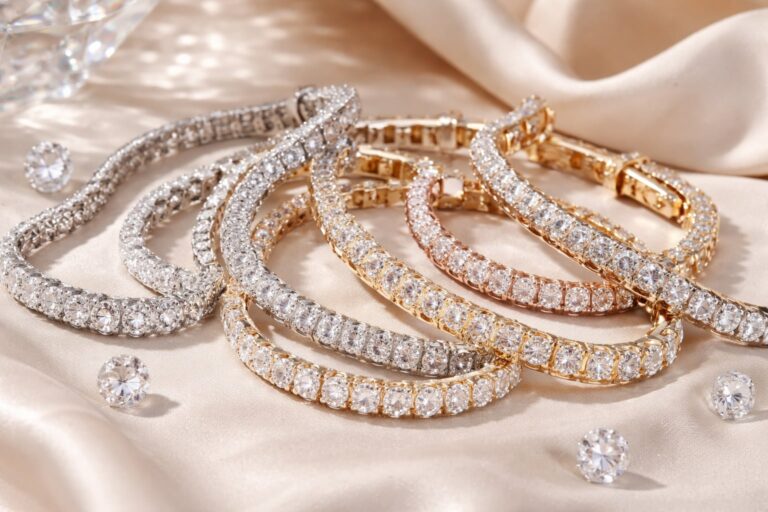




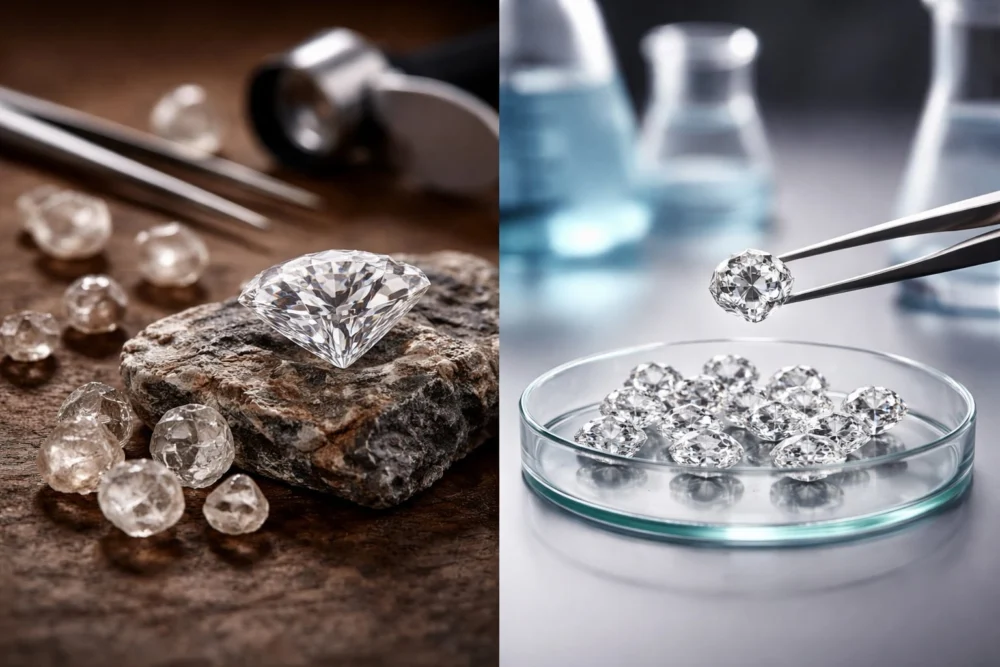
For centuries, diamonds have been revered as elusive gems, painstakingly formed deep within the Earth over billions of years. They symbolize scarcity, prestige, and enduring romance. However, modern science is challenging this age-old paradigm, asking why we should rely on mining when flawless diamonds can be sustainably created in mere weeks. Lab-grown diamonds represent a significant innovation, meticulously replicating nature’s processes within advanced facilities. These gems are chemically and physically identical to their mined counterparts, often presenting a more accessible entry point in terms of cost. This shift is not merely theoretical; a 2024 market analysis indicates a substantial 43% surge in lab-grown diamond jewelry unit sales, underscoring their growing prominence in the consumer market. Industry reports further highlight the increasing adoption of lab-grown diamonds in engagement rings, driven by consumer interest in achieving greater carat sizes and superior quality without exceeding their budget.
The Genesis of Lab-Grown Diamonds: Mimicking Earth’s Crucible
At its core, a lab-grown diamond is a testament to scientific ingenuity, produced in a controlled laboratory environment. These facilities replicate the extreme conditions under which carbon crystals naturally form, accelerating the process for faster, more precise growth. Unlike mined diamonds, which are the product of geological processes spanning millennia, lab-grown diamonds are synthesized using sophisticated methods to create pure carbon structures with identical physical and chemical properties.
Certification and Identification: Ensuring Authenticity
The manufacturing process ensures that lab-grown diamonds possess the same hardness and light-handling capabilities as natural diamonds, making them suitable for high-value jewelry. Independent certification from esteemed bodies like the Gemological Institute of America (GIA) is crucial for verifying legitimacy and providing comprehensive reports on quality factors such as cut, color, clarity, and carat weight.

Contrary to some misconceptions, lab-grown diamonds are unequivocally genuine gems. They share the same fundamental carbon structure, chemical composition, and performance characteristics as natural diamonds. Myths suggesting they are mere imitations overlook their inherent diamond nature; only specialized scientific instruments can detect the subtle growth patterns that differentiate them from their earth-mined counterparts. Their durability is equally comparable; both achieve the maximum rating of 10 on the Mohs scale, rendering them resistant to everyday wear and tear. Inclusions, which can occur in both types, add unique characteristics without diminishing value.
Manufacturing Methodologies: High-Pressure High-Temperature (HPHT) and Chemical Vapor Deposition (CVD)
The creation of lab-grown diamonds begins with small carbon fragments, known as seeds, which serve as the foundation for crystal growth. These seeds are then meticulously cultivated using one of two primary methods: High-Pressure High-Temperature (HPHT) synthesis or Chemical Vapor Deposition (CVD). Both techniques significantly accelerate the natural diamond formation process, yielding polished diamonds ready for jewelry settings in a fraction of the geological time.
The HPHT method ingeniously simulates the extreme conditions found deep within the Earth’s mantle. In this process, a diamond seed is enclosed within a specialized high-pressure apparatus. This unit is then subjected to immense temperatures, often reaching around 2,000 degrees Celsius, and pressures exceeding one million pounds per square inch. Carbon sources are introduced, which then adhere to the seed, gradually building a crystalline diamond structure. The result is a rough diamond that, once extracted, is cut and polished to mirror the strength and appearance of its natural counterpart, ensuring a consistent output suitable for jewelry applications.
The CVD method operates on a different principle. Here, a thin diamond seed is placed within a sealed chamber, which is then filled with a carbon-rich gas mixture, typically methane, diluted with hydrogen. The chamber is subjected to microwave energy or another heat source, causing the gas molecules to break down. This releases free carbon atoms, which then deposit onto the diamond seed, layer by layer, forming new diamond crystals over time. This method offers precise control over size and characteristics, allowing for the creation of gems with exceptional clarity and color. After cutting and polishing, some diamonds may undergo further treatments to enhance their inherent qualities, a practice that is disclosed on their grading reports.

Distinguishing between diamonds produced by these methods, or from natural origins, requires advanced analytical techniques. Visually, the naked eye cannot differentiate between them. Their fundamental traits and evaluation standards, including shape, color, clarity, and weight, are identical. Discussions about which method is "better" often depend on individual priorities, and jewelers can offer guidance based on specific needs and preferences.
The Geological Journey: Natural Diamonds
In stark contrast to their laboratory-created counterparts, natural diamonds embark on an extraordinary geological journey spanning billions of years. These gems are formed under immense pressure and heat within the Earth’s mantle, typically between 93 to 155 miles below the surface. In these deep-mantle regions, pressures can reach 45 to 60 kilobars, and temperatures range from 900 to 1,300 degrees Celsius. These stable environments, often found beneath ancient continental cratons, are crucial for carbon to crystallize into diamonds, preventing it from reverting to graphite.
The formation process begins with carbon sources, such as fluids rich in carbon dioxide and methane, that seep into mantle rocks. Through processes like plate subduction, where oceanic crust sinks into the mantle, heat and pressure are generated, facilitating the transformation of carbon into diamond crystals. These processes can take billions of years, with most natural diamonds dating back one to three-and-a-half billion years. Inclusions trapped within the diamond during its formation provide invaluable clues about the geological conditions and the surrounding minerals of its ancient genesis. Volcanic activity, specifically kimberlite and lamproite eruptions, then transports these ancient gems to the Earth’s surface. These rapid ascents, occurring hundreds of millions of years ago, ensure the diamonds retain their crystalline structure by maintaining high pressure during their journey.
Physical and Chemical Properties: Identical at the Atomic Level
The remarkable properties of diamonds, whether natural or lab-grown, stem from their fundamental atomic structure. Composed entirely of carbon atoms arranged in a precise, tightly bound cubic lattice, diamonds exhibit unparalleled hardness. On the Mohs scale, they achieve a perfect score of 10, meaning they can scratch virtually any other known material. This structure also contributes to their exceptional refractive index of approximately 2.42, which enables the brilliant sparkle and captivating "fire" for which diamonds are renowned. Their specific gravity is around 3.52, and they are known for their lack of birefringence, ensuring consistent optical performance.

While diamonds are pure carbon, trace elements can impart subtle colors. The most highly prized diamonds are those that are completely colorless, falling within the D-to-Z grading scale. However, the presence of elements like nitrogen can cause yellow tints, while boron can produce vivid blue hues. These variations, whether naturally occurring or precisely introduced in a lab, contribute to the diverse palette of diamond colors available.
Assessing Quality: The 4Cs Framework
Regardless of their origin, diamonds are assessed for quality using the universally recognized "4Cs": Cut, Color, Clarity, and Carat weight. These criteria provide a standardized framework for evaluating a diamond’s beauty, brilliance, and overall value.
- Cut: This refers to the proportions, symmetry, and polish of a diamond, which dictate how well it reflects and refracts light. A well-cut diamond will exhibit exceptional brilliance (white light return), fire (dispersion of light into spectral colors), and scintillation (the play of light and shadow as the diamond moves). The quality of the cut is paramount to a diamond’s visual appeal, often influencing its sparkle more than its color or clarity.
- Color: This refers to the absence of color in a diamond. While most diamonds fall within a colorless to light yellow or brown range (graded D-Z), rarer fancy-colored diamonds exist in shades of pink, blue, green, and yellow, commanding significantly higher prices due to their extreme rarity.
- Clarity: This assesses the presence of internal characteristics (inclusions) and external blemishes. Inclusions can range from tiny crystals and feathers to clouds and naturals. Clarity grades range from Flawless (no inclusions or blemishes visible under 10x magnification) to Included (inclusions are obvious and affect transparency and brilliance). Many inclusions are microscopic and do not impact the diamond’s visible beauty.
- Carat Weight: This is the unit of mass for gemstones, with one carat equaling 0.2 grams. Larger diamonds are rarer, and therefore, typically more expensive per carat. However, the cut quality can significantly impact how large a diamond appears, with a well-cut diamond of a lower carat weight potentially looking more impressive than a poorly cut one of a higher carat weight.
The Value Proposition: Affordability and Market Dynamics
A significant driver behind the growing popularity of lab-grown diamonds is their affordability. They typically cost 60-80% less than natural diamonds of comparable quality. This price differential allows consumers to acquire larger carat weights, higher clarity grades, or more vivid colors within the same budget. For instance, a two-carat lab-grown diamond might be available for the same price as a one-carat natural diamond, offering substantial value.
The market supply dynamics also play a crucial role. The supply of natural diamonds is inherently limited by geological availability and the arduous extraction process. New diamond deposits are discovered infrequently, and current mines have finite resources. In contrast, the production of lab-grown diamonds is scalable, driven by technological advancements and increasing manufacturing capacity. As production grows and technology refines, the cost of lab-grown diamonds is expected to continue to decrease, potentially making them even more accessible.

This difference in scarcity and production method has significant implications for long-term value retention. While natural diamonds have historically maintained their value more steadily, lab-grown diamonds are subject to rapid price depreciation as production efficiency improves. This means that while a lab-grown diamond might offer superior immediate value in terms of size and quality for the price, its resale value is likely to be considerably lower than that of a natural diamond. This distinction is critical for consumers considering diamonds not just for their aesthetic appeal but also as potential investments or items to be passed down through generations.
Consumer Choice and Personal Priorities
The decision between a lab-grown and a natural diamond hinges on individual priorities and values. Neither option is inherently "better" than the other; they simply represent different pathways to owning a diamond with identical physical and chemical properties.
For consumers prioritizing budget flexibility, the ability to acquire larger or higher-quality stones for less, lab-grown diamonds offer compelling advantages. They align with modern preferences for accessibility, predictable supply, and the opportunity for greater personalization within a defined budget. The controlled manufacturing environment ensures consistent quality and availability, making them an attractive choice for those who value efficiency and predictable outcomes.
Conversely, natural diamonds appeal to those who are drawn to their ancient origin story, the inherent rarity, and the romantic notion of possessing a gem formed over billions of years through unique geological processes. The perceived prestige associated with natural diamonds, tied to their limited supply and millennia-long formation, resonates with buyers who value tradition, exclusivity, and a tangible connection to Earth’s history. The unique journey of a natural diamond from the Earth’s mantle to a jewelry store imbues it with a narrative that many find deeply meaningful.

Navigating the Decision Process: Resources and Community
The diamond market, with its intricate grading systems, fluctuating prices, and diverse origins, can be complex for consumers. To simplify this decision-making process, reputable platforms and communities offer invaluable resources. Online forums, such as PriceScope, bring together diamond shoppers, gemologists, and industry experts, providing a space for candid discussions and unbiased information. These platforms facilitate comparisons of lab-grown and natural diamonds, offer insights into vendor reputations, and clarify the nuances of certification reports.
Tools like the Holloway Cut Advisor (HCA) can objectively assess a diamond’s cut performance, translating optical physics into easily comparable scores. Pricing information, coupled with verified buyer reviews, helps consumers navigate the market with greater confidence. Educational guides break down complex topics, such as the significance of inclusions or the value of fancy colors, enabling informed choices.
Ultimately, the choice between a lab-grown and a natural diamond is a personal one. It requires an understanding of the scientific similarities, the economic differences, and the symbolic weight each origin carries. By leveraging available resources and considering individual priorities—whether it be budget, perceived rarity, ethical considerations, or the allure of geological history—consumers can confidently select the diamond that best aligns with their desires and values. The journey to finding the perfect diamond, regardless of its origin, is made more assured with knowledge and access to trustworthy guidance.