


When navigating the evolving landscape of diamond alternatives, consumers face a pivotal decision: the enduring allure of lab-grown diamonds or the captivating brilliance of moissanite. Both options, born from technological advancements and catering to a demand for ethically sourced and more accessible gemstones, offer compelling alternatives to traditional mined diamonds. However, their fundamental differences in composition, optical properties, durability, and value proposition necessitate a thorough understanding for informed decision-making. PriceScope, a leading diamond and jewelry forum, provides a platform for detailed comparisons and real-world user experiences to empower buyers, moving them from confusion to clarity.
The Rise of Lab-Grown Diamonds: Chemistry and Creation
Lab-grown diamonds, also referred to as laboratory-created or synthetic diamonds, are genuine diamonds, sharing the identical chemical, physical, and optical properties of their earth-mined counterparts. The creation process involves replicating the extreme conditions under which natural diamonds form, but within a controlled laboratory environment, significantly accelerating the timeline from billions of years to mere weeks or months.
Manufacturing Processes:
Two primary methods are employed in the synthesis of lab-grown diamonds:

- High-Pressure High-Temperature (HPHT): This technique mimics the natural diamond formation process deep within the Earth’s mantle. A small diamond seed crystal is placed in a growth chamber with a carbon source. Intense pressures, approximating 1.5 million pounds per square inch, and temperatures exceeding 2,000 degrees Fahrenheit are applied. This environment encourages carbon atoms to dissolve and crystallize onto the seed, forming a larger diamond.
- Chemical Vapor Deposition (CVD): In this method, a diamond seed is placed in a vacuum chamber filled with carbon-rich gases, such as methane. Under controlled high temperatures and low pressures, these gases decompose, and carbon atoms deposit onto the seed, gradually building the diamond layer by layer. CVD is often favored for its ability to produce exceptionally pure diamonds.
Grading and Authenticity:
Crucially, lab-grown diamonds are not simulants or imitations. Reputable gemological laboratories, including the Gemological Institute of America (GIA) and the International Gemological Institute (IGI), certify and grade them using the same stringent 4Cs standards applied to natural diamonds: cut, color, clarity, and carat weight. This ensures transparency and allows consumers to compare quality objectively. The identical molecular structure means they exhibit the same hardness (10 on the Mohs scale), brilliance, and fire as natural diamonds.
Market Dynamics and Benefits:
The market for lab-grown diamonds has experienced substantial growth, driven by increasing consumer awareness and acceptance. Industry reports project the global lab-grown diamond sector to be valued at approximately $29-30 billion in 2025, with continued significant expansion anticipated. This surge is attributed to several key benefits:
- Affordability: Lab-grown diamonds offer a significant cost advantage over natural diamonds, often ranging from 30% to 70% less for comparable quality. This allows consumers to acquire larger stones, higher clarity grades, or better color grades within their budget.
- Ethical Sourcing and Sustainability: With controlled production, lab-grown diamonds bypass the environmental and ethical concerns sometimes associated with mining. When powered by renewable energy sources, their carbon footprint can be considerably lower.
- Predictable Quality: The controlled manufacturing process leads to greater consistency in quality, with many lab-grown diamonds exhibiting excellent clarity and color.
Exploring Moissanite: A Gemstone of Cosmic Origins
Moissanite, a silicon carbide (SiC) gemstone, presents a distinct alternative to diamonds, celebrated for its exceptional sparkle and attractive price point. While naturally occurring moissanite is exceedingly rare, found only in trace amounts in meteorites and certain upper-mantle rocks, the moissanite utilized in jewelry today is exclusively lab-created.

Discovery and Synthesis:
Moissanite was first identified in 1893 by French chemist Henri Moissan while examining samples from a meteorite crater. Initially mistaken for diamond due to its hardness and brilliance, it was later identified as silicon carbide. This rare mineral was subsequently named moissanite in his honor. The commercial production of gem-quality moissanite began in the 1990s, with companies like Charles & Colvard pioneering patented methods for growing high-quality, single-crystal silicon carbide suitable for faceting.
Composition and Properties:
Unlike diamonds, which are pure carbon, moissanite is composed of silicon and carbon atoms arranged in a distinct crystal structure. This unique composition imparts specific optical and physical properties:
- Brilliance and Fire: Moissanite possesses a higher refractive index (2.648-2.69) than diamond (2.42), causing it to bend light more intensely. This results in exceptional brilliance and a more pronounced "fire" – the dispersion of light into spectral colors, often appearing as vibrant rainbow flashes. Its dispersion value of 0.104 significantly exceeds that of diamond’s 0.044.
- Durability: Moissanite ranks 9.25 to 9.5 on the Mohs hardness scale, making it one of the hardest gemstones available and highly resistant to scratching and everyday wear. While slightly less hard than diamond, it is considerably tougher than many other popular gemstones.
- Color: While moissanite can exhibit faint hues, modern manufacturing processes predominantly yield colorless or near-colorless stones, often graded using terms analogous to diamond color scales (e.g., colorless, near-colorless).
Market Position and Appeal:
Moissanite has carved out a significant niche in the jewelry market as a popular diamond alternative. Its primary appeal lies in:

- Exceptional Value: Moissanite offers a significantly lower price point than both natural and lab-grown diamonds, often making it possible to acquire larger stones for a fraction of the cost. A 1-carat equivalent moissanite can range from a few hundred dollars, depending on quality and retailer.
- Vibrant Sparkle: The intense fire and brilliance of moissanite are highly desirable for consumers who seek a lively, eye-catching gemstone that exhibits dramatic rainbow flashes.
- Accessibility: Its affordability and consistent availability make it an accessible option for a wide range of jewelry, from engagement rings to fashion pieces.
Comparative Analysis: Key Differences and Considerations
When juxtaposing lab-grown diamonds and moissanite, several key distinctions emerge, guiding consumers toward the option that best aligns with their preferences and priorities.
Visual Appearance and Light Interaction
While both can appear diamond-like to the untrained eye, their interaction with light differs notably.
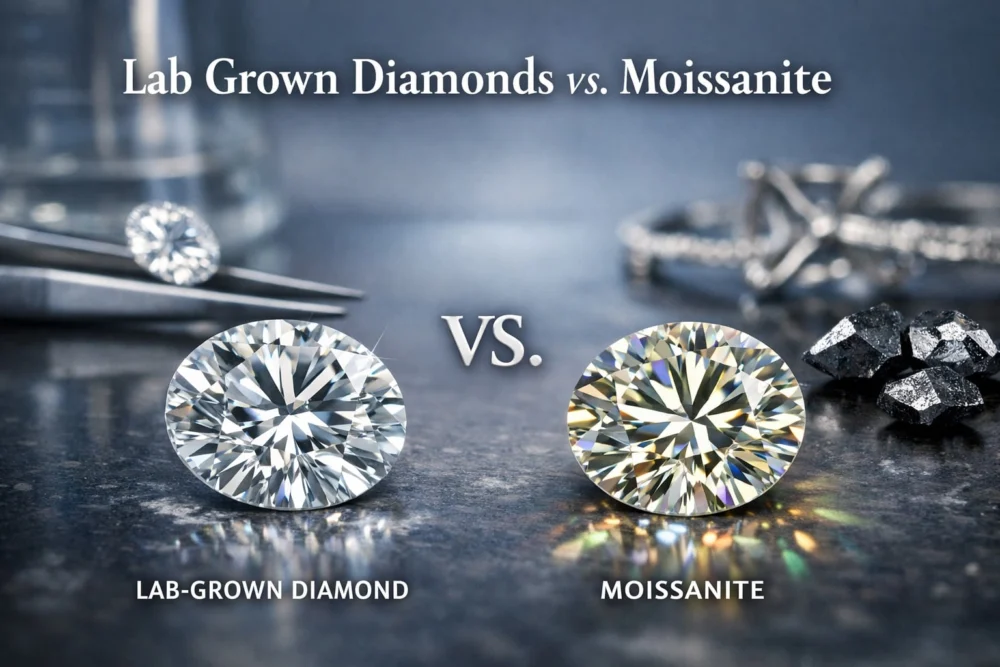
- Lab-Grown Diamonds: Exhibit a balanced interplay of brilliance (white light return) and fire (colored flashes). This results in a classic, sophisticated sparkle that is universally recognized and appreciated. The brilliance is a result of their identical refractive index to natural diamonds.
- Moissanite: Characterized by its enhanced fire, moissanite displays more pronounced and frequent rainbow flashes due to its higher refractive index and dispersion. This creates a more dynamic and visually intense sparkle that some find captivating, while others may perceive it as less subtle than a diamond’s sparkle.
Refractive Index and Dispersion
The technical measurements underscore their differing optical performances:

- Lab-Grown Diamonds: Refractive index of approximately 2.42, leading to a balanced light return.
- Moissanite: Refractive index ranging from 2.65 to 2.69, and a dispersion of 0.104, contributing to its signature fiery brilliance.
Durability and Longevity
Both are highly durable, but a slight distinction exists:
- Lab-Grown Diamonds: A perfect 10 on the Mohs scale, offering unparalleled resistance to scratching and damage, ensuring longevity for heirloom quality.
- Moissanite: Scores 9.25-9.5 on the Mohs scale, making it exceptionally durable for daily wear and highly resistant to scratching, outperforming most other gemstones.
Color Qualities
Both can be found in colorless and near-colorless grades:
- Lab-Grown Diamonds: Graded on the GIA D-Z scale, allowing for precise selection of colorless (D-F) or near-colorless (G-I) options.
- Moissanite: Typically described as colorless or near-colorless, with modern production yielding stones that closely resemble the appearance of high-grade diamonds.
Price Point
This is often the most significant differentiator:

- Lab-Grown Diamonds: While more affordable than natural diamonds, they represent a higher investment than moissanite. Prices are influenced by the 4Cs and have seen a steady decline due to increased production.
- Moissanite: Offers a considerably more budget-friendly option, making larger carat weights and more elaborate designs accessible.
Trusted Retailers for Informed Decisions
Selecting the right retailer is paramount to ensuring quality, transparency, and a positive purchasing experience. PriceScope highlights three premier online vendors for lab-grown diamonds, each offering distinct strengths:
- Whiteflash: Renowned for its curated "Precision Lab" collection, Whiteflash places a strong emphasis on cut quality and provides detailed light performance imagery and HD videos. Their commitment to cut excellence ensures superior brilliance and sparkle.
- Blue Nile: Offers one of the largest online selections of diamonds, including lab-grown options, allowing for extensive comparison of shapes, price points, and specifications across a broad inventory. Their platform provides a streamlined shopping experience.
- James Allen: Stands out with its innovative 360-degree HD diamond videos, enabling close inspection of each lab-grown diamond before purchase. This advanced visualization tool empowers buyers to assess details and make confident choices.
These retailers consistently deliver reliable grading, clear imagery, and competitive pricing. Their combined strengths—performance standards, selection breadth, and online transparency—make them top recommendations for purchasing lab-grown diamonds with confidence.
Making the Final Decision: Priorities and Preferences
The choice between lab-grown diamonds and moissanite ultimately rests on individual priorities and aesthetic preferences.

For those who value the traditional diamond experience with the prestige and timeless elegance associated with it, lab-grown diamonds are the ideal choice. They offer the exact visual and physical properties of natural diamonds, are certified to the same rigorous standards, and provide significant savings compared to mined counterparts. The assurance of owning a "real diamond" with superior durability and ethical sourcing makes them a compelling option for engagement rings and fine jewelry.
For consumers prioritizing maximum sparkle, vibrant fire, and exceptional value, moissanite emerges as a strong contender. Its dramatic rainbow flashes, remarkable durability, and significantly lower price point allow for larger stones and more accessible luxury. It appeals to those who appreciate a lively, eye-catching gemstone that offers outstanding visual impact without a substantial financial commitment.
Conclusion: Empowered Choices Through Education
The landscape of diamond alternatives is rich with innovation and choice. Lab-grown diamonds offer the authentic diamond experience with ethical and economic advantages, while moissanite captivates with its unparalleled sparkle and affordability. By understanding the distinct compositions, optical properties, and market dynamics of each, consumers can move beyond marketing claims and make a choice that truly reflects their personal style, budget, and values. PriceScope, as a dedicated forum for diamond and jewelry education, continues to serve as an invaluable resource, empowering buyers with the knowledge and community support needed to navigate these decisions with confidence and make an informed investment for a lifetime.