



The allure of a diamond’s sparkle has captivated consumers for generations, but the journey to acquiring that brilliance often involves complex decisions, especially when balancing desire with budget. In today’s jewelry market, two prominent alternatives to mined diamonds stand out: lab-grown diamonds and cubic zirconia. While both offer a more accessible path to dazzling adornments, their fundamental differences in composition, durability, appearance, and long-term value are critical for informed purchasing. This in-depth analysis, drawing from extensive industry knowledge and community insights, aims to demystify these options, empowering consumers to make confident choices that align with their vision and financial realities.
Understanding the Genesis of Modern Gems
The evolution of gemology has been profoundly shaped by technological advancements, leading to the creation of diamonds and diamond simulants in controlled laboratory environments. This shift has democratized access to beautiful gemstones, offering alternatives that were once considered unattainable for many. PriceScope, a leading online forum and resource for diamond and jewelry enthusiasts, has been at the forefront of providing objective comparisons and expert guidance on these evolving options. As a platform connecting consumers with a wealth of knowledge from industry professionals and seasoned buyers, PriceScope emphasizes transparency and informed decision-making, particularly when navigating the distinctions between lab-grown diamonds and cubic zirconia.

What Are Lab-Grown Diamonds, and How Are They Made?
Lab-grown diamonds, also known as synthetic or cultured diamonds, are genuine diamonds, chemically, physically, and optically identical to their mined counterparts. Their creation involves replicating the Earth’s natural diamond-forming processes within highly controlled laboratory settings. This technological feat allows for the production of diamonds that possess the same exceptional hardness, brilliance, and durability as diamonds formed over billions of years deep within the Earth’s mantle.
The two primary methods for growing diamonds in a lab are High-Pressure High-Temperature (HPHT) and Chemical Vapor Deposition (CVD).
The High-Pressure High-Temperature (HPHT) Manufacturing Process
The HPHT method is the older of the two technologies, initially developed for industrial applications in the mid-20th century. This process mimics the conditions found deep within the Earth’s mantle, where natural diamonds are formed. It involves placing a small diamond seed crystal, along with a carbon source (like graphite) and a metal catalyst (such as iron or nickel), into a specialized press. This press then subjects the mixture to extreme pressures, typically between 5 and 6 gigapascals (approximately 50,000-60,000 times atmospheric pressure), and temperatures ranging from 1,300 to 1,600 degrees Celsius.

Under these intense conditions, the carbon source dissolves into the molten metal catalyst and then crystallizes onto the diamond seed, growing it layer by layer. This process can take anywhere from several days to weeks, depending on the desired size and quality of the diamond. The result is a rough diamond crystal that, once extracted and cleaned, can be cut and polished like any natural diamond. While HPHT is effective for producing colorless and colored diamonds, it can sometimes leave trace metallic inclusions from the catalyst, which are usually removed during post-growth treatments or polishing.
The Chemical Vapor Deposition (CVD) Manufacturing Process
The CVD method, developed later, offers a different approach to diamond synthesis. This technique involves depositing carbon atoms from a gas mixture onto a diamond seed crystal in a vacuum chamber. The process begins by placing diamond seeds on a substrate within the chamber, which is then filled with a blend of gases, typically methane (CH4) and hydrogen (H2). Energy, often in the form of microwaves or a hot filament, is applied to the gas mixture, creating a plasma.
Within this plasma, the gas molecules break down, releasing carbon atoms that then deposit onto the diamond seed, causing it to grow in layers. This process occurs at lower pressures than HPHT but still requires high temperatures, generally between 700 and 1,200 degrees Celsius. CVD is known for its ability to produce high-purity diamonds with fewer inclusions than some HPHT diamonds, making it particularly well-suited for creating larger, exceptionally clear stones. The growth period for CVD diamonds can range from a few weeks to several months, depending on the desired carat weight and quality. Similar to HPHT, CVD diamonds may undergo post-growth treatments, such as HPHT annealing, to enhance their color or clarity.
Key Properties and Characteristics of Lab-Grown Diamonds

The identical atomic structure of lab-grown diamonds to natural diamonds means they share all the same desirable physical and optical properties.
- Hardness: Lab-grown diamonds score a perfect 10 on the Mohs scale of hardness, the highest rating achievable. This makes them exceptionally resistant to scratching and abrasion, ensuring they can withstand daily wear for generations without losing their luster or integrity.
- Brilliance and Fire: With a refractive index of approximately 2.42, diamonds (both natural and lab-grown) excel at bending and reflecting light. This property creates the characteristic sparkle, known as brilliance, along with colorful flashes called fire. The precision of their cut significantly influences these optical performances.
- Clarity and Color: Lab-grown diamonds are graded on the same 4Cs—cut, color, clarity, and carat weight—as natural diamonds. Due to the controlled growth environment, it’s possible to produce diamonds with exceptional clarity and a full spectrum of colors, from D (colorless) to Z, and even vibrant fancy colors. Trace elements introduced during synthesis can intentionally create these colors.
- Durability: Their inherent toughness means lab-grown diamonds are not prone to chipping or breaking under normal wear conditions. This makes them ideal for everyday jewelry, including engagement rings that are subjected to constant use.
- Thermal Conductivity: Like natural diamonds, lab-grown diamonds are excellent thermal conductors, a property that plays a role in their identification and also finds applications in technological fields.
Uses and Considerations for Lab-Grown Diamonds in Jewelry
The growing acceptance and availability of lab-grown diamonds have significantly impacted the jewelry market, particularly in engagement rings, anniversary gifts, and other fine jewelry pieces. Consumers now have the option to acquire larger, higher-quality diamonds at a more accessible price point compared to natural diamonds. Retailers like Whiteflash, James Allen, and Blue Nile are prominent in offering extensive selections of certified lab-grown diamonds, often featuring advanced imaging technologies and detailed grading reports from reputable institutions like the Gemological Institute of America (GIA).
When choosing a lab-grown diamond, it is crucial to look for certification from recognized gemological laboratories. These reports provide verifiable data on the diamond’s 4Cs, ensuring transparency and confidence in the purchase. The cost savings, typically ranging from 30% to 50% or more compared to natural diamonds of equivalent quality, allow buyers to invest in a larger stone, a higher color or clarity grade, or a more intricate setting.

What Are Cubic Zirconia, and How Are They Made?
Cubic zirconia (CZ) is a visually striking, yet fundamentally different, alternative to diamonds. It is a synthetic crystalline substance composed of zirconium dioxide (ZrO2). Unlike diamonds, which are pure carbon, CZ is a mineral simulant, meaning it is designed to imitate the appearance of a diamond but lacks its inherent chemical and physical properties. Since its commercial introduction in the 1970s, CZ has become one of the most popular and affordable diamond substitutes due to its remarkable sparkle and low cost.
The Manufacturing Process of Cubic Zirconia
The production of cubic zirconia is a high-temperature, multi-step process. The primary method used is called "skull melting." This technique involves combining zirconium oxide powder with stabilizers, such as yttrium oxide or calcium oxide, which are essential for maintaining the material’s cubic crystalline structure.
The mixture is placed into a specialized crucible, typically made of copper and cooled by circulating water. This crucible is then heated to extremely high temperatures, exceeding 4,900 degrees Fahrenheit (approximately 2,700 degrees Celsius), using radio-frequency induction. This intense heat melts the core material, while the surrounding crucible keeps the outer layer solid, forming a protective "skull" that contains the molten zirconium dioxide.

As the molten material cools gradually over several hours or days, the zirconium dioxide crystallizes into its cubic form. Once completely solidified, the resulting mass is removed from the crucible. The crystals are then separated, inspected for quality, and cut and polished into various shapes and sizes for use in jewelry. This controlled laboratory environment ensures a high degree of purity and consistency in the final product.
Key Properties and Characteristics of Cubic Zirconia
While CZ is designed to mimic the look of a diamond, its properties differ significantly, impacting its durability, brilliance, and long-term appeal.
- Hardness: Cubic zirconia ranks between 8 and 8.5 on the Mohs scale of hardness. While this provides good resistance to scratching compared to many other materials, it is considerably softer than a diamond (10 on the Mohs scale). This means CZ is more susceptible to scratches, chips, and abrasions over time, especially with frequent wear.
- Brilliance and Fire: CZ has a high refractive index, typically ranging from 2.15 to 2.18, which is close to that of a diamond (around 2.42). However, its dispersion rate, which is responsible for the colorful flashes of fire, is significantly higher than that of a diamond (around 0.058-0.066 for CZ versus 0.044 for diamond). This higher dispersion can result in more pronounced, sometimes overly intense, rainbow-like flashes, which some consumers find dazzling, while others perceive it as less refined or "disco-ball-like" compared to the subtler fire of a diamond.
- Clarity and Color: CZ is typically manufactured to be internally flawless and perfectly colorless, often appearing brighter than many natural diamonds. This uniformity can be appealing for its consistency, but it can also lend an "unnatural" perfection that distinguishes it from real diamonds, which often have minor internal characteristics. Trace elements can be added during manufacturing to create colored CZ stones, mimicking various gemstones.
- Durability: Due to its lower hardness, CZ can become abraded and cloudy over time with regular wear. Exposure to chemicals, oils, and even everyday friction can lead to surface damage that diminishes its sparkle. Unlike diamonds, CZ does not possess the same level of resilience for long-term, high-wear jewelry.
- Density: CZ is denser than diamond, meaning a CZ stone of the same dimensions will weigh more than a diamond.
Uses and Considerations for Cubic Zirconia in Jewelry

Cubic zirconia is widely used in fashion jewelry, costume jewelry, and as an affordable option for engagement rings or special occasion pieces where longevity is not the primary concern. Its affordability makes it accessible for larger stone sizes, intricate designs, and for individuals who wish to experiment with different styles without significant financial commitment. Many retailers offer CZ jewelry in various metals, including sterling silver, gold-plated, and even solid gold, providing a wide range of aesthetic options.
While CZ can offer an initial impressive sparkle, it is essential for buyers to understand that it is a simulant. It does not hold significant resale value and its brilliance will likely degrade over time with regular wear. For those seeking a piece with lasting heirloom potential or the prestige of a genuine diamond, CZ is not the ideal choice.
Comparing the Two: A Deep Dive into Key Differences
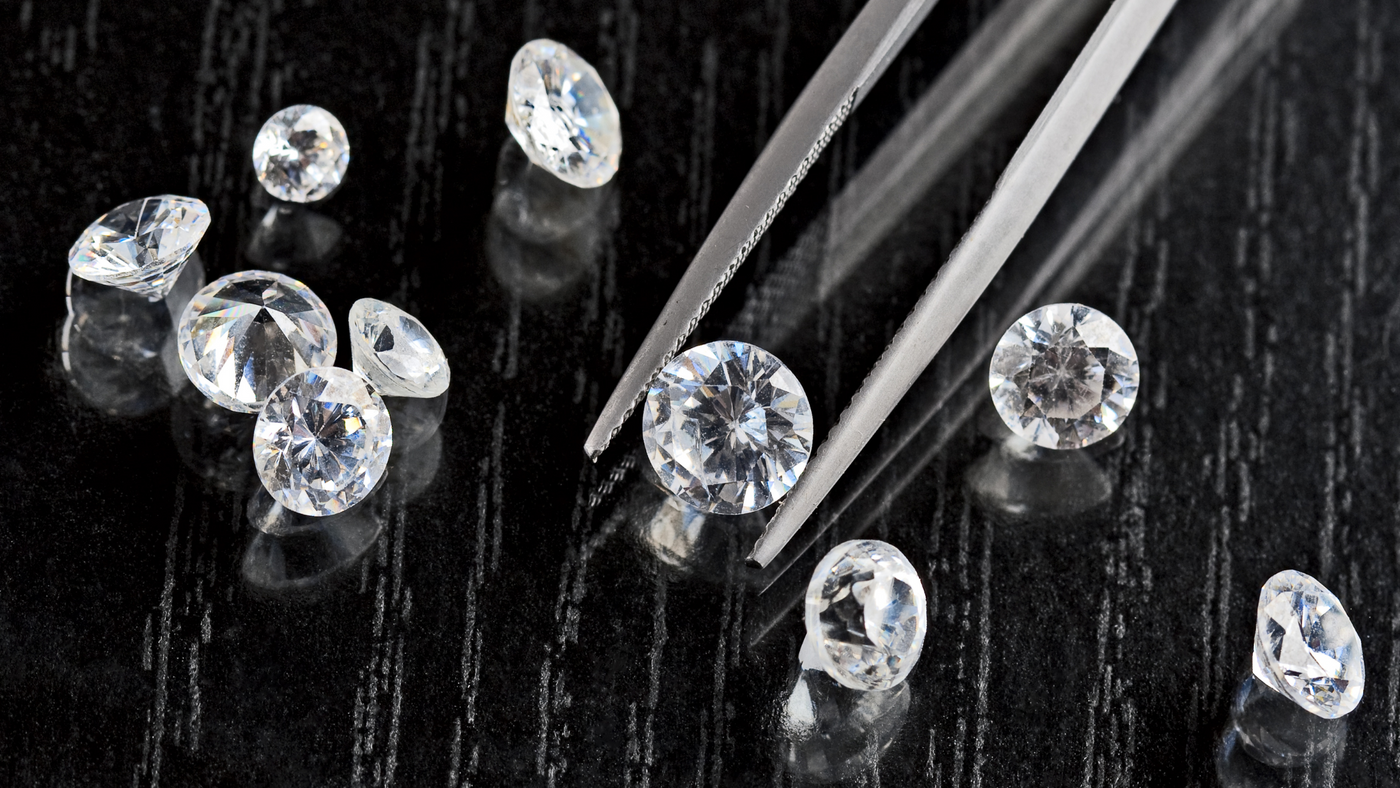
The decision between a lab-grown diamond and cubic zirconia hinges on understanding their core distinctions in composition, appearance, durability, environmental impact, and price.
Chemical Composition: The Foundation of Authenticity
At the heart of the distinction lies their elemental makeup. Lab-grown diamonds are pure carbon, crystallized in the same atomic lattice as natural diamonds. This carbon-based structure is responsible for their unparalleled hardness, brilliance, and thermal conductivity. Cubic zirconia, conversely, is zirconium dioxide, a compound entirely different from carbon. This difference in composition fundamentally dictates their physical properties and their classification as either a genuine diamond (lab-grown) or a diamond simulant (CZ).
Appearance: Nuances in Brilliance and Fire
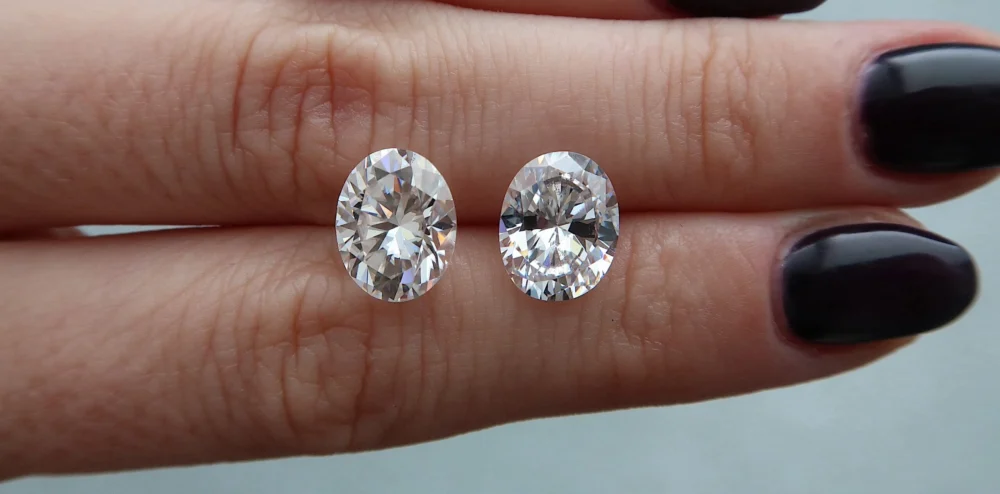
While both stones aim to capture the eye with sparkle, their interaction with light differs. Lab-grown diamonds exhibit the classic diamond brilliance and fire, characterized by a balanced interplay of white light reflection and colorful dispersion. The precise cut quality plays a paramount role in maximizing this optical performance. Cubic zirconia, with its higher dispersion, can produce more dramatic rainbow flashes. This can be appealing for a bolder look, but it may also appear less sophisticated or more artificial to discerning eyes compared to the nuanced sparkle of a diamond. The refractive index and dispersion rates are scientifically measurable differences that contribute to their distinct visual characteristics.
Durability and Longevity: A Measure of Wearability
The Mohs hardness scale provides a clear indicator of durability. A diamond’s perfect 10 means it is exceptionally resistant to scratching and wear, making it suitable for lifelong adornment. Cubic zirconia’s 8-8.5 rating, while good for many materials, makes it prone to developing scratches and scuffs over time. This means a CZ ring, especially if worn daily, may lose its original luster and clarity more rapidly than a diamond ring. For pieces intended to be cherished for decades or passed down through generations, the superior durability of lab-grown diamonds is a significant advantage.
Environmental Impact: A Closer Look at Production
The environmental footprint of both lab-grown diamonds and cubic zirconia is a complex consideration. While both are manufactured in laboratories, thus avoiding the ecological disruptions associated with traditional mining, their production processes have varying energy requirements. Lab-grown diamond production, particularly HPHT and CVD methods, can be energy-intensive. However, the industry is increasingly focusing on utilizing renewable energy sources and improving efficiency to mitigate this impact. The production of CZ also involves high-temperature processes, and its overall environmental impact depends heavily on the energy sources and manufacturing practices employed. Consumers interested in sustainability often research specific producers’ environmental policies rather than making broad assumptions about either material.

Price: Value and Affordability
Price is often a primary driver in choosing between these options. Cubic zirconia is remarkably affordable, with prices for even large stones typically ranging from a few dollars to tens of dollars. This makes it an excellent choice for those seeking maximum sparkle on a minimal budget. Lab-grown diamonds, while significantly less expensive than natural diamonds, still represent a considerable investment. They are typically priced 30% to 50% lower than natural diamonds of equivalent quality. This price differential offers buyers the opportunity to acquire larger or higher-quality diamonds than they might otherwise afford, providing substantial value for a genuine diamond.
Which Is Better: Lab-Grown Diamonds or Cubic Zirconia?
The question of which is "better" is subjective and depends entirely on the consumer’s priorities.
Choose Cubic Zirconia If You Prioritize Extreme Affordability and Bold Initial Sparkle
If the primary goal is to achieve a dazzling appearance at the lowest possible cost, and the jewelry is intended for occasional wear or as a fashion statement, cubic zirconia is a compelling choice. It allows for the acquisition of large, eye-catching stones and intricate designs without a substantial financial outlay. For individuals who enjoy frequently changing their jewelry or want a dramatic look for specific events, CZ offers unparalleled affordability. However, it is crucial to accept its limitations in terms of durability and long-term value retention.

Choose Lab-Grown Diamonds If You Prioritize Authenticity, Durability, and Timeless Diamond Appeal
For those who seek the genuine properties of a diamond—its unparalleled hardness, brilliance, and timeless appeal—lab-grown diamonds offer an ideal solution. They provide the same aesthetic and performance characteristics as natural diamonds but at a more accessible price point. This makes them an excellent choice for engagement rings, wedding bands, and other significant pieces intended to be worn daily and cherished for a lifetime. The availability of certifications from reputable gemological laboratories ensures transparency and provides buyers with confidence in their purchase. The value proposition of lab-grown diamonds lies in acquiring a true diamond with enduring qualities, backed by verifiable grading, at a significant cost saving compared to mined diamonds.
Finding the Best Fit for Your Needs
Ultimately, the choice between a lab-grown diamond and cubic zirconia depends on individual needs, lifestyle, and long-term aspirations for the jewelry piece.
- For a Lifelong Engagement Ring: A lab-grown diamond is the superior choice due to its authenticity, unmatched durability, and timeless appeal. It offers the prestige and performance of a natural diamond without the premium price tag. Retailers like Whiteflash, James Allen, and Blue Nile provide extensive selections and the necessary documentation for informed purchasing.
- For Fashion Jewelry or Temporary Pieces: Cubic zirconia is an excellent option if you desire maximum sparkle for a lower cost and do not require heirloom quality or extreme durability. It’s perfect for experimenting with trends or for pieces that will not be subjected to constant wear.
- For Educational Purposes: Both materials can serve as valuable tools for learning about gemology and optics, demonstrating principles of light interaction and material properties.
PriceScope serves as an invaluable resource throughout this decision-making process. By centralizing information from trusted vendors, offering detailed educational guides on the 4Cs, providing tools for comparing diamond proportions, and fostering a community of experienced buyers, PriceScope empowers consumers to make informed choices. Engaging with the PriceScope forum allows potential buyers to gain insights from real-world experiences, understand the nuances of cut quality, vendor reliability, and long-term diamond performance, ensuring that their investment in sparkle is both beautiful and wise.

Join the Largest Diamond and Jewelry Forum
Navigating the world of diamonds and gemstones can be complex, but connecting with a knowledgeable community can transform the experience from daunting to empowering. PriceScope’s extensive forum, with over 100,000 members and hundreds of thousands of discussion threads, offers a unique platform for peer-to-peer advice and expert insights. Here, consumers can find discussions on everything from the wearability of lab-grown diamonds over time to detailed comparisons of vendor customer service and the impact of specific inclusions on a diamond’s brilliance.
The platform also integrates practical tools like the Holloway Cut Advisor (HCA) for evaluating round diamond proportions and comprehensive educational content that goes beyond basic definitions of the 4Cs. By leveraging the collective wisdom and practical experience of its members, PriceScope aims to provide straightforward, unbiased information, enabling consumers to make confident decisions based on real-world outcomes, not just sales pitches. This deep dive into the world of lab-grown diamonds and cubic zirconia, supported by resources like PriceScope, ensures that every sparkle purchased is a choice made with knowledge and assurance.