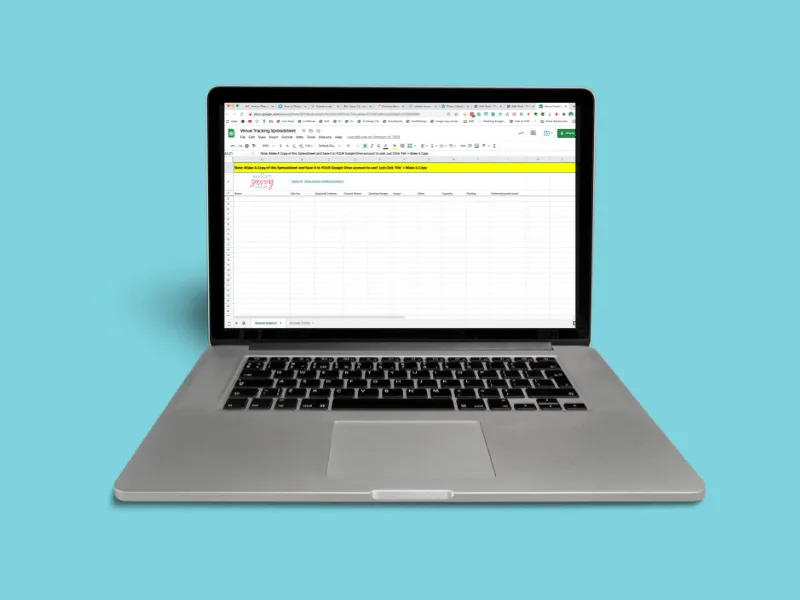
The process of selecting a wedding venue, often romanticized as a pivotal moment in wedding planning, frequently devolves into a labyrinth of forgotten details and financial ambiguities. Couples embarking on this journey often tour multiple picturesque locations, only to find themselves weeks later struggling to recall which venue quoted a corkage fee, or if the most aesthetically pleasing option was also the most exorbitant. This common predicament underscores the critical need for a structured approach, with a dedicated wedding venue spreadsheet emerging as an indispensable tool to transform vague impressions into concrete, comparable data, facilitating a clear and confident decision.
The venue typically represents the single largest allocation within a wedding budget, often consuming between 40 to 50 percent of the total expenditure when combined with catering. This significant financial commitment necessitates a methodical evaluation far beyond a mental tally. A comprehensive guide, complemented by a free, customizable spreadsheet, empowers couples to navigate this crucial decision. It delineates essential tracking points, identifies key questions to pose during every venue tour, uncovers common hidden fees, and provides a framework for objectively scoring and comparing potential sites. By adopting such a tool, the often overwhelming task of venue comparison can be streamlined, making it the most straightforward aspect of wedding preparation.
The Strategic Imperative: Why Venue Comparison Demands Precision
Regardless of the overall budgeting strategy employed, the reception venue consistently commands the lion’s share of the wedding budget. Industry analyses, including reports from leading wedding planning platforms, consistently highlight that venue and catering costs combined constitute nearly half of a couple’s total wedding expenditure. This makes the venue selection not merely a logistical choice, but the foundational decision that subsequently shapes almost every other element of the wedding.
The chosen venue dictates the wedding date, establishes the maximum guest count, defines the overall aesthetic and "vibe" of the event, and critically, determines the remaining financial resources available for other essential components such as floral arrangements, photography, entertainment, and the honeymoon. Consequently, identifying a wedding venue that aligns with budgetary constraints is a decision warranting deliberate and unhurried consideration. A specialized wedding venue spreadsheet offers an invaluable solution, enabling couples to visualize real trade-offs and compare options objectively, moving beyond the fleeting impressions of a Monday tour versus the half-remembered notes from a Thursday phone call. This systematic approach mitigates the risk of emotional decision-making overpowering financial prudence.
Structuring the Search: Essential Data Points for Your Venue Spreadsheet
The fundamental purpose of a wedding venue comparison spreadsheet is to standardize the data collection process, ensuring an "apples-to-apples" comparison across all prospective locations. The spreadsheet should be organized with one row dedicated to each venue, and columns systematically filled with pertinent information as it is gathered.
Core Data Capture: The Foundational Details
Initial columns should focus on essential information that aids in the preliminary screening of venues, helping to narrow down options worthy of an in-person visit:

- Venue Name and Location: Essential for identification and logistical planning. Proximity to guest accommodations and transportation hubs can be a significant factor.
- Contact Information: Name, phone, email for direct communication.
- Website/Social Media Links: For easy reference to photos, testimonials, and detailed offerings.
- Maximum Capacity (Seated/Standing): Crucial for guest list management and adherence to safety regulations. This directly impacts the feasibility of hosting the desired number of guests.
- Available Dates: Understanding peak vs. off-peak seasons and specific dates (e.g., Saturdays are often premium) is vital for scheduling and budget.
- Overall Aesthetic/Vibe: A brief description (e.g., rustic barn, elegant ballroom, modern loft) helps categorize and recall the venue’s ambiance.
- Key Amenities Included: (e.g., tables, chairs, linens, basic sound system, bridal suite, parking).
- Rain Plan/Backup Options: Essential for outdoor or partially outdoor venues.
- Accessibility: ADA compliance, ease of access for guests with mobility challenges.
- Exclusive Vendor Policy: Whether they require specific caterers, florists, etc., or allow outside vendors.
The Financial Columns: Deciphering the True Cost
This section is where the spreadsheet truly demonstrates its value, as the initial "sticker price" rarely reflects the comprehensive financial commitment. Tracking these cost components in dedicated columns is paramount:
- Venue Rental Fee: The base cost for securing the space for a specified duration. Note any variations for different days of the week or seasons.
- Catering Cost (Per Person): If in-house or exclusive catering is required, obtain detailed per-person pricing for food and non-alcoholic beverages. Inquire about minimum guest counts.
- Beverage Packages/Corkage Fee: Details on open bar options, wine/beer packages, or fees for bringing in external alcohol.
- Service Charge/Gratuity: A percentage (often 18-25%) added to catering and beverage costs, which may or may not include gratuity for staff. Clarification is essential.
- Sales Tax: The applicable local and state sales tax on all services and goods.
- Security Deposit: The amount required to secure the date, and the conditions for its refund.
- Liability Insurance: Whether the venue requires the couple to purchase event liability insurance, and estimated costs.
- Setup/Teardown Fees: Charges for staff time dedicated to arranging and dismantling the event space.
- Overtime Fees: Hourly rates if the event extends beyond the contracted time.
- Equipment Rental: Costs for any tables, chairs, linens, flatware, glassware, or specialized audio-visual equipment not included in the base package.
- Vendor Fees/Buyouts: Any fees charged for allowing outside vendors (e.g., external caterers, specific DJs) or mandatory "buyout" clauses for exclusive services.
- Parking/Valet Charges: Costs associated with guest parking or valet services.
- Bridal Suite/Getting Ready Space: If included in the rental or an additional charge.
- Cake Cutting Fee: A per-slice charge for cutting and serving the wedding cake.
- Cleaning Fee: A post-event cleaning charge.
It is crucial to note that the day of the week significantly impacts pricing. Many venues implement a tiered pricing structure, with Saturday rates in peak season being substantially higher than those for Fridays, Sundays, or weekdays. Ensuring that all quotes entered into the spreadsheet correspond to the same type of date (e.g., all Saturday rates) is vital for accurate comparison.
Strategic Inquiry: Questions to Ask on Every Venue Tour
Venue tours are often fast-paced and emotionally charged, making it easy to depart with a wealth of impressions but a deficit of concrete answers. To prevent a spreadsheet full of blanks and assumptions, couples should arrive prepared with a comprehensive list of questions. This acts as a wedding venue comparison checklist, ensuring that every row in the spreadsheet can be populated with factual data, enabling an informed decision. While extensive lists of questions exist, a minimum set should cover the following:
- Availability: Is our preferred date or month available? What are the rates for peak vs. off-peak seasons?
- Capacity: What is the comfortable capacity for a seated dinner and a standing reception?
- Inclusions: What exactly is included in the base rental fee (e.g., tables, chairs, linens, basic lighting, sound system, bridal suite access, event coordinator)?
- Catering Policies: Is in-house catering mandatory? If not, do you have a preferred vendor list, and are there fees for outside caterers?
- Beverage Policies: What are the options for alcoholic beverages (open bar packages, cash bar, corkage fees for BYOB)?
- Time Allotment: How many hours are included for the event itself, plus setup and teardown? What are the overtime rates?
- Payment Schedule & Cancellation Policy: What is the deposit structure, and when are subsequent payments due? What are the terms for cancellation or rescheduling?
- Staffing: What level of staff is provided (e.g., venue manager, servers, bartenders, security)?
- Decor Restrictions: Are there any limitations on decorations (e.g., open flames, confetti, hanging items)?
- Sound Restrictions: Are there noise ordinances or time limits for music?
- Accessibility: Are there ramps, elevators, or accessible restrooms for guests with disabilities?
- Parking: Is parking available on-site, and is there a charge? Do you offer valet service?
- Backup Plan: For outdoor spaces, what is the contingency plan in case of inclement weather?
- Vendor Access: What are the policies for vendor access, setup, and teardown? Are there specific insurance requirements for vendors?
Beyond merely collecting answers, understanding the nuances of these responses is crucial. Industry experts often advise couples to listen for both green flags (e.g., transparency, flexibility, proactive communication) and red flags (e.g., evasiveness, hidden charges, restrictive clauses) when evaluating potential vendors.
Unveiling the "Surprise Costs": Navigating Hidden Fees
The initial price quoted by a venue is almost invariably lower than the final bill. The disparity between these two figures is a common source of budget overruns, silently inflating expenses. Therefore, creating dedicated columns for these potential "surprise costs" and explicitly inquiring about them is a non-negotiable step. These hidden fees, frequently appearing in venue contracts, can significantly alter the perceived affordability of a location:
- Cake Cutting Fee: A per-slice charge for the venue staff to cut and serve your wedding cake.
- Corkage Fee: A per-bottle charge if you bring your own alcohol, often in addition to bartender fees.
- Linen/Chair Upgrade Fees: While basic linens and chairs might be included, aesthetically pleasing options often come at an additional cost.
- Vendor Meal Costs: Many venues charge for meals provided to your wedding vendors (photographers, DJs, planners).
- Lighting/Audio-Visual Equipment Rental: Specific lighting, projectors, or advanced sound systems may not be included in the base package.
- Gratuity for Specific Staff: Clarify if the service charge covers all gratuities or if additional tipping is expected for specific staff members.
- Overtime for Vendors: If the venue’s rental period ends but your chosen vendors (e.g., DJ) need more time for breakdown, this could incur additional venue charges.
- Coat Check Attendant: If required or desired, this might be an additional staff cost.
- Permits/Licenses: Depending on the event’s nature or location, specific permits might be necessary, and the venue may or may not assist or charge for these.
- Required Security Guards: Some venues mandate a certain number of security personnel, especially for larger events, at an additional hourly rate.
When these often-overlooked charges are systematically logged into the spreadsheet, a seemingly "affordable" barn venue and an "all-inclusive" hotel can dramatically reverse their positions in terms of true cost. Documenting these figures in writing provides an irrefutable basis for comparison and prevents costly surprises further down the planning timeline.
Leveraging the Free Venue Tracking Spreadsheet: A Practical Guide

Digital tools, particularly those offering collaborative features, have revolutionized wedding planning. The free venue tracking spreadsheet, designed for use with Google Sheets, exemplifies this efficiency. Its accessibility allows couples to simply make a copy to their personal Google Drive and begin editing immediately.
The spreadsheet is typically structured with two primary tabs:
- Comparison Tab: This acts as the initial screening and narrowing-down tool. Each potential venue is assigned a row, and the columns are populated with the basic and financial details collected during initial inquiries and tours. This tab allows for a quick visual scan to determine which venues meet initial criteria and warrant further consideration, and which can be eliminated early in the process.
- Cost Tab: This tab is dedicated to the comprehensive calculation of "all-in" costs. It aggregates the venue rental, per-person food and drink expenses, service charges, mandatory extras, and any external caterer fees. By calculating the total projected cost for each venue, this tab exposes the true financial commitment, leaving no room for hidden surprises within the contract. Presenting this full wedding venue cost comparison side-by-side makes the ultimate decision transparent and data-driven.
Strategic Decision-Making: Beyond the Numbers
Once the spreadsheet is comprehensively populated, the data largely speaks for itself. However, a few strategic considerations can help refine the comparison process and resolve any lingering ties:
- Prioritize Core Values: First, weigh what aspects are most important to the couple. If a breathtaking outdoor ceremony space is a non-negotiable dream, a slightly higher rental fee might be justified. Conversely, if providing an exceptional culinary experience is paramount, a venue that allows for greater investment in catering might be prioritized over a more architecturally dramatic building.
- Calculate All-In Cost Per Guest: Move beyond simply comparing rental fees. Divide each venue’s calculated "all-in" total cost by the estimated guest count. This metric often reveals that a seemingly "expensive" option can, in fact, offer superior value once catering, beverages, and all associated fees are factored in, distributing the cost more efficiently across the guest experience.
- Explore Non-Traditional Venues: Think creatively beyond conventional wedding venues. Restaurants, public parks, community centers, art galleries, private estates, and even unique Airbnb rentals can offer beautiful settings at a significantly lower cost. Many restaurants, for instance, are amenable to hosting weddings, particularly on Friday or Saturday evenings, as a full buyout guarantees substantial revenue. A significant advantage of restaurants and some non-traditional spaces is their often less rigid "wedding-fee structure," potentially eliminating common charges like corkage, cake cutting, and specific server fees, allowing those savings to be reallocated towards an exceptional dining experience.
Integrating Venue Selection into the Holistic Wedding Budget
The venue spreadsheet addresses one of the most substantial financial decisions. However, the chosen venue inevitably triggers a cascade of subsequent decisions and financial implications across the entire wedding budget. Relying on disparate spreadsheets or mental calculations for the overall budget can quickly lead to disorganization and overspending.
This is where a holistic budgeting system becomes invaluable. The venue decision directly influences categories such as decor (a grand ballroom needs less elaborate decoration than a blank canvas warehouse), catering (in-house vs. external), entertainment (sound restrictions, power availability), and even transportation for guests. A master budget system allows couples to track and adjust spending across every category, ensuring that the initial venue choice remains financially sound within the broader context of their wedding goals. Such a system ensures that from the first deposit to the final vendor payment, the entire budget remains transparent and accountable. When combined with initial guidance on how to set a realistic wedding budget, the venue search becomes a well-integrated component of a financially savvy planning strategy.
Conclusion: Empowering Couples Through Informed Decisions
In an era where wedding planning can be emotionally charged and financially daunting, a structured approach is a powerful ally. A meticulously maintained wedding venue spreadsheet transforms the most significant financial decision of a wedding into a calm, side-by-side comparison founded on tangible data. By systematically tracking consistent details for every option, asking targeted questions during tours, diligently logging all potential hidden fees in writing, and allowing the comprehensive "all-in" numbers to guide the decision, couples can make choices that are both financially prudent and deeply aligned with their vision.
This methodical approach is not merely about saving money; it is about making informed decisions that reduce stress, prevent regret, and allow couples to allocate resources towards the elements of their wedding day that truly matter most to them. Embracing such smart planning strategies is the hallmark of a savvy wedding journey. As couples progress beyond venue selection, continuing to leverage budgeting tools and seeking out money-saving tips and exclusive deals will ensure a beautiful, memorable celebration that honors both their love and their financial well-being.