

Oklahoma City bore witness to a truly unique and deeply personalized celebration on August 16, 2026, as Marie and Joseph united in marriage, showcasing a masterful blend of their Vietnamese, Korean, and Western heritages. The meticulously planned event, captured with stunning detail by Sierra Ellis Photography, exemplified a growing trend in modern nuptials: couples crafting bespoke experiences that honor their diverse backgrounds while reflecting their individual journey. This wedding transcended traditional formats, becoming a vibrant tapestry woven with custom-designed attire, heartfelt family tributes, and highly personal elements, from the décor to the entertainment, all unfolding within the elegant Art Deco setting of the Civic Center Music Hall.

A Love Story Forged in Oklahoma City, Cemented in Clay

Marie and Joseph’s journey began five years prior, not in the grand halls of tradition, but through the modern pathways of online dating, specifically Hinge. Their initial tea date in Oklahoma City blossomed into an entire afternoon of exploration—snacks, drinks, bookstore visits—each shared moment revealing deeper layers of connection through common interests in travel, food, and the outdoors. A pivotal moment in their courtship, which later found a charming echo in their wedding décor, occurred when Joseph patiently introduced Marie to the art of pottery on his own wheel. This act of shared creation and gentle guidance solidified Marie’s realization that Joseph was indeed "very special," a sentiment that would ultimately guide the design and spirit of their wedding. This personal anecdote highlights how many couples today are increasingly seeking to integrate the specific milestones and unique hobbies of their relationship into their wedding narrative, moving beyond generic themes to create truly authentic celebrations.

The Evolution of Attire: A Narrative of Cultural Fusion

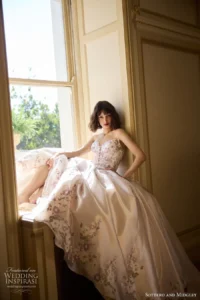
The sartorial journey of Marie throughout her wedding day was a dynamic expression of her heritage and personal style, a captivating performance that saw her transform four times, each ensemble marking a distinct phase of the celebration. She began her day in a breathtaking sculptural Mikado wedding gown, a design meticulously created in collaboration with Glam by Nanie in Houston. This initial gown, featuring a sophisticated basque waist, trumpet silhouette, and a corset bodice adorned with delicate, tapering beading, presented a silhouette of timeless elegance. A dramatic overskirt provided a grand entrance, which was later removed to facilitate uninhibited dancing during the reception, a practical yet stylish innovation.

Her second outfit, a beaded reception dress from Lotus Design in Ho Chi Minh City, offered a stark yet equally stunning contrast. Covered in shimmering, hanging beads, this dress was specifically designed to catch the light and enhance every movement on the dance floor, signaling the shift from formal ceremony to joyous celebration. Joseph, too, embraced custom design for his tuxedo, working with Duan Tailor in Ho Chi Minh City to select every detail, from fabric and lapels to button placement and cufflinks, ensuring his attire was as unique and personally tailored as Marie’s.

The couple’s commitment to honoring their roots was further underscored by the inclusion of traditional Vietnamese Áo Dài and a Korean Hanbok. Marie designed a lace-trimmed veil to accompany her reception dress, while both the Áo Dài and the Hanbok were commissioned, with Joseph’s mother playing a collaborative role in the creation of the latter. This multi-garment approach is becoming increasingly prevalent in multicultural weddings, allowing couples to symbolically embrace and showcase each facet of their shared and individual identities without compromise. This thoughtful sequence of attire not only provided visual spectacle but also served as a chronological narrative of the day’s cultural transitions, a living exhibition of their combined heritage.

A Sacred Union: Honoring Faith and Family

The spiritual heart of Marie and Joseph’s wedding was a Catholic ceremony held at St. Andrew Dung Lac Catholic Church. This segment of the day was marked by deep reverence and personal touches that made it profoundly meaningful for the couple and their families. Prior to the formal Mass, Marie and Joseph shared a private first look, a tender moment where they exchanged personal vows away from the gaze of guests. This intimate exchange provided a foundation of private commitment before their public declaration, a trend many couples adopt to savor a moment of solitude amidst the wedding day’s joyous whirlwind.

The ceremony itself was enriched by Marie’s active participation; drawing on her years of leading music for her church youth group, she sang the responsorial psalm, infusing the service with her own voice and devotion. A live string quartet provided a beautiful, unobtrusive musical accompaniment throughout the Mass, enhancing the solemnity and beauty of the sacrament without overpowering it.

A particularly poignant detail was the quiet tribute to Joseph’s father, who had passed away six months before the wedding. A "Reserved from Heaven" sign was thoughtfully placed on the pew beside Joseph’s mother, a subtle yet powerful acknowledgment of his enduring presence and an embrace of grief within the celebration of new beginnings. This gesture resonated deeply with guests, highlighting the couple’s sensitivity and respect for family bonds, even in absence. As the Mass concluded, Marie and Joseph presented bouquets to both sets of parents, a gesture of gratitude and honor, before exiting the church amidst a shower of rose petals, signifying a joyful departure into their married life. The integration of traditional religious rites with such personal and emotional elements created a ceremony that was both spiritually grounded and uniquely reflective of the couple’s values.

Architectural Elegance Meets Meticulous Planning

The choice of the 1930s Art Deco ballroom at Oklahoma City’s Civic Center Music Hall as the reception venue was a cornerstone of the wedding’s aesthetic success. Marie and Joseph deliberately prioritized finding a venue that not only fit their budget but also inherently matched their desired classic and clean style. The Civic Center, with its soaring ceilings, polished wood floors, and oversized mirrors, provided a stunning backdrop that required minimal additional décor, allowing the existing architecture to speak for itself and streamline subsequent design decisions. This strategic selection underscores the importance of venue choice in setting the tone and style for an entire event, often simplifying other planning aspects.

Marie took a proactive role in the majority of the planning, finding genuine enjoyment in the process of bringing her vision to life. She strategically engaged a partial planner to refine logistical details and offer creative ideas, demonstrating an understanding of when to seek expert assistance to complement personal involvement. This hybrid approach to wedding planning is increasingly common, allowing couples to maintain creative control while offloading the more complex coordination tasks.

The couple dedicated significant time to vendor selection, meticulously reviewing portfolios, conducting in-person meetings, and ensuring each vendor fully understood their visual direction and the intricate cultural traditions they wished to incorporate. This rigorous process is critical for multicultural weddings, where a deep appreciation and understanding of diverse customs are paramount for successful execution. Their budget allocation reflected their priorities: food, photography, attire, décor and rentals, and flowers received primary consideration, with other categories adjusted accordingly. This pragmatic approach to budgeting, centered on core values and key aesthetic elements, is a practical piece of advice for any couple navigating the complexities of wedding expenses. The seamless execution of the day, particularly the absence of any major challenges or surprises, speaks volumes about their thorough planning and the competence of their chosen team, highlighting the invaluable role of a skilled wedding planner in mitigating unforeseen issues.

Pottery: A Thread of Intimacy in Grand Design

One of the most touching and distinctly personal elements of the wedding was the pervasive presence of pottery throughout the reception décor. Rooted in Joseph’s patient lesson to Marie on his pottery wheel during their early courtship—a moment Marie described as realizing Joseph was "very special"—this shared memory was transformed into a tangible detail for every guest table. Joseph personally crafted a ceramic vessel for each table, with Marie contributing to the glazing process. These handmade pieces, each a labor of love, were then delivered to their florist to serve as unique centerpieces.

While the floral arrangements varied from table to table, the constant presence of these custom-made pottery vessels provided a subtle, unifying theme. It was a detail that guests likely admired for its artistic merit, perhaps unaware of the profound personal story embedded within each piece. For Marie and Joseph, however, these vessels quietly but powerfully connected their grand wedding celebration back to one of the intimate, foundational moments of their relationship. This innovative approach to décor serves as an inspiring example for other couples seeking to infuse their wedding with truly meaningful and personal touches, transforming shared hobbies or significant memories into integral parts of their special day. It demonstrates a move away from generic themes towards deeply personalized storytelling through design.

A Reception Alive with Culture, Games, and Dance

The reception at the Civic Center Music Hall was a dynamic and immersive cultural experience, designed to keep guests engaged and entertained from start to finish. The evening’s timeline was intentionally structured around Marie’s series of custom outfit changes, which were punctuated by lively activities. A bilingual MC played a crucial role, bridging cultural divides by hosting interactive games in both Vietnamese and English, fostering participation from all guests. Gift cards awarded to game winners added an extra layer of excitement and appreciation, ensuring that the atmosphere remained festive and inclusive even during the couple’s brief absences for costume transitions.

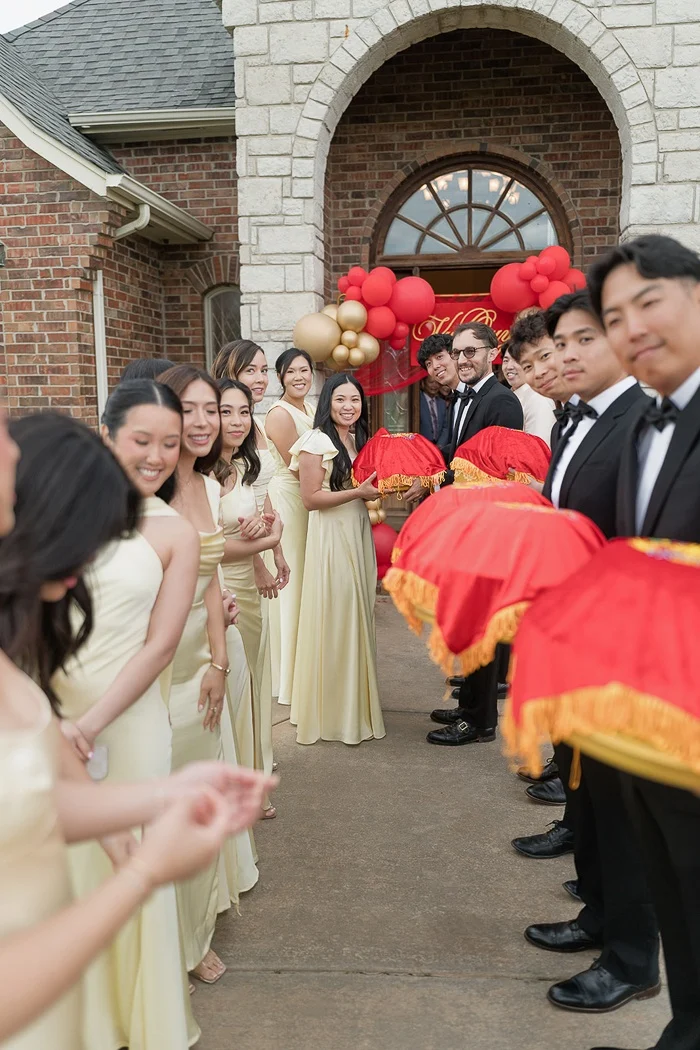
A spectacular lion dance marked Marie and Joseph’s re-entry into the ballroom, now adorned in their vibrant Vietnamese Áo Dài. This traditional performance, rich in symbolism and energy, served as a powerful cultural statement and a visually arresting welcome back for the couple. Following this, they embarked on traditional table greetings, a custom common in many Asian weddings, allowing them to personally acknowledge and interact with each guest. Midway through these greetings, they seamlessly transitioned into their Korean Hanbok, continuing the greetings with the remaining tables. This fluid integration of both cultures through attire and ritual underscored their commitment to honoring both family lineages.

The evening continued with representatives from each table delivering heartfelt speeches, followed by more playful games designed to "earn" the opportunity to present wedding gifts, adding an element of lighthearted competition and engagement. Only after these culturally rich and interactive segments did the reception move into more universally recognized Western traditions: the elegant cake cutting, a celebratory champagne tower, the spirited bouquet toss, and finally, an open dance floor. The presence of a groomsman, a talented breakdancer, ensured that the energy remained high, encouraging everyone to join in the dancing and culminating in a vibrant, unforgettable celebration that perfectly encapsulated Marie and Joseph’s journey and heritage. The meticulous planning of these diverse elements created a seamless flow, demonstrating that a multicultural wedding can be both deeply traditional and incredibly fun, leaving guests with a lasting impression of a truly unique and joyful union.

Reflections and Recommendations for Future Couples

Looking back on their wedding day, Marie expressed profound satisfaction, noting that they "wouldn’t change anything." Even the behind-the-scenes complexities, often a source of stress for couples, were expertly managed by their wedding planner, ensuring a smooth experience. "Surprisingly, there were not any big challenges or surprises that came up during our wedding day! And if there were, our wedding planner handled it and we never heard about it!" she recounted, underscoring the invaluable role of professional coordination.

For other couples embarking on the journey of planning their own multicultural wedding, Marie offers practical and insightful advice. First, she emphasizes the importance of early and clear budgetary decisions, advising couples to identify their top priorities (e.g., food, photography, attire) and allocate resources accordingly, adjusting other categories around these core elements. Second, she stresses the critical need for clear and consistent communication with all vendors, particularly when intricate cultural traditions are involved. This ensures that every professional involved understands and respects the nuances of the celebration. Finally, Marie encourages couples to be bold in building their wedding celebration around the unique aspects of their lives and relationship that already bring them together. In her and Joseph’s case, this translated into custom clothing that told their story, family traditions that anchored their ceremony, a pottery motif that symbolized their connection, and a reception brimming with music, games, and surprises from beginning to end.

Marie and Joseph’s Oklahoma City wedding stands as a testament to the beauty and richness that emerge when diverse cultures are not just acknowledged but deeply integrated into a wedding celebration. Their story provides a compelling blueprint for how personalized touches, thoughtful planning, and a deep respect for heritage can culminate in a truly unforgettable and meaningful union, setting a new standard for culturally blended nuptials.