

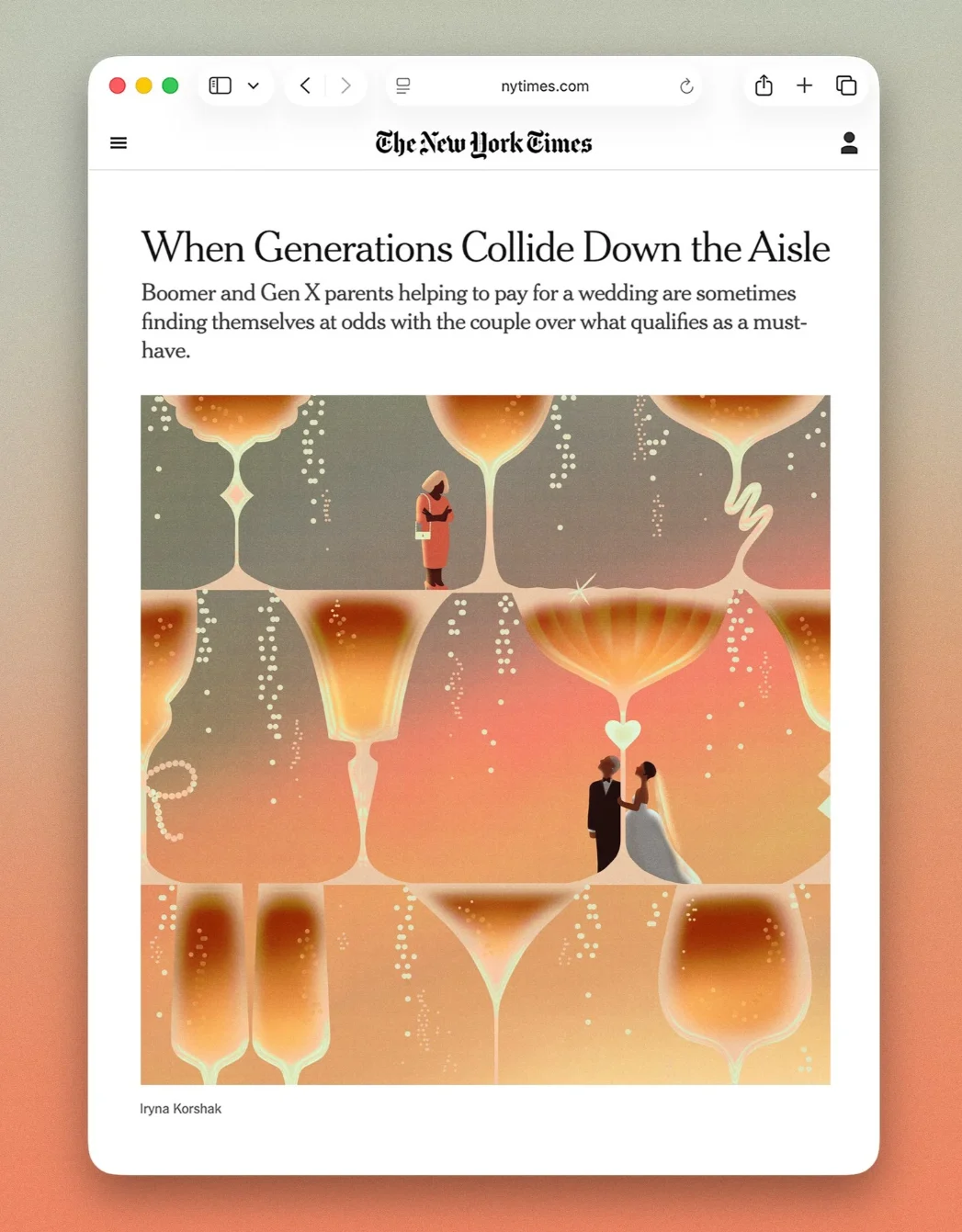
The recent publication by The New York Times, delving into the intricate landscape of intergenerational wedding conflict, has cast a spotlight on a phenomenon increasingly prevalent in contemporary society: the friction between couples seeking personalized ceremonies and parents often financing "timeless" celebrations. This examination, featuring insights from long-time industry observer Ariel Meadow Stallings of Offbeat Wed and Ohio-based wedding planner Emily Berg, a member of Offbeat Wed’s vendor community, underscores a dynamic that has been evolving for decades, revealing deeper structural issues within the wedding industrial complex and family relationships.
The article by reporter Tammy LaGorce highlights the chasm that frequently emerges when a couple’s vision for their special day, often shaped by modern sensibilities and a desire for authenticity, collides with parental expectations rooted in tradition, societal norms, and a significant financial investment. This is not a new conflict, but its manifestation has become more acute with the rise of diverse wedding styles and the increasing financial burden associated with modern nuptials. The New York Times’ interest signals a broader cultural shift and a recognized need to understand the underlying currents shaping one of life’s most significant milestones.
The Evolution of Wedding Expectations: A Generational Divide
To fully grasp the current intergenerational wedding conflict, it’s crucial to understand the historical context and the differing generational perspectives that converge during wedding planning. For generations past, particularly Baby Boomers and early Gen X, weddings often served as significant social events, reaffirming family status and adherence to established community norms. Media, then dominated by traditional bridal magazines and mainstream television, presented a relatively monolithic vision of what a "proper" wedding entailed: a white dress, a formal reception, specific floral arrangements, and a defined guest list. Parental involvement, both financially and in decision-making, was often unquestioned and seen as a natural extension of family support.
However, the late 20th and early 21st centuries ushered in a profound shift. The advent of the internet, social media platforms, and specialized blogs like Offbeat Wed democratized wedding inspiration. Couples, particularly Millennials and now Gen Z, are exposed to an unprecedented array of options, from intimate elopements to themed celebrations, destination weddings, and highly personalized ceremonies that reflect their unique identities and values. This generation often prioritizes authenticity, sustainability, and experiences over elaborate displays of wealth or adherence to rigid traditions. They are also more likely to be critical consumers, questioning conventional wisdom and seeking out vendors who align with their unconventional visions.
The generational divide, therefore, is not merely a matter of taste but a fundamental difference in worldview regarding marriage, family, and personal expression. Parents, having grown up with a distinct set of expectations and a less diversified media landscape, often struggle to reconcile their vision of a "timeless" wedding—one they might have dreamed of or experienced themselves—with their children’s desire for something "personal" or "alternative." This clash is frequently exacerbated by the financial contributions parents make, which can become an unspoken or explicit lever for control over decisions.
The Wedding Industrial Complex: Marketing to Parental Influence
A critical, yet often overlooked, structural issue underlying these conflicts is the strategic marketing approach of the mainstream wedding industry. For decades, the industry has adeptly targeted not just the engaged couple, but significantly, their parents. Industry reports and observations from platforms specializing in alternative weddings indicate that a substantial portion of wedding advertising, particularly for high-cost services like venues, catering, and traditional photography, implicitly or explicitly appeals to the sensibilities and financial leverage of the parents.
This marketing strategy capitalizes on several factors:
- Financial Contribution: With the average cost of a wedding in the United States often exceeding $30,000, and rising in urban centers, parental financial contributions remain a significant component for many couples. Industry analysis suggests that parents contribute, on average, anywhere from 40% to 60% of the total wedding budget. This financial power gives them considerable influence.
- Media Susceptibility: Older generations, generally less exposed to the torrent of contradictory information and diverse opinions found online, tend to internalize traditional media messages about what constitutes a "proper" wedding as authoritative. When a venue coordinator or a traditional florist asserts that certain elements are "non-negotiable" or "essential" for a sophisticated event, parents are often more inclined to accept these pronouncements as fact, rather than as marketing ploys.
- Emotional Investment: Parents often view their child’s wedding as a culmination of their family’s journey, a reflection of their values, and a significant social occasion that could impact their standing within their community. This emotional investment makes them susceptible to industry messaging that emphasizes grandeur, tradition, and perceived perfection.
Industry practices, such as mandating specific vendors, imposing strict décor rules, or pushing for larger guest lists, often align with these traditional expectations, effectively reinforcing the parents’ perspective and sometimes undermining the couple’s unique vision. Some critics have labeled aspects of this mainstream marketing as "predatory," arguing that it exploits parental anxieties and desires, turning what should be a joyous celebration into a commercialized performance driven by external pressures.

Weddings as a "Petri Dish" for Family Dynamics
Beyond marketing and generational differences, the wedding planning process serves as a potent catalyst, or "petri dish," for deeply ingrained family dynamics. All the unspoken tensions, established communication patterns, and underlying power structures within a family tend to surface and intensify during this high-stakes period. Issues such as how a family manages money, whether adult children are genuinely treated as autonomous individuals, and how disagreements are typically navigated, are all brought to the forefront.
For many couples in their twenties or early thirties, wedding planning marks the first time they engage in a significant, emotionally and financially weighty negotiation with their parents as fellow adults. If a family lacks robust communication infrastructure or a history of open dialogue about sensitive topics, these discussions can quickly devolve into conflict. What might appear on the surface as a disagreement about floral arrangements or a guest list size is often a proxy battle for deeper issues:
- Control vs. Autonomy: Parents may struggle to relinquish control, viewing their children as still needing guidance, while the couple asserts their newfound adult autonomy.
- Financial Leverage: The money provided by parents can implicitly or explicitly be used as a means of control, creating resentment and power imbalances.
- Unresolved Issues: Long-standing family feuds, differing expectations for family gatherings, or even a parent’s desire to relive their own wedding through their child’s can all complicate the planning process.
- Communication Styles: Passive-aggressive behaviors, avoidance, or outright confrontation can emerge, reflecting a family’s typical (and often ineffective) methods of conflict resolution.
This concentration of emotional and financial pressure, coupled with a fixed deadline and a public event, amplifies every simmering issue, making the wedding planning period notoriously stressful for all involved. Understanding this underlying dynamic is crucial for both couples and wedding vendors alike. For vendors, recognizing that a client’s stress over a parental conflict often stems from a power negotiation rather than a simple taste disagreement allows for more empathetic listening and targeted support.
The Role of Specialized Platforms and Vendors
The increasing complexity of wedding planning, particularly amid intergenerational clashes, has highlighted the invaluable role of specialized platforms and vendors who cater to more nuanced and non-traditional approaches. Offbeat Wed, established in 2007, has consistently provided a space for couples seeking unique, personal, and authentic wedding experiences, distinguishing itself from the mainstream industry. Its longevity and focus on diverse perspectives have made it a trusted resource for both couples and journalists seeking insight into evolving wedding trends.
The New York Times’ recurring engagement with Offbeat Wed and its vendor community underscores this need. Reporters like Tammy LaGorce turn to such platforms for several reasons:
- Long-Term Perspective: Offbeat Wed has observed the evolution of wedding trends and family dynamics for over two decades, offering a historical lens on current conflicts.
- Nuanced Understanding: The platform provides a deeper, more critical analysis of the wedding industry beyond its glossy façade, exposing underlying commercial and social pressures.
- Access to Diverse Voices: Its extensive vendor community comprises professionals who specialize in non-traditional weddings, offering real-world perspectives from the "trenches" of planning unique events. These vendors often act as crucial intermediaries, helping couples navigate parental expectations while staying true to their vision. For instance, Emily Berg, the Ohio wedding planner featured in the NYT piece, exemplifies a vendor skilled in balancing these delicate dynamics.
These specialized vendors often adopt a client-centric approach, prioritizing the couple’s vision and offering strategies to manage family expectations. They are adept at facilitating difficult conversations, proposing creative compromises, and providing emotional support, thereby mitigating some of the stress inherent in intergenerational conflicts. Their growing prominence signifies a shift in the industry, where authenticity and personalized service are becoming increasingly valued.
Broader Implications and Future Outlook
The ongoing dialogue surrounding intergenerational wedding conflicts carries significant implications for various stakeholders:
- For Couples: The heightened awareness of these dynamics can empower couples to proactively address potential conflicts, set boundaries, and seek support from vendors or counselors who understand these challenges. It encourages a focus on communication and defining what truly matters for their union, rather than succumbing to external pressures.
- For Families: While challenging, these conflicts can also serve as an opportunity for families to re-evaluate their communication styles, redefine adult relationships, and establish healthier patterns for future interactions. Successful navigation can strengthen bonds; unresolved conflicts can create lasting rifts.
- For the Wedding Industry: The spotlight on these issues challenges the mainstream wedding industrial complex to re-evaluate its marketing strategies and product offerings. There is a growing demand for more flexible, personalized, and less prescriptive services that cater to diverse generational values. Vendors who can adeptly mediate family dynamics and champion a couple’s vision are likely to thrive. The continued success of platforms like Offbeat Wed suggests a lasting market for authenticity and individuality over rigid tradition.
- For Society: The evolving nature of weddings reflects broader societal shifts concerning individualism, family structure, financial transparency, and the role of tradition in modern life. The New York Times’ consistent interest in these topics underscores their cultural relevance and their ability to reveal deeper truths about contemporary relationships and values.
As younger generations continue to prioritize personal expression and question established norms, the tension between traditional expectations and individual desires in wedding planning is likely to persist. The ongoing conversation, spurred by insightful journalistic coverage and the expertise of specialized wedding communities, is essential for fostering greater understanding, facilitating healthier family dynamics, and ultimately, helping couples craft celebrations that truly reflect their love story.