


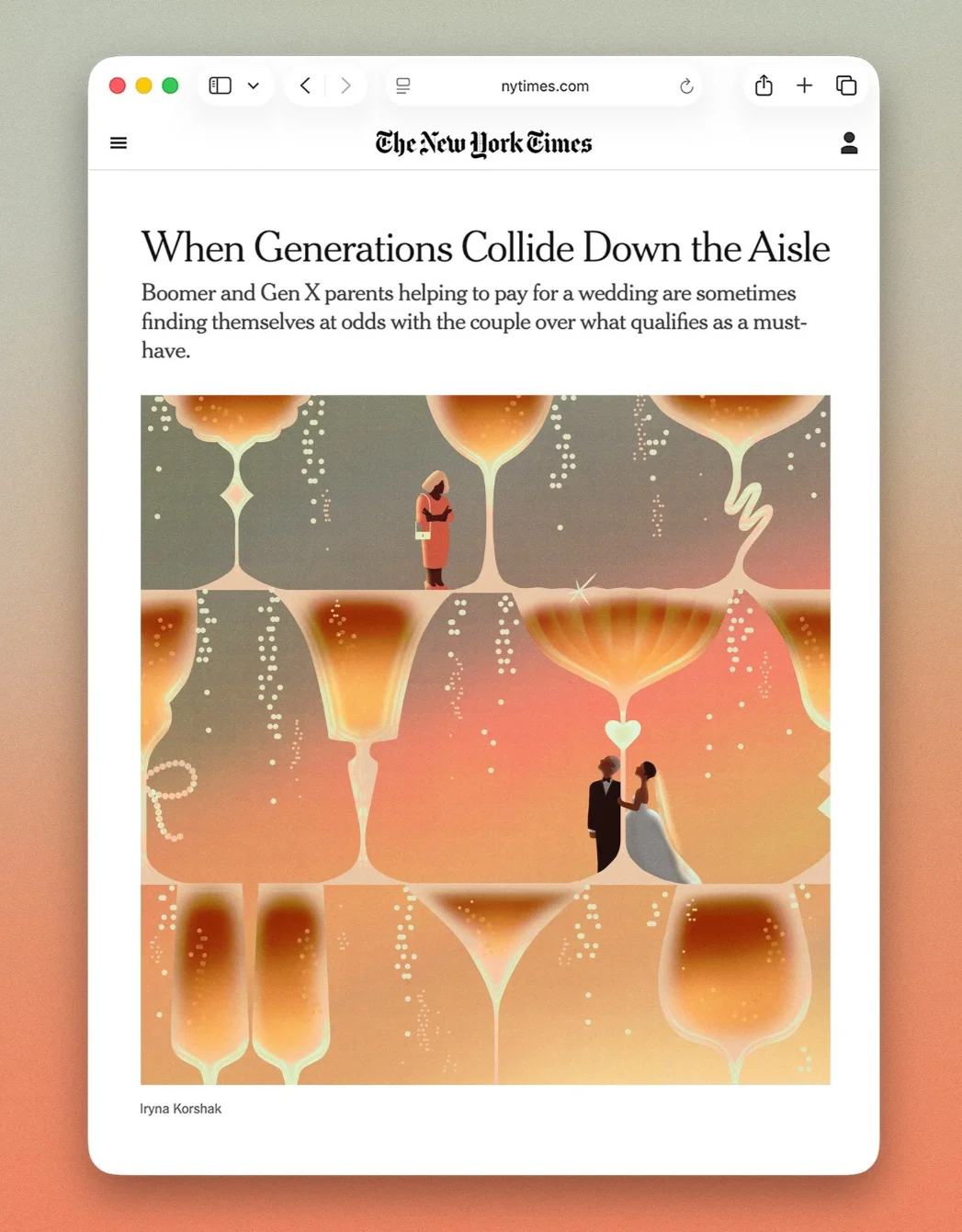
The New York Times recently published a comprehensive piece exploring the increasingly common intergenerational conflicts that arise during wedding planning, specifically highlighting the friction between couples desiring personalized celebrations and parents often funding and advocating for "timeless" or traditional events. This timely examination underscored a dynamic observed for decades by experts in the wedding industry, including Ariel Meadow Stallings, founder of Offbeat Wed, who was quoted in the article. The report also featured Emily Berg, an Ohio-based wedding planner and a member of Offbeat Wed’s vendor community, showcasing how these complex issues play out on the ground. This article delves deeper into the structural underpinnings of these conflicts, examining the historical context, the pervasive influence of the wedding industrial complex, and the profound family dynamics that surface during the high-stakes period of wedding preparation.
The New York Times Feature: A Spotlight on Modern Nuptial Tensions
The New York Times article, penned by reporter Tammy LaGorce, brought into sharp focus a prevalent tension in contemporary wedding planning. It articulated the struggle between marrying couples, typically Millennials and Gen Z, who prioritize authenticity, individuality, and a reflection of their personal story in their wedding celebration, versus their parents, often Baby Boomers or older Gen X, who frequently contribute significant financial resources and, in turn, hold expectations rooted in established traditions, societal norms, and the desire for a grand, memorable event. The article detailed anecdotes of disagreements over guest lists, attire, venue choices, and overall aesthetic, illustrating how these seemingly minor points of contention often mask deeper divergences in values and communication styles between generations.
Ariel Meadow Stallings, whose platform Offbeat Wed has chronicled diverse wedding experiences for nearly two decades, provided expert commentary in the Times piece, offering a longitudinal perspective on these evolving dynamics. Her insights highlighted how the same generational clashes she observed when Gen X was coming of age are now manifesting as Gen X becomes the parental generation. The inclusion of Emily Berg, an active member of Offbeat Wed’s curated vendor network, further grounded the Times‘ report in the practical realities faced by wedding professionals navigating these familial negotiations. This dual perspective—from a long-standing industry observer and a current practitioner—lends significant weight to the Times‘ findings and validates the widespread nature of these intergenerational tensions.
The Historical Evolution of Wedding Financing and Industry Influence
To fully grasp the current intergenerational wedding conflicts, it is crucial to understand the historical trajectory of wedding financing and the concurrent rise of the "wedding industrial complex." For much of history, weddings were simpler affairs, often community-centric, locally funded, and less extravagant. Post-World War II, particularly during the economic boom of the 1950s and 60s, a new paradigm emerged in Western societies. The concept of the "dream wedding" began to take root, fueled by increasing prosperity and a burgeoning consumer culture. Marketing efforts by bridal magazines, jewelers, and event venues started to shape public perception of what a wedding "should" entail.
By the 1980s and 90s, the average cost of weddings began its steep ascent, transforming the event into a significant financial undertaking. This era solidified the expectation that parents, particularly the bride’s family, would bear a substantial portion, if not all, of the wedding expenses. This tradition, while rooted in historical dowry practices and societal norms, became increasingly intertwined with commercial pressures. The wedding industry, a multi-billion-dollar global enterprise, skillfully capitalized on these parental expectations, developing sophisticated marketing strategies that often targeted the generation most likely to be footing the bill. This historical context reveals how the current conflicts are not merely about taste but are deeply embedded in decades of commercial conditioning and evolving societal roles.
The Wedding Industrial Complex: Marketing to the Parent Generation
A central, yet often unstated, structural issue underlying intergenerational wedding conflict is the mainstream wedding industry’s primary marketing focus: the parents, rather than the engaged couple themselves. While contemporary marketing increasingly targets couples through digital platforms, traditional segments of the industry have historically and effectively cultivated a narrative around what a "proper" or "timeless" wedding entails, largely directed at the generation most likely to be providing financial support.
Parents, particularly Baby Boomers and older Gen Xers, often grew up in an era with a different relationship to media authority. Information from established institutions, whether a respected bridal magazine or a professional vendor, was often internalized as authoritative. When a venue-mandated coordinator or a traditional florist asserts that certain elements—a specific type of floral arrangement, a multi-course sit-down dinner, or a large guest list—are "necessary" or "standard," many parents accept these pronouncements as fact. This contrasts sharply with younger generations, who have grown up in the internet age, exposed to a vast array of contradictory opinions, diverse wedding styles, and DIY possibilities. Millennials and Gen Z are more likely to question established norms and seek out unique expressions of their identity, often viewing traditional industry dictates with skepticism.
This divergence in media literacy and consumer behavior creates a fertile ground for conflict. What appears to be a disagreement over table settings or the guest list is often a deeper struggle: parents, influenced by decades of industry messaging about non-negotiable traditions, attempting to enforce commercial standards that their children do not recognize as mandatory. Ariel Meadow Stallings has previously described some of this mainstream wedding marketing as "predatory," arguing that it exploits parental desires for their children’s happiness and social standing by instilling a sense of obligation towards costly and often unnecessary traditions. Data consistently shows that the average cost of a wedding in the United States hovers around $30,000, with some estimates placing it significantly higher in major metropolitan areas. Studies by organizations like The Knot and WeddingWire frequently report that parents contribute an average of 50-70% of the total wedding budget, underscoring their significant financial leverage and, consequently, their perceived right to influence decisions.
Weddings as a "Petri Dish": Exposing Family Dynamics
Beyond financial considerations and industry influence, weddings serve as a potent "petri dish" for existing family dynamics, concentrating simmering issues related to money, control, communication, and the treatment of adult children into a single, high-stakes event. For many couples in their 20s or early 30s, wedding planning represents the first significant negotiation with their parents as fellow adults concerning a matter of substantial financial and emotional weight.
Families often have established, unspoken rules about how money is handled, how disagreements are navigated, and the extent to which adult children are granted autonomy. These underlying dynamics, which might otherwise remain latent or surface in less intense ways, become acutely magnified during the wedding planning process. The fixed deadline, the substantial budget, the extensive guest list, and the heightened emotional investment from all parties involved can turn routine decisions into battlegrounds.

Many families lack the robust communication infrastructure necessary to navigate such complex, emotionally charged negotiations effectively. This deficit can lead to rapid escalation of conflict, often manifesting in predictable patterns once observed repeatedly. For instance, a parent’s insistence on inviting extended family members might not merely be about hospitality but a projection of their own social standing or a perceived obligation to family unity. Similarly, a couple’s desire for an intimate, unconventional ceremony might be a statement about their independence and rejection of parental control, rather than simply a matter of aesthetic preference. Understanding that these conflicts are often power negotiations rather than mere taste disagreements can fundamentally shift how wedding vendors and therapists approach supporting couples, moving beyond superficial solutions to address the deeper familial infrastructure.
Data and Trends: A Generational Divide in Wedding Preferences
The generational divide in wedding preferences is supported by various demographic and consumer behavior trends. Millennials and Gen Z, having grown up in an era of unprecedented personalization and digital connectivity, tend to prioritize authenticity, unique experiences, and self-expression. Their weddings often reflect a desire to break from tradition, incorporating elements that are meaningful to them personally, such as unconventional venues, sustainable practices, personalized vows, or unique entertainment. They are less swayed by aspirational images of "perfect" weddings dictated by magazines and more influenced by real-life examples shared on social media, emphasizing individuality over uniformity.
Conversely, many Baby Boomer and older Gen X parents often harbor expectations rooted in the weddings of their own generation or their peers. These expectations frequently center on elements perceived as markers of status, tradition, and formality: a large guest list, a traditional church ceremony, a formal reception, and adherence to established etiquette. For these parents, the wedding can represent a significant social event, an opportunity to celebrate family legacy, and a demonstration of their generosity and success.
Data from wedding surveys consistently illustrates these differing priorities. Younger couples often express a willingness to spend more on experiences (e.g., unique entertainment, destination elements) and less on traditional physical trappings (e.g., elaborate floral arrangements, expensive favors). They are also more likely to contribute to their own wedding costs, or even fully self-fund, in exchange for greater control over decisions. This shift in financial contribution can sometimes mitigate parental influence, but it also highlights the growing independence of younger generations in their life choices. The pervasive influence of social media platforms like Instagram and Pinterest has further fueled the desire for personalized, visually distinctive weddings among younger generations, simultaneously providing inspiration and, at times, unrealistic expectations.
Implications for Couples, Families, and the Wedding Industry
The implications of these intergenerational conflicts are far-reaching, affecting not only the emotional well-being of the couples and their families but also the strategies employed by wedding professionals. For couples, navigating these tensions requires open, honest communication, boundary setting, and often, the difficult decision of prioritizing their vision over parental expectations, especially when financial contributions come with strings attached. Some couples opt for alternative funding models, choosing to pay for a larger portion of their wedding themselves to maintain creative control, even if it means a smaller or delayed celebration. Others seek professional mediation or pre-marital counseling to address these deep-seated issues before they escalate.
For the wedding industry, understanding these dynamics is crucial for adaptation and success. Nontraditional vendors, like those in the Offbeat Wed community, are uniquely positioned to assist couples stressed by parental conflict. By recognizing that the core issue is often a power negotiation rather than a simple taste disagreement, these vendors can offer more empathetic and effective guidance. This involves active listening, asking probing questions about family dynamics, and helping couples articulate their vision while also considering how to respectfully communicate with their parents. The rise of wedding planners specializing in conflict resolution or those with a strong emphasis on personalized, client-centric approaches reflects an industry increasingly aware of these complex familial layers.
The broader societal context reveals a continuing tension between the enduring appeal of tradition and the modern emphasis on individual expression and autonomy. As family structures evolve and financial independence among young adults shifts, the nature of wedding celebrations is likely to become even more diverse. The future of weddings may see a greater embrace of celebrations that are deeply personal, financially flexible, and less constrained by prescriptive industry norms, reflecting a more nuanced negotiation between generational values.
Expert Perspectives and Vendor Adaptations
The continuous engagement of platforms like Offbeat Wed with the New York Times and other prominent media outlets underscores the critical role that specialized communities play in shaping the discourse around modern weddings. Offbeat Wed’s founder, Ariel Meadow Stallings, and its network of vendors offer a unique vantage point, having observed and facilitated countless "offbeat" weddings that often serve as a direct response to traditional pressures.
These experts emphasize that vendors are increasingly becoming informal mediators in family disputes. They must develop skills beyond event logistics, encompassing emotional intelligence and an understanding of family systems. This means creating contracts that clearly define decision-making authority, offering tiered service packages that cater to varying levels of parental involvement, and providing resources or referrals for couples facing severe family conflict. The ability to articulate a couple’s vision in a way that respects parental concerns, perhaps by finding compromises that blend tradition with personal touches, is becoming a hallmark of successful contemporary wedding professionals.
Conclusion: Navigating the Future of Nuptial Celebrations
The New York Times’ exploration of intergenerational wedding conflict is more than just a commentary on event planning; it is a significant sociological observation about evolving family structures, generational values, and the persistent influence of commercialism. The friction between a couple’s desire for a personal celebration and parental expectations for a "timeless" event reflects deeper negotiations about autonomy, financial control, and the very definition of family celebration in the 21st century.
As the wedding landscape continues to diversify, understanding these underlying structural issues and family dynamics will remain paramount for couples, parents, and the professionals who serve them. The conversation initiated by the Times and amplified by experts like those at Offbeat Wed provides crucial cultural context and practical information, fostering a more empathetic and effective approach to navigating one of life’s most significant rites of passage. The future of weddings will undoubtedly continue to be a fascinating arena where tradition meets innovation, and where familial love, sometimes strained, ultimately seeks to find its most authentic expression.